The Rediscovery of a Challenger Expedition Specimen in William Herdman’s Zoology Museum Collection at the University of Liverpool (and how digitisation is transformative).

Written by Leonie Sedman, Curator of Heritage & Collections Care, University of Liverpool.

Along with many other NatSCA members, I care for a mixed collection, meaning that one inevitably becomes something of a ‘Jack of all trades’ missing out on the academic satisfaction created by specialisation. As a curator who finds collections research to be the most satisfying part of my job, it can be frustrating when that research is often only possible on a ‘need-to-know’ basis – usually when a new display or exhibition is being planned, or when the specimens are to be used in teaching. Looking on the bright side though – this does provide glimmers of joy when the research produces something exciting!

In 2004 when I was first employed to manage the University of Liverpool’s Heritage Collections (medical & scientific museum collections built up through research or teaching), I retrieved a large proportion of the collections from attics and cellars where they languished because the objects and specimens were no longer actively used in teaching (this is now changing – but that would be a different blog). The Zoology Museum collection was one of these.

Continue reading

NatSCA Digital Digest – November 2025

Compiled by Ellie Clark, Curator of Fossil Cnidaria at the Natural History Museum.

Welcome to the November edition of NatSCA Digital Digest.

Digital Digest is a monthly blog series featuring the latest on where to go, what to see and do in the natural history sector including jobs, exhibitions, conferences, and training opportunities. We are keen to hear from you if you have any top tips and recommendations for our next Digest, please drop an email to blog@natsca.org.

Sector News

GCG Winter Seminar in Hastings – Registration Open

While the call for abstracts has now closed, you can still register to join the Geological Collections Group in December at Hastings Museum & Art Gallery for their 2025 Winter Seminar and Annual General Meeting. The Seminar and AGM will be held at the Museum on December 10th and will be followed by a field trip to the coast in the Pett Level – Fairlight area on December 11th.

For registration forms and details about the talks of the day, guidance on what to expect during the field trip, and directions for finding your ways to all of the above, visit their website here.

Continue reading

Splits and Distortion of a “Hisstoric” Snakeskin: Humidification as Part of Remedial Conservation Treatment of a Boa constrictor Skin”

Written by Claire Kelly, Conservator at Natural History Museum, London.

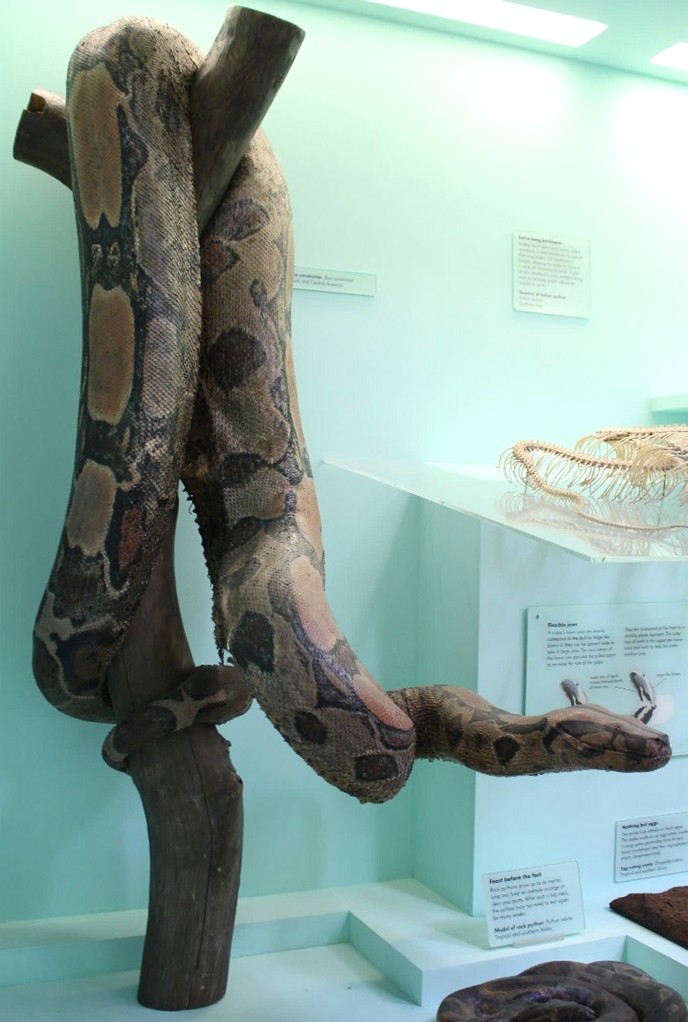
Boa Constrictor in Fishes, Amphibians and Reptiles Gallery at NHM ©The Trustees of the Natural History Museum

A Boa Constrictor on display in the Fishes, Amphibians and Reptiles Gallery at the Natural History Museum in London, UK was removed to undergo a considerable amount of remedial conservation treatment.

The taxidermy skin, dating from around the late 19th century, is mounted over a plaster form that was placed onto a wooden trunk. The skin exhibited severe deterioration with multiple splits in various areas located throughout the length of the specimen. The entire ventral seam had opened along with skin distortion and lifting around the splits without any stitched seam to hold it in situ. Most of the damage was at the ventral area of the specimen but some splits and distortion were visible whilst on display, along with material shed on to the case base.

Continue reading

“Our Irish Natural History”: Increasing the Accessibility of Natural History Collections through Community-Driven Interpretation

Written by Adriana Ballinger, Yale University Charles P. Howland Postgraduate Research Fellow at the National Museum of Ireland, Natural History.

Natural history specimens are often inaccessible to the communities from which they were collected. As a result, source communities lack opportunities to connect with elements of their local heritage, and museums and their publics overlook the place-based expertise that many of these communities hold about the specimens we research and see on display. Scientists lead the knowledge creation process surrounding natural history specimens, but source communities can also contribute valuable information, especially regarding the meanings that flora, fauna, and geological features embody in their environments of origin. Although these cultural contexts are often intangible and unquantifiable, they are nevertheless important facets of specimens’ natural histories. For the past year, I have led “Our Irish Natural History,” a community-driven research and exhibition project at the National Museum of Ireland (NMI). I set out to increase the accessibility of the NMI’s natural history collections, explore innovative avenues for community-led interpretation, and create new opportunities for public engagement.

Continue reading

How to Get a Job Working with Museum Collections

Written by Sarah Burhouse, Caitlin Jamison, Bethany Palumbo & Vicky Ward. Compiled by Jennifer Gallichan, Vertebrate Curator, Amgueddfa Cymru – Museum Wales.

Those of us that that are lucky enough to work with natural science collections will be familiar with the question ‘How do you get a job in a museum’? At a time when cuts to the sector mean that museum jobs seem even fewer and farther between, I felt it was important that we share some of our combined experiences to hopefully give some tips (and hope) for emerging museum professionals.

I reached out to colleagues across the sector to get their ‘origin’ stories and see if they had any advice for those seeking a museum job working with collections. Many thanks to Sarah, Caitlin, Bethany and Vicky for sharing your stories with us.

Continue reading