Collections 2030: What’s Next for Museum Collections?

What does the next decade look like for museum collections in the UK? This is the question that the Museums Association’s new research project, Collections 2030, is asking.

Over the course of this year, we’ll be working with museum workers, researchers and users to think about the big issues that the sector needs to have on its radar as we plan for the next decade. What trends do we need to adapt to? Will the way that we treat and value collections change? What are the implications of a new generation taking charge in our museums? And will we have the infrastructure that we need not only to pass on collections, but to make them valued by the wider public?

When asked about the future, it can be tempting to let our imaginations run away with ourselves.

But if we’re going to consider what museum collections might look like in 12 years or so, it’s worth casting our minds back the same distance. Over that period, technological changes have been huge, and have led to much experimentation in museums but not always greater impact. The financial crisis has radically changed the workforce and business model for many museums, with major implications for collections knowledge and management.

But our museum collections themselves can seem oddly absent from this picture of change.
Collections have not grown much, and to the extent that ‘pure’ collections issues enter into our discussions, we have seen a period with much to talk about. But not a huge amount of change in practice, about disposals, about storage, about where to put everything, and occasionally, and with much trepidation, whether we should give some of our stuff back to those who made it.

Continue reading

Rocks of Death and Fizzing Fossil Fish

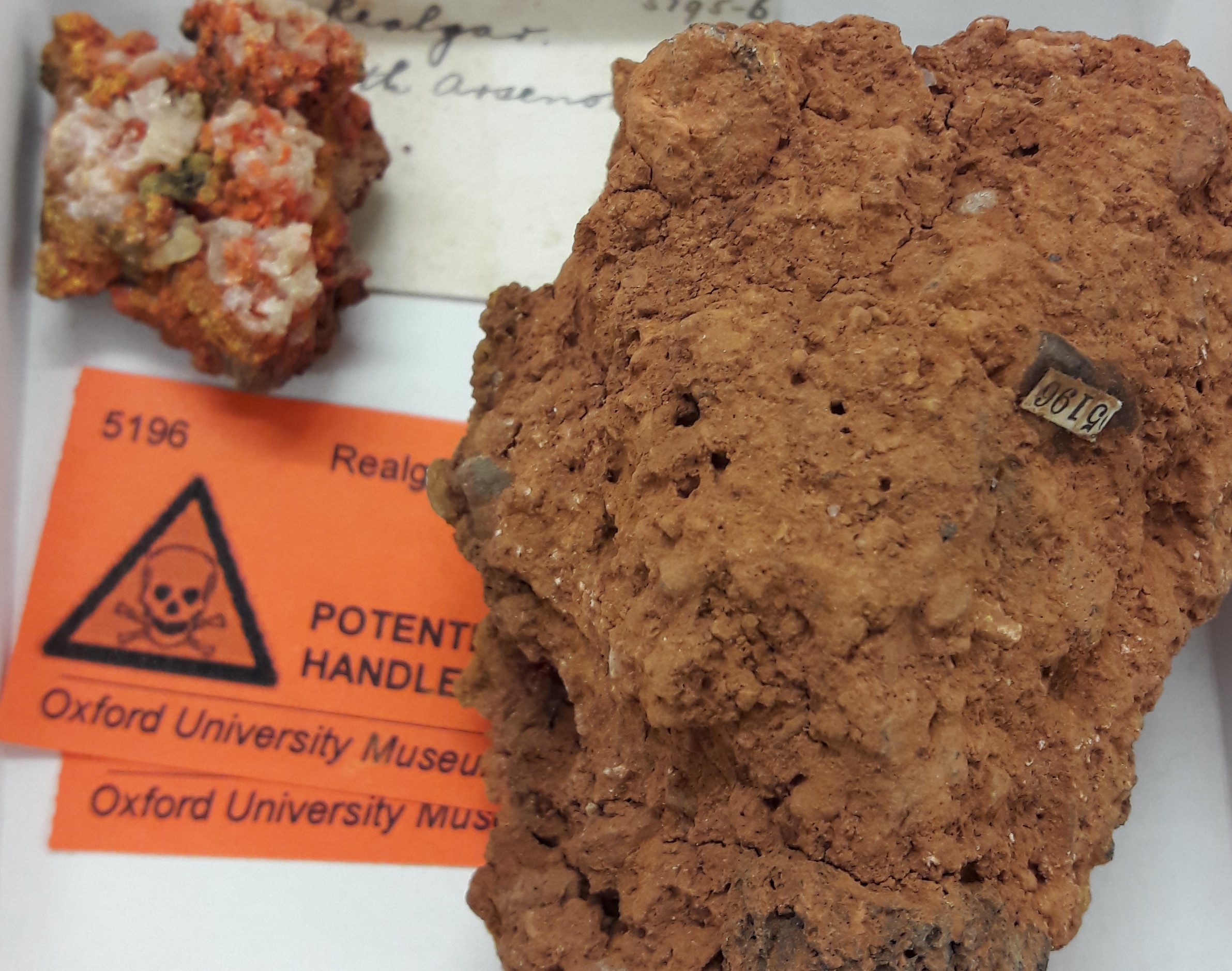
In what must surely be one of the most excitingly themed workshops known to scientists, Monica Price (formerly of Oxford University Museum of Natural History) and Jana Horak (Amgueddfa Cymru – National Museum Wales) recently ran a day-long workshop called Hazards in Geological Collections. We’re not talking hazards like booklice eating your specimen labels, we’re talking The Big Guns. It was Christmas come early for the attendees who had gathered from the ‘four corners’ of the British Isles to learn what villainstreasures might be lurking in their collections.

Hazards in geological collections take many forms. © Oxford University Museum of Natural History.

Each of the three tables of eager minds was presented with a box of unlabelled specimens from which to try and list the potential hazards. After a very thorough health and safety briefing, we all leaned cautiously in towards the box. Decked out in nitrile gloves and face masks, we were the picture of professionalism. The excitement of the workshop was definitely heightened by the real, LIVE specimens in front of us. Had any of us had been stupid enough to open up and breathe in the contents of an asbestos tube, or rub ourselves all over with a toxic mineral, we could have done ourselves some serious harm. But as it was, the 20 or so geologists in the room were suitably well-behaved.

Continue reading

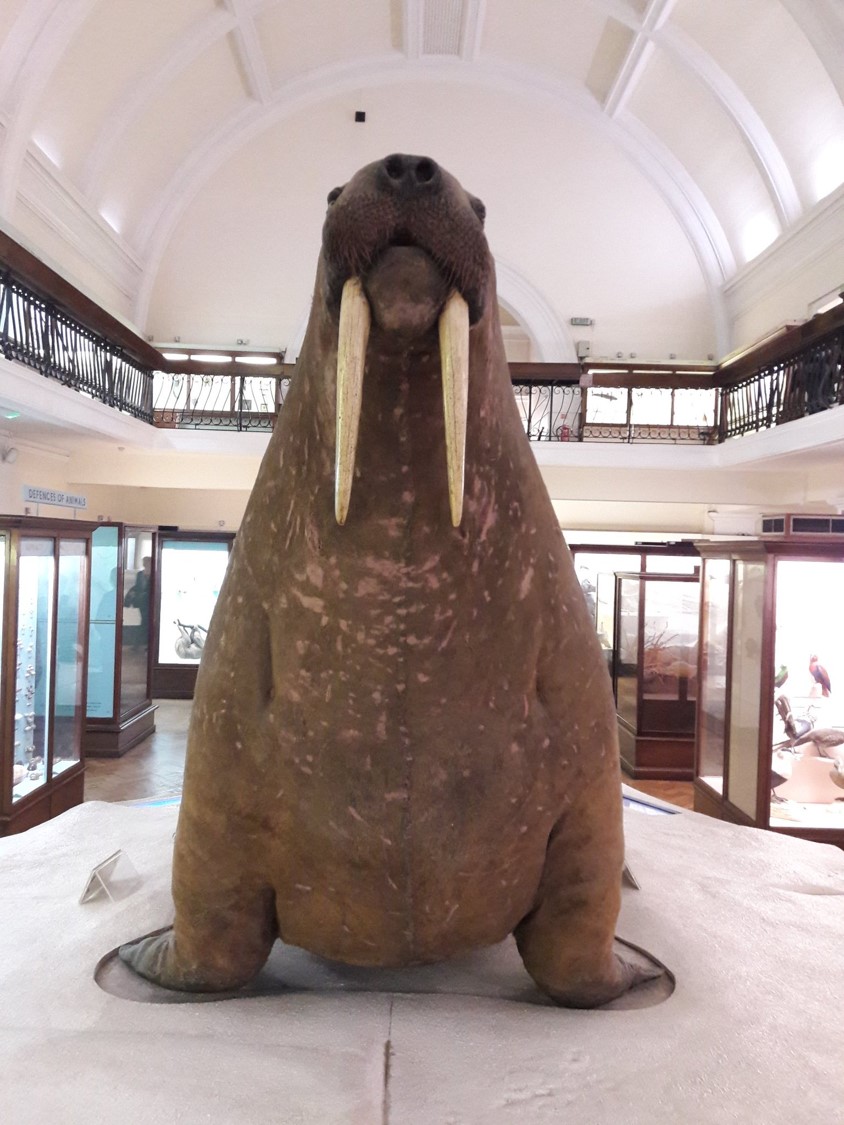
Waving Goodbye to the Walrus: Reflections on Leaving (and Starting)

To paraphrase that great Disney wildlife documentary, The Lion King: change is good, but it’s not easy.

Leaving any job after a long time is always strange, and I’ve been lucky enough to have spent (almost!) seven years at the Horniman Museum and Gardens. In that time I’ve worked on several large projects, learned more than I thought I ever would about anthropology collections, and made some wonderful friends. But sadly, I have now had to move on. Happily, I’ve been able to move on to the wonderful Powell-Cotton Museum, where I will be spending the next year curating the natural history collections.

This has meant quite a large change: I’ve moved to a different part of the country, and started a new job that is very different to what I’ve been doing for the last few years. I’ll admit to feeling some imposter syndrome – I have been working almost exclusively with anthropology objects for a long time now (not my subject specialism: I studied zoology), and worried that I might have forgotten some of my natural history knowledge! Thankfully, that doesn’t seem to have been the case, and in fact working with anthropology collections has taught me a surprising amount about working with natural history collections… from identifying worked animal materials (such as ivory and bone) to documentation standards and procedures (I was a Documentation Assistant at the Horniman), I have gained skills and knowledge that will be invaluable in my new role.

Sad to say goodbye to the Horniman Walrus. (C) Horniman Museum and Gardens

Continue reading

Playing with Time

Cave palaeontology collections as vessels of truth and creativity…

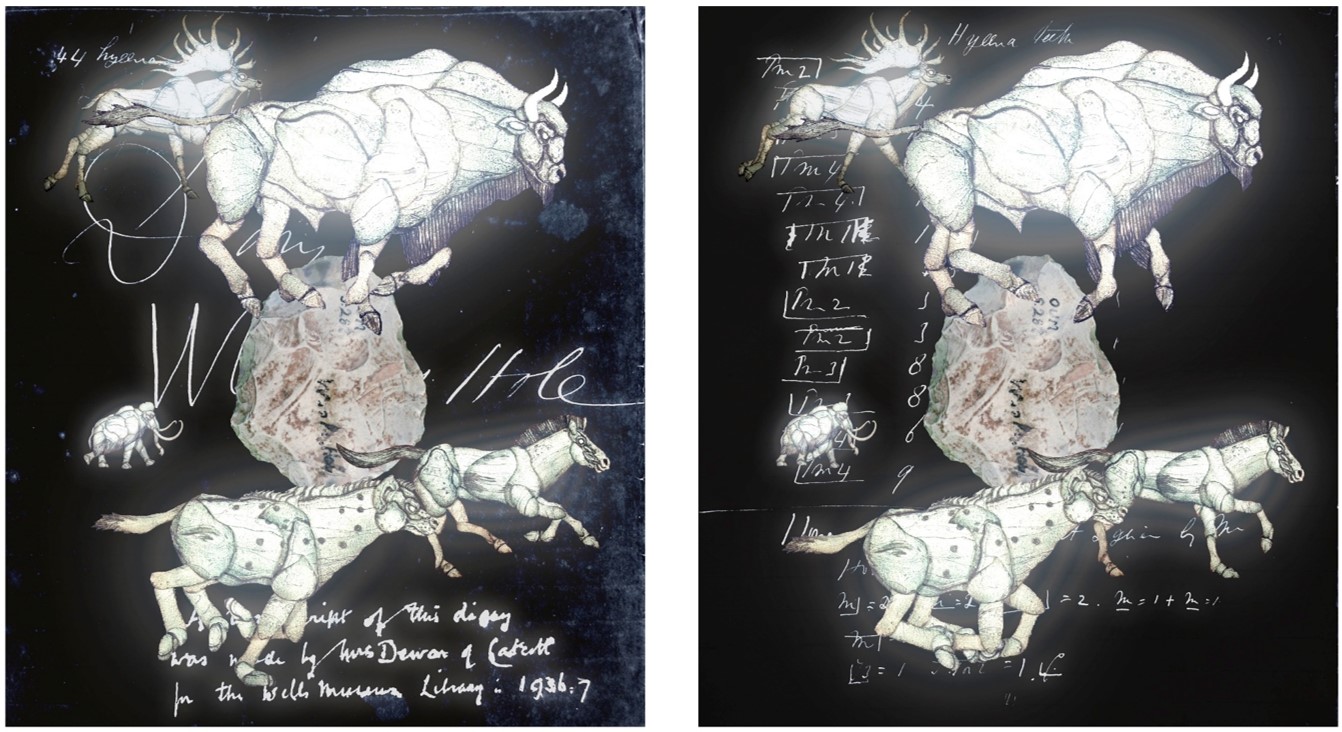
Big Beasts Stalk The Mind of Sir William Boyd Dawkins. Two pages from a flip-book showing animated giant deer, steppe bison, spotted hyaena, horse, pages from Sir William’s notebook relating to the excavation of the Hyaena Den at Wookey Hole and a Palaeolithic hand axe unearthed there. (C) Sean Harris.

Beasts of tooth and claw have always stalked the darker corners of my mind. But we could probably all say that couldn’t we? However, a recent creative collaboration – for which Wells and Mendip Museum’s seminal collection of Pleistocene mammal bone provided the focus – presented a new slant on the mind/ cave analogy.

My grandparents, who exerted such a powerful influence on my formation, did their very best to nurture a natural scientist of some shape or form. They would, I think, have been proud of a geologist, ornithologist, zoologist – also perhaps an archaeologist; maybe even an anthropologist. Someone of great standing and integrity, qualities probably manifest in a really solid moustache.

Consequently, growing up, I spent a lot of time in museums, in hides and ranging across fields with a geologist’s hammer; all activities accompanied with a notebook and pencil. However, to the considerable bafflement (and perhaps frustration) of my well-intentioned elders, a compulsive urge to express the images and narratives that formed themselves in my mind’s eye – ironically borne of hours gazing into cases at the minutiae of taxidermied creatures, patinated bones, geological specimens – won out and instead of a scientist they got an artist and animator.

However, having now, over the course of a career, worked with a diverse array of researchers in museums and conservation organisations, I know that I’m on the same spectrum as a great many of them – albeit perched at a slightly different position along it. Whilst our motivations and the languages we use to communicate our discoveries may be different, we’re all explorers of a type. I wish I could have the opportunity to explain that to my grandmother – though maybe she knew it anyway.

Continue reading

When Art Recreates the Workings of Natural History it can Stimulate Curiosity and Emotion

Natural history is one of the branches of science whose methods and traditions are most often referenced by contemporary artists. A flock of the installations that we find in leading galleries echo, reflect, borrow from and parody the ways that natural history works.

Sometimes these artists pick apart the way that natural history is “done” in museums – Joseph Cornell’s mini display cases; Ruth Marshall’s knitted animal pelts; Tessa Farmer’s “fairies” made from real insect carcasses; Polly Morgan’s modern take on taxidermy and Damien Hirst’s various preserved specimens all invite us to consider the ways that museums represent nature, and the role of museum specimens.

Elsewhere artists point to natural history as a part of our human society, performed in the wild, beyond the walls of museums and universities. For example, Natural Selection by Andy and Peter Holden (currently at The Towner Gallery in Eastbourne until 20th May) tells the story of the people obsessed by the illegal practice of collecting bird eggs.

Work in the museum and in the wild are two central pillars of natural history. One artist who shadows the practices of both is the American artist Mark Dion. His exhibition, Theatre of the Natural World, is showing now at the Whitechapel Gallery in London until 13th May. As a natural historian who works in museums and undertakes fieldwork, I am always interested in art that encourages me to step back and reflect on how my profession actually operates.

Sometimes what it shows me is funny, sometimes it’s sad, and sometimes it’s disturbing. Such art can be a highly effective means of communicating just how absurd some aspects of natural history are. Much of Dion’s work highlights the subjective, peculiar and inconsistent ways that taxonomy operates: it is an entirely human construct intended to place order on the impossibly disordered living world.

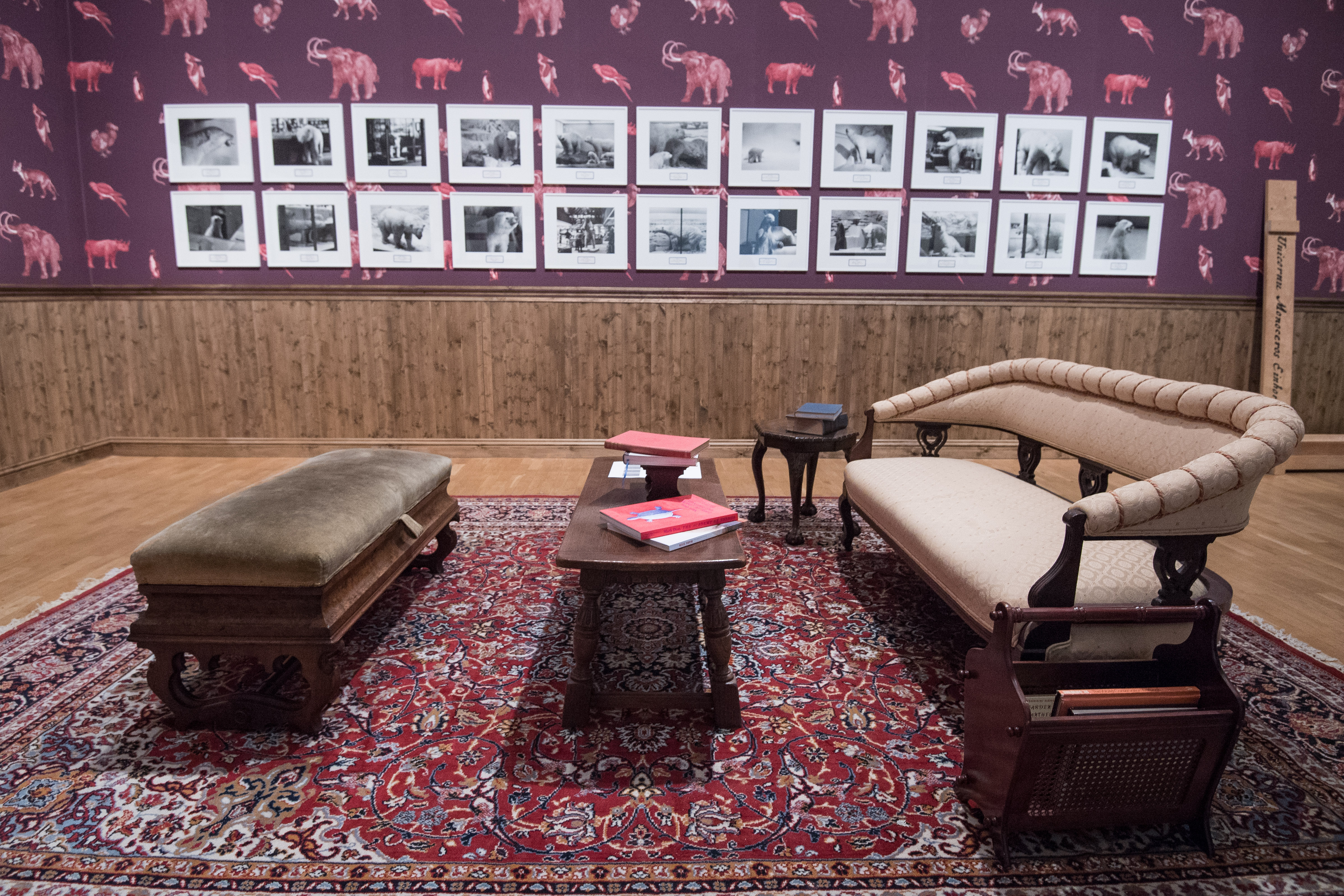
Mark Dion
The Naturalist’s Study, 2018
Installation view of Mark Dion: Theatre of the Natural World at Whitechapel Gallery, London, 2018
Photo: Jeff Spicer/PA Wire

Continue reading