Listening and learning: Reflections on the Second Workshop of the People and Plants Project

Written by Fiona Roberts. Collaborative ESRC PhD student, Cardiff University and Amgueddfa Cymru-National Museum Wales Decolonising biocultural curation of South Asian medicinal plants.

Monday 7th November, National Museums Collections Centre

In early November, a group of academics, researchers, curators, artists and knowledge holders gathered at Edinburgh’s National Museums Collections Centre. The second workshop of the year-long AHRC-funded ‘People and Plants’ project focused on ‘reactivating ethnobotanical collections as material archives of Indigenous ecological knowledge.’

During the object handling session (Photo by Dr Ali Clark, National Museums Scotland)

The People and Plants Project

Led by National Museums Scotland, Royal Botanic Gardens, Kew and the Powell-Cotton Museum, the project investigates current debates on decolonising museum practices, including the interplay between natural history and ethnography collections, creating a conversation about these among varied experts.

The project’s previous workshop, held at the Powell-Cotton Museum in March 2022, brought together Somali knowledge holders from UK diasporic communities and was run in partnership with the University of Kent’s School of Anthropology and Conservation and the NOMAD project, which engages Somali communities in heritage projects. To read more, see this previous blogpost, and view workshop talks on YouTube [People and Plants – YouTube].

Continue reading

Ostracod Odessey – Broadcasting the Brady Collection

Written by Dan Gordon, Keeper of Biology, The Great North Museum: Hancock.

The Great North Museum : Hancock is home to many remarkable collections, but one of the most important is perhaps one of the most unfamiliar to our visitors. The Brady collection of Ostracods.

Ostracods, sometimes called Seed Shrimp, are distinctive Class of crustaceans. A shell of two intricately textured valves almost entirely envelopes their shrimp-like bodies, with just a small opening for a cluster of rapidly moving legs to poke out. As their common name suggests, most species are very small, mostly invisible to human eye, but they’re ubiquitous, busily going about their lives wherever there is permanent or temporary water, from the poles to the tropics. Some swarm the world’s oceans in vast planktonic shoals, while others live in the still, dark pools of caves, in garden ponds or even puddles.

They’re poorly known outside of academic communities, which is a real shame, because despite being fascinating creatures in their own right, they have important roles in many aquatic ecosystems, and significantly, they’re commonly encountered in the fossil record, which means that they are particularly important indicator fossils. In addition, the chemical make-up of their distinctive shells tells us about ocean acidity and temperature, which can tell us about ocean warming and climate change.

The collection was the work of George Stewardson Brady, a local man, born in Gateshead in 1832, and one of the people who pioneered the study of these animals at a time when they were relatively poorly understood.  Housed in a row of cabinets, the Brady collection is made up of nearly 3000 microscope slides with up to 100 Ostracods on each. These specimens were collected all over the world, many of them by well-known expeditions such as the HMS Challenger expeditions in the 1870s. It contains many Types, and provides a valuable resource for the study of these animals today.

Continue reading

A Collection of Sri Lankan Bird Skins.

Written by Eimear Ashe, Documentation Officer, National Museum of Ireland – Natural History.

The Temporary Number

During the course of my work in the Natural History Division of the National Museum of Ireland, (NMI) I came across a couple of boxes of bird skins that were in the wrong place. By deciding to move them to their correct place, I opened a metaphorical can of worms. It turned out that these 200 bird skins had been assigned modern numbers during a volunteer project 16 years ago. In the intervening period, the original accession number had been discovered. Never one to leave a wrong number in place, I took on the challenge to renumber this collection before rehousing them.

The Donor

First, I read the acquisition register and found the donor to be a gentleman named Colonel James Grove White, a career British Army officer. Upon retirement, Grove White came to live in Co. Cork in the south of Ireland, and like many British men in Ireland at that time, he came to hold high office during various periods, and was very active in the local community. It was during his time in Ireland, almost 100 years ago, that he donated his collection of “Ceylonese” bird skins. Presumably these were collected by him while on duty in Sri Lanka, although there is no documentation in the NMI to contribute the field collection details, other than the labels on the birds themselves.

Continue reading

A Foot In The Door – Finding Collections Work As A Trailing Spouse In A Foreign Country

Written by Caroline Grounds, Freelance Zoological Collections Assistant, Musée national d’histoire naturelle, Luxembourg.

I arrived in Luxembourg 8 years ago when my husband accepted a job offer here, not knowing much about the tiny country (“where exactly is Luxembourg?”), and with a new baby in tow.

I had become accustomed to the trailing expat spouse role, so I was happy for a new adventure, though the hardest part about moving, especially to a country where you don’t speak the language, is finding your niche in which you can carve out something of your own.

As a former Biology teacher, most of my previous museum experience was in science education, as a volunteer at the NHM in London, and the George C. Page museum (La Brea Tar Pits) in Los Angeles, and I was keen to get involved in the Luxembourg Natural History Museum in any way, shape or form. Something about being around the wonders of nature, whether outside or housed in a building, is inspiring to me and, surrounded by like-minded people, where I truly feel like I’m supposed to be.

Not speaking any of the official local languages however (Luxembourgish, German and French), I quickly found that it would be difficult to find work, even on a voluntary basis as I had before. I submitted my CV to the museum anyway, and endured a rather painful phone call in very bad schoolgirl French (mine, not theirs!), which, much to my amazement, led to one of the researchers contacting me for help proofreading his research papers, which were being published in English. That schoolgirl French came in useful after all!

Continue reading

A Remarkable Collection Of Fossil Birds From The Eocene

Written by Andrew Kitchener, Principal Curator of Vertebrates, National Museums Scotland.

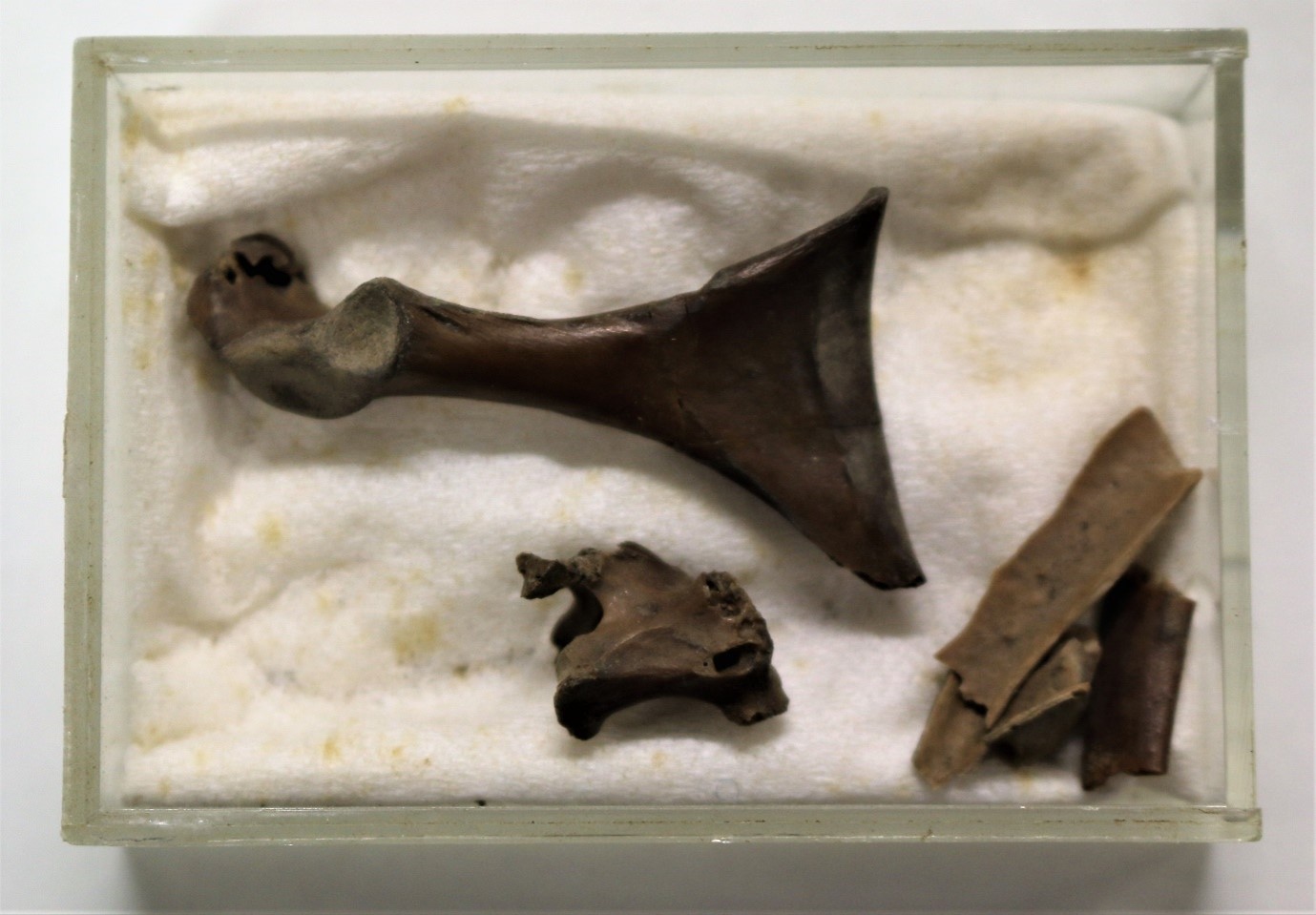
In November 2021 National Museums Scotland acquired a remarkable collection of fossil bird skeletons dating from the Eocene, approximately 54.6-55 million years ago. The story of how this collection ended up in Edinburgh is a very long one and began more than 25 years ago. 

Please can you show me your collection of Eocene birds?” This was the question that greeted me when I first met a Mr Michael Daniels more than 25 years ago. Visiting the museum with his wife Pam and his daughter Caroline, who lived in Edinburgh, this meeting would be the beginning of a long friendship and long-term correspondence, which ended sadly in 2021. My answer was “Well I would love to show you our collection of Eocene birds, but we don’t have any.” Michael proceeded to tell me about his remarkable collection of several hundred skeletons and part skeletons that he had discovered in nodules of the London Clay, which had eroded out of the cliffs at Walton-on-the-Naze in Essex. In later years I visited Michael and Pam at their home and got to see the collection in its countless drawers and boxes in his study. I was astonished at the amazing variety of specimens of all shapes and sizes.  Many of the bones were minuscule, requiring great patience and skill to extract from the substrate.

Some of the many hundreds of fossil bird bones from Walton-on-the-Naze © National Museums Scotland

Michael Daniels was a passionate self-taught palaeontologist, who visited various fossil sites outside London and further afield in southern England from his home at Loughton near Epping Forest. He developed a more specialised interest in the Tertiary Eocene London Clay in the early 1970s, having been a founder member of the Tertiary Research Group in 1969. On retirement in 1985 he moved with his wife to Holland-on-Sea, so that he could pursue this interest at Walton-on-the-Naze.

Continue reading