NatSCA Digital Digest – May 2025

Compiled by Ellie Clark, Collections Moves Team Leader at the Natural History Museum, London.

Welcome to the May edition of NatSCA Digital Digest

Digital Digest is a monthly blog series featuring the latest on where to go, what to see and do in the natural history sector including jobs, exhibitions, conferences, and training opportunities. We are keen to hear from you if you have any top tips and recommendations for our next Digest, please drop an email to blog@natsca.org.

Sector News

Registration Now Open for SHNH International Summer Meeting

We are pleased to announce that registration is now open for the two-day international meeting ‘A Sense of Nature’. The conference will explore the intersections of the senses – including sight (vision), sound (hearing), smell (olfaction), taste (gustation) and touch (tactile perception) – with the history of natural history.

The event will be at Kelvin Hall, Glasgow on 19th June and 20th June 2025. The conference will feature 12 papers across six sessions, as well as collections tours and an optional conference dinner.

Full details are available here. Registration will close at 6pm (BST) on 28th of May 2025.

Continue reading

A Stable Future – Research into the Stability of Materials used in Taxidermy Manufacture.

Written by Jazmine Miles Long – Taxidermist & Bethany Palumbo – Head of Conservation, Natural History Museum Denmark.

Taxidermy collections are crucial for our understanding of biodiversity, evolution, population genetics and climate change. They form a large part of natural science collections and their long-term preservation is essential. Historically, taxidermy was created using natural, durable materials such as wood, plant fibres, wax, clay and glass with examples dating back to the 16th century. However, over the past 50 years, taxidermists have increasingly adopted synthetic and plastic-based materials due to their ease of application, lower cost, and effectiveness in creating realistic specimens. One such example is polyurethane, a very widely used material to build the form that goes under the taxidermy skin. Although polyurethane has been extensively tested (albeit not specifically for taxidermy), it has already been shown to be unstable and unsuitable for long-term use. Awareness of stable, durable materials is not widespread within the taxidermy community. As a result, many modern museum taxidermy pieces are made with untested and potentially unstable materials.

Continue reading

A Time Capsule of Extinction: Scotland’s Iconic Wildlife

Written by Caitlin Jamison, Museum Collection Technician, Montrose Museum: ANGUSalive.

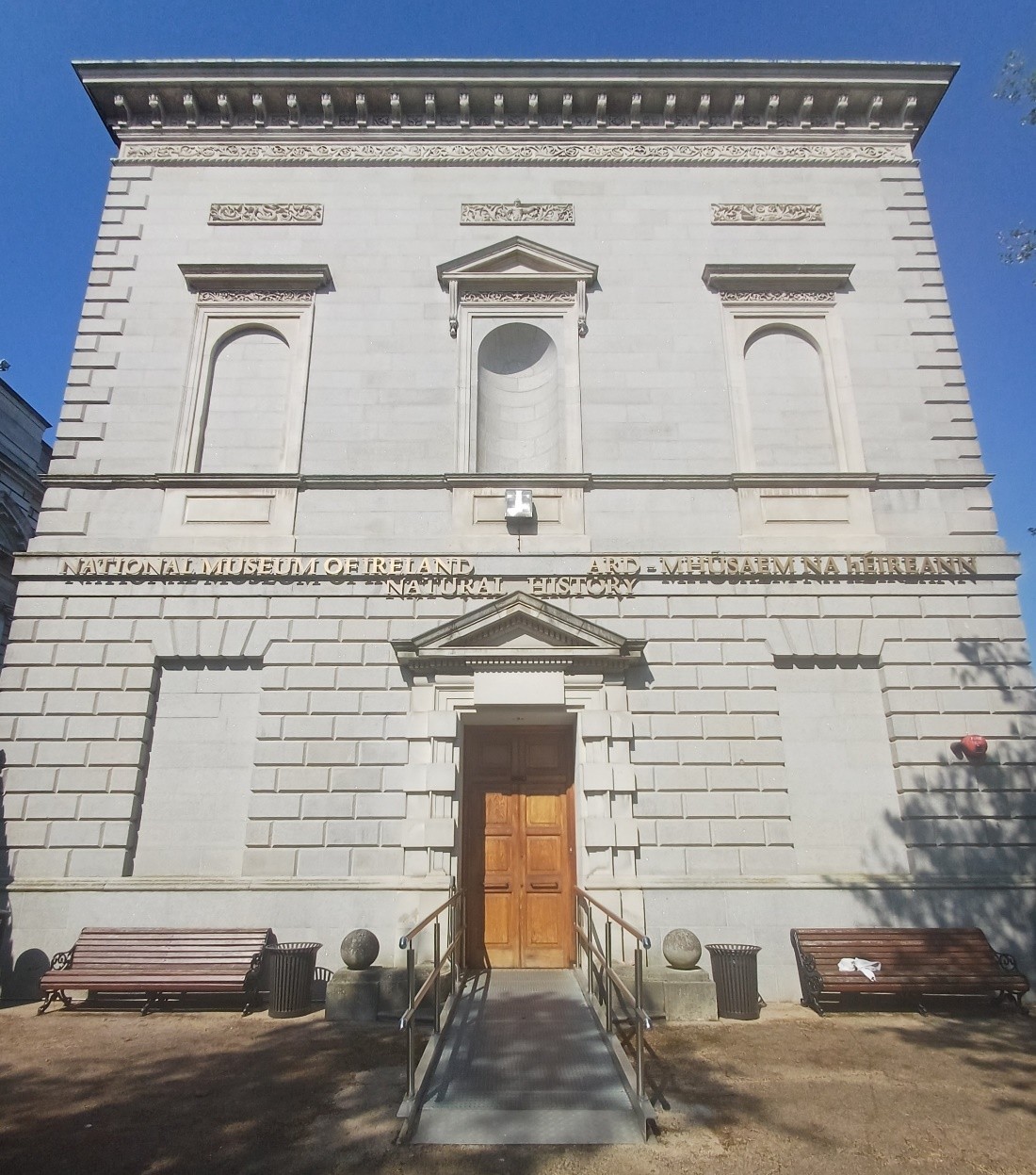
Montrose Museum in Angus, northeast Scotland, houses an impressive natural history collection. Everything from taxidermy to fossils to rare minerals are housed in a modest, Greek-revival style museum off the high street. Built in 1842, it is one of the first purpose-built museums in Scotland.

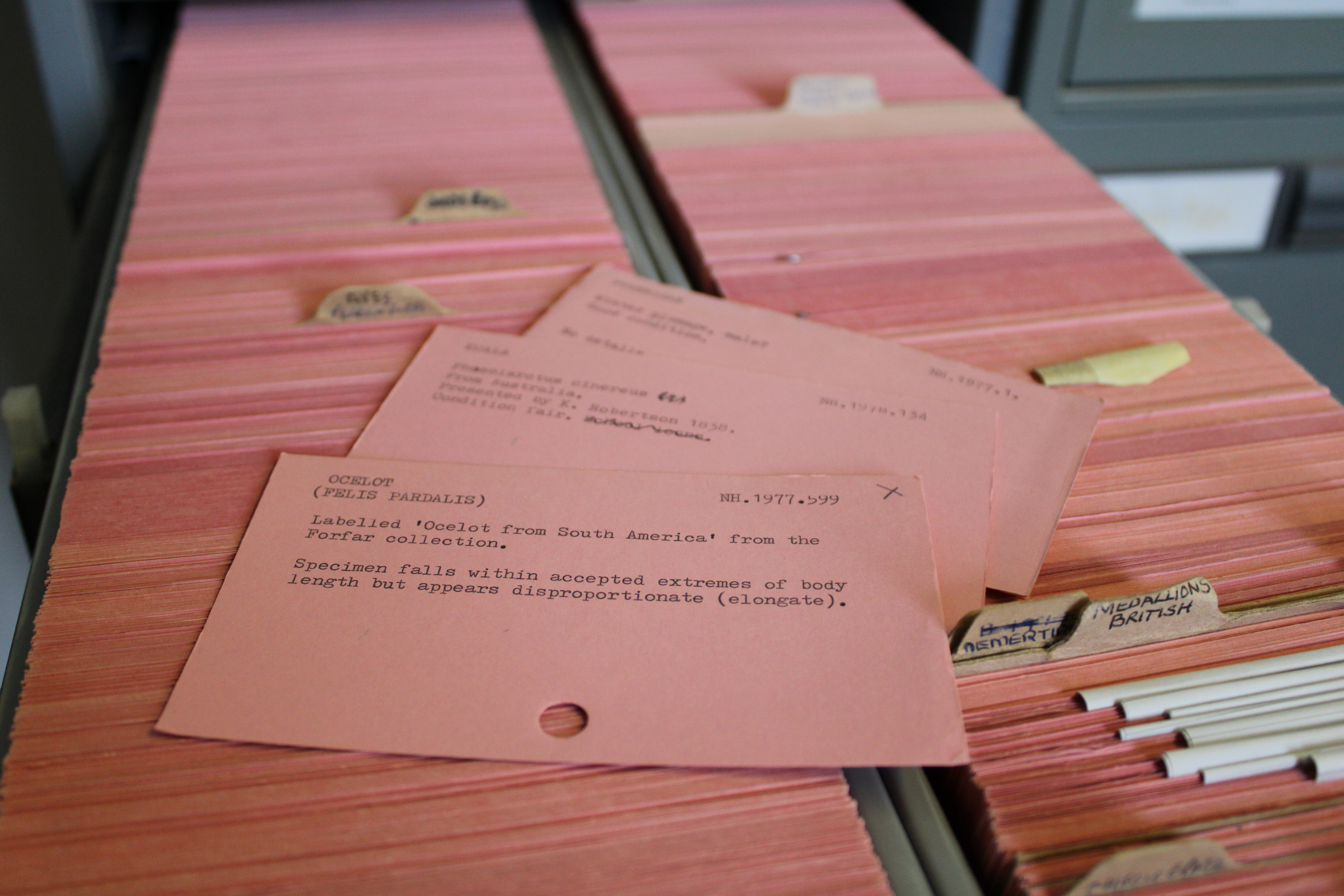
Sadly, due to changing public interest (and the challenging funding situation facing many local authority museums) the collection has been somewhat forgotten since it was catalogued onto neat pink index cards in the late 1970s.

Montrose Museum’s 1970s card catalogue (author’s own photo)
Continue reading

NatSCA Digital Digest – April 2025

Compiled by Milo Phillips, Digitisation Co-ordinator at the Royal Botanic Garden Edinburgh.

Welcome to the April edition of NatSCA Digital Digest.

A monthly blog series featuring the latest on where to go, what to see and do in the natural history sector including jobs, exhibitions, conferences, and training opportunities. We are keen to hear from you if you have any top tips and recommendations for our next Digest, please drop an email to blog@natsca.org.

Sector News

New Unnatural History Museum Sessions

The Unnatural History Museum brings together museum professionals, creatives and academics across disciplines to platform vital conversations about the museum mediation of the natural world during the sixth mass extinction. The series unfolds over a series of themed Zoom sessions featuring short presentations, followed by a roundtable discussion.

Links to upcoming sessions can be found here: https://www.eventbrite.ie/o/verity-burke-53923741293 and will continue to be updated as more events are added.

The event series now has a website where recordings of prior sessions will be uploaded and you can check out upcoming events: https://unnaturalhistorymuseum.org/

Continue reading

Packing the Blaschka Glass Models 

Written by Julian Carter, Principal Conservator Natural Sciences, Amgueddfa Cymru – Museum Wales, Cardiff

During the late 19th century, Leopold Blaschka (1822-1895) and his son Rudolf (1857-1929) produced thousands of beautifully detailed glass models of a wide range of sea creatures, and other animals, for natural history museums and aquaria all over the world. The work has since been hailed as “an artistic marvel in the field of science and a scientific marvel in the field of art”. The work of the Blaschka’s remains remarkably contemporary today, working as they did on the cusp of design, craft, and industry. Crossing the boundaries of science and art, the surviving models today have a value that makes them irreplaceable. 

The idea for making lifelike renditions of sea creatures out of glass arose from the difficulty of preserving and displaying soft-bodied animals such as jellyfish, marine worms, and sea anemones. Preserving such animals in a lifelike way is difficult as techniques such as fluid preservation cause colours to quickly fade and shapes to become distorted. Leopold Blaschka devised a solution to this problem by using his glass working skills to accurately model these animals out of glass and other materials available to him and went on to establish a successful business supplying glass models to museums worldwide during the latter half of the 19th century. 

The model of the sea anemone Actinia mesembryanthum (right) based on a plate (left) from Phillip Henry Gosse’s Actinologia britannica. A history of the British sea-anemones and corals which Leopold Blaschka used for the early sea anemone models that he built.
Continue reading