Transforming Scientific Natural History 3D Data into an Immersive Interactive Exhibition Experience

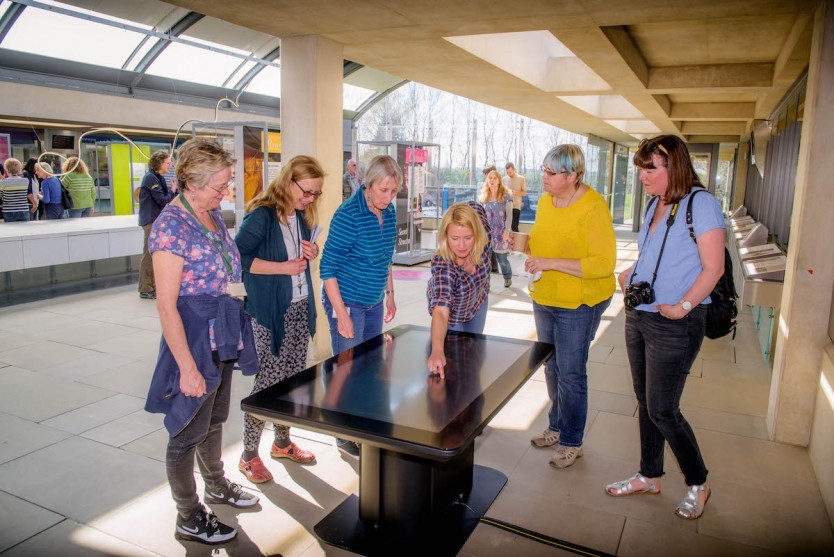
Interspectral is a Swedish company that provides an interactive exhibition system called Inside Explorer using 3D volumetric scanning, such as CT and micro CT, real-time graphics visualisation and a large touch table to enable gallery visitors to interactively explore natural history subjects using modern science techniques.

Inside Explorer is today used at museums worldwide, for example the British Museum, Natural History Museum London, Utah Natural History Museum, Denver Museum of Science and Nature and many more.

A recent collaboration between Interspectral and Wakehurst; Kew’s wild botanic garden for their Millennium Seed Bank Visitor Atrium, has resulted in some spectacular results. These can be seen in the specially commissioned Secret Structures exhibition. The Inside Explorer system at the exhibition enables visitors to the Millennium Seed Bank to not only marvel at plants, but to learn from them and to understand our need to protect them. The Inside Explorer Digital Table invites them to peel back the layers of intriguing, scanned objects from RBG Kew’s collections; a Brazil nut, a piece of oak, an orchid and a carved walnut shell.
© Kew Gardens

Wakehurst and Interspectral worked with London’s Natural History Museum’s imaging labs to micro CT scan the subjects for the exhibits. These were then produced for exhibition by Interspectral and Wakehurst.

Continue reading

NatSCA Digital Digest – June

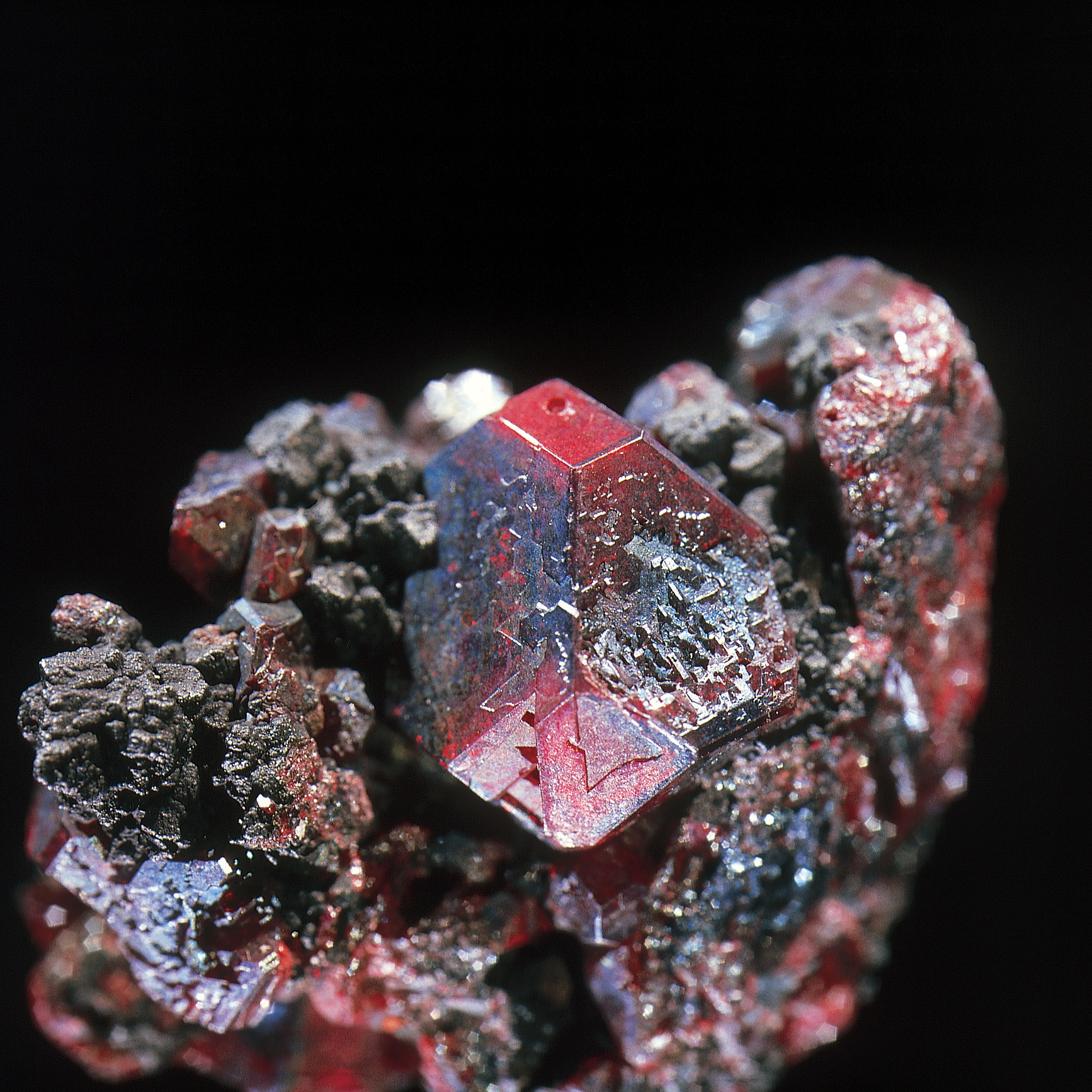
The beautiful mineral Cuprite, from Phoenix Mine, Cornwall. (© Plymouth Museums, Galleries, Archives).

Post-Conference Blues

It’s been a few months since our 2018 conference and AGM at Leeds City Museum. It was wonderful to see so many people there – to catch up with old friends and to meet new ones. And as always, I am so sad when it is over. I guess this is why it’s nice to revisit what went on for the two days. There have been a few different write ups about the conference:

David Waterhouse, Senior Curator of Natural History, Norfolk Museums Service, wrote his first blog post ever all about his time at the conference here.

Glenys Wass, Heritage Collections Manager at Peterborough Museum wrote about her summary of the conference talks here.

Jan Freedman (me), Curator of Natural History, at Plymouth Museums, Galleries, Archives, shared my experiences of the conference here.

Plus, the talks from the conference will be written up either for the NatSCA blog, the Notes & Comments, or the Journal of Natural Science Collections.

The Future of Museum Collections

Leading on from the conference, one talk by Alistair Brown at the Museums Association, looked at where collections will be in 2030. This new research project will be working with museum staff to understand issues that currently face museums and where they want them to be in less than 15 years time. A write up of the Collections 2030 project can be found here.

Continue reading

Collections 2030: What’s Next for Museum Collections?

What does the next decade look like for museum collections in the UK? This is the question that the Museums Association’s new research project, Collections 2030, is asking.

Over the course of this year, we’ll be working with museum workers, researchers and users to think about the big issues that the sector needs to have on its radar as we plan for the next decade. What trends do we need to adapt to? Will the way that we treat and value collections change? What are the implications of a new generation taking charge in our museums? And will we have the infrastructure that we need not only to pass on collections, but to make them valued by the wider public?

When asked about the future, it can be tempting to let our imaginations run away with ourselves.

But if we’re going to consider what museum collections might look like in 12 years or so, it’s worth casting our minds back the same distance. Over that period, technological changes have been huge, and have led to much experimentation in museums but not always greater impact. The financial crisis has radically changed the workforce and business model for many museums, with major implications for collections knowledge and management.

But our museum collections themselves can seem oddly absent from this picture of change.

Collections have not grown much, and to the extent that ‘pure’ collections issues enter into our discussions, we have seen a period with much to talk about. But not a huge amount of change in practice, about disposals, about storage, about where to put everything, and occasionally, and with much trepidation, whether we should give some of our stuff back to those who made it.

Continue reading

Playing with Time

Cave palaeontology collections as vessels of truth and creativity…

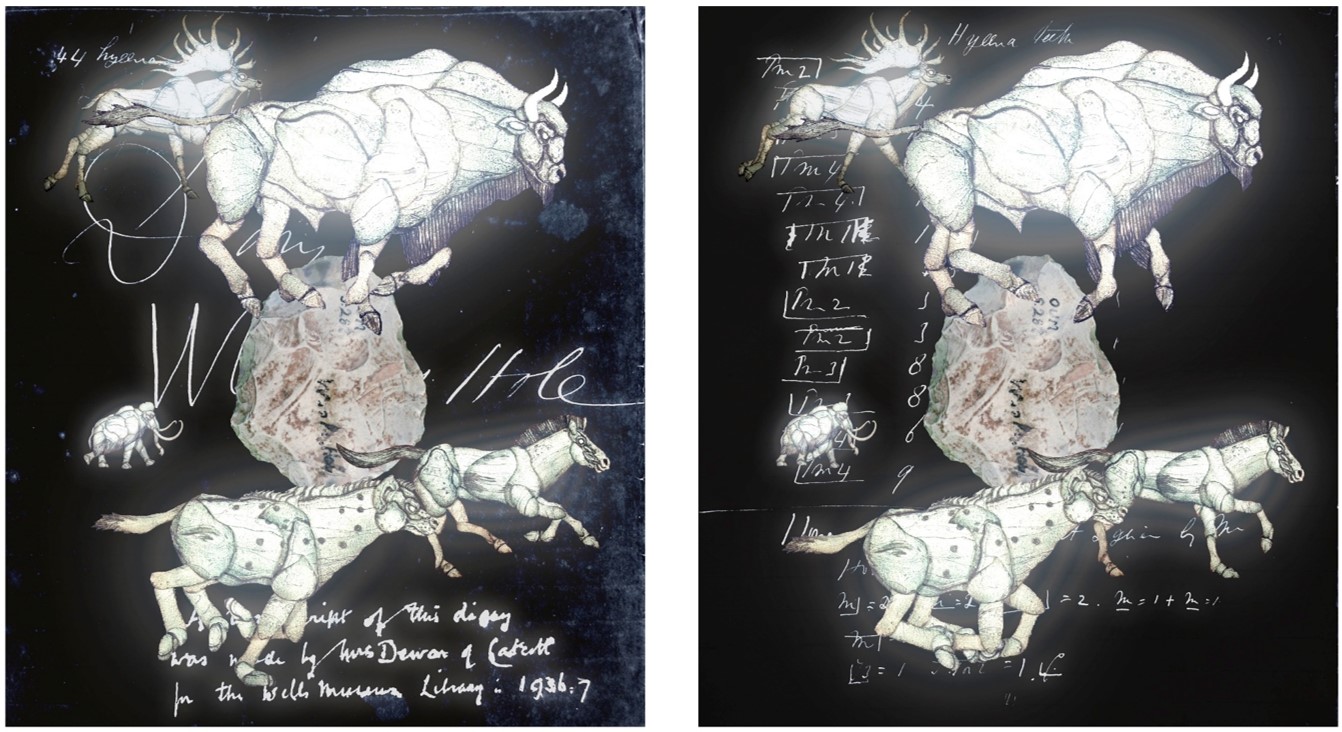
Big Beasts Stalk The Mind of Sir William Boyd Dawkins. Two pages from a flip-book showing animated giant deer, steppe bison, spotted hyaena, horse, pages from Sir William’s notebook relating to the excavation of the Hyaena Den at Wookey Hole and a Palaeolithic hand axe unearthed there. (C) Sean Harris.

Beasts of tooth and claw have always stalked the darker corners of my mind. But we could probably all say that couldn’t we? However, a recent creative collaboration – for which Wells and Mendip Museum’s seminal collection of Pleistocene mammal bone provided the focus – presented a new slant on the mind/ cave analogy.

My grandparents, who exerted such a powerful influence on my formation, did their very best to nurture a natural scientist of some shape or form. They would, I think, have been proud of a geologist, ornithologist, zoologist – also perhaps an archaeologist; maybe even an anthropologist. Someone of great standing and integrity, qualities probably manifest in a really solid moustache.

Consequently, growing up, I spent a lot of time in museums, in hides and ranging across fields with a geologist’s hammer; all activities accompanied with a notebook and pencil. However, to the considerable bafflement (and perhaps frustration) of my well-intentioned elders, a compulsive urge to express the images and narratives that formed themselves in my mind’s eye – ironically borne of hours gazing into cases at the minutiae of taxidermied creatures, patinated bones, geological specimens – won out and instead of a scientist they got an artist and animator.

However, having now, over the course of a career, worked with a diverse array of researchers in museums and conservation organisations, I know that I’m on the same spectrum as a great many of them – albeit perched at a slightly different position along it. Whilst our motivations and the languages we use to communicate our discoveries may be different, we’re all explorers of a type. I wish I could have the opportunity to explain that to my grandmother – though maybe she knew it anyway.

Continue reading

NatSCA Digital Digest – April

Dear Digital Digest-digesters, it has been an extremely busy month but there are just enough hours in the month to put out the April edition. Continue reading for a round up of all the things you need to know…

What Should I Read?

After much to-ing and fro-ing and panicking from various factions, it has been announced that “accredited museums and galleries will be granted an exemption in legislation… that bans the trade of elephant ivory in almost all circumstances”. This is great news for museums. Read the full story on the Museums Association website here.

There has been a lot of coverage of the dinosaur tracks found in Scotland, but if you missed it all, here’s what the BBC had to report. Both sauropod and theropod tracks are present and they’ve gotten everyone all excited.

Wildlife Photographer of the Year is in the news for another year as another photographer falls foul of either not reading, or else ignoring, the rules. The anteater in one of the winning images has been investigated and concluded to be a taxidermy specimen. The image was therefore disqualified and the photographer told to er… get stuffed.

Continue reading