NatSCA Digital Digest – November

Compiled by Glenn Roadley, Curator (Natural Science), The Potteries Museum & Art Gallery.

Welcome to the November edition of NatSCA Digital Digest.

A monthly blog series featuring the latest on where to go, what to see and do in the natural history sector including jobs, exhibitions, conferences and training opportunities. We are really keen to hear more about museum re-openings, exhibition launches, virtual conferences and webinars, and new and interesting online content. If you have any top tips and recommendations for our next Digest please drop an email to blog@natsca.org.

News from the Sector 

Upcoming Conference: Decolonising Natural Science Collections
November 19th 2020
NatSCA will be holding a one-day online conference on November 19th 2020, 9:50am – 4.15pm GMT. Continue reading →

NatSCA Digital Digest – October

Compiled by Lily Nadine Wilkes. NatSCA Volunteer.

Welcome to the October edition of NatSCA Digital Digest.What can I read?

There are some wonderful posts on our blog. Patricia Francis, the natural history curator of Gallery Oldham, wrote Natural Connections an investigation of the person, place and specimens of a painting that reveals a hidden Oldham story. There is also Andrew Kitchener’s post on CryoArks, the UK’s first zoological biobank.

As we are in Black History Month, there is a lovely collection of research from the Natural History Museum into how the museums history and collections are connected to the transatlantic slave trade in Slavery and the Natural World.

Continue reading →

Museums Beyond Covid

Written by Jan Freedman, Curator of Natural History, The Box, Plymouth.

The sun was hot on my neck as I walked up the stone steps of the largest museum in America. The Smithsonian National Museum of Natural History is on every natural curators museums to visit list, and I was full of youthful excitement!

Inside was cool, and I was met with a grand hall, with a beautiful taxidermy elephant in the centre. The space buzzes with the echoing chatter and the scuttling of excited little feet. I walk on to the stairs, past the large mass of people queuing for the lift, and head up the stairs, patiently waiting for people to pass, so I can meet my ancestors. Here in the Human Origins gallery, there are wonderful displays and interactives all about the evolution of our species. Children run from case to case. Prams block display panels. Interactives are bashed.

I move along to the mammal gallery, where it seems like twenty different schools have chosen to visit at the same time. The cases are two deep with visitors peering at mammals from continents away: children squashed at the front, adults squeezing and pushing to get a glimpse. Reminiscent of a Friday night at our student bar. The air is stale and dry. The noise of a thousand different conversations ring loud in my head. There’s a feeling of being moved along by an invisible force of hunger: not for food, but to ‘see’ the next thing.

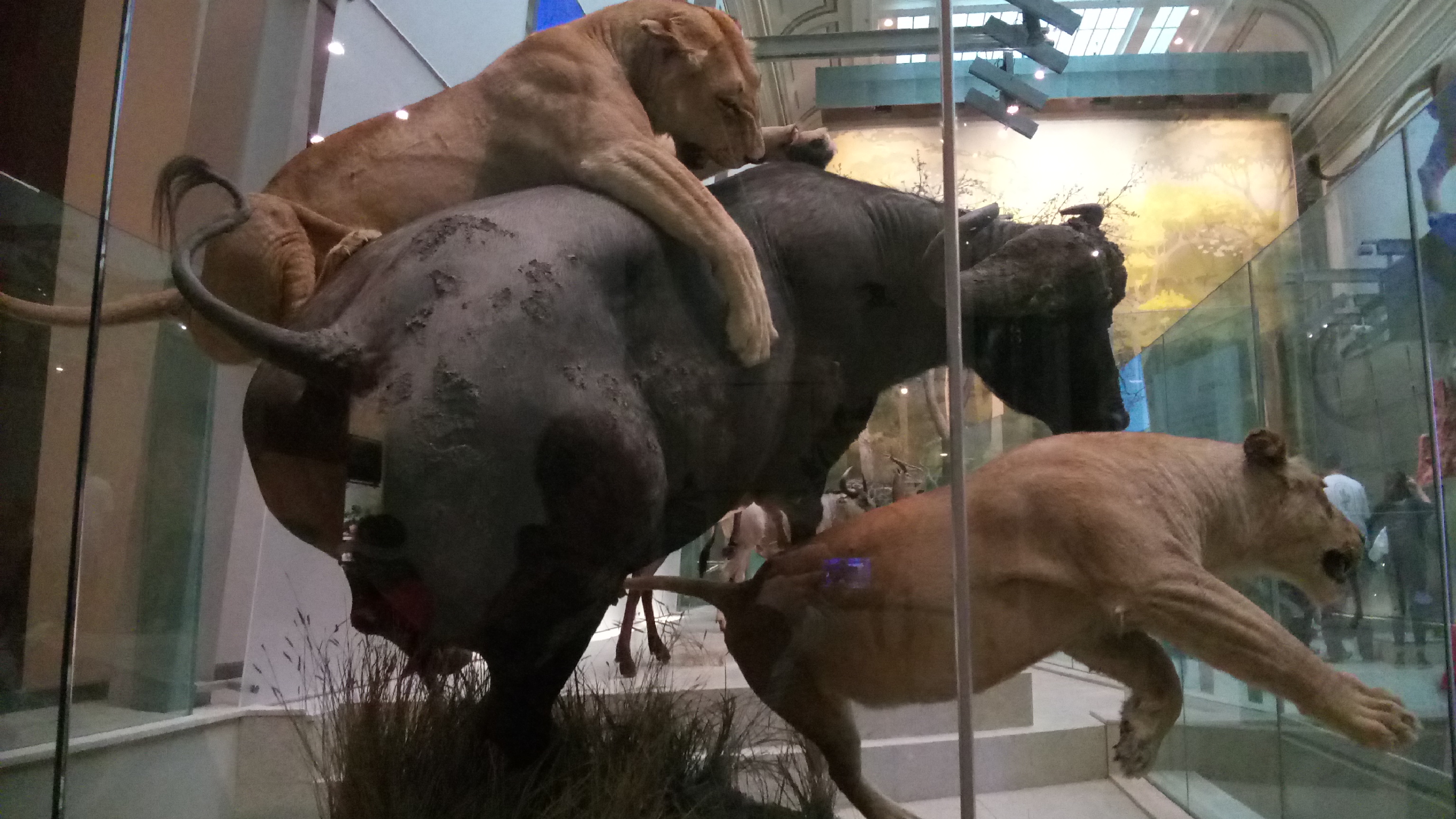
Beautiful taxidermy work of lions attacking a buffalo. I patiently waited 15 minutes until the case was clear of visitors for this photo. Photo by Jan Freedman.

Continue reading →

Giant Sequoia at the Natural History Museum

Written by Lu Allington-Jones, Senior Conservator & Chelsea McKibbin, Conservator, at the Natural History Museum, London.

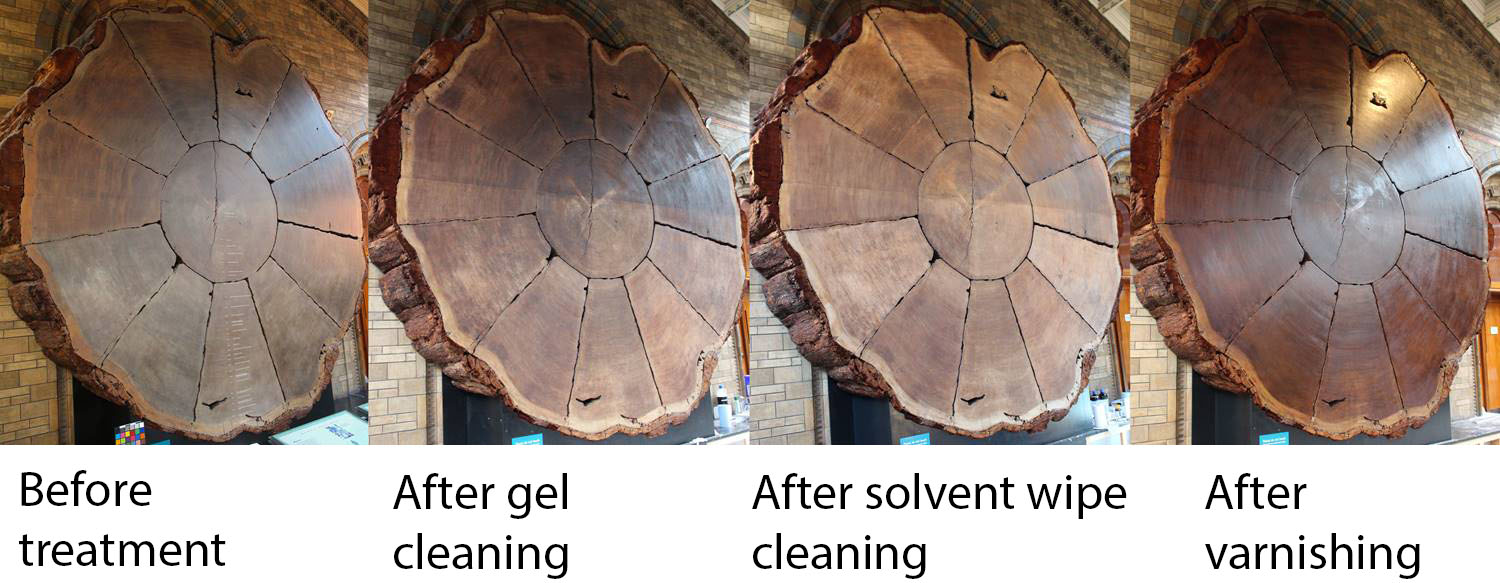
In 2016 a team undertook conservation of the slice of giant sequoia tree which is on display in Hintze Hall of the Natural History Museum in London. Following condition mapping, the treatment involved dry cleaning, removal of the old varnish with solvent gel and applying a fresh coat of varnish. A time-lapse video was taken of the whole process, which spanned 12 weeks, and can be viewed at the end of this post.

Figure 1. The stages of treatment

The Specimen

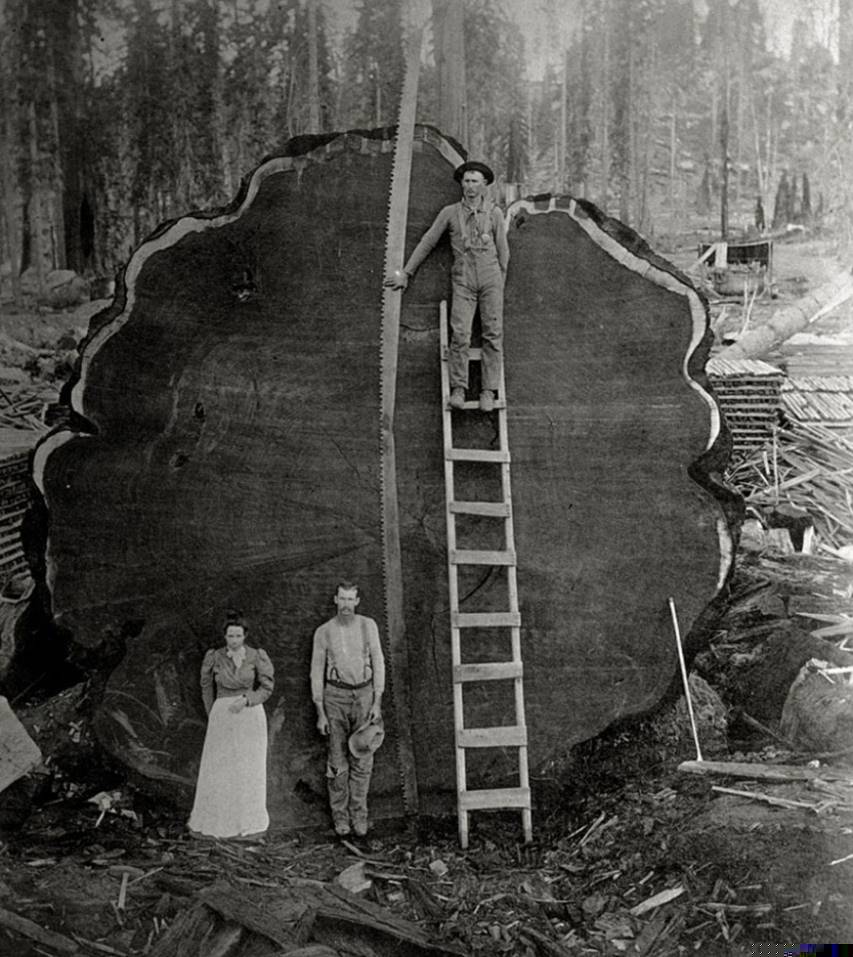
The giant sequoia (from Kings Canyon National Park, California, USA) was felled in 1891 at the age of 1,341 years. It had been 101 m tall and just over 5 m in diameter. Two sections were cut for display. The bottom and slightly larger one was sent to the AMNH while the top section was split into 12 pieces: one central disc and 11 radial segments to enable shipping to the UK. They arrived at the South Kensington site in April 1893.

Figure 2. The tree when it was felled

The giant sequoia section went on display the following year, in one of the bays of the central hall. It was moved in 1902 to stand against the wall dividing the north and central halls, and again in 1971 to its current location on the second-floor balcony.

Continue reading →

NatSCA Digital Digest – April

Compiled by Lily Nadine Wilks, Intern at Museum Development Yorkshire.
Welcome to the April edition of NatSCA Digital Digest!

A note from the Blog editor:

As you know, Digital Digest is our monthly blog series featuring the latest on what’s new in the natural history sector. We normally feature the latest on where to go, what to see and do in the natural history sector including jobs, exhibitions, conferences and training opportunities. With the onset of the lockdown, we can’t go anywhere physically, but perhaps now more than ever, there is still heaps of stuff out there to keep you entertained. I would like to welcome Lily to the Digital Digest team, who had the tough job of compiling her first ever Digest in our first month of lockdown! Many thanks and well done for all of your suggestions.

In this strange and unusual time more and more of us are looking online for fun things to do, read and watch. I have compiled some of my favourites:

Where Can I ‘Visit’?

If you are like me and are missing going out to museums and seeing physical exhibitions, the Smithsonian – National Museum of Natural History have the next best thing with a range of virtual tours through their permanent, current and past exhibits. There are plenty to choose from to keep you entertained.

Chester Zoo did two wonderful live virtual tours of some of their animals throughout the day on their Facebook page and YouTube channel. They are still up and if you didn’t catch them first time round they are definitely worth watching. My favourites are the adorable Red Pandas and the curious Meerkats. Find them all on YouTube here.

What Can I do?

The Natural History Society of Northumbria have issued the North East Bee Hunt to get help recording bee species across the North East. It comes with a handy identification guide, this is something I will be trying in my garden and on my daily outdoor exercise.

If you don’t have time to watch but are able to listen, I have enjoyed the Ologies series with Alie Ward, a comedic science podcast on all things ‘Ology’. I enjoyed Plumology (feathers) featuring Dr. Alison Shultz, the Ornithology curator at the Natural History Museum of LA.

I enjoy a good bit of competition and the University of Cambridge Museum of Zoology have created Open Your Window Bingo! You can get points for looking out your window and spotting Butterflies, Birds, Plants and Extras.

Good Reads?

I enjoyed reading the Late bloomer: the exquisite craft of Mary Delany blog from the British Museum, beautiful visuals accompany a story about Mary Delany who at 72 began producing floral collages. It is mind-blowing that the images are not painted but are paper collages.

April Fools came around once more and I thought the National Trust is definitely my favourite this year. Rangers on Brownsea Island are helping squirrels find their nuts.

As another bit of light relief, Laura Bailey has been sharing the adventures of Moley on Twitter. Moley is a stone seal. I have to agree with Moley on this one.

Before You Go…

If you have any top tips and recommendations for our next Digest please drop an email to blog@natsca.org.

Similarly, if you have something to say about a current topic, or perhaps you want to tell us what you’ve been working on, we welcome new blog articles so please drop Jen an email if you have anything you would like to submit.

Stay safe and keep well.