Ostracod Odessey – Broadcasting the Brady Collection

Written by Dan Gordon, Keeper of Biology, The Great North Museum: Hancock.

The Great North Museum : Hancock is home to many remarkable collections, but one of the most important is perhaps one of the most unfamiliar to our visitors. The Brady collection of Ostracods.

Ostracods, sometimes called Seed Shrimp, are distinctive Class of crustaceans. A shell of two intricately textured valves almost entirely envelopes their shrimp-like bodies, with just a small opening for a cluster of rapidly moving legs to poke out. As their common name suggests, most species are very small, mostly invisible to human eye, but they’re ubiquitous, busily going about their lives wherever there is permanent or temporary water, from the poles to the tropics. Some swarm the world’s oceans in vast planktonic shoals, while others live in the still, dark pools of caves, in garden ponds or even puddles.

They’re poorly known outside of academic communities, which is a real shame, because despite being fascinating creatures in their own right, they have important roles in many aquatic ecosystems, and significantly, they’re commonly encountered in the fossil record, which means that they are particularly important indicator fossils. In addition, the chemical make-up of their distinctive shells tells us about ocean acidity and temperature, which can tell us about ocean warming and climate change.

The collection was the work of George Stewardson Brady, a local man, born in Gateshead in 1832, and one of the people who pioneered the study of these animals at a time when they were relatively poorly understood.  Housed in a row of cabinets, the Brady collection is made up of nearly 3000 microscope slides with up to 100 Ostracods on each. These specimens were collected all over the world, many of them by well-known expeditions such as the HMS Challenger expeditions in the 1870s. It contains many Types, and provides a valuable resource for the study of these animals today.

Continue reading →
NatSCA Digital Digest – December 2022

Compiled by Milo Phillips, Assistant Curator of Entomology for National Museums Scotland.

Welcome to the December edition of NatSCA Digital Digest.

A monthly blog series featuring the latest on where to go, what to see and do in the natural history sector including jobs, exhibitions, conferences, and training opportunities. We are keen to hear from you if you have any top tips and recommendations for our next Digest, please drop an email to blog@natsca.org.

Sector News

Catch up: Museum Action for Climate Empowerment Webinars

The most recent webinar from the Network of European Museum Organisations (NEMO) is now available to watch online if you were unable to make it to the live webinar in November. Henry McGhie or Curating Tomorrow, and NEMO Policy Officer Elizabeth Wilde dig into sustainability insights for the sector, key ways that museums can meaningfully contribute to the United Nations Framework Convention on Climate Change (UNFCCC), and explores a new guide for how museums can measure and report greenhouse gas emissions. All previous webinars can also be found over on the NEMO YouTube channel.

Link to latest webinar: https://www.ne-mo.org/training/nemo-webinars.html

Link to NEMO YouTube channel: https://www.youtube.com/@nemo-networkofeuropeanmuse7452

Registration Open for Field Studied Council January Courses

You can now register for upcoming natural history courses hosted by the Field Studies Council. January workshops include: an introduction to bee conservation, an exploration of botanical folklore, and courses on marine mammal and marine invertebrate biology and ecology. Many are hosted online with FSC Virtual, and costs vary.

Link to upcoming courses: https://www.field-studies-council.org/courses-and-experiences/natural-history-courses/

Continue reading →

Museo Giovanni Capellini – Wunderkammer or Modern Museum?

Written by Michela Contessi, Conservator, Museum University Network, Collezione di Geologia “Museo Giovanni Capellini”, Alma Mater Studiorum – Università di Bologna.

The Geological Collection “Museo Giovanni Capellini” is part of the University Museum Network in Bologna (SMA – Sistema Museale di Ateneo). The museum is in an 18th-century building and includes a core of 16th-century geological and paleontological collections dating back to one of the oldest natural history museums in the world, created by Ulisse Aldrovandi in 1556. Most of the two million specimens now hosted in the museum though, were acquired by Professor Giovanni Capellini (1833-1922), holder of the first chair of geology established in Italy and rector of the University of Bologna. The museum holds important (both historically and scientifically) collections of rocks, fossils and documents from all around the world (Europe, Africa, North and South America), including the 1909 cast of Diplodocus carnegii, which is a popular touristic attraction in Bologna.

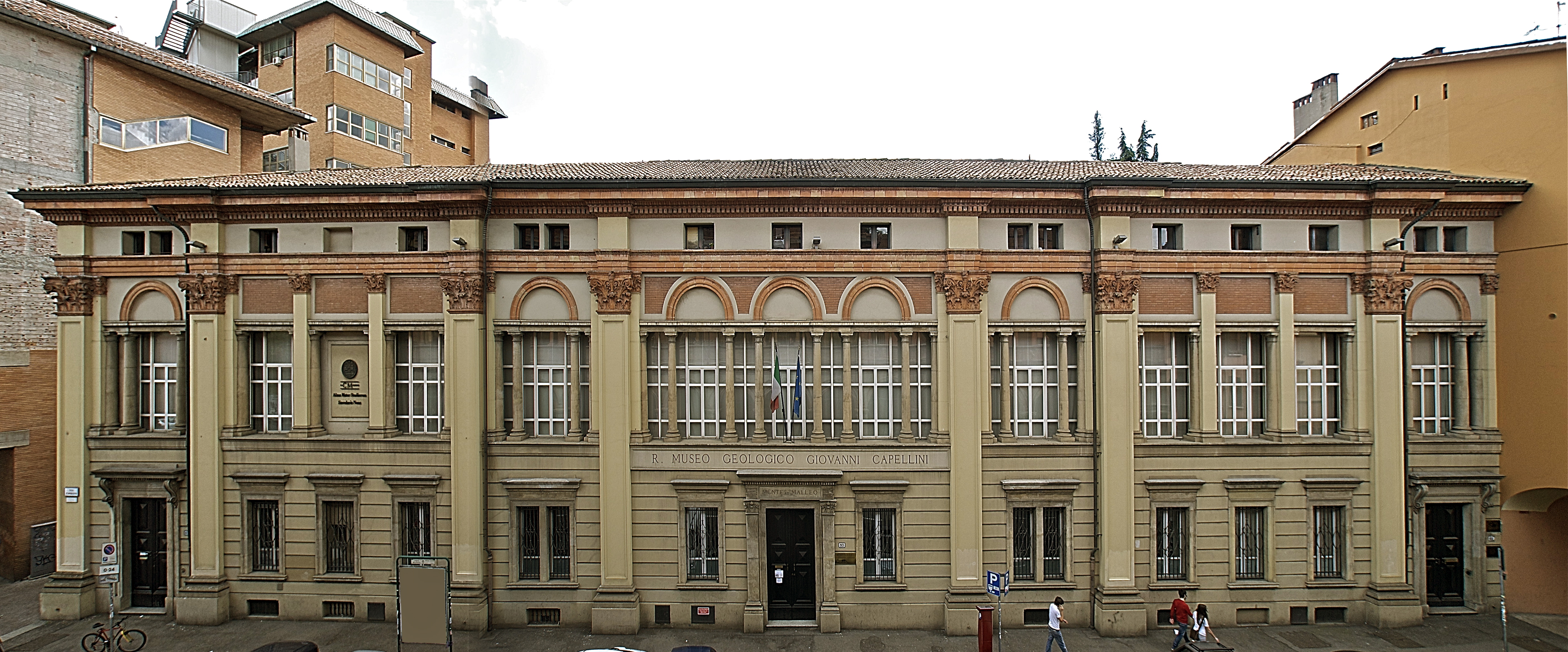
Facade of The Geological Collection "Museo Giovanni Capellini"
Figure 1 – Museum facade. © @Sistema Museale di Ateneo – University of Bologna

However, and here comes the problem…

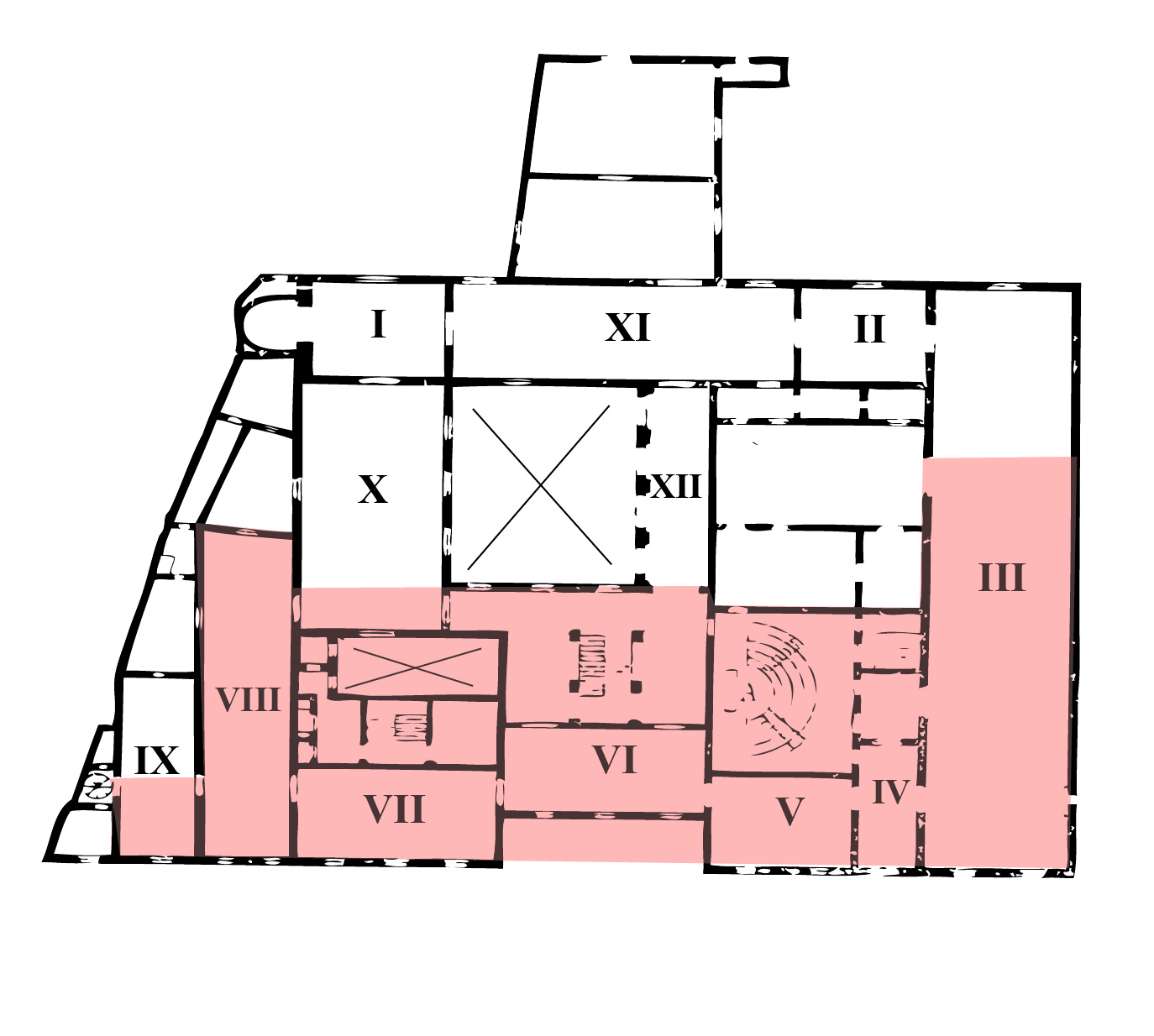
After Capellini’s death in 1922 little was done for the museum, in the early 1960s, when the new-born Institute of Geology and Paleontology was built, the museum building was literally cut in half and the collections crowded into half the original space.

Figure 2 – Museum plan in 1911, shown in red is the current available space.
Figure 2 – Museum plan in 1911, shown in red is the current available space. © @Sistema Museale di Ateneo – University of Bologna

Structural issues arose due to this move, and the museum was closed to the public for almost 30 years. After a major renovation, funded for the ninth centenary anniversary of the University in 1988, the museum was given a new lighting and heating system, reopened to the public and it welcomes several thousand visitors a year since then. The building is now solid (as an old 500-year-old lady can be), but again nothing has been done since, and what looked like a good compromise in the eighties is now obsolete.

Continue reading →

NatSCA Digital Digest – October 2022

Compiled by Glenn Roadley, NatSCA Committee Member, Curator of Natural Science at The Potteries Museum & Art Gallery.

Welcome to the October edition of NatSCA Digital Digest.

A monthly blog series featuring the latest on where to go, what to see and do in the natural history sector including jobs, exhibitions, conferences and training opportunities. We are really keen to hear from you if you have any top tips and recommendations for our next Digest, please drop an email to blog@natsca.org.

Sector News

COP27 and Action for Climate Empowerment
COP27 will be happening in Egypt, in November, as the international meeting of governments to progress climate action. The main programme for the Paris Agreement and the UN Framework Convention on Climate Change (UNFCCC) that relates to the work of museums was already adopted at COP26, in Glasgow. This is called the Glasgow Work Programme on Action for Climate Empowerment and runs from 2021-31. It covers the public-facing aspect of the UNFCCC and Paris Agreement, relating to education, training, public awareness, access to information, public participation and international co-operation on climate change matters. The new programme also sets out a framework for stronger climate action, through effective policies, co-ordinated action, sharing tools and support, and more effective monitoring and communication of climate actions. The new programme specifically points out the important role of a range of sectors, including museums, educational and cultural institutions. Climate action is not just for COP, nor is it just for governments, and the new programme is both a recognition and an invitation for sectors to play their part.

Continue reading →

NatSCA Digital Digest – September 2022

Compiled by Claire Dean, Curatorial Assistant at Tullie House Museum and Art Gallery, Carlisle, and MA Preventive Conservation student at Northumbria University.

Welcome to the September edition of NatSCA Digital Digest.

A monthly blog series featuring the latest on where to go, what to see and do in the natural history sector including jobs, exhibitions, conferences and training opportunities. We are really keen to hear more about exhibitions, conferences and anything you’d like to promote. If you have any top tips and recommendations for our next Digest please drop an email to blog@natsca.org.

Sector News

The theme for SPNHC 2023 at The California Academy of Sciences in San Francisco, is “Taking the Long View”, encouraging all of us to envision the future for our field, our collections, and ourselves. Proposals for Symposia and Workshops are now being accepted. Please visit the Symposia and Workshops page for more information. The deadline for submissions is September 26, 2022.

Papers are currently being sought for the next issue of The Journal of Natural Science Collections, which is due for January 2023. If you would like to submit an article focusing on natural science collections (for example, decolonising, collections, conservation or education), please do get in touch (editor@natsca.org). More details and past volumes can be seen on our website.

Continue reading →