NatSCA Digital Digest – October

Compiled by Dr Emma Nicholls, Deputy Keeper of Natural History at the Horniman Museum and Gardens.
What Should I Read?

You may or may not own/have heard of ‘Dinosaurs, How They Lived and Evolved‘ by Dr Darren Naish and Dr Paul Barrett, but either way the good news is there’s now a literally-just-released-second-edition, which is the most up to date a (printed) book can possibly be really. There is a lot of talk about it already but my tuppence is- I have a copy and it’s brilliant. That description fully extends to the captivating cover art by Bob Nicholls of Paleocreations, featuring a hungry Tianyulong (that’s a dinosaur, in case you weren’t sure).

I came across a charming article about getting children into natural sciences recently called ‘Kids and caterpillars: Fostering a child’s interest in nature by rearing Lepidoptera (moth and butterfly) larvae‘. I’m not suggesting we all go out and start rearing leps, but in an age where human lives are ruled by technology, it’s a beautiful story and heart warming example of an intra-familial cross-generational citizen science project by an Assistant Curator at the Carnegie Museum of Natural History and his son.

Continue reading

Crochetdermy® at the Horniman

Written by Dr Emma Nicholls, Deputy Keeper of Natural History at the Horniman Museum and Gardens.

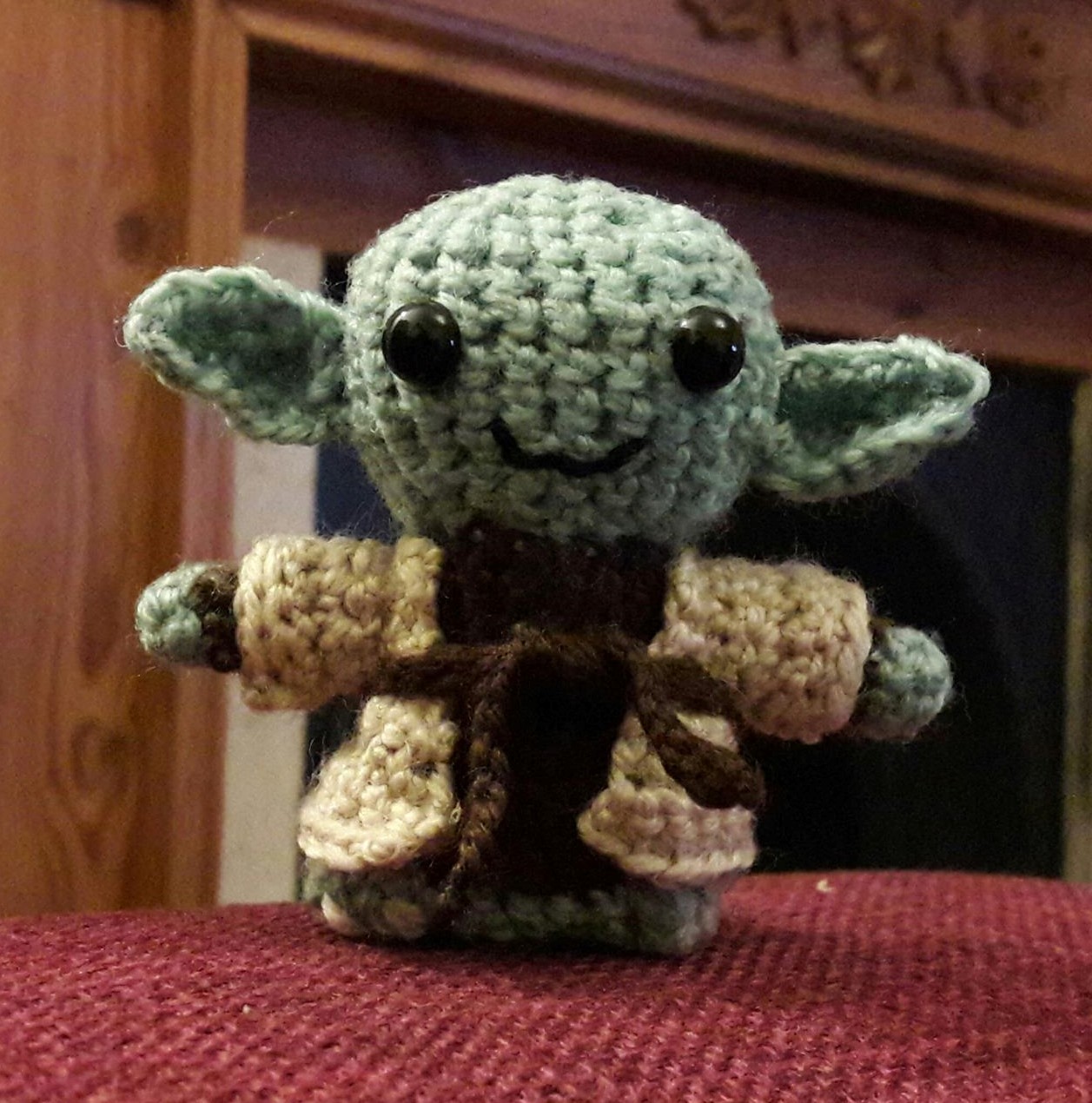
We all have our hobbies, though some are definitely more gloat-worthy than others. Personally, I do have some respectable things on my list like visiting other natural history collections and reading history books, but then I also have less conventional interests like attending Destination Star Trek, and building model WWII airplanes. Whatever makes you happy, I say! Last Christmas I got a new hobby- I was given a Star Wars crochet set and, having wiled away the cold winter nights using it to learn how to knot wool into shapes*, I used my new found ‘skills’ to make this awesome, if far from perfect, crochet Yoda for my sister’s birthday. I was pretty chuffed with myself to be frank**, but if you happen to know my sister, don’t look at Yoda’s cloak too closely next time you pop round to see her.

My first crochet project; A little Yoda for my sister. © Emma Nicholls.

It is through the eyes of someone with this specific level of skill (loose term in my case) that I introduce you with awe to the new installation in the Inspired by Nature temporary exhibition space at the Horniman Museum and Gardens. When I first saw the lioness peering out over the Natural History Gallery, I let out an audible and involuntary ‘wow’. The exhibition, by artist Shauna Richardson, is called EVOLUTION of The Artist and the Exhibited Works. The exhibition comprises seven 3-dimensional sculptures, and one ‘skin’; a baboon that hasn’t been stuffed in order to show, in part, the process of how her sculptures have been created. Shauna devised the term ‘Crochetdermy®’ as an obvious yet genius amalgamation of the words ‘crochet’ and ‘taxidermy’ to describe her sculptures, which it does really rather well I’d say. The skill required to produce these life-size pieces, speaking from the bottom rung of the crochet skill set ladder, is phenomenal (and I think people on much higher steps than I would have to agree). You can see the muscles in the lioness’s neck, the facial features are as realistic as you like, and the size and impact of the pieces on the visitors is obvious, whenever I walk past.

Continue reading

So You Think You Know About Dinosaurs?

Ben Garrod’s new book series could be a hit with audiences of all ages.

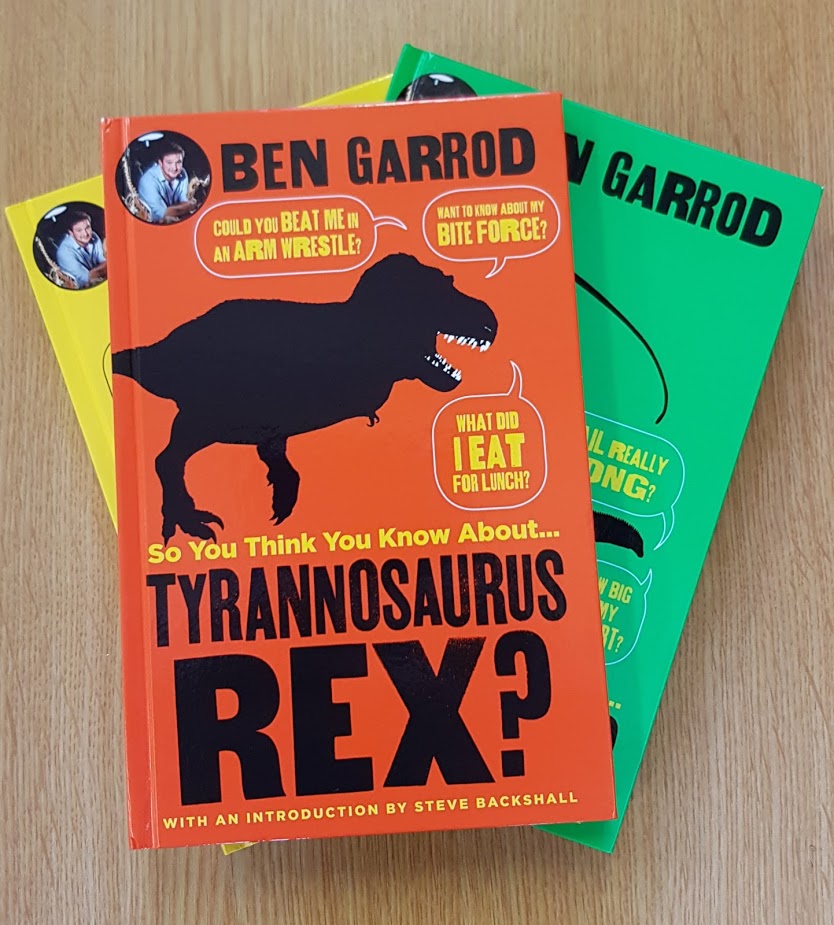
So you think you know about dinosaurs? The evocative title perfectly reflects the contradictory upbeat attitude and challenging facts of Ben Garrod‘s series of dinosaur books for children. Each book is focused on a different dino species and is chock full of hard facts and science aimed at enthralling, teaching and challenging kids to think for themselves. While at an absolutely ANCIENT age of 23 years I am perhaps not the demographic that Ben is aiming at, nonetheless I immensely enjoyed these charming books and surprised myself by learning a lot about Triceratops, Diplodocus and Tyrannosaurus Rex.

Continue reading

Collections 2030: What’s Next for Museum Collections?

What does the next decade look like for museum collections in the UK? This is the question that the Museums Association’s new research project, Collections 2030, is asking.

Over the course of this year, we’ll be working with museum workers, researchers and users to think about the big issues that the sector needs to have on its radar as we plan for the next decade. What trends do we need to adapt to? Will the way that we treat and value collections change? What are the implications of a new generation taking charge in our museums? And will we have the infrastructure that we need not only to pass on collections, but to make them valued by the wider public?

When asked about the future, it can be tempting to let our imaginations run away with ourselves.

But if we’re going to consider what museum collections might look like in 12 years or so, it’s worth casting our minds back the same distance. Over that period, technological changes have been huge, and have led to much experimentation in museums but not always greater impact. The financial crisis has radically changed the workforce and business model for many museums, with major implications for collections knowledge and management.

But our museum collections themselves can seem oddly absent from this picture of change.

Collections have not grown much, and to the extent that ‘pure’ collections issues enter into our discussions, we have seen a period with much to talk about. But not a huge amount of change in practice, about disposals, about storage, about where to put everything, and occasionally, and with much trepidation, whether we should give some of our stuff back to those who made it.

Continue reading

NatSCA Digital Digest – April

Dear Digital Digest-digesters, it has been an extremely busy month but there are just enough hours in the month to put out the April edition. Continue reading for a round up of all the things you need to know…

What Should I Read?

After much to-ing and fro-ing and panicking from various factions, it has been announced that “accredited museums and galleries will be granted an exemption in legislation… that bans the trade of elephant ivory in almost all circumstances”. This is great news for museums. Read the full story on the Museums Association website here.

There has been a lot of coverage of the dinosaur tracks found in Scotland, but if you missed it all, here’s what the BBC had to report. Both sauropod and theropod tracks are present and they’ve gotten everyone all excited.

Wildlife Photographer of the Year is in the news for another year as another photographer falls foul of either not reading, or else ignoring, the rules. The anteater in one of the winning images has been investigated and concluded to be a taxidermy specimen. The image was therefore disqualified and the photographer told to er… get stuffed.

Continue reading