NatSCA Digital Digest – October 2024

Compiled by Milo Phillips, Digitisation Coordinator at the Royal Botanic Garden Edinburgh.

Welcome to the October edition of NatSCA Digital Digest.

A monthly blog series featuring the latest on where to go, what to see and do in the natural history sector including jobs, exhibitions, conferences, and training opportunities. We are keen to hear from you if you have any top tips and recommendations for our next Digest, please drop an email to blog@natsca.org.

Sector News

Forensic Solutions to Pangolin Poaching

Does your collection include pangolins? Museum pangolins requested in an effort to build a stable isotope database.

The plight of the pangolin and intensification of poaching for traditional medicine is well-publicised. There is an urgent need for new forensic solutions to this crisis that transcend disciplines. The Scottish Universities Environmental Research Centre (SUERC) are seeking small scale samples from any and all pangolin species held in UK museums. Of particular interest currently is the Philippine pangolin (Manis culionensis).

The project aims to develop a robust, multi-isotope provenancing map which will make it possible to determine where specific confiscated scales are poached. It will do this using stable isotopes and spatial markers such as trace metals. The team at SUERC are happy to travel for in-house destructive sampling or can provide postage materials if the curators and collection managers would prefer to take samples themselves.

For details, please contact Ruth Lewis-Smith (r.lewis-smith.1@research.gla.ac.uk) at the University of Glasgow.

Continue reading
Welcome to a ’Wild, Wonderful World’ at the Natural History Museum Denmark.

Written by Bethany Palumbo, Head of Conservation, Natural History Museum Denmark.

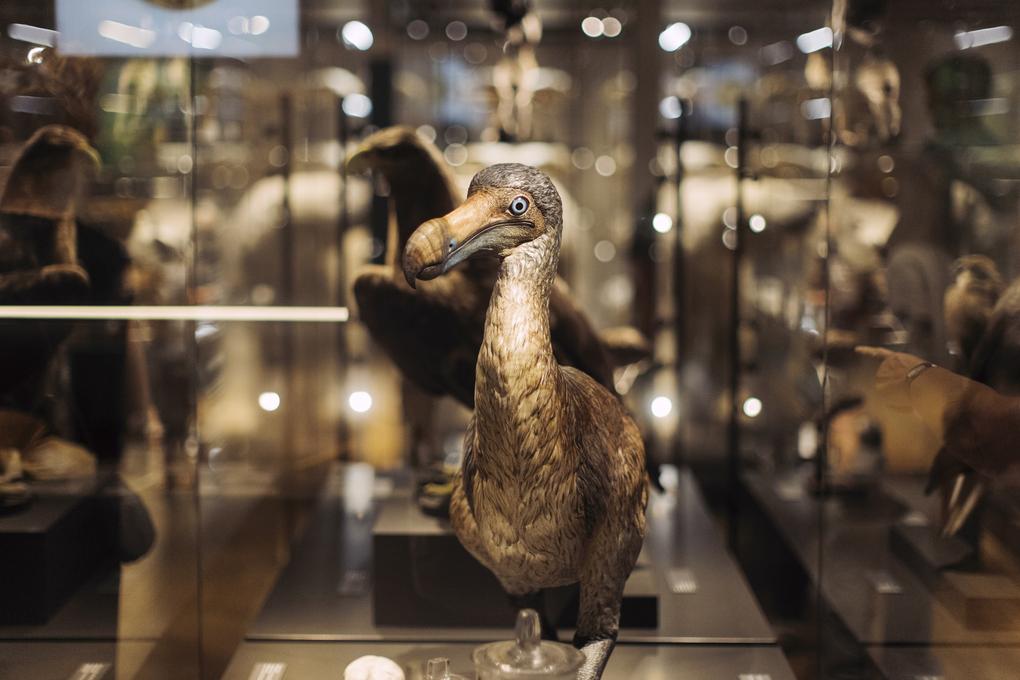
Dodo Model at the Wild, Wonderful World Exhibition (© Andreas Haubjerg NHMD)

In June 2024, the Natural History Museum Denmark opened a new temporary exhibition titled ‘Wild, Wonderful World or ‘Vilde, Vidunderlige Verden’ in Danish. The exhibition presents the colourful, authentic stories behind specimens, and introduces new perspectives on how to think about nature and the significance of the natural history collections.

For the past several years, temporary exhibitions at the museum had all been loaned exhibitions from other institutions. We decided that this one would instead be entirely from our own historical collections, with some of the specimens on display dating as far back as 400 years. This blog post will present 3 fascinating object stories from the exhibition that I am especially excited to share.

Continue reading

NatSCA Digital Digest – September 2024

Compiled by Olivia Beavers, Assistant Curator of Vertebrate Zoology at World Museum, National Museums Liverpool.

Welcome to the September edition of NatSCA Digital Digest.

A monthly blog series featuring the latest on where to go, what to see and do in the natural history sector including jobs, exhibitions, conferences, and training opportunities. We are keen to hear from you if you have any top tips and recommendations for our next Digest, please drop an email to blog@natsca.org.

Sector News

GCG 51st Winter Seminar and AGM – Call for Abstracts Now Open

The Geological Curators Group have announced the details for their Winter Seminar Reciprocal Relationships: how can partnerships help us and our collections develop?  and AGM taking place at Oxford University Museum of Natural History 11 – 13th November 2024. The dates include an evening icebreaker, presentations, workshops, AGM, conference dinner and a field trip.

The deadline for abstracts is October 14th 2024. Please follow the link for further details: https://www.geocurator.org/events/180-agm51 .

Continue reading

Bryozoans on the Move: Trials and Challenges of Packing Collections.

Written by Abbie Herdman, Curator of Invertebrates (Non-Insects), Natural History Museum, London.

The Natural History Museum, London (NHM) is currently undertaking one of the biggest collections moves in history, around 38 million specimens total (with 28 million moving off site). A diverse range of collections are expected to move to the new site in Reading including fossils, wet, dry, taxidermy and osteological specimens. This blog will focus on some examples and challenges faced when preparing the bryozoan collections to move.

Bryozoans are an astounding yet little known phylum of predominantly colonial aquatic invertebrate animals, found in both freshwater and marine ecosystems. Known as the ‘moss animals’, for a long time, they were thought to be plants which still confounds the record of this group in aquatic collections due to their growth patterns encrusting on rocks, as seaweed-like and sometimes as gelatinous blobs. There are bryozoan reefs which support diverse marine species, they are recognised bioindicators in aquatic habitats and are ‘blue carbon’ stores (Porter, J, S. et al., 2020).

Continue reading

Creating a New Diorama at the Booth Museum of Natural History

Editors note: This is the second of two concurrent blogs about the new diorama at the Booth Museum. Click here to read the first and find out more about how the diorama was created.

Written by Su Hepburn, Head of Learning & Engagement, Brighton & Hove Museums.

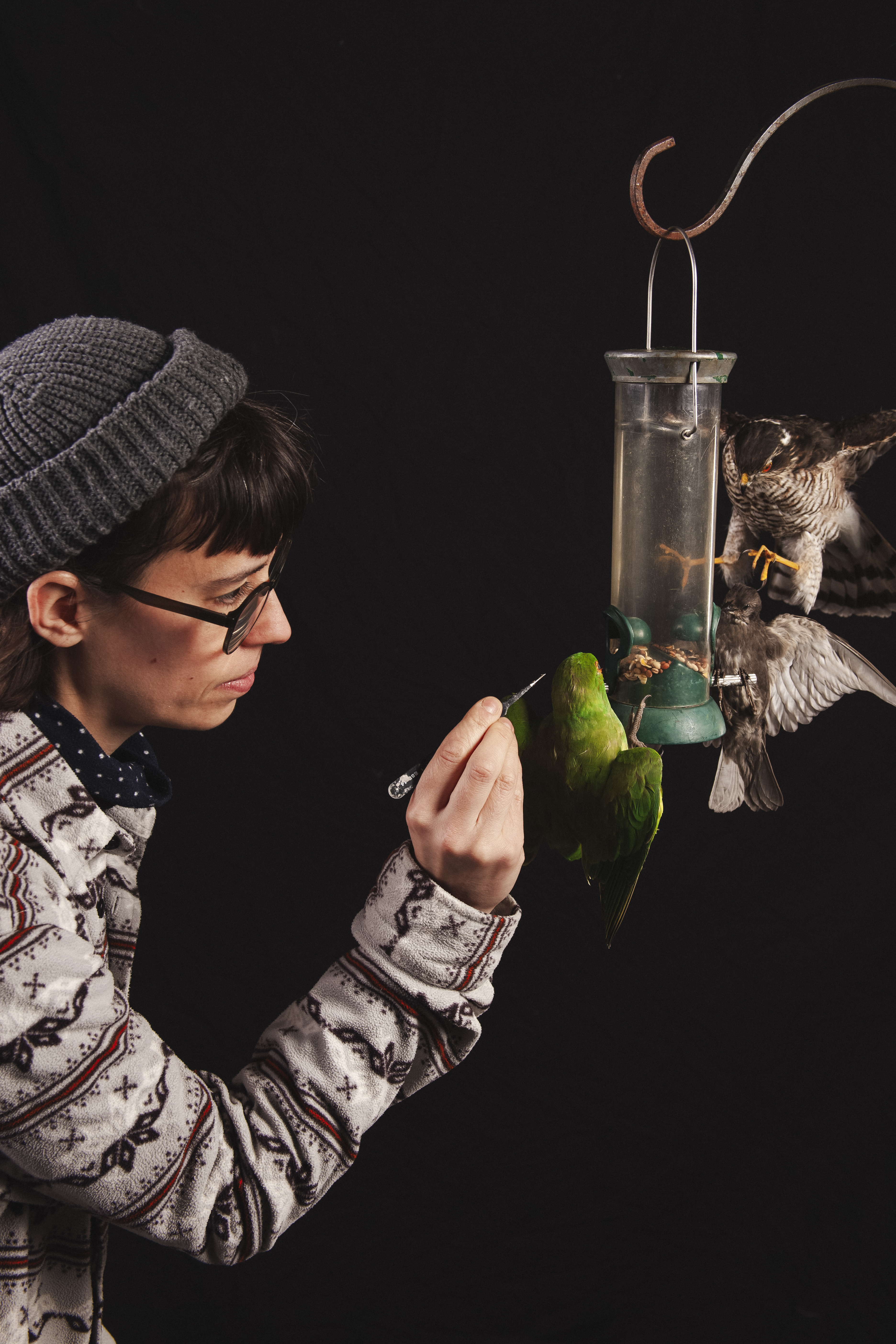
Jazmine Miles-Long, Taxidermist © Laurence Dean Photography

Why a new diorama?

In the autumn of 2022, we started our ‘Discover our Dioramas’ project at the Booth Museum of Natural History, part of Brighton & Hove Museums. Funded by an Esmée Fairbairn Collections Fund of £50,000 we set about building the first natural history diorama at the museum in 92 years. This was a significant project for a museum whose Victorian creator Edward Booth had lined every wall with dioramas of birds. Dioramas are an ideal way of storytelling. They are visual and can get a lot of key information to audiences without the need for words.

Alongside this we were also given £3000 from Rampion Windfarms to research and display more information about people especially women involved in the museum’s history. 

These projects gave us the time and space to be playful and to make friends. To impact on our audiences, our staff, our collections, and our future practices. It has brought joy to the museum, visitor and staff alike. 

Continue reading