Vertebrate Collections of the Institute of Biology, UNAM, Move to the New Building of the National Biodiversity Pavilion in Mexico City.

Written by Fernando A. Cervantes, Professor and Curator of Mammals, Department of Zoology, Instituto de Biología, UNAM.

Mexico is a megadiverse country and has 10% of the world’s species. The Institute of Biology of the National Autonomous University of Mexico (IBUNAM) houses the National Biological Collections (NBC), which contain the largest and most important representation of museum specimens of Mexican biodiversity in Mexico. These include 10 zoological collections, a herbarium, and a botanical garden (Zambrano and Reynoso, 2003). Among the highlights are the National Insect Collection (CNIN), with more than 3,000,000 specimens, the National Herbarium (MEXU), with more than 1,500,000 specimens, and the living collections of the Botanical Garden. They all collaborate in the elaboration of the national biological inventory and their specimens provide knowledge on the presence, distribution, and evolution of biological diversity (Cervantes et al. 2016).

   The NBC are located at the IBUNAM facilities in the Ciudad Universitaria campus, south of Mexico City, Mexico, where they have been for approximately 22 years now. However, the rapid growth in the number of specimens in each of the collections over the last few decades has meant that the space in which they are currently housed is no longer sufficient. At the same time, the number of academic personnel associated with the NBC, students, equipment, and materials have grown in parallel and demand the need for more space to allow for the proper functioning of the NBC.

Continue reading
NatSCA Digital Digest – May 2022

Compiled by Claire Dean, Curatorial Assistant at Tullie House Museum and Art Gallery, Carlisle, and MA Preventive Conservation student at Northumbria University.

Welcome to the May edition of NatSCA Digital Digest.

A monthly blog series featuring the latest on where to go, what to see and do in the natural history sector including jobs, exhibitions, conferences and training opportunities. If you have any top tips and recommendations for our next Digest please drop an email to blog@natsca.org.

Sector News

The countdown is on to the SPNCH/NatSCA/BHL Conference 2022, which is being held in Edinburgh and online. Early Rate registration has now closed but a Late Rate registration fee is still available, with NatSCA members eligible for the Standard Member rate. The programme runs from Sunday 5th to Friday 10th June and is available to view here.

If your work involves (or if you are considering) citizen science, community science, or other forms of research collaborations with the public, you may be interested in joining the virtual C*Sci2022 conference, May 23-26th.  Registration is now open and the full programme is available here.

Brighton’s Booth Museum has received funding from the Esmée Fairbairn Collections Fund for an exciting new project to create a modern diorama to reflect changes in UK wildlife since E.T. Booth’s death in 1890. The project will also involve improving their educational offers and increase audience participation. Due to run from 2022-2024, you can find out more about the project here.

Continue reading

‘Marvellous Molluscs’ – Increasing Accessibility, Improving Storage & Unlocking Research Potential At The University Of Aberdeen

Written by Hannah Clarke, Assistant Curator (Collections Access), University of Aberdeen.

In April 2021, The University of Aberdeen’s Zoology Museum, with support from NatSCA’s Bill Pettit Memorial Award, undertook a year-long project to rehouse and improve the accessibility of the University’s mollusc collection.

The collection comprises approximately 2550, mostly British specimens, collected from the 1840s to the 1970s. The specimens were gifted to the museum by former students, academic staff, and amateur shell collectors, they also include several specimens from as far afield as the Pacific, Africa, China, Madagascar, America, and Canada.

The molluscs form part of the University’s extensive Zoology Collections, which are recognised as being of National Significance. As such, we are constantly striving to improve access to these collections, and the ‘Marvellous Molluscs’ Project aimed to do just that.

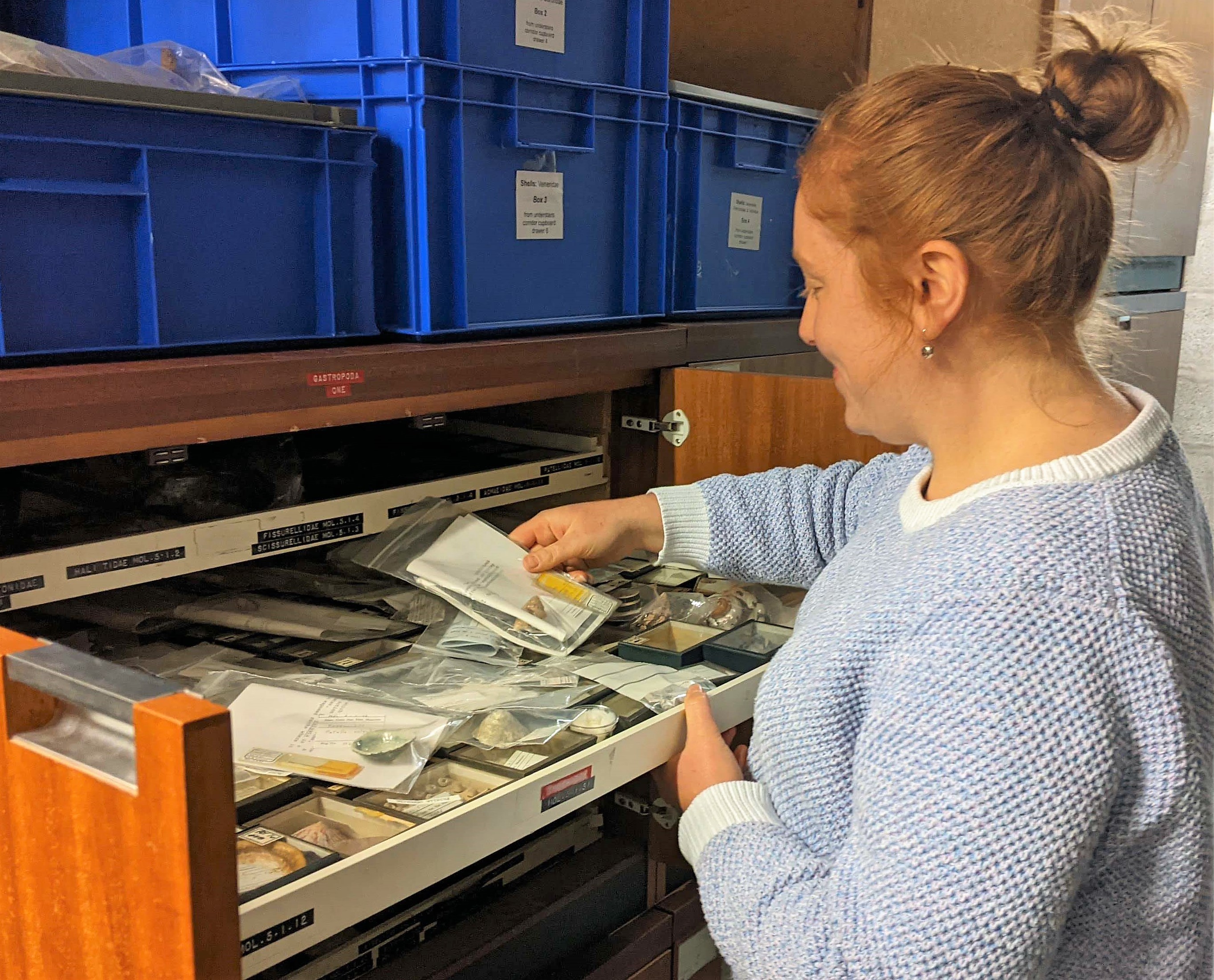
Assistant Curator, Hannah Clarke, identifying storage issues in specimen cupboards.

Having identified the collections both in storage and on display, a project plan was created that would tackle not only the rehousing, but also the documentation of the specimens on the museum database. The majority of specimens were poorly stored several layers deep in drawers, had outdated taxonomy, and lacked any database records or collections data.

Continue reading

Digital Digest – April 2022

Compiled by Milo Phillips, Assistant Curator of Entomology for Leeds Museums and Galleries.

Welcome to the April edition of NatSCA Digital Digest.

A monthly blog series featuring the latest on where to go, what to see and do in the natural history sector including jobs, exhibitions, conferences and training opportunities. If you have any top tips and recommendations for our next Digest please drop an email to blog@natsca.org.

Sector News

SPNHC / BHL / NatSCA Conference 2022

This summer will see the return of the physical NatSCA Conference – a partnership with the Society for the Preservation of Natural History Collections and the Biodiversity Heritage Library. Early Rate registration has now closed but a Late Rate registration fee is still available, with NatSCA members eligible for the Standard Member rate. The programme of events is now available to view.

NatSCA Lunchtime Chats

The new lunchtime chats are for members only and run on the last Thursday of every month. In our last session we heard from Mike Rutherford, Curator of Zoology and Anatomy at the Hunterian in Glasgow all about their investigation of a sperm whale that washed up in Thailand.

In this month’s talk we’ll be having a discussion about upcoming openings on the board of trustees for NatSCA (i.e. the committee), so please join us if you’d like to learn more about what we all do. There will be specific roles opening up so departing trustees will be explaining in more detail what those involve, but there will also be general positions available. Any NatSCA member is eligible to become a trustee; no previous experience or length of time as a member is a requirement, just an enthusiasm for supporting the work of the association. We welcome and encourage all applicants and we are particularly keen to receive nominations that help us represent the diversity of our membership, at trustee level.

Continue reading

Wikipedia, Museum Volunteers And The New Normal

By John-James Wilson, Curator of Vertebrate Zoology, World Museum, National Museums Liverpool.

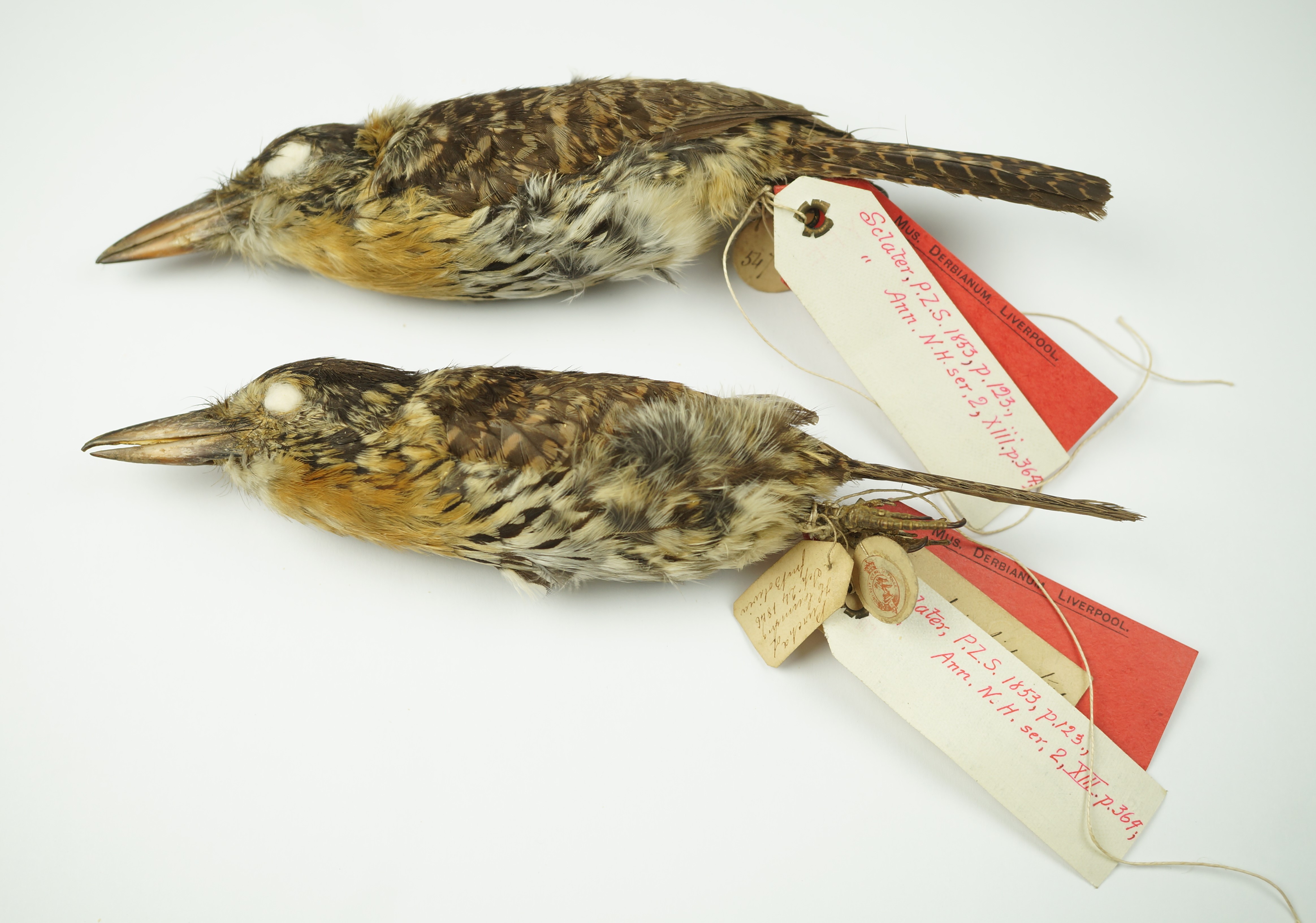
Like most museums across the country, World Museum suspended its volunteer programmes shortly before the first national lockdown in March 2020. This was meant to be a short-term measure but with curators continuing to work hybridly our volunteers haven’t yet returned. Organisations like Volunteer Scotland have advised volunteers to consider if and how they can work remotely.

While some museums had existing remote volunteering activities (see great examples here and here), which saw increased participation, World Museum’s vertebrate zoology collection didn’t. An additional challenge for us has been that remote access to our collections database is limited to staff with a VDI. With the pandemic still with us for some time to come (Chris Whitty has said it will be 5 years) we have started exploring ways to engage both new and long-serving volunteers with the collection online.

During lockdown, Auckland Museum published a Wikimedia strategy citing the provocative 2018 talk by Adam Moriarty which championed the importance of collection information featuring, not solely on museum’s own webpages, but in places like GBIF and Wikipedia. This reinforced our view that we need to improve the collections’ presence in Wikipedia. Wikipedia articles are created by volunteers and can be edited by anyone with a standard web browser, potentially providing a valuable activity for remote volunteering.

Continue reading