Discovering Treasures in the Depths of the Dagnall.

Written by Ruth Cowlishaw of Liverpool School of Tropical Medicine.

This year marks Liverpool School of Tropical Medicine’s 125th anniversary. The school was the first institute of its kind back in 1898, built to help investigate some of the tropical diseases brought back to the busy port city from shipping expeditions and trade. To celebrate such a major milestone an array of events and activities have been planned by the school, including outreach events and fundraising, whilst also giving us a chance to reflect on our history. One such planned scheme was the distribution of internal funds for exciting projects, proposed by staff members that would make a difference in this very special year.
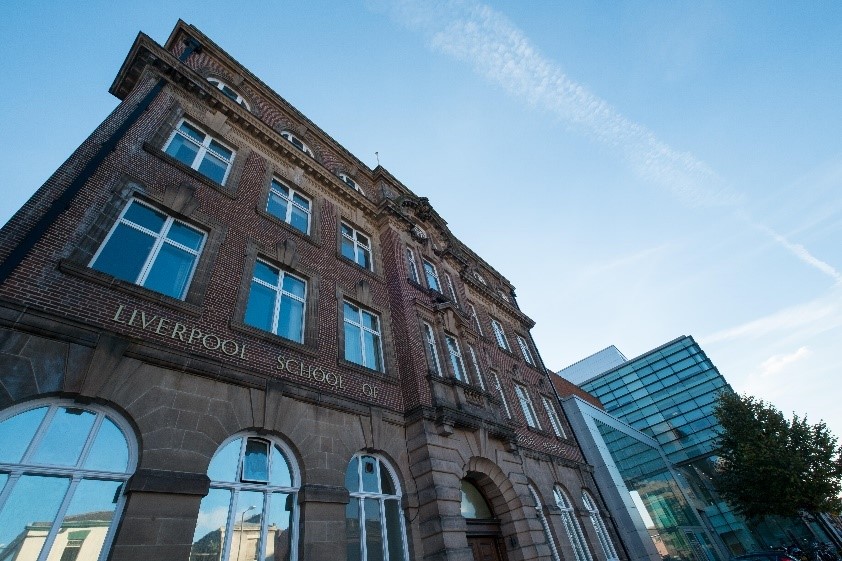
Mary Kingsley Building, LSTM. ©LSTM

The Dagnall Laboratory situated in the Mary Kingsley Building is the main teaching laboratory for the school. Within its walls it houses many historical pathological and entomological samples, from mosquito wings and blood films to seven-meter-long tapeworms. Throughout the years a selection of these samples has been used to help educate thousands of medical professionals, postgraduate students and armed forces personnel. However, a large part of the collection became forgotten and neglected as specimen preservation skills and staff were lost over time. With news of potential funding myself and the team saw an opportunity to rediscover these “lost” specimens and decided to put together a bid with the aim to reinvigorate our collection. The project not only aligned with the 125 Anniversary theme of Heritage and History but also looked forward to the future.

Continue reading

NatSCA Digital Digest – October 2023

Compiled by Milo Phillips, Assistant Curator of Entomology for National Museums Scotland.

Welcome to the October edition of NatSCA Digital Digest.

A monthly blog series featuring the latest on where to go, what to see and do in the natural history sector including jobs, exhibitions, conferences, and training opportunities. We are keen to hear from you if you have any top tips and recommendations for our next Digest, please drop an email to blog@natsca.org.

Sector News

Museum Association Conference 2023: The Power of Museums

There’s still time to register for this years’ Museum Association Conference, being held in Gateshead on 7th-9th November. The conference will explore how we can help our communities flourish by having a positive impact on health and wellbeing, placemaking, economic regeneration and by providing space to reflect on the pressing issues that we face. The cost of living crisis, discrimination and climate change are all having an impact on our communities. What do people need from us in times of upheaval and change? Follow the link to find out about the registration fees and to book your place: https://www.museumsassociation.org/events/conference-2023/

NatSCA Lunchtime Chats

The new lunchtime chats are for members only and run on the last Thursday of every month. This series is supposed to be informal; no fancy equipment is needed; it will be put out over the NatSCA Zoom platform and there is no fixed format. All members will have received a link to join via Zoom (the same link works for all sessions) – if you haven’t, get in touch with membership@natsca.org. Bring your sandwiches and a cuppa and we hope to see you on the day!

Continue reading

Deaccessioning of the Non-Manx Herbarium in the Natural History Collection, Manx Museum.

Written by Laura McCoy, Curator of Natural History, Manx National Heritage.

The Manx Museum, part of Manx National Heritage, is both the national museum and part of the National Trust of the Isle of Man, which is technically not a part of the UK, it is a Crown Dependency. Its collecting focus is to represent the Island and its history, similar to county museums in the UK. No other museum represents our Island better and that is our strength. When accessing our material, researchers are looking for something relating to the Island itself or how it sits in context to a wider geographical area. We are an Accredited museum and, like many others, we have a collections development forum, made up of curatorial and collections management staff, through which any new proposed acquisitions have to be assessed – but this has not always the case. We still have objects within the collection which would not pass our collections development policy today. 

Continue reading

How to Find Ectoparasites on Study Skins and Explore Natural Heritage Shared between Colonial and Provincial Museums

Written by John-James Wilson, Lead Curator of Zoology at World Museum, National Museums Liverpool & Jing Jing Khoo, Postdoctoral Research Associate at Institute of Infection, Veterinary & Ecological Sciences, University of Liverpool.

Selangor Museum was established in Kuala Lumpur by British colonial officials in 1887. A purpose-built museum building, opened in 1907, was designed by Liverpool-born architect Arthur Hubback, but there is a stronger link between Selangor Museum and Liverpool.

Selangor Museum’s early director Herbert Robinson was also born in Liverpool and had worked as an assistant at the Liverpool Museums, now known as World Museum. Selangor Museum wasn’t a large institution, with just three British curators and three museum hunters from Sarawak, one being Charles Ulok. But through the museum’s work, a European knowledge system was imposed onto the local wildlife.

The museum’s work included extensive hunting on the hill and mountains and islands of Malaysia, Thailand and Indonesia. The museum soon ran out of storage space in Kuala Lumpur and specimens were routinely sent to England. Hundreds of specimens were sent to Robinson’s former workplace, World Museum, in 1914.

https://archive.org/embed/from-selangor-museum-to-liverpool

Click link above for 3-minute video about Selangor Museum and its connection to Liverpool made for the Green Representatives Network at Monash University in Selangor.

Continue reading

NatSCA Digital Digest – September 2023

Compiled by Olivia Beavers, Assistant Curator of Vertebrate Zoology at World Museum, National Museums Liverpool.

Welcome to the September edition of NatSCA Digital Digest.

A monthly blog series featuring the latest on where to go, what to see and do in the natural history sector including jobs, exhibitions, conferences, and training opportunities. We are keen to hear from you if you have any top tips and recommendations for our next Digest, please drop an email to blog@natsca.org.

Sector News

Museum Association Conference 2023: The Power of Museums

This years’ Museum Association Conference is being held in Gateshead on 7th-9th November. The conference will explore how we can help our communities flourish by having a positive impact on health and wellbeing, placemaking, economic regeneration and by providing space to reflect on the pressing issues that we face. The cost of living crisis, discrimination and climate change are all having an impact on our communities. What do people need from us in times of upheaval and change? Follow the link to find out about the registration fees and to book your place: https://www.museumsassociation.org/events/conference-2023/

#BlackInNHMs – Black in Natural History Week – Registration is now open!

The 3rd Annual Black in Natural History Museums (#BlackInNHMs) Week runs from Sunday 15th – Saturday 21st October. Anyone can join in: non-black and black colleagues are invited to a series of online events planned for the week. Follow this link to register and find out more: https://www.blackinnhms.org/2023-binhms-week

Continue reading