New loose taxidermy storage at Canterbury Museums

The following is a review by Philip Hadland, of a storage project undertaken by the Canterbury Museums:

Introduction

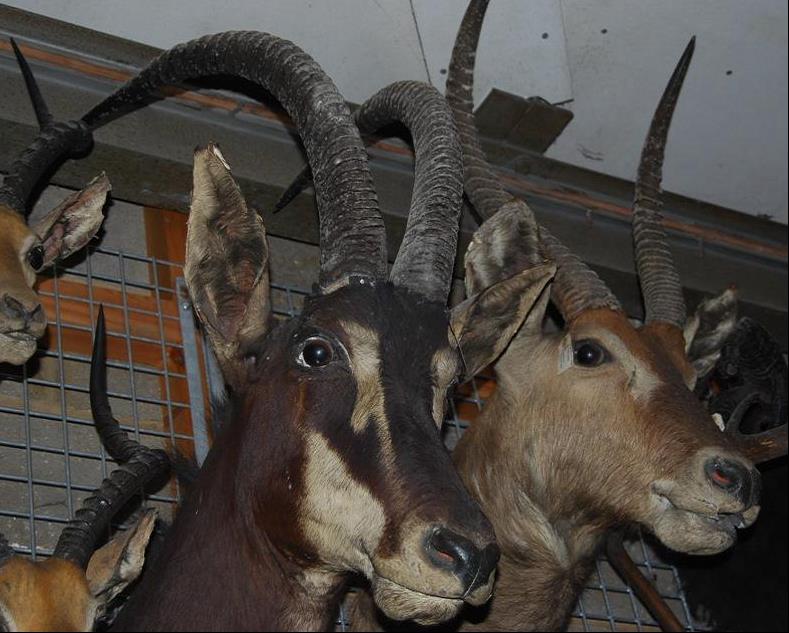
Much of Canterbury Museums taxidermy collection is loose taxidermy and is stored in shelved cupboards without any additional physical protection from handling, movement, or insect pest damage. A pilot project was carried out in 2013/14 to develop a new storage system for this section of the taxidermy collection to improve its care and management.


Aims of the Project

  1. Improve storage conditions and long term care
  2. Improve the management of the collection
  3. Free up storage space


Evaluation of Potential Storage Methods

To get a feel for what might work in practice I sent an email to the NATSCA Mailing List asking for ideas on what works well and what works not so well. Based on the plentiful feedback I received, I evaluated the advantages and disadvantages of the methods suggested.

From this initial research it is clear that there is no single method that can satisfy the needs of the great variety of sizes and shapes of taxidermy that exist in museum collections. Some methods are of course better than others in satisfying similar aims but cost is also an issue.

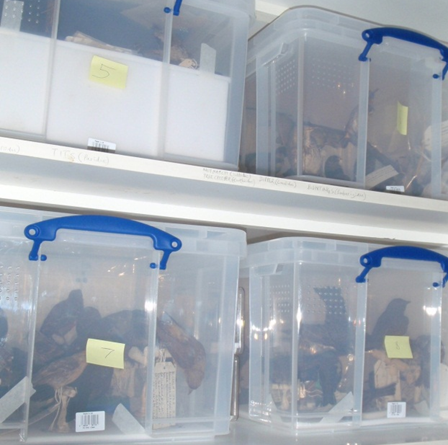
It was decided that a method based on Really Useful boxes was the best solution. The main reasons were the amount of time needed to prepare each box was minimal, there were very good offers available to acquire the boxes cheaply at the time and the sizes available matched up very well to the storage cupboards.


Method
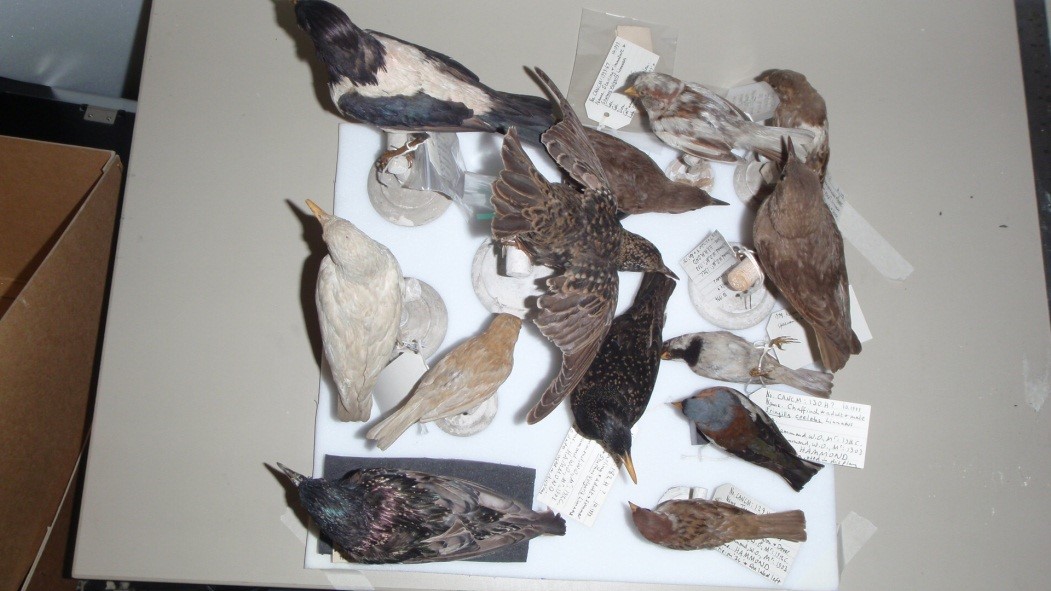
2014-06-03_birds

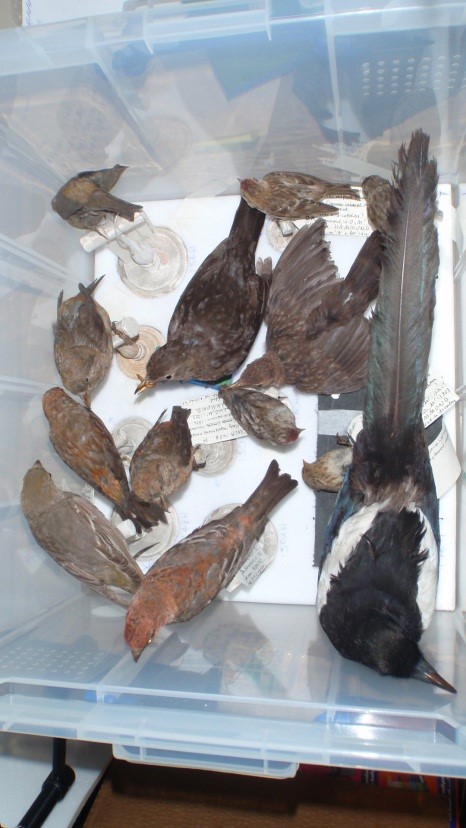
Plastazote was first cut to fit the boxes. Then the bases of specimens were drawn around in pen with the specimen number written alongside and orientation to enable easy identification of what goes where. A list was also kept of the contents of each box.
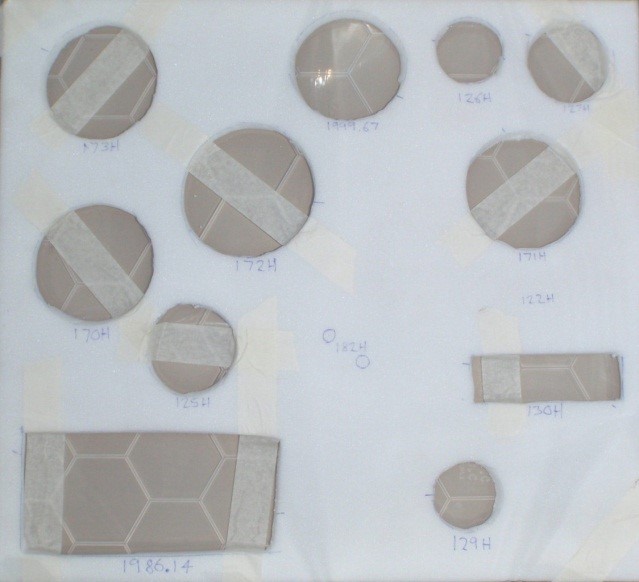
2014-06-03_cut-foam

The foam was cut using a Stanley knife and affixed to the bottom of the box using masking tape.
The birds were then carefully slotted into place and the boxes were labelled and the location documentation was updated.

Before
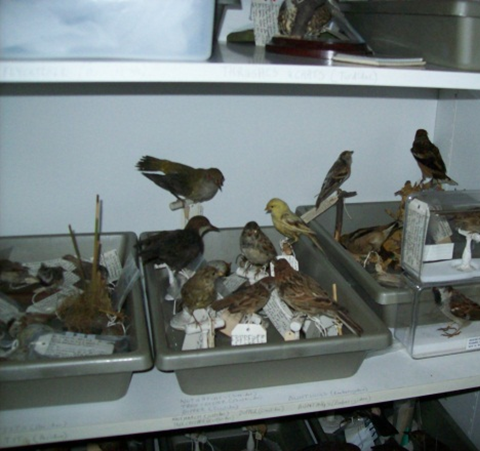
2014-06-03_before

After

2014-06-03_after1

2014-06-03_after2

Resource breakdown and cost

Really useful boxes x 10 £110
Approximate cost of Plastazote used £20
Fixings and adhesives £1
Mothballs £4
Total material cost £135
Curatorial time (including planning) £300
Volunteer time (for photography and documentation 10 hours
Total cost £435


Summary

127 items of taxidermy have been rehoused and are well supported in robust, waterproof and conservation standard materials that are easily moved without the birds toppling and they are transportable. This will limit damage to the collections through preventing unnecessary handling, toppling, and pest attack – increasing their long term care. Each specimen now has a specific box location linked to the database so that it can be found easily when required.


I’d like to thank my colleagues and the NatSCA community for their help with this project.

Bill Pettit Memorial Project – Conservation of historic Taxidermy

Ann Ainsworth (Colchester and Ipswich Museums)

Hannah Clarke (Freelance Conservator)

Ipswich Museum has an important historic collection which dates back to its opening in 1847. A recognised strength of the natural history collection is the historically important Victorian and Edwardian taxidermy of animals from across the globe.

The taxidermy collection is stored in an old building which used to be an old coach depot and later a garage. The space had become very dusty and dirty and a significant mould problem had developed.

one

We followed a very simple methodology of light dusting with soft brushes using a vacuum containing a HEPA filter. This was followed by swabbing with an alcohol/water solution to remove the mould and kill the spores. Where possible specimens were covered or wrapped in polythene to act as a protective cover to protect from dust, provide an external surface for mould to grow on, and to prevent pest damage which is also a potential problem within the stores.

two

The variety of conservation problems, meant that many different treatment processes needed to be used by Hannah. Some of the processes included dry cleaning, wet cleaning, re-adhering, colour matching, re-inserting feathers, removing old varnish with solvents, mitring, sealing with brown gum tape, and applying and buffing wax. New panels of glass and sections of beading had to be sourced and cut to size.

The top panel of the pike case had warped and bowed, as the glass side panels had been broken previously. There were no structural supports on the front inside edges of the case either, meaning that the top of the case was unsupported from the front. The existing beadings on the rear inside edges were not secure, and the metal tacks used to hold the mitred sections of wood in place were very loose. New beading was sourced to match as close to the original as possible and was then colour matched and held in place using new tacks.

Cygnet before conservation

Cygnet before conservation

Cygnet after conservation

Cygnet after conservation

The Bill Pettit Memorial funding went towards payment for the freelance Conservator in terms of time and travel expenses and the purchase of replacement glass and beading for the cases where broken or damaged.

It was agreed that conserved cases would not be returned to store until the planned repair work had been successfully completed. As many of the conserved cases as possible were put on public display in the museum galleries. This has enabled part of the collection not normally seen by visitors to be on display. It has also helped to present a strong message of the Museum Services’ wish to improve the condition of specimens and its storage facilities and helped to raise the profile of the project.

Spicer platypus case after conservation

Spicer platypus case after conservation


NATURAL HISTORY MUSEUM BINGO!

This article is reposted from the UCL Museums blog.

By Mark Carnall, Curator of the Grant Museum of Zoology, UCL

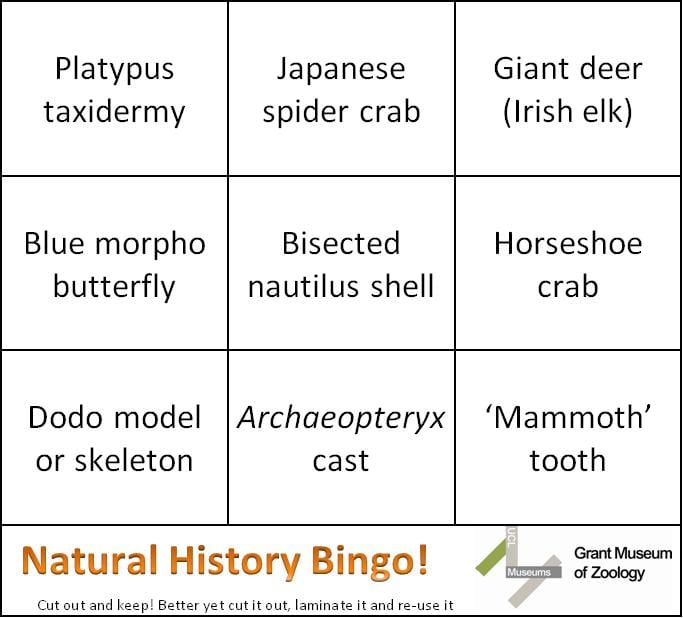
My colleague Jack Ashby alluded to the Natural History Bingo Card in a recent blog post so I thought I’d take the time to present it to the wide world! Natural history museums are funny places. Despite the millions of species of animals and the enormous variation within species between broods, sexes, life stage, populations and seasonal variations you’d expect that you could visit every natural history museum in the World (finances allowing) and never see the same thing twice. You might think that, but the truth is many natural history museums have the same stuff on display whether you’re at the Grant Museum, the Natural History Museum London or in Paris, New York, Prague or Plymouth.

In fact, some specimens are so common, you can go around a natural history museum with this handy NATURAL HISTORY MUSEUM BINGO* and nine times out of ten you’ll have seen most of these specimens before you get to the gift shop. So what gives?

Natural History Bingo Card
Click to embiggernate & cut out and Keep! Natural History Bingo modified from the version in Carnall, M.A (2011): Completely Rethinking the Organisation of Natural History Museums: A Taxonomically Arranged National Collection. NatSCA News:21

I originally published the above figure in a paper looking at why natural history museums are all the same and what, if anything, could be for natural history museums to make the best use of their vast collections. You can tell from this Microsoft Paint produced chart that tongue was firmly in cheek but why does the Bingo hold true (go ahead and try it next time you are museuming)? It’s partly because, unlike other kinds of museums, natural history museums by and large have the same remit and are collecting and presenting the same thing (the natural world). But with so many different species and shapes of organisms why are the same specimens used as the public face of biology (specifically zoology) here? Continue reading

The best natural history specimen in the world (did not get thrown on a fire)

This article is reposted from the UCL Museums blog.

Last week I saw something that had never occurred to me might be possible to see. Through the years I have learned a lot about this object – I knew where it was, I knew where it came from and I certainly know its place in the pantheon of the history of natural history. We even have a cast of it in the Grant Museum.

If you had asked me what the best natural history object in the UK was, most days I would tell you it was this one. I had just assumed that seeing it wasn’t something that ever happened, even for people who run university zoology museums.

The Grant Museum team an a sperm whale jaw at the OUMNH (they're closed for roof repairs)Last Wednesday the staff of the Grant Museum went on an expedition to the Oxford University Museum of Natural History (OUMNH), which is closed for roof repairs until 2014. On a visit to the zoology section a cupboard was opened before us, it was filled with skulls, dried fish and a couple of boxes. As the history of this cupboard was explained – it was Tradescant’s Museum – the oldest in the country – it suddenly dawned on me what was in those boxes. And that we were going to see it.

We were going to see the only soft tissue of a dodo anywhere in the world. Continue reading

Books on the History of Taxidermy

History of Taxidermy

Here are two useful books on the history of taxidermy that went out of print soon after publication have been reprinted and are now available again (in softback only).

Edward Gerrard & Sons – a taxidermy memoir

by Pat Morris

This is an account of the once famous London firm whose work can be seen in many museums from Britain to Australia. They began by specialising in osteological preparations, but by the late 19th century had diversified into taxidermy and model making (particularly as teaching aids in schools).
A speciality of Gerrards was making ‘animal furniture’, an astonishing variety of bizarre objects. You would not believe how many things can be made from a dead elephant! A final chapter reviews the history and closure of Gerrard Hire Ltd, suppliers of mounted specimens for theatrical and photographic work. Stuffed vultures were particularly popular to take to people in hospital apparently.

The King’s Choice

by Pat Morris & Rob Chinnery

This book describes the beautiful taxidermy by George Quatremain (1846-1917). He was well-known to famous artists of his day, and active in Stratford on Avon and Malvern.
Some of his mounted animals were set up in natural surroundings and photographed for calendars. As befits the quality of Quatremain’s work, this book includes some full colour illustrations.