65 Million Years in the Making, Five Seconds to Explain

Written by Callum Smart, a natural history volunteer at Bolton Museum. He works both in the stores, documenting the collections, and in the gallery engaging with visitors using the objects to start conversations. Here he shares his experience of one afternoon with a school group.

It’s Wednesday afternoon at Bolton Museum and I have just finished setting up the fossil touch tray, a selection of ancient artefacts for visitors to get hands on with. A school trip marches through the atrium, passing the gift shop with furtive glances, heading towards the wonderful Egyptian exhibits. The children clutch their worksheets, a scavenger hunt checklist filled with items from around the museum’s galleries. They whisper to each other, checking if they’ve missed anything in the Bolton’s History gallery and making bold claims over what they’ll find in the next room.
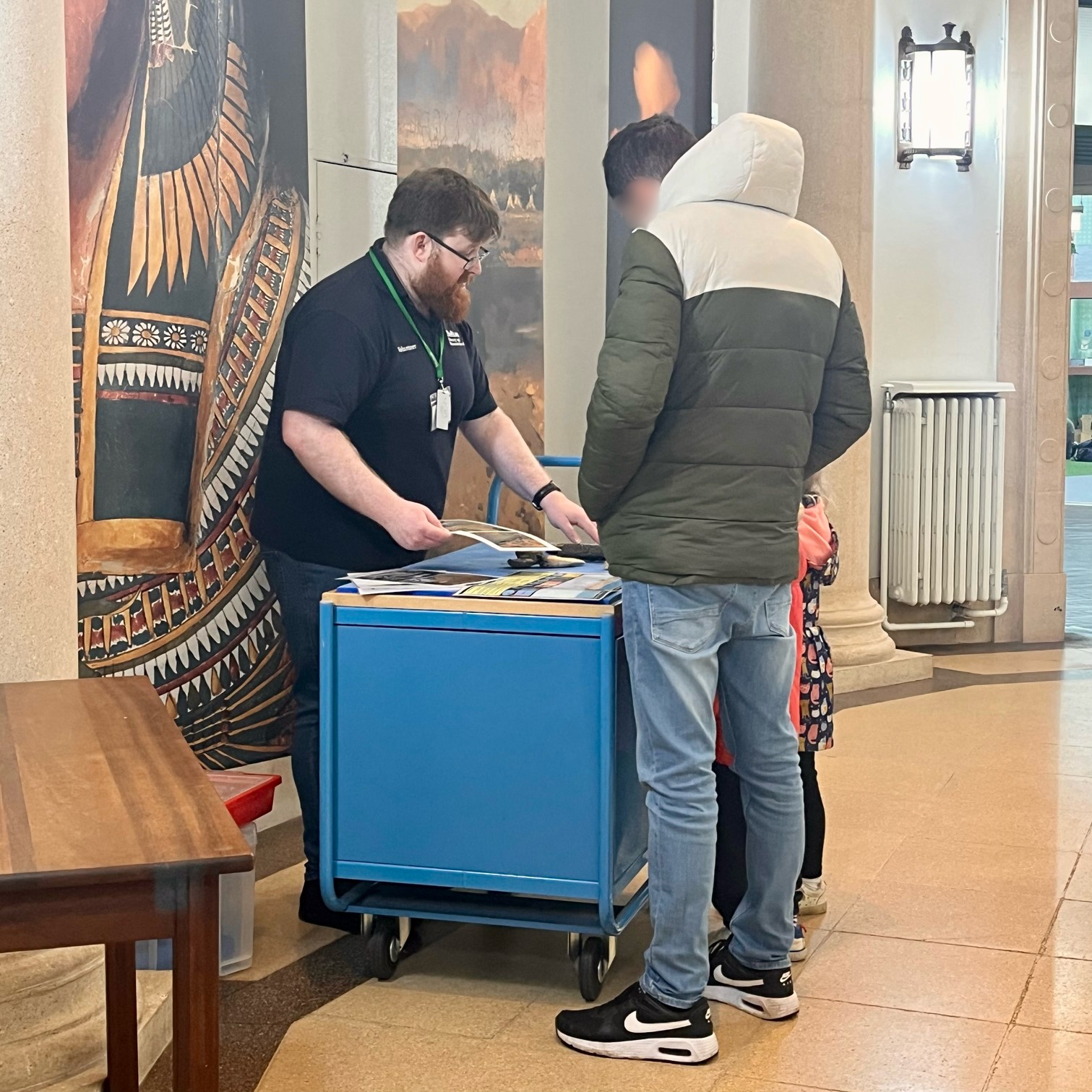
Callum at the object handling table with the fossil touch tray speaking to visitors. © Bolton Museum

A few of them spot the fossils on my trolley and start to stop, blurting out questions, weighing up whether to reach out and touch the strange rocks. I’d love for kids to interact with the fossils, it’s why I’m there. But I also don’t want to distract them from their trip, so I’m grateful when the teacher steers them on. Their teacher asks if I would be able to talk to the children about the fossils when they finish in the Egypt gallery. “Of course,” I say, “I’d be happy to.”

Continue reading

NatSCA Digital Digest – February 2025

Compiled by Ellie Clark, Collections Moves Team Leader at the Natural History Museum

Welcome to the February edition of NatSCA Digital Digest.

Digital Digest is a monthly blog series featuring the latest on where to go, what to see and do in the natural history sector including jobs, exhibitions, conferences, and training opportunities. We are keen to hear from you if you have any top tips and recommendations for our next Digest, please drop an email to blog@natsca.org.

Sector News

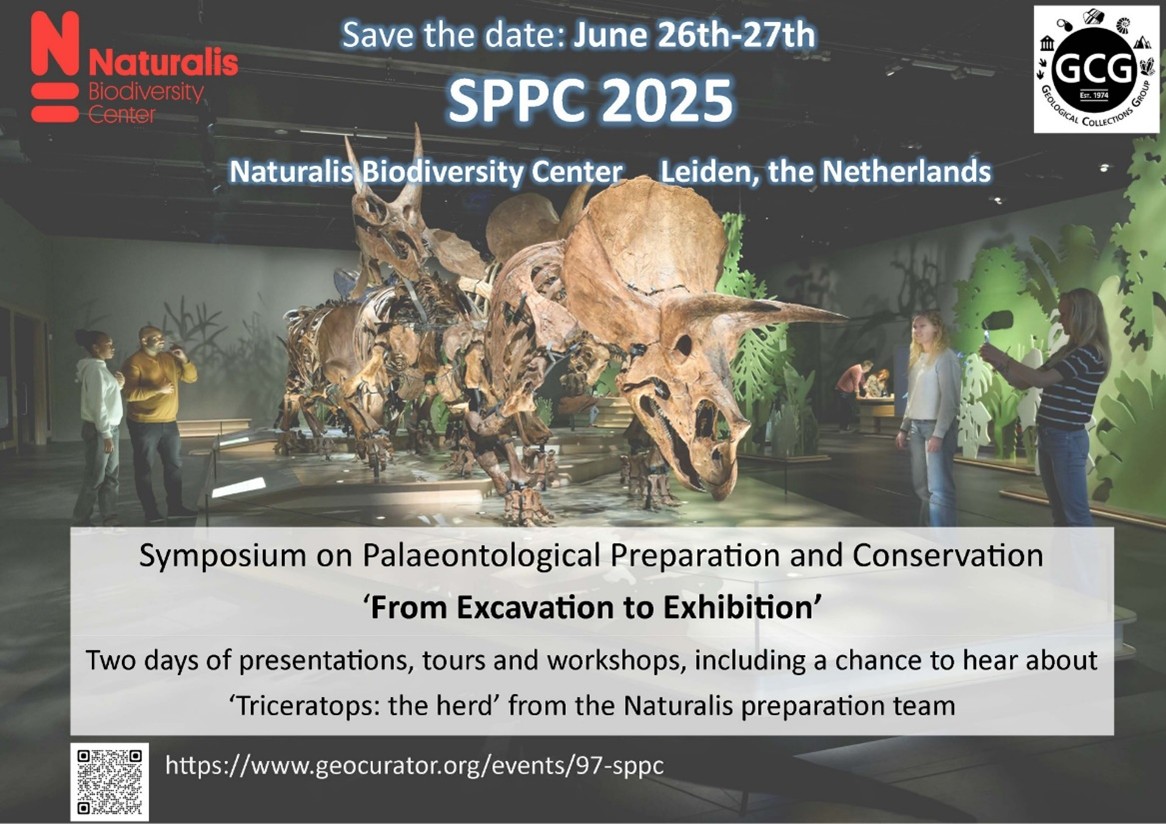
Save the Date: SPPC, June 26th – 27th 2025

The 30th Symposium on Palaeontological Preparation and Conservation will be held in the Netherlands this year on 26-27th June.

The theme will be From Excavation to Exhibition including aspects of the story of how geological collections end up on display in our museums, as well as their conservation and preparation. A call for abstracts and registration is coming soon. For more details visit: https://www.geocurator.org/events/97-sppc

Continue reading

‘Dino Takedown’ at the Natural History Museum of Denmark.

Written by Bethany Palumbo, ACR, Head of Conservation Unit, The Natural History Museum of Denmark.

At the Natural History Museum of Denmark, work is currently underway to prepare and move thousands of specimens to a new building, located in the Botanical Gardens in Copenhagen. One such specimen is ‘Misty’ our beloved 17-meter-long Diplodocus. Misty has been welcoming visitors to the Zoological Museum since 2014 and is a much-loved part of our exhibitions.

Taking this specimen down was symbolic in many ways. It was a goodbye to the old building but also a celebration of the new building and future of the museum. We wanted to commemorate this milestone and so we decided to make the Diplodocus deinstallation into an outreach event called the ‘Dino Takedown’. This would create a rare opportunity for the public to watch the deinstallation process, ask questions and further understand the types of conservation work we do in a museum.

Continue reading

NatSCA Digital Digest – October 2022

Compiled by Glenn Roadley, NatSCA Committee Member, Curator of Natural Science at The Potteries Museum & Art Gallery.

Welcome to the October edition of NatSCA Digital Digest.

A monthly blog series featuring the latest on where to go, what to see and do in the natural history sector including jobs, exhibitions, conferences and training opportunities. We are really keen to hear from you if you have any top tips and recommendations for our next Digest, please drop an email to blog@natsca.org.

Sector News

COP27 and Action for Climate Empowerment
COP27 will be happening in Egypt, in November, as the international meeting of governments to progress climate action. The main programme for the Paris Agreement and the UN Framework Convention on Climate Change (UNFCCC) that relates to the work of museums was already adopted at COP26, in Glasgow. This is called the Glasgow Work Programme on Action for Climate Empowerment and runs from 2021-31. It covers the public-facing aspect of the UNFCCC and Paris Agreement, relating to education, training, public awareness, access to information, public participation and international co-operation on climate change matters. The new programme also sets out a framework for stronger climate action, through effective policies, co-ordinated action, sharing tools and support, and more effective monitoring and communication of climate actions. The new programme specifically points out the important role of a range of sectors, including museums, educational and cultural institutions. Climate action is not just for COP, nor is it just for governments, and the new programme is both a recognition and an invitation for sectors to play their part.

Continue reading

A Remarkable Collection Of Fossil Birds From The Eocene

Written by Andrew Kitchener, Principal Curator of Vertebrates, National Museums Scotland.

In November 2021 National Museums Scotland acquired a remarkable collection of fossil bird skeletons dating from the Eocene, approximately 54.6-55 million years ago. The story of how this collection ended up in Edinburgh is a very long one and began more than 25 years ago. 

Please can you show me your collection of Eocene birds?” This was the question that greeted me when I first met a Mr Michael Daniels more than 25 years ago. Visiting the museum with his wife Pam and his daughter Caroline, who lived in Edinburgh, this meeting would be the beginning of a long friendship and long-term correspondence, which ended sadly in 2021. My answer was “Well I would love to show you our collection of Eocene birds, but we don’t have any.” Michael proceeded to tell me about his remarkable collection of several hundred skeletons and part skeletons that he had discovered in nodules of the London Clay, which had eroded out of the cliffs at Walton-on-the-Naze in Essex. In later years I visited Michael and Pam at their home and got to see the collection in its countless drawers and boxes in his study. I was astonished at the amazing variety of specimens of all shapes and sizes.  Many of the bones were minuscule, requiring great patience and skill to extract from the substrate.

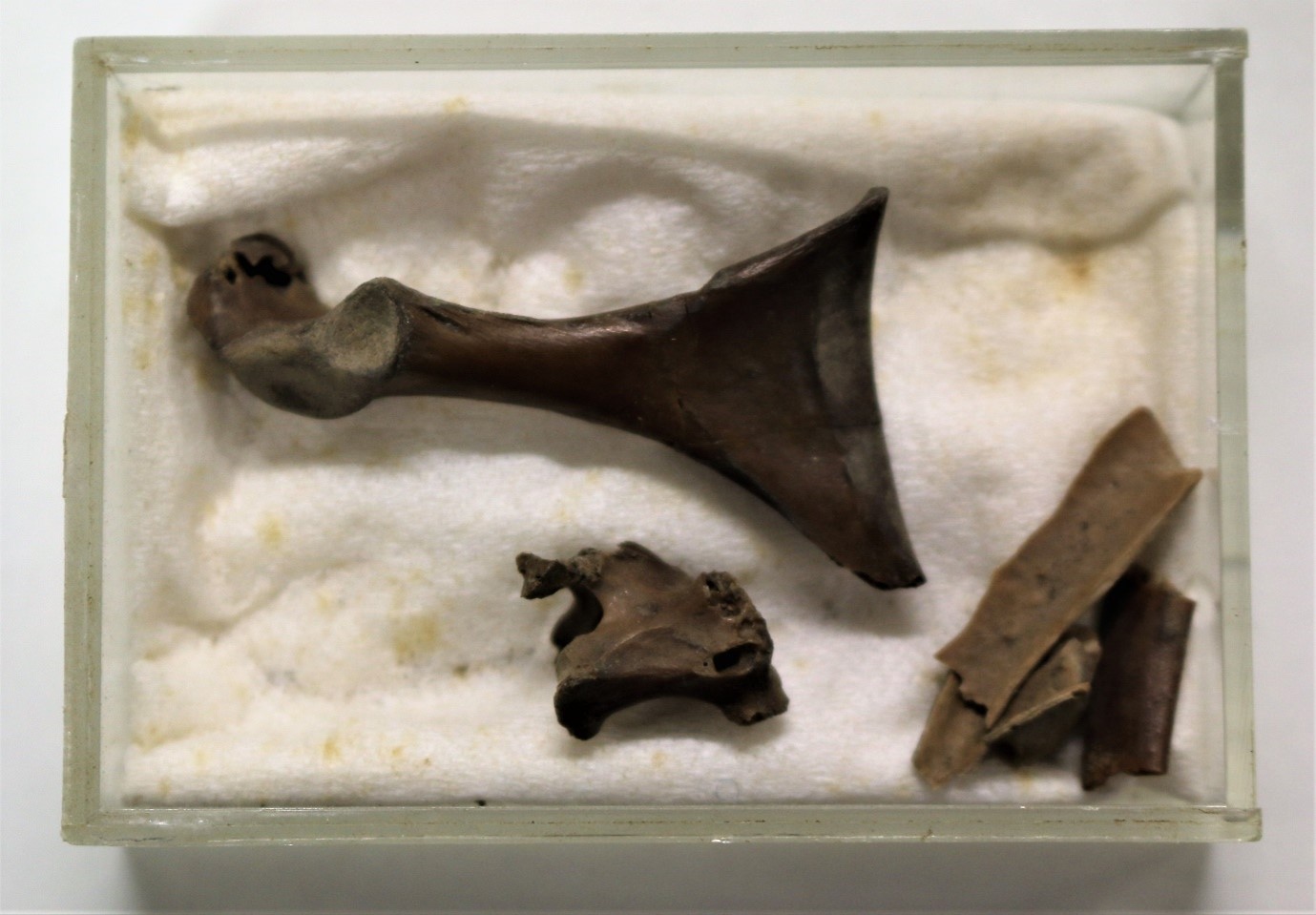
Some of the many hundreds of fossil bird bones from Walton-on-the-Naze © National Museums Scotland

Michael Daniels was a passionate self-taught palaeontologist, who visited various fossil sites outside London and further afield in southern England from his home at Loughton near Epping Forest. He developed a more specialised interest in the Tertiary Eocene London Clay in the early 1970s, having been a founder member of the Tertiary Research Group in 1969. On retirement in 1985 he moved with his wife to Holland-on-Sea, so that he could pursue this interest at Walton-on-the-Naze.

Continue reading