A Remarkable Collection Of Fossil Birds From The Eocene

Written by Andrew Kitchener, Principal Curator of Vertebrates, National Museums Scotland.

In November 2021 National Museums Scotland acquired a remarkable collection of fossil bird skeletons dating from the Eocene, approximately 54.6-55 million years ago. The story of how this collection ended up in Edinburgh is a very long one and began more than 25 years ago. 

Please can you show me your collection of Eocene birds?” This was the question that greeted me when I first met a Mr Michael Daniels more than 25 years ago. Visiting the museum with his wife Pam and his daughter Caroline, who lived in Edinburgh, this meeting would be the beginning of a long friendship and long-term correspondence, which ended sadly in 2021. My answer was “Well I would love to show you our collection of Eocene birds, but we don’t have any.” Michael proceeded to tell me about his remarkable collection of several hundred skeletons and part skeletons that he had discovered in nodules of the London Clay, which had eroded out of the cliffs at Walton-on-the-Naze in Essex. In later years I visited Michael and Pam at their home and got to see the collection in its countless drawers and boxes in his study. I was astonished at the amazing variety of specimens of all shapes and sizes.  Many of the bones were minuscule, requiring great patience and skill to extract from the substrate.
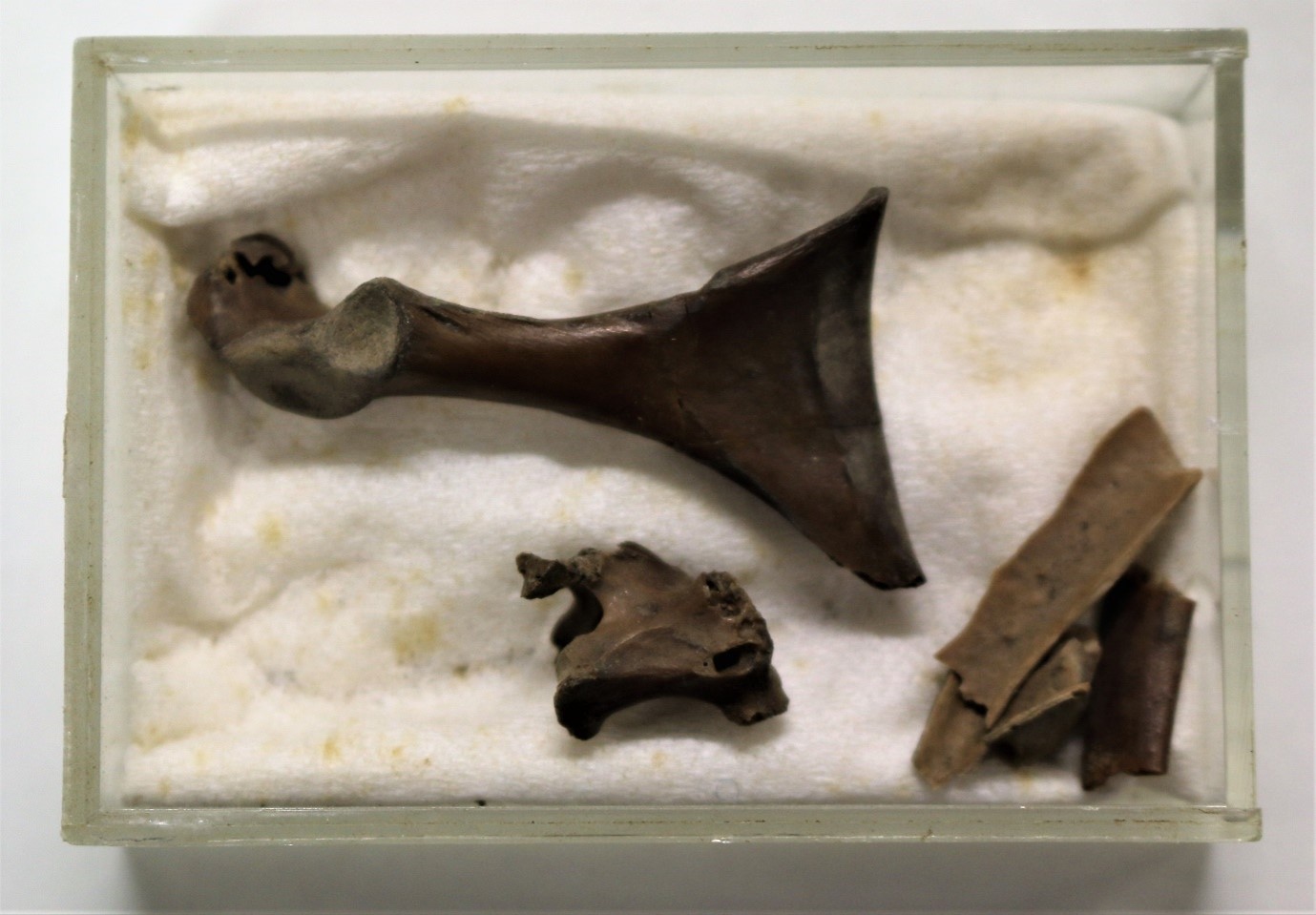
Some of the many hundreds of fossil bird bones from Walton-on-the-Naze © National Museums Scotland

Michael Daniels was a passionate self-taught palaeontologist, who visited various fossil sites outside London and further afield in southern England from his home at Loughton near Epping Forest. He developed a more specialised interest in the Tertiary Eocene London Clay in the early 1970s, having been a founder member of the Tertiary Research Group in 1969. On retirement in 1985 he moved with his wife to Holland-on-Sea, so that he could pursue this interest at Walton-on-the-Naze.

Continue reading
Thomas Bateman’s Ichthyosaurs

Written by Alistair McLean, Curator of Natural Science,  Sheffield Museums Trust.

2021 was the bicentenary of the birth of the Derbyshire antiquarian, Thomas Bateman (1821-1861). To commemorate the event, Sheffield Museums Trust developed an exhibition focusing on the Bateman collection, much of which is preserved in Sheffield. 

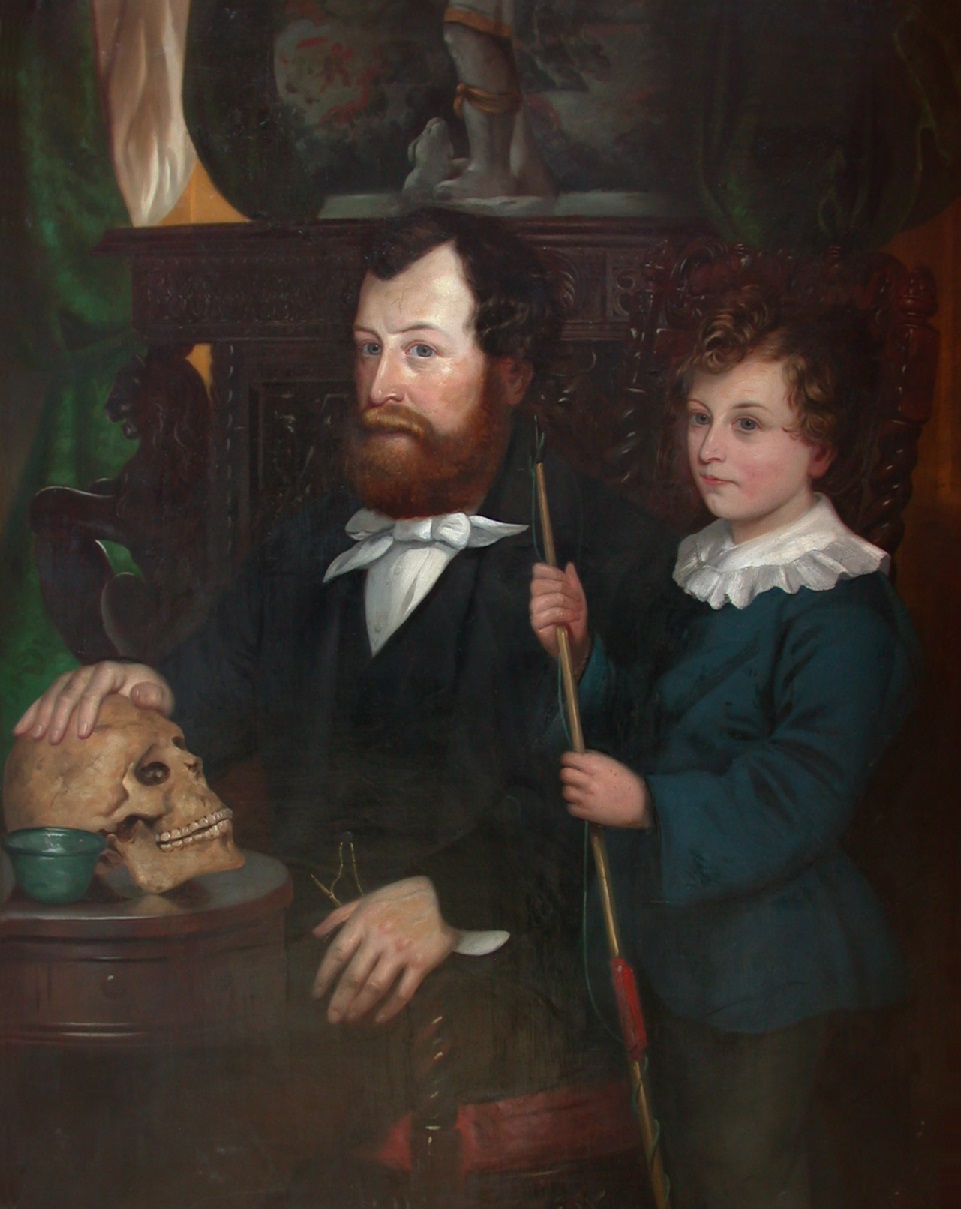
Figure 1. Thomas Bateman & Son

The collections of Thomas and his father William Bateman (1787-1835), are perhaps best known in archaeological circles. The pair were prominent barrow diggers, and spent much of their relatively short lives excavating burial mounds in the Peak District of Derbyshire and surrounding counties. The specimens they acquired were displayed in the family museum at Lomberdale Hall, Middleton-by-Youlgreave in Derbyshire.

The collection consisted of archaeology, world cultures and natural history (predominantly taxidermy, birds’ eggs, insects, mineralogy and palaeontology). A large part of it was initially loaned to and later sold to Sheffield Public Museum (now Weston Park Museum) in 1876 and 1893 respectively.

The importance of the Bateman family’s contribution to the study of natural science has historically been overshadowed by their notoriety as archaeologists. But their efficacy as general collectors plus the relative abundance of surviving contextual information, puts them into the top tier of contributors to Sheffield’s natural science collection.

Continue reading

NatSCA Digital Digest – September

Compiled by Olivia Beavers, Assistant Curator of Natural Science at The Potteries Museum & Art Gallery.

Welcome to the September edition of NatSCA Digital Digest.

A monthly blog series featuring the latest on where to go, what to see and do in the natural history sector including jobs, exhibitions, conferences and training opportunities. We are really keen to hear more about museum re-openings, exhibition launches, virtual conferences and webinars, and new and interesting online content. If you have any top tips and recommendations for our next Digest please drop an email to blog@natsca.org.

What to do

As we move into the new school year, The Grantham Climate Art Prize is calling for messages of hope from young people on climate change – ahead of the UN Climate Change Conference (COP26) in Glasgow this November. This is an opportunity for young people aged 12-25 to raise awareness for our precious habitats and send a message of hope through designing a mural to go onto walls across the UK – and be in for a chance to win £250 cash!  The theme of this competition is Biodiversity Loss and Climate Change. Click here to learn more – entries by 24.09.21.

Continue reading

Making the Most of What You’ve Got

Written by Dr Emma Nicholls, Deputy Keeper of Natural History, Horniman Museum and Gardens

The Collection

The Horniman Museum is the custodian of a collection of ca. 175,000 fossil specimens, collected by Walter Hellyer Bennett (1892-1971). A mining geologist and palaeontology enthusiast, Bennett collected somewhat indiscriminately, not pausing to favour geography, strata, or taxa, which makes it a collection of great interest to a wide variety of academics, and for other uses such as exhibitions and loans.

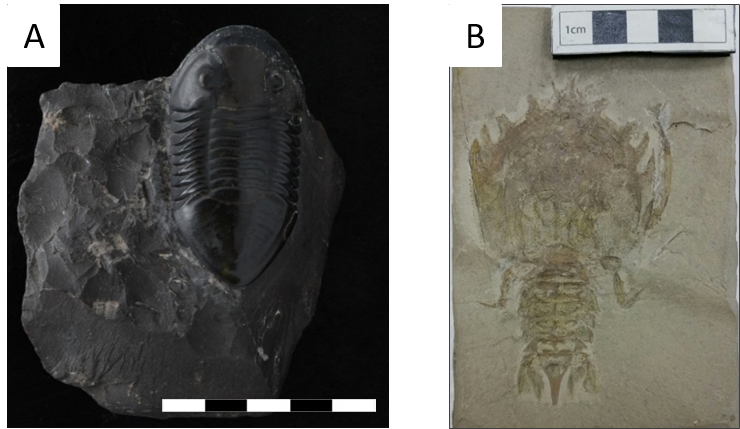
This huge collection was bequeathed to the Croydon Natural History and Scientific Society in the 1970s, where choice pieces were put out on open display whilst the rest remained stored in Bennett’s original wooden cabinets. It contains some beautiful material, such as this Isotelus gigas trilobite, and Eryon propinguus lobster.

A) Isotelus gigas, and Ordovician trilobite from the Trenton Limestone. B) Eryon propinquus, a Jurassic lobster from the Solnhofen Limestone. © Horniman Museum and Gardens.

The collection is approximately 10% vertebrate material, 85% invertebrates, and 5% plants and trace fossils. In case you are interested in particular taxonomic groups (as we are keen on facilitating research enquiries and visits… fyi) the invertebrates are mostly bivalves, brachiopods, cephalopods, corals, and gastropods, with a large variety of other taxonomic groups represented in small numbers as well (please do get in touch if you’re interested in getting more information), and the vertebrates are primarily conodonts, crocodilians, dinosaurs, fish (including sharks), ichthyosaurs, mammals, plesiosaurs, pterosaurs, and turtles. Geographically, around 87% of the material was collected within Europe, primarily from the UK (50%) and France (15%). A further 10% is from North America whilst small amounts of material were collected from across Africa, South America, the Middle East, Asia and Australasia. Notable sites include the Solnhofen Limestone and the Burgess Shale.

Continue reading

NatSCA Digital Digest – June

Compiled by Sam Barnett, NatSCA Volunteer and PubSci Committee Member.

Welcome one and all to the June 2019 edition of the Digest.

What should I read?

New experiments in flight design don’t crop up every day – which is why the discovery of Yi qi, the creature that looked like a bird had tried to imitate a bat and an aye-aye at the same time, was so surprising. The problem was that the remains were so scrappy it left a lot of interpretation as to how that membrane of skin fit around its wing (see image from the paper for a couple of proposals). Thankfully that picture is getting clearer due to the discovery of a second member of the family: named Ambopteryx, this little beauty helps fill the gaps in our understanding. You can read more about Ambopteryx in the Nature paper or over at The Atlantic for the lowdown by Ed Yong.

Continue reading