NatSCA Digital Digest – May 2023

Compiled by Glenn Roadley, NatSCA Committee Member, Curator of Natural Science at The Potteries Museum & Art Gallery.

Welcome to the May edition of NatSCA Digital Digest.

A monthly blog series featuring the latest on where to go, what to see and do in the natural history sector including jobs, exhibitions, conferences and training opportunities. If you have any top tips and recommendations for our next Digest please drop an email to blog@natsca.org.
Sector News

NatSCA Conference

The NatSCA annual conference and AGM was held at The Potteries Museum & Art Gallery on Thursday 27th and Friday 28th April 2023. The focus this year was So how do we actually do all this? Hopeful futures and turning theory into practice for big issues in natural history collections.

With 86 delegates present each day plus over 20 online, it was great to welcome everyone back to physical NatSCA conferences. A huge thanks to everyone that attended and to our speakers for the brilliant talks! For those that were unable to attend, we’re hoping to make the presentations available online in the near future.

SPNHC Conference

The 38th Annual Meeting of The Society for the Preservation of Natural History Collections is being held in San Francisco, California 28 May – 2 June 2023. Full details here.

SHNH International Summer Meeting

This year’s SHNH International Summer Meeting, ‘The Language of Nature’, will take place at Thinktank, Millennium Point, Birmingham on Tuesday 13 June 2023 (with visits planned for 14 June). This one-day international meeting will explore the language of nature in its broadest sense. Over centuries, different formats and mediums, stylistic approaches and classification systems have been used to describe and represent the natural world. These ‘languages’ influence how we conceive of nature, how we categorise it, how we wonder at it and who we credit with its ‘discovery’. This conference aims to bring new perspectives to the history of natural history writing and other expressions of nature, exploring not only the creativity and originality involved but also the limitations and biases that shape our understanding of the natural world and how it has been perceived throughout history. Full details here.

Continue reading
Naturalis’ New Hall of Evolution

Written by Becky Desjardins, Senior Preparateur, Naturalis Biodiversity Center.

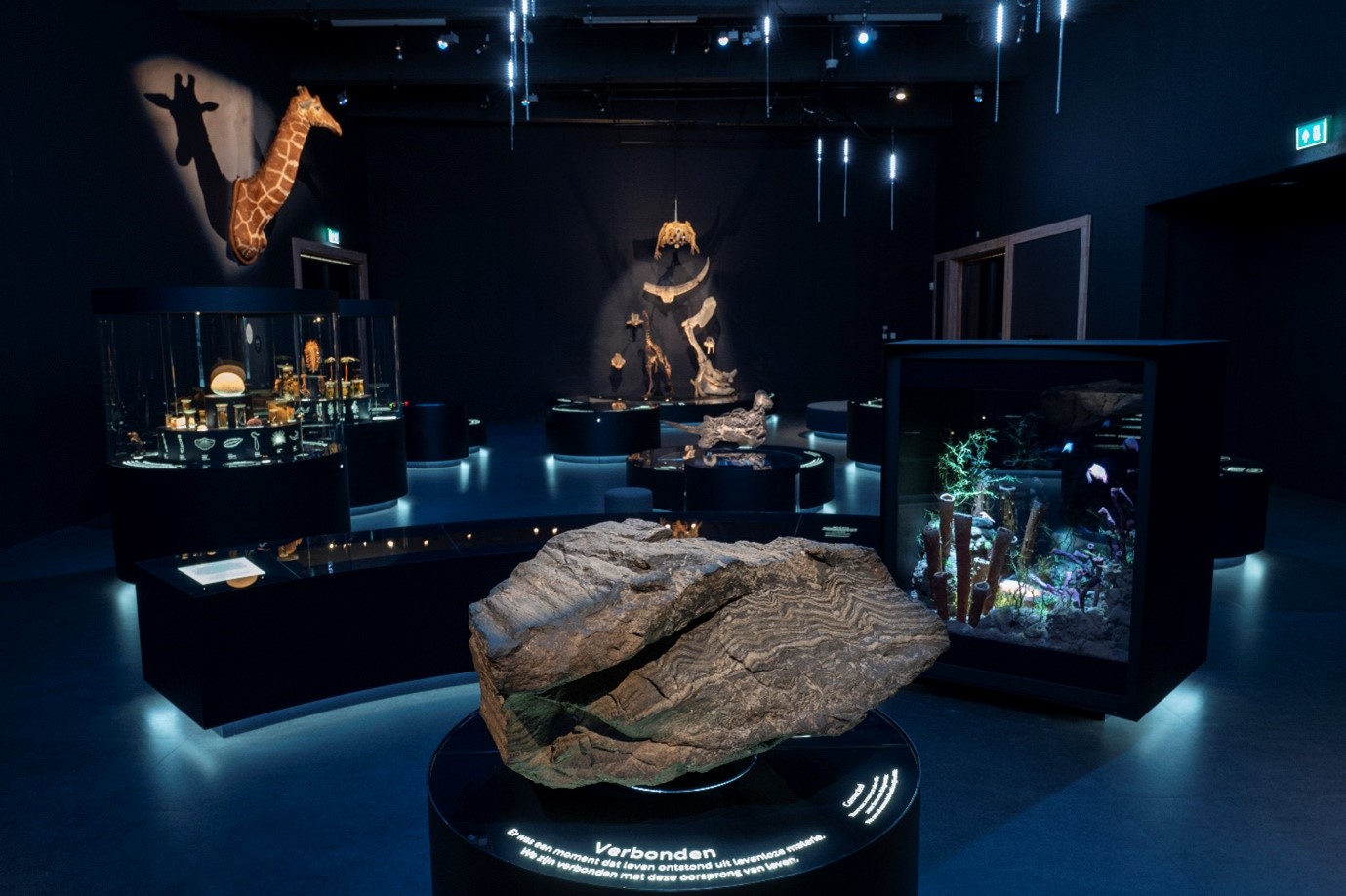
In 2019 Naturalis opened a new building with eight permanent exhibit halls. We are happy to announce that we have opened the ninth hall, Evolution. The exhibit designer, Marijke Besselink, told me that the concept for the hall was developed after she heard how visitors reacted to a stone that was in the former Naturalis prehistory exhibit. This stone came from Greenland and dates to 3.76 billion years ago. In this rock you can see layers that indicate the presence of oxygen that might have been produced by single celled organisms. It is one of the earliest signs of life on earth. One of the museum educators told Marijke how in the old exhibit, visitors were astonished that the rock was so old, and would touch it with awe. Now this centerpiece is in the front centre of the dark blue exhibit, and when a visitor touches the stone, it starts up a light and sound interaction which connects to other vitrines around the exhibit. This gives the visitor a feeling of connection, that everything on Earth is intertwined: we are all related.

© Henk Caspers

Around the stone we can find fossils from the Burgess Shale, a Canadian formation that includes more than 500-million-year-old ancestors of most modern animals. Marijke wanted to make it clear to the public what the animals preserved as fossils looked like as to the casual observer these small fossils sometimes look like a dark grey smudge! Projections help the fossil organisms manifest out of their slate beds and move across the vitrine and into an aquarium filled with creatures from the so-called Cambrian explosion. The aquarium, made with the Pepper’s Ghost technique, is one of the highlights of the hall. Besides being very cool looking, visitors see how these prehistoric animals moved, and see how similar they are to modern animals.

Continue reading

Book Review: A Historical Directory of Taxidermists.

Reviewed and written by Jazmine Miles Long, Taxidermist. https://www.jazminemileslong.com, Twitter: @TaxidermyLondon; Instagram: @Jazmine_miles_long

A Historical Directory of Taxidermists: Bird and Animal stuffers, Naturalists, Beast and Bird Preservers in Southwest England and Wales. Early 19th C to Mid-20th C.

A directory complied by Kelvin Boot
Published by MPM Publishing
2022
ISBN 978-1-7397161-0-3
Contact – kelvinbootbooks@gmail.com

This book is a must have for any researcher exploring the lives and work of taxidermists from Southwest England and Wales during the 19th and 20th Century. 140 pages in black and white including some images of taxidermists trade labels.

The book is a thorough directory of the taxidermists trading in the area at the time, the introduction cites how the directory was researched, exploring printed documents, not only naturalists publications but newspapers, trade directories and census records where taxidermists may have been mentioned or advertised. Exploring what the life of a taxidermist may have been like and how just like today it was the ‘celebrity’ taxidermists that would have been more likely to be written about.

Continue reading

A Foot In The Door – Finding Collections Work As A Trailing Spouse In A Foreign Country

Written by Caroline Grounds, Freelance Zoological Collections Assistant, Musée national d’histoire naturelle, Luxembourg.

I arrived in Luxembourg 8 years ago when my husband accepted a job offer here, not knowing much about the tiny country (“where exactly is Luxembourg?”), and with a new baby in tow.

I had become accustomed to the trailing expat spouse role, so I was happy for a new adventure, though the hardest part about moving, especially to a country where you don’t speak the language, is finding your niche in which you can carve out something of your own.

As a former Biology teacher, most of my previous museum experience was in science education, as a volunteer at the NHM in London, and the George C. Page museum (La Brea Tar Pits) in Los Angeles, and I was keen to get involved in the Luxembourg Natural History Museum in any way, shape or form. Something about being around the wonders of nature, whether outside or housed in a building, is inspiring to me and, surrounded by like-minded people, where I truly feel like I’m supposed to be.

Not speaking any of the official local languages however (Luxembourgish, German and French), I quickly found that it would be difficult to find work, even on a voluntary basis as I had before. I submitted my CV to the museum anyway, and endured a rather painful phone call in very bad schoolgirl French (mine, not theirs!), which, much to my amazement, led to one of the researchers contacting me for help proofreading his research papers, which were being published in English. That schoolgirl French came in useful after all!

Continue reading

A Remarkable Collection Of Fossil Birds From The Eocene

Written by Andrew Kitchener, Principal Curator of Vertebrates, National Museums Scotland.

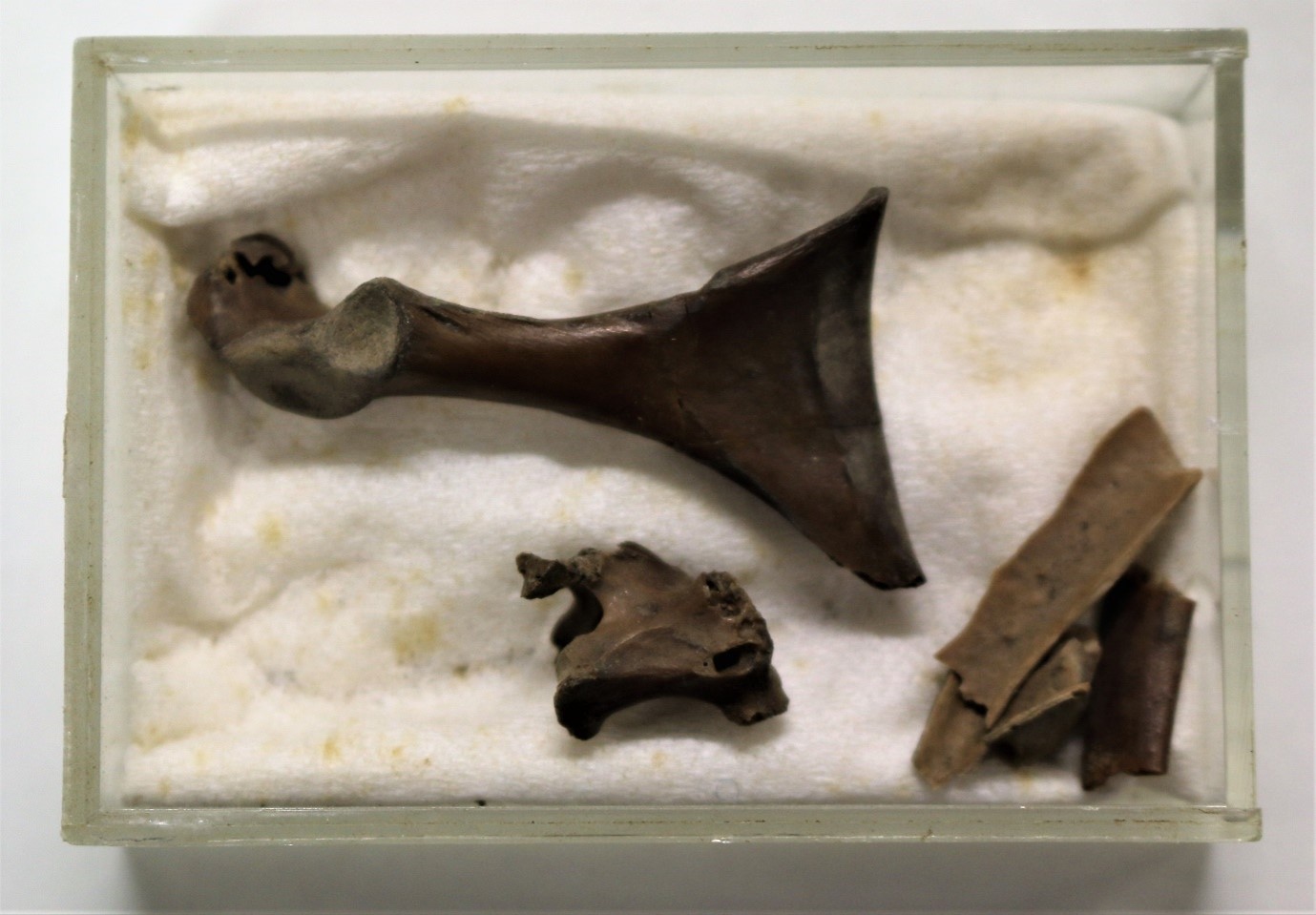
In November 2021 National Museums Scotland acquired a remarkable collection of fossil bird skeletons dating from the Eocene, approximately 54.6-55 million years ago. The story of how this collection ended up in Edinburgh is a very long one and began more than 25 years ago. 

Please can you show me your collection of Eocene birds?” This was the question that greeted me when I first met a Mr Michael Daniels more than 25 years ago. Visiting the museum with his wife Pam and his daughter Caroline, who lived in Edinburgh, this meeting would be the beginning of a long friendship and long-term correspondence, which ended sadly in 2021. My answer was “Well I would love to show you our collection of Eocene birds, but we don’t have any.” Michael proceeded to tell me about his remarkable collection of several hundred skeletons and part skeletons that he had discovered in nodules of the London Clay, which had eroded out of the cliffs at Walton-on-the-Naze in Essex. In later years I visited Michael and Pam at their home and got to see the collection in its countless drawers and boxes in his study. I was astonished at the amazing variety of specimens of all shapes and sizes.  Many of the bones were minuscule, requiring great patience and skill to extract from the substrate.

Some of the many hundreds of fossil bird bones from Walton-on-the-Naze © National Museums Scotland

Michael Daniels was a passionate self-taught palaeontologist, who visited various fossil sites outside London and further afield in southern England from his home at Loughton near Epping Forest. He developed a more specialised interest in the Tertiary Eocene London Clay in the early 1970s, having been a founder member of the Tertiary Research Group in 1969. On retirement in 1985 he moved with his wife to Holland-on-Sea, so that he could pursue this interest at Walton-on-the-Naze.

Continue reading