Dropping a Pin on the Salter Collection

Written by George Seddon-Roberts, PhD Student, John Innes Centre, work completed whilst on placement as a Curatorial Intern at Amgueddfa Cymru – Museum Wales.

When accessing an entomology collection, there are a few things that a researcher can expect to find. Each specimen should be pinned with labels describing its species and information about where it was collected – two valuable pieces of information which can help researchers to trace the specimen’s origin geographically and in time. Knowing where and when a specimen was collected can help researchers better understand the historical landscape and ecology and make predictions into the future. However, when collections receive specimens from private collectors, this standard of labelling might not be met. As part of a 3-month internship at Amgueddfa Cymru – Museum Wales, I aimed to transform one such collection.

The collection in context 

John Henry Salter (1862-1942) was an academic and naturalist, who spent much of his life as a lecturer at University College of Wales in Aberystwyth, where he would later be appointed as the first Professor of Botany. Outside of academia, Salter was a prolific collector of insects across several groups, most notably including coleoptera (beetles) and lepidoptera (butterflies and moths). Salter’s collection contains specimens from across Wales, as well as England, Tenerife and south-east France; regions where he spent time during his retirement. The specimens, which amount to over 15,000 individuals, were meticulously recorded in field logs by Salter, which were also donated to the museum with the collection.  

Continue reading

NatSCA Digital Digest – August

Compiled by Ellie Clark, Collections Move Team Leader at the Natural History Museum

Welcome to the August edition of NatSCA Digital Digest.

A monthly blog series featuring the latest on where to go, what to see and do in the natural history sector including jobs, exhibitions, conferences, and training opportunities. We are keen to hear from you if you have any top tips and recommendations for our next Digest, please drop an email to blog@natsca.org.

Sector News

Registration is now open for the 13th European Bird Curators Meeting, October 2024, in Liverpool.

The European Bird Curators Meetings aim to promote cooperation, dissemination of best practices and new techniques in the curation, management, and use of bird collections. Presenters in the scientific programme often include curators, collection managers, museum historians and ornithological researchers. These are friendly meetings and anyone with an interest is welcome to join us.

The meeting will include plenary and submitted presentations, discussion sessions, collections tour, conference dinner (optional – Tuesday 29th October) and field excursion (optional – Thursday 31st October). 

Please follow the ‘Tickets available here’ link from the event webpage to register. They have single day registration options and have kept costs as low as possible to encourage attendance by local natural history curators. 

If you have any questions, please email vertebratezoology@liverpoolmuseums.org.uk.

Continue reading

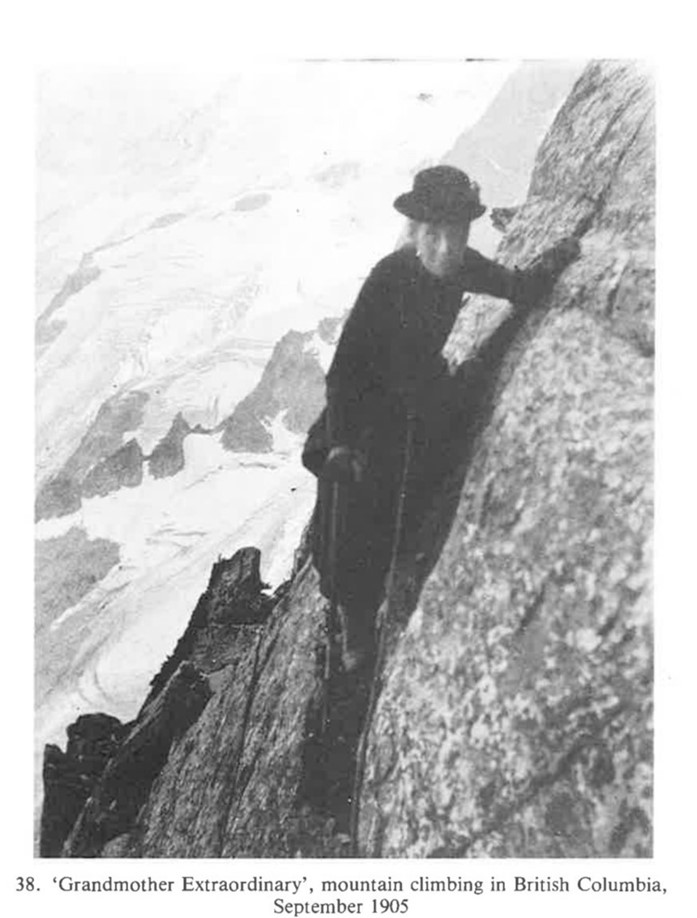
Mary De La Beche: Lady Lepidopterist

Written by Kanchi Mehta, 2nd year BSc student, Swansea University, whilst on placement at National Museum Cardiff and Swansea Museum.

Born in Swansea in June 1839, the young Mary grew up in a house where she had every freedom. Taught in politics, photography, languages, art and science, young Mary was a smart, outspoken, and opinionated girl. As she grew up, she learnt from her father, Lewis Llewelyn Dillwyn, in the forests and beaches around Swansea. Over the years, she took a particular interest in the biology around her family home and kept that interest throughout her life.

She married in Sketty Church to John Cole Nicholl in 1860. He shared her adoration for the outdoors and over the course of their honeymoon the couple went all over Europe seeing the sights, scaling every mountain they could and documenting it all in their diaries. Mary alone filled roughly six diaries with her thoughts on the nature she saw, the people she met and the languages she learnt all accompanied by her sketches. By the Christmas of 1860, the pair made it home with two puppies in tow, brought for Mary by John, and a baby on the way.

© Grandmother Extraordinary by Hilary M. Thomas
Continue reading

Going ‘Extinct’ for Jewellery

Written by Sonal Mistry (Masters Students in Scientific Illustration, Zuyd University of Applied Sciences, the Netherlands) and Olivia Beavers (Assistant Curator of Vertebrate Zoology at World Museum, National Museums Liverpool).

Last year, Sonal approached the vertebrate zoology team at World Museum Liverpool to see the Nicobar Pigeon taxidermy mounts, study skins, as well as the Liverpool Pigeon study skin and dodo skeleton to use as reference for her work. From the first meeting, it was fascinating to see the detailed nature of her initial sketches and how quickly she worked.

World Museum has received requests from wood carvers and illustrators to access the osteology collection, taxidermy mounts and/or study skins as a reference for their work. The in-person visits help them to create more accurate drawings and carvings compared to using 2D images for reference. 

Collaborating with researchers of a particular species or family broadens our understanding of the collections. For example, Sonal’s explanation of her university assignment shed light on the endangered status of Nicobar Pigeons and the unconventional use of their gizzard stones in jewellery which I was unaware of.

Sonal is currently pursuing a master’s degree in Scientific Illustration, at Zuyd University of Applied Sciences in Maastricht, the Netherlands. Her passion for the sciences and the arts enriches her illustrations with a unique quality that is evident in her diverse projects, showcasing a blend of creativity and scientific accuracy.

Continue reading

Rediscovering the Hancock Coelacanth

Written by Dan Gordon, Keeper of Biology, The Great North Museum: Hancock.

For as long as I’d worked at the museum, there’d always been a Coelacanth. People referred to it in passing, pointing out the large tub of orange tinted spirit where it lurked. I’d always rather taken it for granted; an interesting but rather mundane specimen, and I’d never been curious enough to fish it out of the murky liquid and examine it.

That is, until 2018, when staff at the National Maritime Museum Cornwall got in touch about an exhibition they were putting together called Monsters of the Deep. They’d asked us about Coelacanth fossils and I mentioned the Coelacanth in the fish collection, which was greeted with some surprise. A real one…Would we consider a loan? And as I thought about this, I came to realise that I knew very little about the Coelacanth at all.

There was next to nothing in the catalogue about it, so I decided, firstly, to get a better look. This was easier said than done. The Coelacanth is over a metre long and weighed over 20kg, sitting in a container of tea coloured alcohol bigger than a bathtub. Reaching in, I ran my gloved fingers over its flanks, which had the texture of coarse sandpaper. Lifting it out was like wrestling an alligator, but eventually it emerged, a gaping mouth with small sharp teeth, a ragged tear through the flesh of its head, and the huge eyes of a deep-water dweller.

Continue reading