Packing the Blaschka Glass Models 

Written by Julian Carter, Principal Conservator Natural Sciences, Amgueddfa Cymru – Museum Wales, Cardiff

During the late 19th century, Leopold Blaschka (1822-1895) and his son Rudolf (1857-1929) produced thousands of beautifully detailed glass models of a wide range of sea creatures, and other animals, for natural history museums and aquaria all over the world. The work has since been hailed as “an artistic marvel in the field of science and a scientific marvel in the field of art”. The work of the Blaschka’s remains remarkably contemporary today, working as they did on the cusp of design, craft, and industry. Crossing the boundaries of science and art, the surviving models today have a value that makes them irreplaceable. 

The idea for making lifelike renditions of sea creatures out of glass arose from the difficulty of preserving and displaying soft-bodied animals such as jellyfish, marine worms, and sea anemones. Preserving such animals in a lifelike way is difficult as techniques such as fluid preservation cause colours to quickly fade and shapes to become distorted. Leopold Blaschka devised a solution to this problem by using his glass working skills to accurately model these animals out of glass and other materials available to him and went on to establish a successful business supplying glass models to museums worldwide during the latter half of the 19th century. 

The model of the sea anemone Actinia mesembryanthum (right) based on a plate (left) from Phillip Henry Gosse’s Actinologia britannica. A history of the British sea-anemones and corals which Leopold Blaschka used for the early sea anemone models that he built.
Continue reading

Invertebrates In Vitro

Written by Paolo Viscardi, Curator of Zoology, National Museum of Ireland – Natural History

I’m not sure why, but people really seem to love Blaschka models.

Beccaria tricolor [sic] Nr.373 in Blaschka catalogue. Specimen NMINH:1886.810.1 at the National Museum of Ireland.

Beccaria tricolor [sic], Nr.373 in Blaschka catalogue. Specimen NMINH:1886.810.1 at the National Museum of Ireland. Image by Paolo Viscardi, 2018

They are the subject of a surprisingly large number of enquiries at the National Museum of Ireland — Natural History (AKA the Dead Zoo), where I look after the zoology collections.

If you’ve not heard of the Blaschkas, they were a father and son company of lampworkers based in Dresden, who supplied museums and universities around the world with glass models for teaching and display. Between 1864 and 1890 they made mail-order models of invertebrates (alongside glass eyes and medical equipment), then from 1890 until 1936 they worked exclusively for Harvard University on the Ware collection of glass flowers.

glass_flowers_gift-bouquet

Bouquet of Blaschka glass flowers made in 1889, gifted to Elizabeth C. and Mary L. Ware. Now part of the Harvard Glass Flowers exhibit. Image by Bard Cadarn, 2018.

At the Dead Zoo we have a particularly large and comprehensive collection of the invertebrates, with around 590 models acquired in lots between 1874 and 1888. I say ‘around’, because many of the models are made up of multiple parts, with different developmental stages, enlargements and details that are classed as elements of the same model.

Continue reading

Brendel Plant Model Survey

Written by Donna Young, Curator of Herbarium, World Museum, National Museums Liverpool

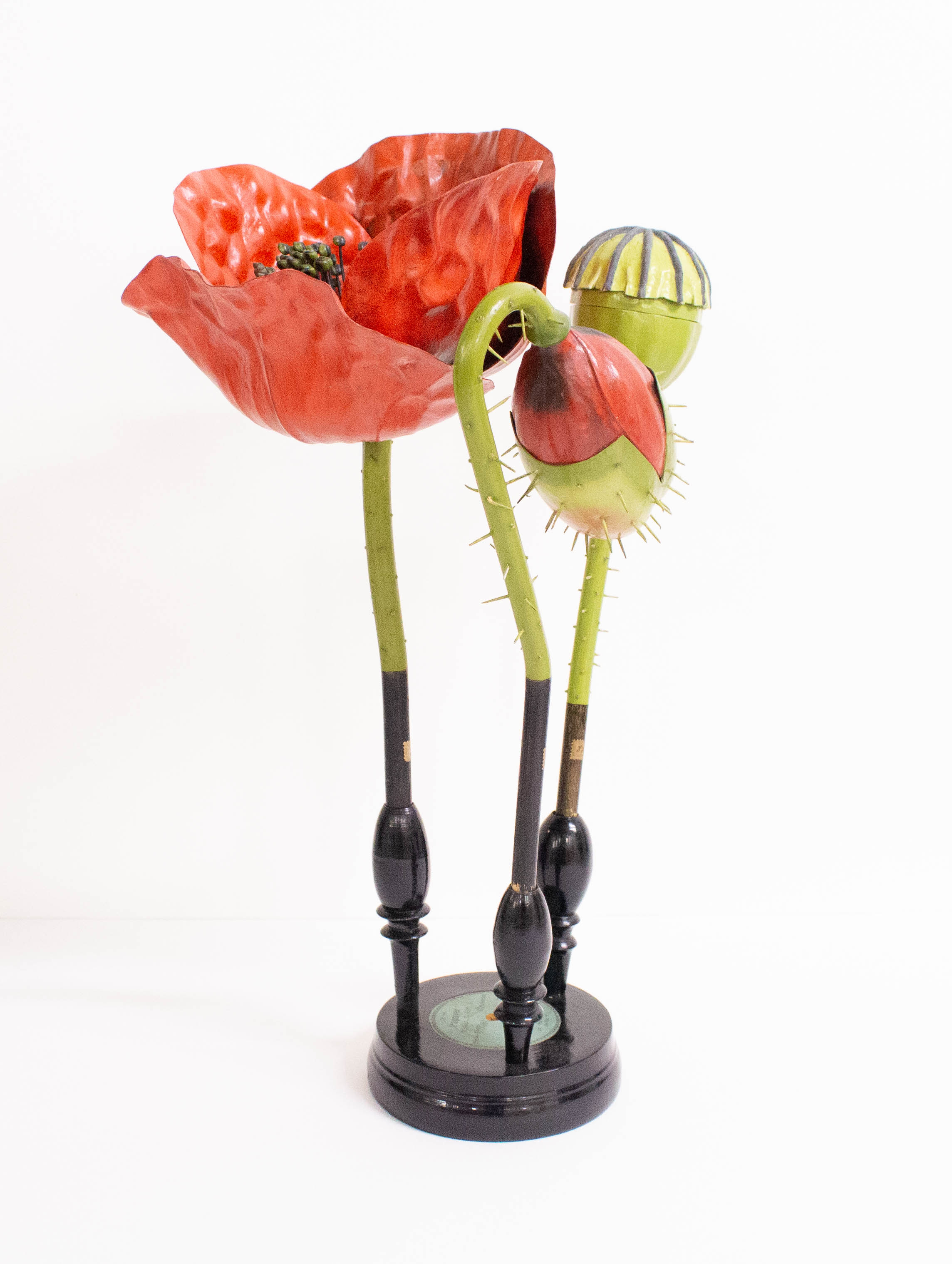
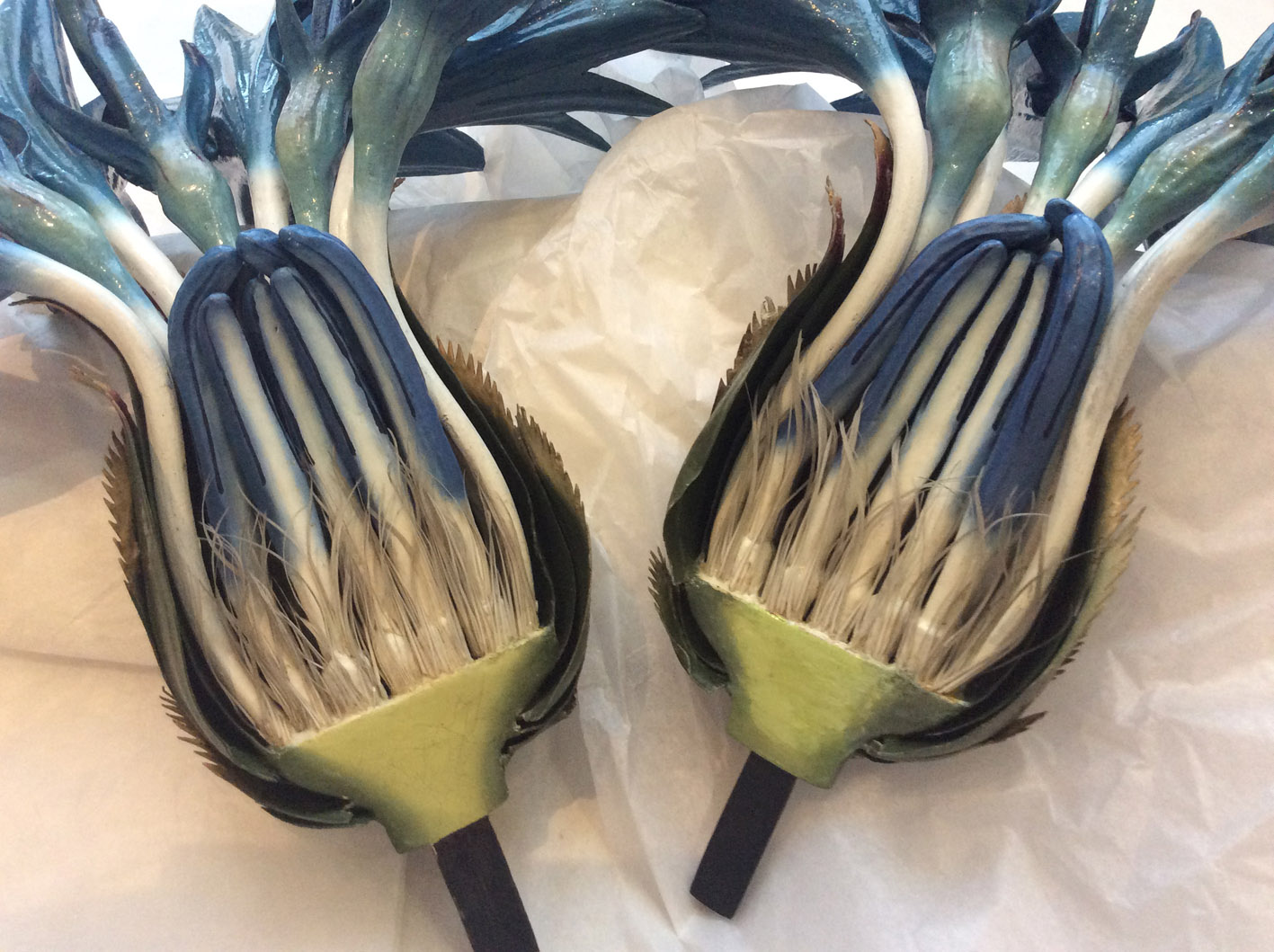
Inspired by the project led by the Corning Museum of Glass, which looked at holdings of Blaschka models, I am embarking on a project to map and document collections of Brendel botanical models worldwide.

The objective of this project is not only to provide a useful resource to be used in the curation of anatomical models, but to document their past and present use – promoting and bringing awareness of these collections to new audiences.

Brendel model Papaver rhoeas
© National Museums Liverpool, World Museum

Anatomical Models

The nineteenth century was the golden age of scientific discovery, and as the century progressed, the teaching of science in schools, academies and museums evolved to reach a new mass public audience. Science was no longer the exclusive preserve of an elite few.

Changing teaching techniques promoted this transformation and pedagogical inquiry was seen as a constructive and involved way of learning. The written and spoken word was supported by the use of visually instructive wall charts and classroom demonstrations. The introduction of interactive teaching models encouraged audiences to understand nature using new and original perspectives.

Botanical models were used to illustrate and demonstrate plant anatomy. Unlike living material, their use was not restricted by seasonal availability and they were ideal for demonstrating small or ephemeral details which are difficult to preserve.

In 1827 Louis Auzoux established his workshop in France, manufacturing human and veterinary anatomical models from papier-mâché. The company also produced botanical models, which were widely distributed to universities and schools in France, particularly to support the expansion in teaching agricultural science.

Brendel model Centaurea cyanus ‘dissected’
© National Museums Liverpool, World Museum

Continue reading