Bringing the Dead Back to Life, with Paolo Viscardi

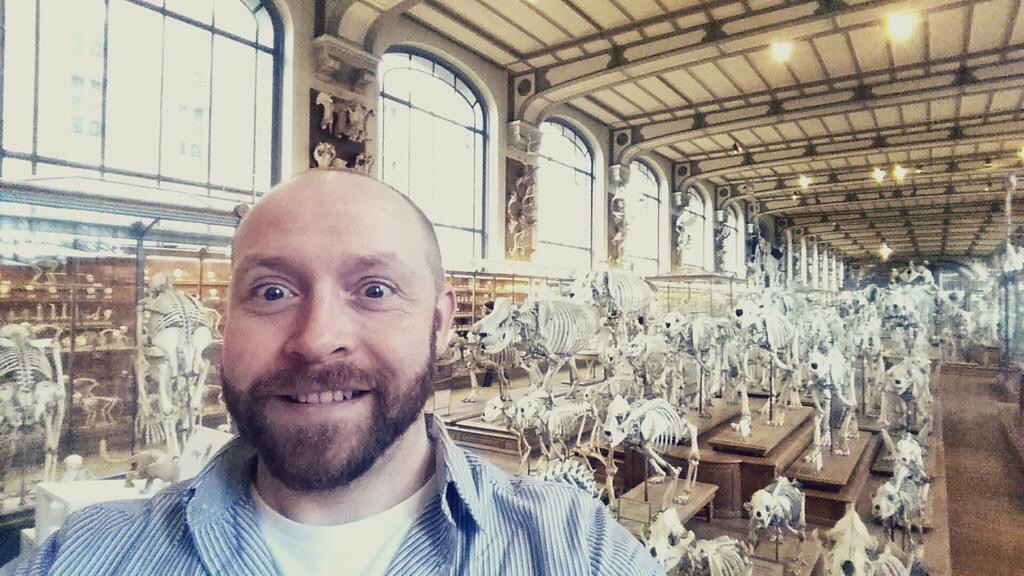
Paolo at the Museum of Comparative Anatomy, Paris

Last week saw the first PubSci talk by NatSCA Chair Paolo Viscardi since we moved venues to the King’s Arms near London Bridge. The subject, Bringing the Dead to Life, is less a Frankenstein manual and more of a description of his role as Deputy Keeper of Natural History at the Horniman Museum and Gardens. He works with dead things every day and he does so for the public’s benefit, because these collections are yours: both yours as a national collective, and yours as an individual if you want to do something with them.1

A large part of the reason we have these amazing collections is due to massive amount of world exploration by wealthy industrialists, tradesmen, and philanthropists. Frederick John Horniman was a tea trader, and collected all sorts of things in his travels. The stuff he brought back captured the public imagination because it introduced them to international cultures they would otherwise have no idea about. We take global information for granted today because we all have access to internet resources in our pockets, so it is hard for us to grasp how unusual it must have been for people in 1948 to see frescoes from Ceylon temples for the first time.

One of the fun side effects of this close encounter with the unusual is that oftentimes people preparing the specimens from overseas were only going by descriptions, and were not at all familiar with the species they were working on. A great example of this is the iconic Horniman Walrus, who was overfilled until he was wrinkle-free – in the style of a seal. There is an exhibit at the Grant Museum of Zoology at the moment discussing this phenomenon and featuring a lovely Stubbs painting of a kangaroo that resembles a giant mouse. Knowing how meticulous Stubbs was about his animal anatomy, one has to believe that this is exactly how he understood them to look and is not in any way an accident of the proportions.

The topic of proportions and measurement brings me on to a study done by Paolo et al. in 2010, looking at the variation in measurements taken of a section of owl bone, so naturally the paper was titled How long is a piece of Strix. Comparative measurement is a fundamental part of species identification, so naturally one would assume a consensus of readings taken by professionals. The results were somewhat different: when working alone, the measurements were accurate. When working as part of a team, the measurements strayed, and the more people collaborating, the greater the disparity between measurements.

As a science communicator both at the museum and through his blog, Paolo has had the opportunity to work on some interesting projects: he has advised BBC television series such as our patron Ben Garrod‘s Secrets of Bones and he has been interviewed for The One Show to explain why cats get stuck up trees (they can’t rotate their ankles). This allowed Paolo to introduce the viewing audience to the Margay (Leopardus wiedii): a cat that can rotate its ankles. He has shared his love of osteology with 13-year-old fellow-blogger Jake McGowan-Lowe, which led to Jake publishing a book on the subject! To promote a recent Horniman exhibition on extreme animal adaptations, Paolo was subjected to the harshest elements in nature, which earned him the title ‘Extreme Curator’, and his very own Lego action figure.
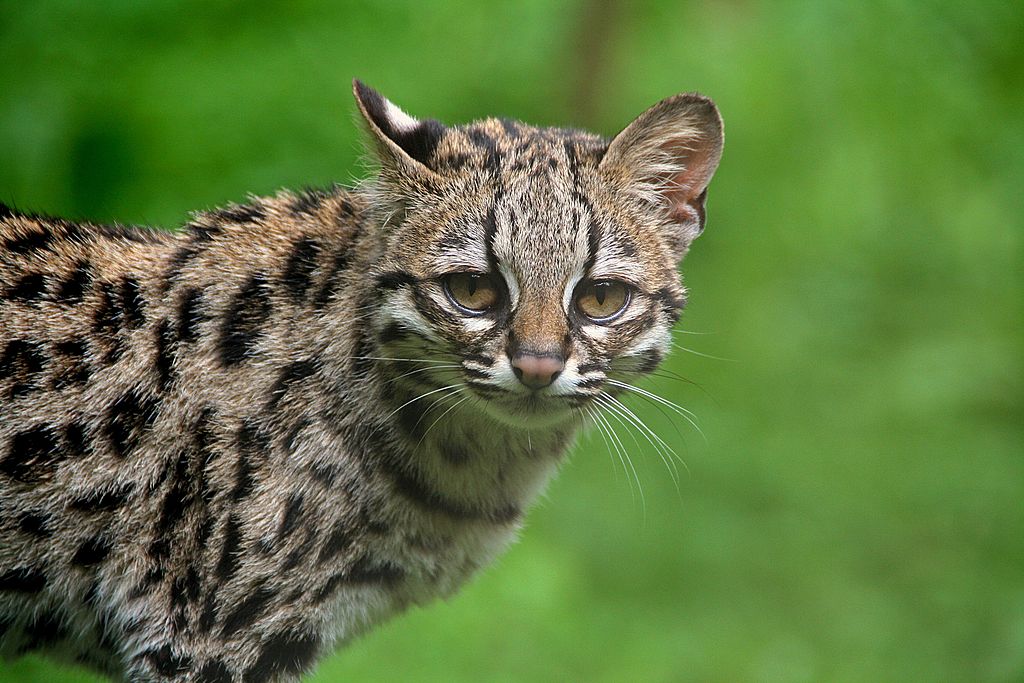
Margay

Margay. By Clément Bardot (Own work) [CC BY-SA 3.0 (http://creativecommons.org/licenses/by-sa/3.0)%5D, via Wikimedia Commons

Where next for Paolo’s science communication? You’ll have to ask him at the next PubSci with Professor Ian Barnes. If you’re a fan of pleistocene megafauna (and, let’s face it, who isn’t), I wouldn’t miss it.

Sam Barnett, NatSCA Blog Editor

1. Depending on what it is you want to do with them and how run-ragged the museum staff are.

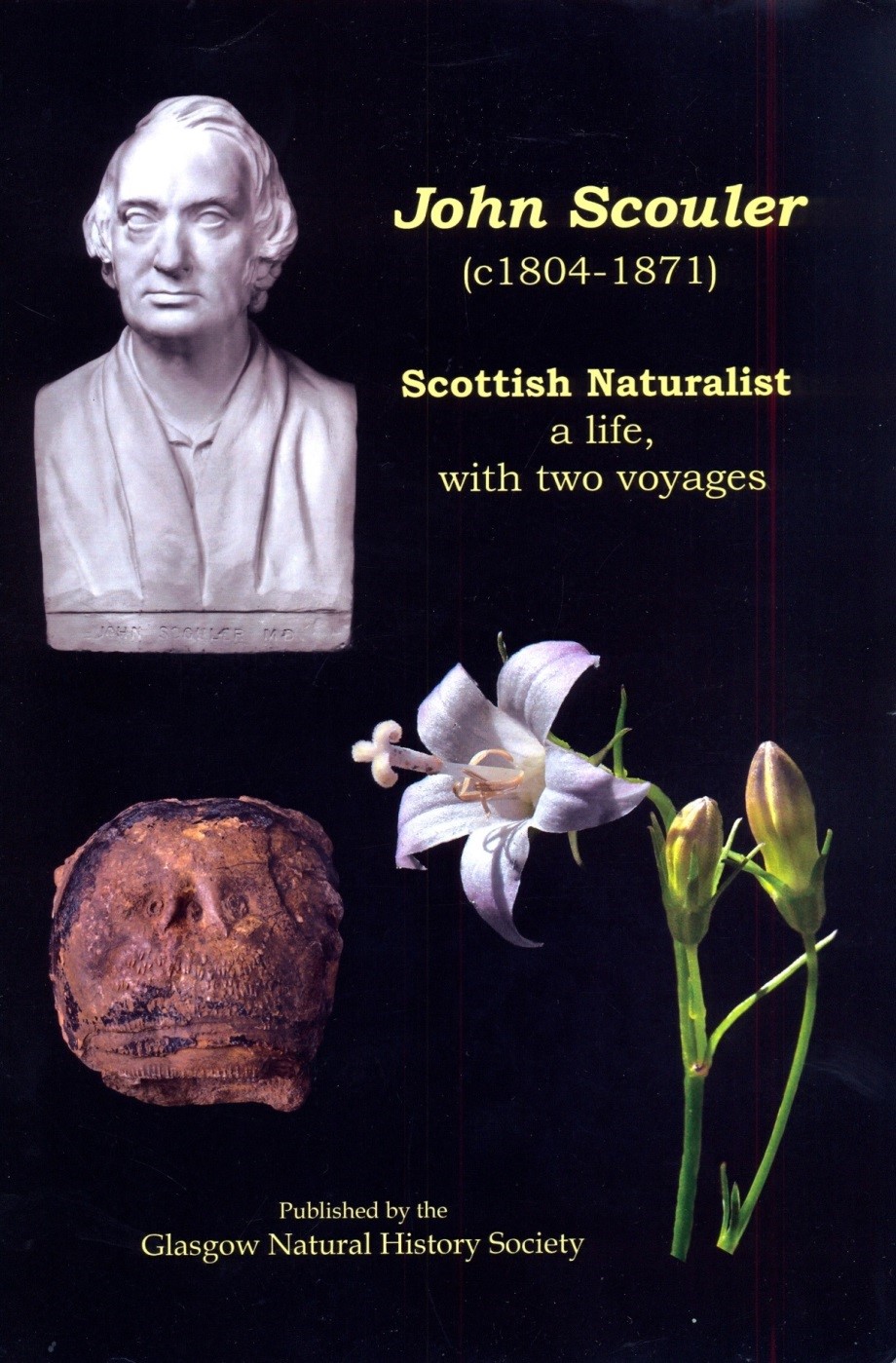
Review of ‘John Scouler (c. 1804 – 1871) Scottish Naturalist: A life, with two voyages’

 Published by the Glasgow Natural History Society

Cover of the journal 'John Scouler (c. 1804 - 1871) Scottish Naturalist:

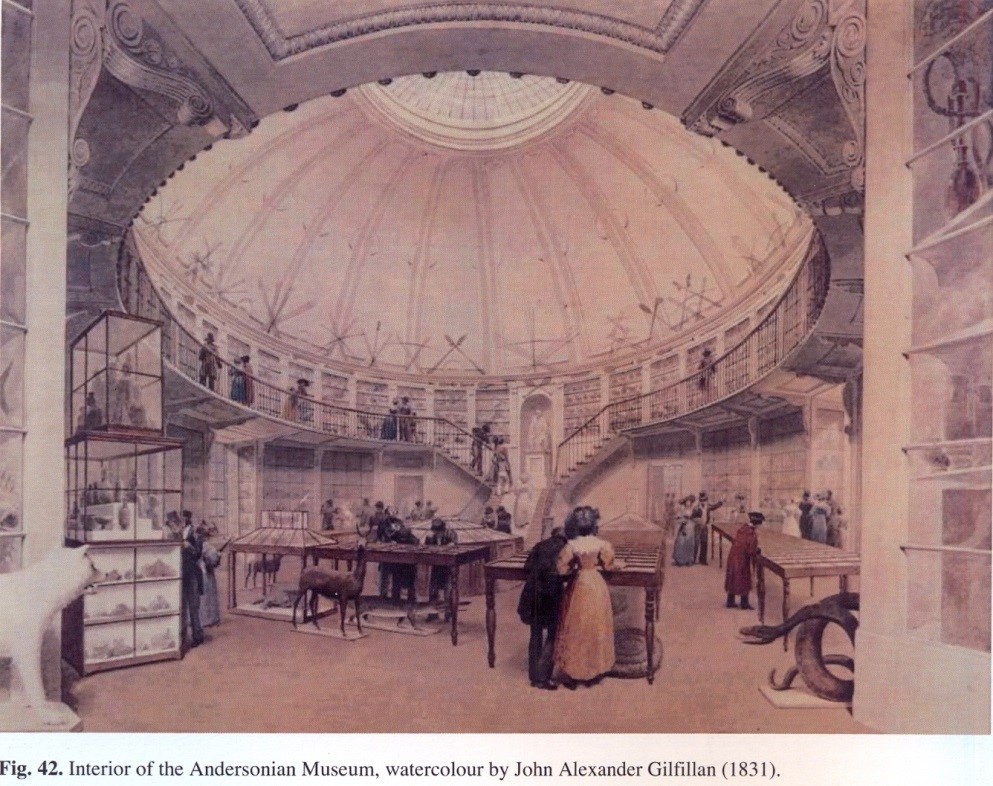
John Scouler was a naturalist whose contribution to his field was highly respected, despite few publications. He was a collector, a lecturer, and in his working life was Professor of Mineralogy at the Andersonian University (and curator of the Museum) in Glasgow (1829 – 1834), and later at the Royal Dublin Society (1834 – 1854). John Scouler was held in high regard by his peers, yet his story, like many other naturalists during the 19th century, is relatively unknown outside of the world-renowned voyages made by Charles Darwin, Joseph Banks, and Alfred Russell Wallace.

Painting of the interior of The Andersonian Museum, which was curated by Scouler (by John Alexander Gilfillan, 1831)

The Andersonian Museum, which was curated by Scouler (by John Alexander Gilfillan, 1831)

The publication begins with the discovery of some ‘dusty plant specimens, dried and mounted on dustier sheets of paper’ found in the biological department of the Royal Technical College, Glasgow. Professor Blodwen Lloyd Binns is charged with the challenge of resolving the mystery of this forgotten herbarium. The Prologue and Introduction are in fact written in her own words, from a draft of a book entitled ‘Round the World in a herbarium’ that she had started in the 1960s. Binns then assesses Scouler based on his contribution to ‘his science’, the scientific thought of the day, and his collections -significantly his herbarium. The author of the journal, Charles Nelson, uses these three areas to portray an accurate and systematic account of Scouler’s legacy with prose that is engaging, erudite, and succeeds in fleshing out the uncertainty around Scouler’s second voyage to India.

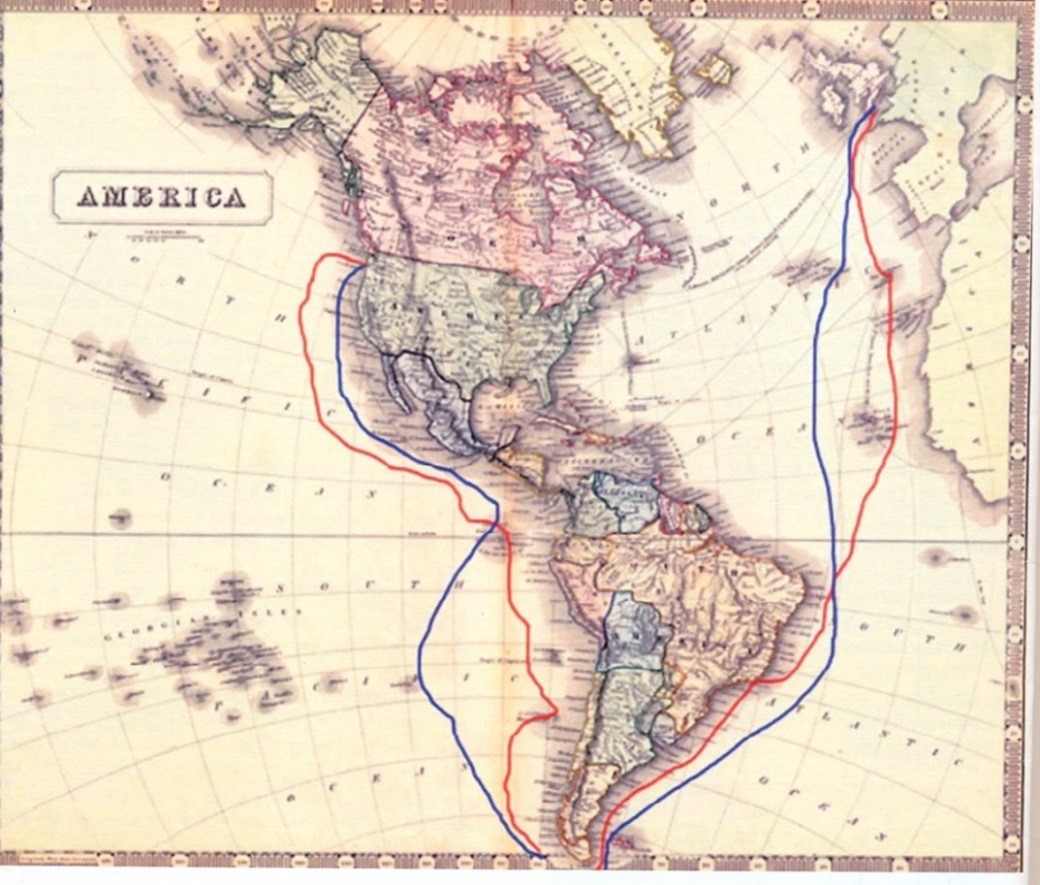
Scouler held a strong passion for collecting and an interest in botany. He studied anatomy at Edinburgh University and wished to pursue a career as a surgeon, but had been greatly influenced by Professor William Jackson Hooker, who became his lifelong friend and teacher. It was Hooker (who would later become Director of Kew) who recommended Scouler as ship’s surgeon on his first ‘voyage of discovery’ on the William and Ann to the Galapagos and North West Pacific coast (1824 – 1826), along with another of Hooker’s capable botanists, David Douglas.

Map of the voyage of the Hudson Bay’s Company William & Ann, 1824-1826, based on the readings recorded in the ship’s log (red outward voyage 1824-1825; blue return voyage, 1825-1826)

Voyage of the Hudson Bay’s Company William & Ann, 1824-1826, based on the readings recorded in the ship’s log (red outward voyage 1824-1825; blue return voyage, 1825-1826)

Scouler was the first botanist to explore Oregon and bring back specimens hitherto unknown to science. Scouler reached Canada in June 1825, making new discoveries and descriptions of plants. In Hooker’s ‘Flora’ he honours a new plant collected by Scouler – Phyllospadix scouleri or Scouler’s surf-grass – which belongs to a new genus entirely. This marine flowering plant, unique to the coast, was found at Observatory Inlet, where over 30 species of plants including Scouleri aquatica were found and ascribed to Scouler by Hooker. Scouler’s specimens contributed greatly to Hooker’s great botanical work ‘Flora boreali-americana’ and in some cases still survive in Kew’s collections today.

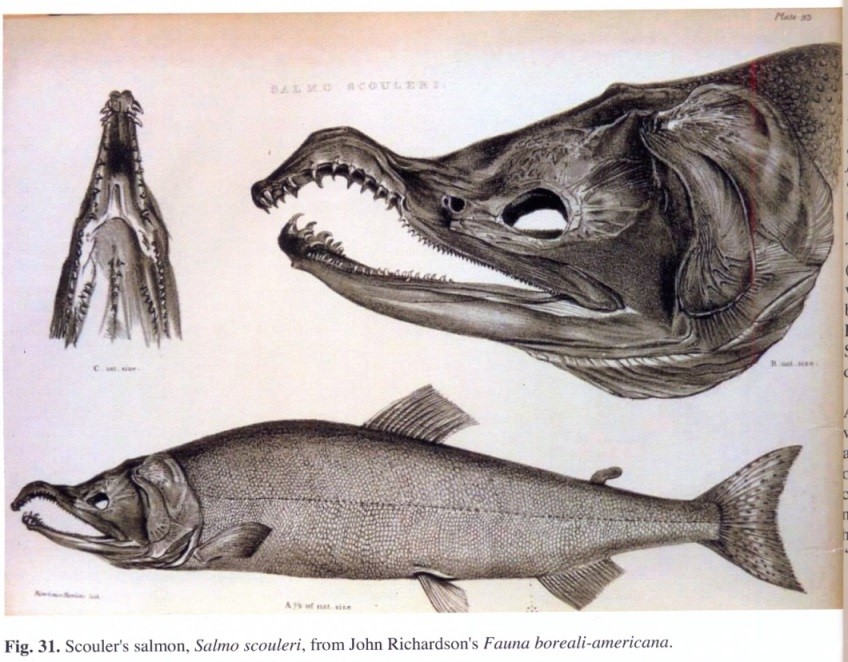
Scouler’s salmon, Salmo scouleri, from John Richardson’s Fauna boreali-americana

Scouler’s salmon, Salmo scouleri, from John Richardson’s Fauna boreali-Americana

In conclusion, the journal beautifully articulates the life of Scouler using diaries, journals, illustrations from monographs, images, shipping logs, and his own surviving specimens, along with secondary sources such as museum catalogues. It is clear, accessible and enjoyable to read, and is comprehensively referenced. I also like the addition of coloured plates of the species discovered by and named in Scouler’s honour. Charles Nelson succeeds in accurately assessing Scouler’s legacy against the criteria set out by Professor Binns, and extends our knowledge of Scouler’s later life. It tells me that John Scouler was indeed a man dedicated to ‘his science’, without a desire for self-promotion or critical acclaim.

Anthony Roach
Science Educator, Natural History Museum


All images reproduced from John Scouler (c. 1804 – 1871) Scottish Naturalist: A life, with two voyages, published by the Glasgow Natural History Society.

NatSCA Digital Digest


Welcome to the weekly digest of posts from around the web with relevance to natural science collections. We hope you find this useful and if you have any articles that you feel would be of interest, please contact us at blog@natsca.org

1. Job: Curator/Lecturer in Vertebrate Palaeontology

It’s your last chance to get your applications in for this one.

Deadline: 3 April 2015

Employer: University of Cambridge

Synopsis

We seek to recruit an outstanding scientist to join the staff of the Department and Museum of Zoology at Cambridge. The successful candidate will combine excellence in research with a commitment to teaching at both undergraduate and graduate levels. In addition he/she will have the ability to engage with the work of the Museum in collections development, outreach and public engagement. 

We seek a candidate with the ambition and ability to fund and lead a world-class research group. For this post, we are likely to appoint a candidate whose research is collections-based. The appointee…

Read more and apply here

2. Exhibition: Coral Reefs

When: 27 Mar 2015 – 13 Sep 2015

Synopsis

Now opened at the Natural History Museum, London. This spectacular window into a world that enriches our very existence is well worth visiting.

Click here for more details

3. Workshop: R Without Fear – Applied R for Biologists

this course is not organised by NatSCA but it could come in handy for our members.

when: 21-25 Sep 2015
where: Facilities of the Centre de Restauració i Interpretació Paleontologica, Els Hostalets de Pierola, Barcelona (Spain).

Synopsis
Introduction to the R working environment.
– Variable types in R.
– Statistical populations and samples through working examples.
– Measurements of central tendency and variability.
– Precision, accuracy and bias.
– Hypothesis testing: Falsability, Type-I and II errors and statistical power.
– Correlation and simple regression.
– P-value vs. effect magnitude.
– Linear Models: Residuals, assumptions and interpretation.
– Explained vs. unexplained variance of a model (the coefficient of determination).
– Building functions in R.
– Introduction to graphics in R.
– The concept of partial effect: Partial regression and correlation.
– General Linear Models (GLM).
– Curve fitting in linear models and General Additive Models (GAMs).
– The problem of spatial autocorrelation in ecology and evolution.
– Multicolinearity: When is there a problem?
– Additive vs. multiplicative effects: Checking and plotting interactions.
– Introduction to General and Generalized Linear Mixed Models (GLMM).
– Fixed vs. Random effects and implications for analysis: Main R functions.
– Introduction to Bayesian statistics: The function MCMCglmm.
– Practical examples in evolutionary ecology:
The study of natural selection.
Applications of linear models for quantitative genetics.
– Student’s case studies.

for more information visit their website

Compiled by Sam Barnett, NatSCA Blog Editor

#MuseumWeek on Twitter – what’s the point?

The last few days have seen Twitter alive with activity centred on museums, with the 2015 #MuseumWeek hashtag providing an opportunity to celebrate culture using images, videos and a maximum of 140 characters.

MuseumWeek

This Twitterstorm in a teacup may seem a bit pointless to some, but it’s difficult to fully appreciate the value of social media until you really use it and experience the benefits first hand.

That’s why this year’s NatSCA conference ‘Museums Unleashed’ is partly about getting everyone up to speed with what’s out there, how it works, and what people are using it for – to make sure that our members aren’t left behind as the museum sector increasingly embraces the digital age.

natscabristol2015

Social media provides an incredibly powerful medium for communicating with other subject specialists, and it also provides a mechanism for developing genuine dialogue with audiences. Hashtags like #MuseumMonday and #FossilFriday allow objects from behind the scenes to be shared around the world quickly and easily, bringing otherwise hidden collections into the public consciousness.

The playful and informal nature of these online interactions may be a significant departure from the authoritative and reserved image projected by some museums, perhaps causing a little discomfort for some, but that informal interaction is the very thing that makes social media such a fantastic mechanism for developing dialogue and bouncing ideas between peers.

Finally, it never pays to underestimate the power of the public as advocates for your collections. A museum with a facilitative approach to social media in its gallery spaces can benefit from the buzz created by people wanting to create and curate their own digital content, inspiring others to visit and generating a deeper interest in the museum’s activities – with minimal input required from staff.

I strongly suggest that you take a look at the various interesting subthemes within #MuseumWeek to see if you can contribute. Today is #familyMW, Saturday is #favMW (for your favourites) and Sunday is #poseMW (maybe put that selfie stick to good use?), so you still have time to get your phone out and get involved!

NatSCA Digital Digest


Chill out with NatSCA's Digital Digest. Binturong (C) Emma-Louise Nicholls

Calm down and chill out with NatSCA’s Digital Digest. Binturong /Arctictis binturong/ (C) Emma-Louise Nicholls

Welcome to the weekly digest of interesting things from around the web with relevance to natural science collections. We hope you find this useful and if you have any articles that you feel would be of interest, please contact us at blog@natsca.org


1. Conference: A Question of Ecology: Answers from Biological Recording

23rd – 25th April 2015

Synopsis

‘Biodiversity information is crucial to understanding ecological relationships and supporting conservation effort in a changing climate. Use of volunteer-collected biological records by the professional scientific community is widely encouraged and celebrated, but much interpretation of biological records is carried out by amateur naturalists, who are uncovering new ecological knowledge from their own records and sharing that knowledge with others.’ ~ National Forum for Biological Recording

Click here for more information.

2. FREE Course: Behind the Scenes at the 21st Century Museum

Starts 1st June 2015, lasts 6 weeks, all online

Synopsis

‘How can we understand museums today? Who makes the decisions about what to put in them and whose stories they tell? Who are museums for and why are they working to engage new audiences? How do we respond emotionally to museum objects and spaces? And how can museums play a role in the pursuit of social justice, human rights, or health and wellbeing?’ ~ Future Learn

Click here to find out more.

3. Event: An unconquerable aversion to Piccadilly”: Charles Waterton, traveller, taxidermist and pioneer conservationist

31st July to 1st August 2015

Synopsis

‘The Annual General Meeting or the Society for the History of Natural History will be held in association with a one day conference of talks celebrating the life and work of Charles Waterton and a second day with related excursions around Wakefield in West Yorkshire.

The Wakefield Museum, at Wakefield One, is currently hosting an exhibition “The extraordinary world of Charles Waterton” and the Society’s meeting will take place at a venue within easy reach of the Museum and will include a visit to the exhibition’ ~ Society for the History of Natural History

Click here for more details and to apply


Compiled by Emma-Louise Nicholls, NatSCA Blog Editor