Museums Unleashed #NatSCA2015

Next Thursday NatSCA will be holding our annual conference in Bristol. This meeting tends to be the highlight of the year for many natural history collections staff – a chance to catch up with colleagues, make new contacts and help shape the direction of our sector.

NatSCA conference attendee group photo from 2012. Image by Rachel Jennings, 2012

NatSCA conference attendee group photo from 2012. Image by Rachel Jennings, 2012

This year the conference is called Museums Unleashed, and the theme is sharing collections using a variety of media – from the traditional television, radio and print to newer digital and social media. This topic has a much broader relevance to the museum sector than the usual NatSCA theme and so there will be a broad diversity of speakers from broadcasting, journalism and a variety of different museum disciplines – check out the full programme and list of abstracts.

Museums Unleashed #NatSCA2015

This broader focus of the meeting will allow the NatSCA membership to learn lessons in engaging audiences from different perspectives and really make the most of our collections in order to advocate for the ongoing use and support.

Of course, this broad speaker base will also allow non-natural-science-specialist to benefit more from the meeting, providing an opportunity for the increasing number of generalist museum staff to break the ice with specialists who can help support them in their role – be it collections focussed or more outwards-facing.

If you haven’t booked a space there is still time, as bookings close on 19th May – although spaces are running out! Just head to the NatSCA website and book online.

If you want to attend the conference meal you’d better be quick though – orders need to be with the restaurant by Wednesday.

We hope to see you there, but if you can’t makes it, be sure to follow the hashtag #NatSCA2015 to keep updated!

Book Review: Integrated Pest Management for Cultural Heritage (2015)

A new book on Integrated Pest Management (IPM) by expert David Pinniger will be published next week, on Tuesday 5th May, entitled ‘Integrated Pest Management for Cultural Heritage‘. The book builds on years of research and advances in IPM techniques, and aims to be a working guide to be used by heritage professionals.

NatSCA member and conservator Lucie Graham has kindly reviewed the book for us in detail. This is available in NatSCA Notes & Comments. Please head over there and have a read.


Cover of Integrated Pest Management in Cultural Heritage, by David Pinniger


Taxidermy and the Country House: Information Needed!

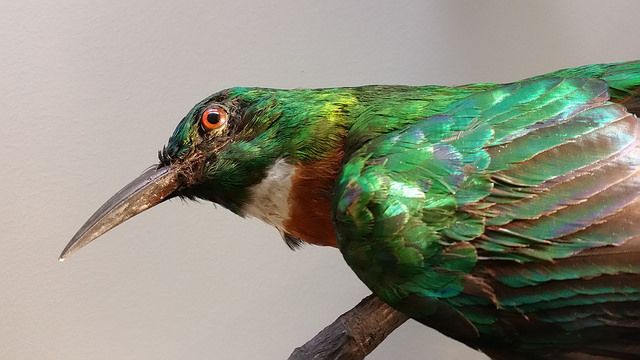
birdpic

Today we would like to share a research request from historic taxidermy expert Pat Morris. Pat says:

I have been commissioned by the National Trust (NT) and English Heritage (EH) to write a book about ‘Taxidermy and the Country House’. I know about collections in houses managed by NT and EH, but finding out what’s where in privately owned mansions is proving difficult. I have been checking 19th century literature (county avifaunas particularly) for references to past collections, and I am trying to find out how many are still extant. I have also been asking around, which is what I’m doing now. If you know of any old collections of birds or hunting trophies in major country houses, I would be glad to know where, please. Many of the big houses, especially in East Anglia and in Shropshire, had substantial taxidermy collections that ended up in local museums, having been donated when no longer wanted at the Big House. If you know of any of these collections, who collected them and the house in which they were previously displayed, I would be grateful for your assistance.

If you have any information that could help in this matter, please contact Pat Morris at: pat.morris5@outlook.com

How ‘The Beetles’ Changed my Life

Beetles are one of the most successful groups of organisms on the planet. In the UK there are over 4000 species, compared to fewer than 600 wild bird species and around 90 mammal species. Beetles are critical to the health of many habitats, through their roles as feeders on plants and fungi, recyclers of animal and plant debris, and as predators.

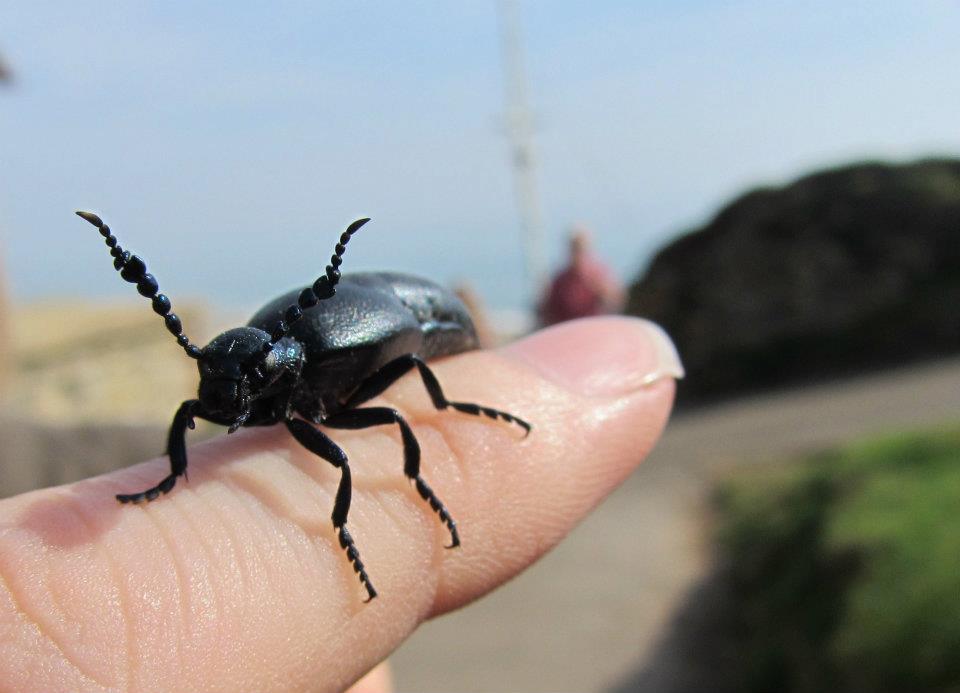
When I first began volunteering with natural science collections at Plymouth City Museum, I occasionally assisted local entomologist Peter Smithers of Plymouth University, who regularly ran ‘Bug Hunts’ with schools around the Devon and Cornwall area. It was here that I came across some of my first beetles. In 2010, whilst walking along the South West Coast Path near the chalk cliffs at Beer, I found a black beetle with a vinyl-like sheen. It was beautiful, but unlike anything I had seen before. I later discovered that it was from a distinctive group called Oil Beetles (Meloidae), which possess one of the most extraordinary life cycles of any UK insect: they are nest parasites of solitary mining bees such as Andrena, Anthopora, and Lasioglossum.

After a female Oil Beetle lays her eggs in a nest hole, the larvae (known as triangulins) wait on a plant until they can attach themselves to a passing bee, using hooks on their feet. The larvae then eat the stored pollen and nectar in the bee’s nest. The strategy means minimal effort from the adult female in raising her young, and the larvae have all the food they need.
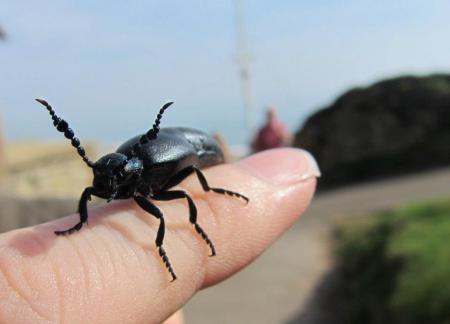
Black Oil Beetle (Meloe proscarabaeus)

Black Oil Beetle (Meloe proscarabaeus)

At the time of my discovery, Buglife was leading the way in trying to understand the state of Oil Beetle populations in the UK, which had suffered severe declines over the past 100 years. With four species believed to be extinct already, there was an urgent need to understand the distribution of the remaining Black, Violet, Rugged and Short-necked Oil Beetles. Buglife launched an Oil Beetle Recording Scheme to map their distribution and engage people of all ages through citizen science.

The survey results have enabled Buglife to learn more about the habitat preferences and hosts of the remaining species, and gain a better understanding of the health of the UK landscape, as Oil Beetles are restricted to wildflower-rich habitats, unimproved coastal grasslands, and woodland edges. Two species of Oil Beetle that were believed to be extinct in the UK have been re-discovered. The Short-necked Oil Beetle was found in South Devon in 2006, before a much larger second population was found on the Isle of Coll in Scotland in 2010. The rare Mediterranean Oil Beetle was found on the same Devon site in 2012, having been last recorded in Kent in 1906.

The efforts of Buglife, local recorders and naturalists have produced valid records to create time series of biodiversity data. Museum collections can also provide useful time series data for conservation efforts, based on specimen label data in terms of location and distribution in a given year. Where a species has been recorded in a particular place and time, we can perhaps find relic populations or sites for reintroduction.
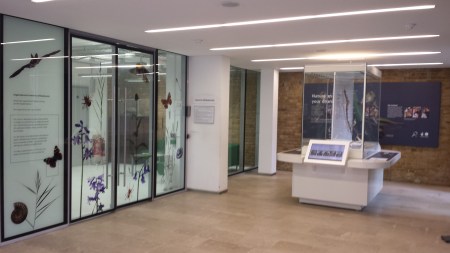
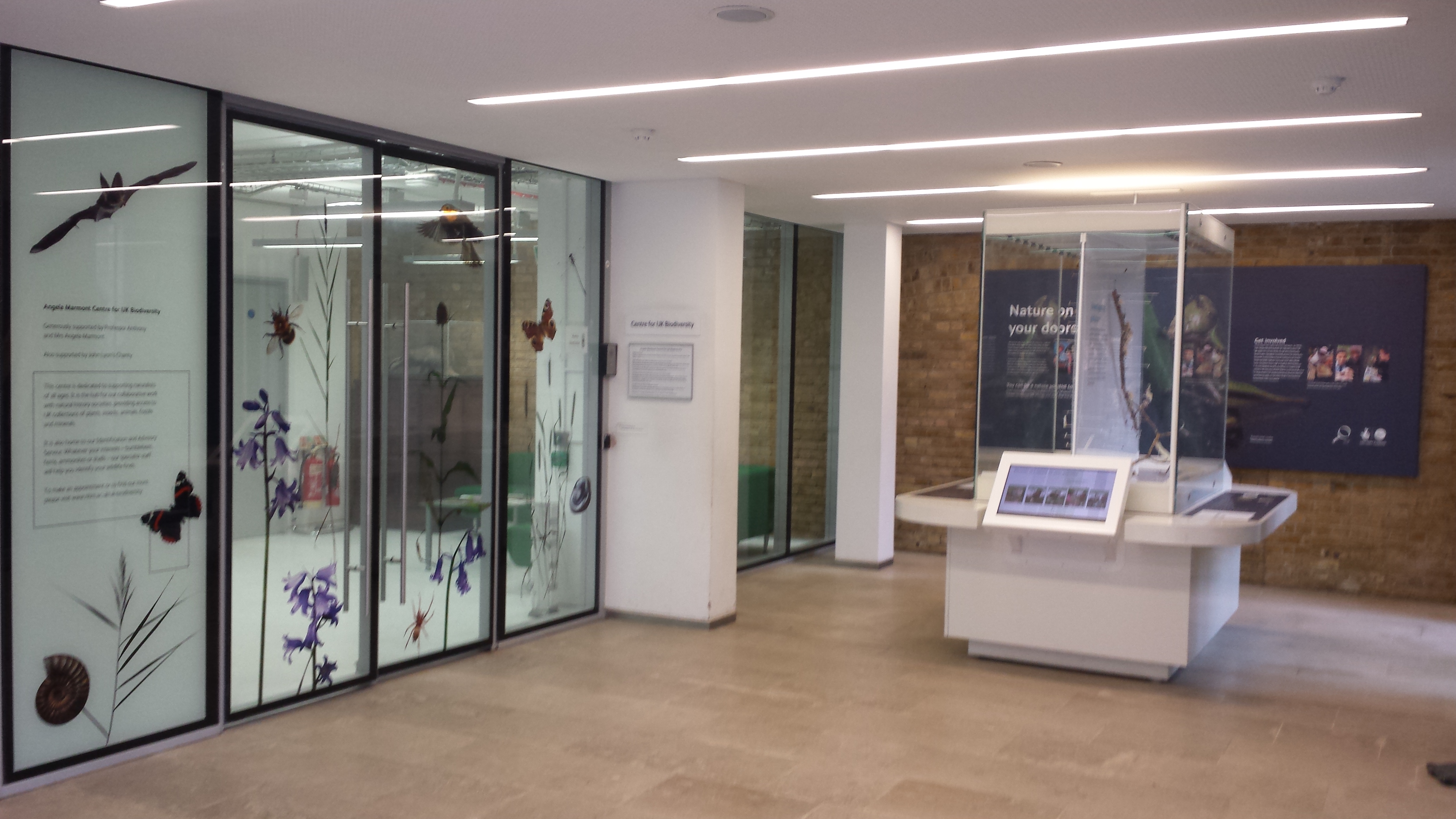
Interior of the Angela Marmont Centre, NHM

Angela Marmont Centre, NHM

It was my interest in Buglife’s Oil Beetle recording scheme that led me to recently join the Natural History Museum’s Angela Marmont Centre for UK Biodiversity (AMC) as an Identification Trainee. The AMC provides world-class facilities in the museum’s Darwin Centre for citizen scientists, as well as expert and amateur naturalists, to enable them to identify UK species using the AMC’s extensive reference collections. Working here is brilliant, and I hope to be trained to identify the key UK biodiversity groups, gain more practical experience of surveying UK wildlife, assist the AMC team in developing citizen science projects based around museum collections, and continue to develop collections management experience through curatorial projects.


Anthony Roach
Skills for the Future Trainee & Science Educator
NHM


NatSCA Digital Digest

mothdigest

In the blogosphere

For those of us that missed the Progressive Palaeontology conference, Elsa Pancroft, aka Giant Science Lady, has done a great write-up of it. I urge you to take a look.

Delicious news for the GCG: The Geological Society are running their annual bake-off again this year. No lawyers were harmed in the making of these cakes, unless they forgot their oven mitts.


In the news

The appreciation of skeletal form is spreading: first Trafalgar Square’s Gift Horse, now the City of London Academy has unveiled a 13 metre chicken. If anything will stop a person eating meat it’s being killed by a giant chicken.


Conferences and Workshops

Today marks the first day of the Linnaean Society’s two-day Digitisation Seminar. I’m looking forward to hearing from people attending, as it fits quite nicely into this year’s NatSCA Conference theme. Also really looking forward to seeing you all there.


Content assembled by Samuel Barnett