Tweeting up a Storm

With the theme of last week’s 2015 NatSCA Conference being sharing collections through social media, there was much discussion about Twitter and the many natural science-related hashtags that abound. So we thought we should compile a list, to make it easier for people wanting to get involved to know what’s out there!

For those new to Twitter, a few pointers:

  • It doesn’t matter how you write hashtags (some capitalisation/all lower case), but capitalising the first letter of each word can make them easier to read, and removes the risk of embarrassing unintended meanings (remember #susanalbumparty?).
  • If you’re starting a new hashtag, search for it first on Twitter to see if it already exists and if so, how it’s used. Also don’t make it too long. It will eat up your 140 characters, and other people will be less likely to use it.
  • When tweeting about an event, find out if there is an official hashtag. If you’re the organiser, communicate what it is! There were so many variations used for International Museum Day this year that it was confusing. This also dilutes the pool of tweets that people will see if they’re following one of several hashtags for the same event, and makes it more difficult to compile them in Storify.

Weekly Hashtags

There are many hashtags based on days of the week:

Monday

#BotanicMonday

#MaggotMonday

#MewseumMonday

#MineralMonday

#MolluscMonday

Tuesday

#TaxidermyTuesday

#TaxonomyTuesday

#TrilobiteTuesday

Wednesday

#WaspWednesday

#WeevilWednesday

#WombatWednesday

#WormWednesday

#WrasseWednesday

Thursday

#TherapodThursday

#ThinSectionThursday

Friday

#FluidFriday

#FlyFriday

#FossilFriday

#FungusFriday

Saturday

#SauropodSaturday

#ScienceSaturday

#SeaBirderSaturday

#SpiderSaturday

Sunday

#ScienceSunday
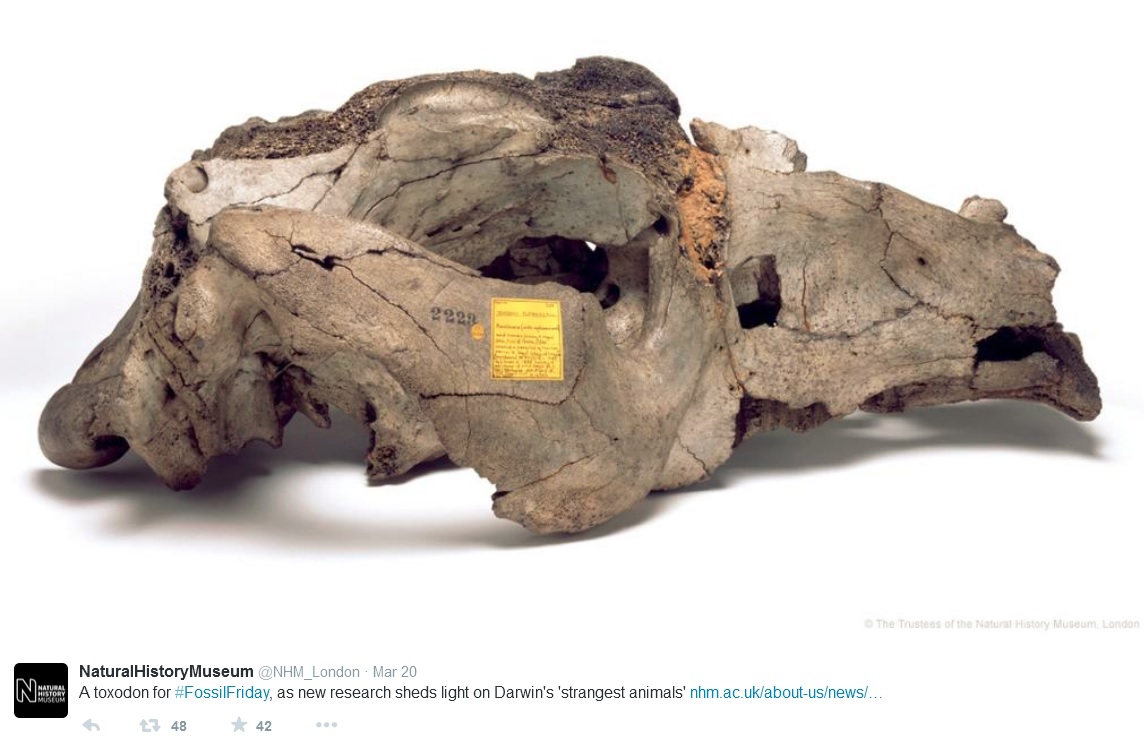
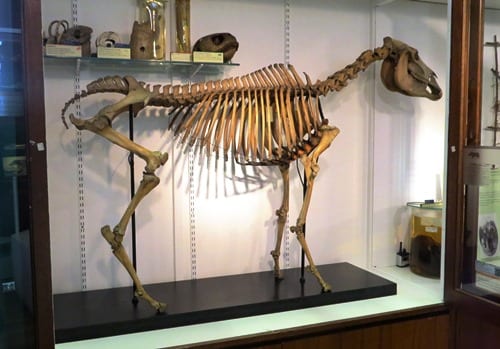
A Toxodon skull from @NHM_London for #FossilFriday

A Toxodon skull from @NHM_London for #FossilFriday

Others

There are lots of other natural science and museum-related hashtags out there, for use any time!

#CreaturesFBTS – Creatures from behind the scenes. Share images of amazing specimens from your stored collections.

#NatSciFashion – Natural science fashion. A new one to come out of this year’s NatSCA conference! Share images of your fabulous natural science-related wardrobe/bags/accessories!

#SciArt and #BioArt – Share your scientific artworks.

#MuseumDocumentation – Explain what documentation work you’re doing, and why it’s important, in only 140 characters (120 once you’ve added the hashtag). Try it, it’s quite a challenge!

#MuseumSelfie – Share selfies in your museum or with your specimens! There is also a Museum Selfie Day. The next one is on 20th Jan 2016.

#MuseumShelfie – What’s on your museum shelves?

And there are many, many more! Museum Week, organised by @CultureThemes, is also a really good event to get involved with on Twitter. It features seven different themed hashtags over seven days, and is now an international affair. A great way to reach new audiences and share your collections! It ran in March 2015, and will be back for 2016. Culture Themes also organise special museum-related hashtags throughout the year, so keep an eye on their site for upcoming days.

Thanks to everyone on Twitter who offered suggestions! What have I missed? What are your favourites?

Rachel Jennings, NatSCA Blog Editor

NatSCA Digital Digest

Chameleon

Events

Now that the 2015 NatSCA Conference is over, the next conference for your diaries is Refloating the Ark: Connecting the public and scientists with natural history collections on 17th – 18th June at Manchester Museum. The full programme, abstracts, and booking information can be found here.

Developing Skills for Collection Managers – 28th May 2015, NHM. An afternoon seminar and workshop run by Nick Poole of the Collections Trust, providing tips on putting collection competency frameworks into practice and improving collections skills.

Jobs

Keeper, Science and Technology – National Museums Scotland. Applications close 31st May 2015.

Learning and Events Assistant – NHM, Tring. Applications close 31st May 2015.

As always, do keep an eye on the jobs page of the NatSCA website!

Around the Web

Watch the team at the Museum of Zoology, Cambridge decant their carnivore case in 2 minutes! Also check out this blog for a conservator’s-eye view of their current redevelopment project.

A good article about how the current financial crisis has left the natural history museum in Dublin in dire straits. A very sad story.

The International Institute for Species Exploration has released a list of the Top 10 New Species of 2015! The list is released on 23rd May each year, to coincide with the birthday of Carolus Linnaeus, the father of taxonomy. Happy birthday Linnaeus!

The HMS Challenger Project – putting the voyage back together

The Challenger voyage and the project

Professor William Benjamin Carpenter and Charles Wyville Thomson came up with the idea of exploring life deep in the ocean. The HMS Challenger expedition (1872 – 1876) was the first around-the-world expedition to discover life, the chemistry, and the physics of the deep sea.

A lot of you NatSCA readers will have heard about the HMS Challenger Project run by Holly Morgenroth, the natural history curator of the Royal Albert Memorial Museum (RAMM) in Exeter. I am Heather, her trainee. I am helping to communicate with and visit museums around the UK and further afield to discover where the thousands of zoological, botanical, geological, and ethnographic specimens have got to, as well as any other bits and bobs related to the expedition, such as scientific equipment, documents and photographs.

Heather working at Bristol Museum

Heather working at Bristol Museum

What happened on the HMS Challenger?

The HMS Challenger set off from Portsmouth on 21st December 1872 and visited about 360 stations, going around all the oceans except the Arctic. At each station, there were trawls or dredges to collect specimens and bottom deposits. Temperature, depth, and specific gravities were all recorded, as well as the composition of the water at many stations.

Throughout the voyage, collections of material dredged or trawled from the ship were sent to William Turner of the University of Edinburgh, who examined their condition and looked after them until the ship returned in May 1876. Although the voyage focused on deep sea collections, the naturalists on board also collected specimens on land – birds, insects, mammals, and plants. They met the inhabitants of the many islands that they visited, some of whom gave the crew members souvenirs, and sold or gave them specimens that they had found on the island.

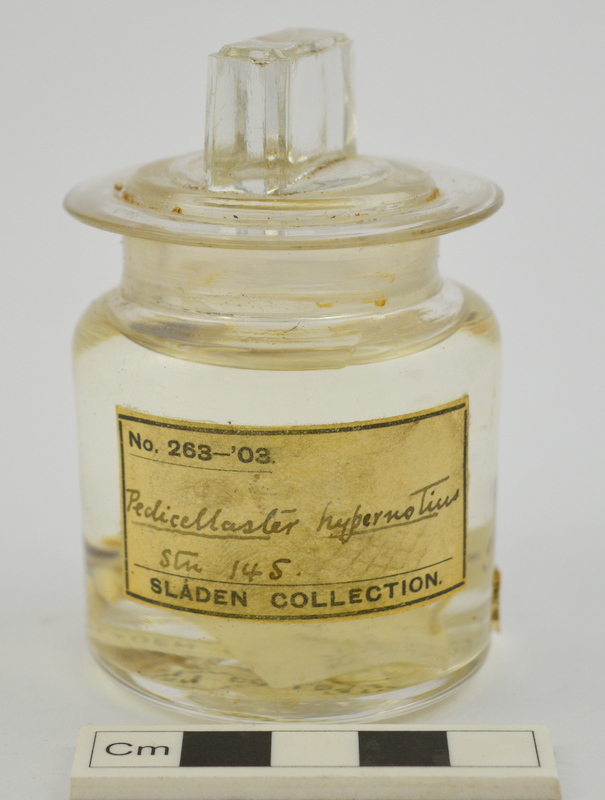
Jar containing starfish in from station 145 (at RAMM)

Jar containing starfish in from station 145 (at RAMM)

So what happened to the collected material?

Once the voyage returned, specimens were sent to numerous scientists specialising in certain areas of natural history. Once sorted through, all of the type specimens were supposed to be sent to the Natural History Museum, then the British Museum (Natural History), and the duplicates were supposed to be returned to Wyville Thomson at the Challenger office in Edinburgh. Sadly, Thomson died in 1882, before a lot of the reports were published. John Murray took over and, from what I have gathered, some duplicate sets that were returned were then distributed to people and museums who took an interest, and some of the scientists studying the material just kept it themselves. In 1918, a few years after Murray’s death, a person called R. Dykes sold off the material that remained at the Challenger office in Edinburgh.

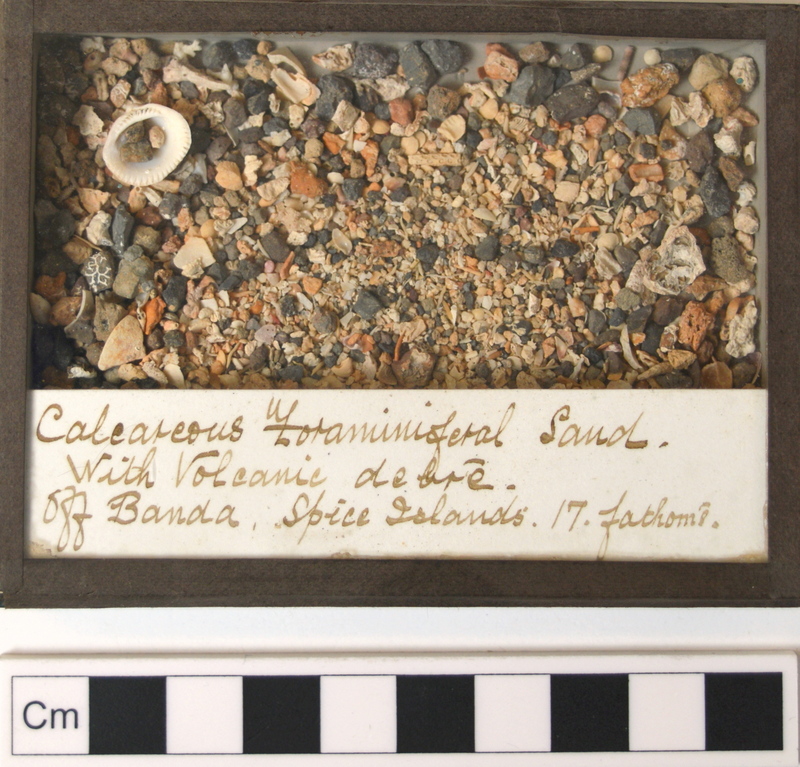
Bottom sediment (from Bristol Museum)

Bottom sediment (from Bristol Museum)

Where is the Challenger material and what is happening at RAMM?

It is everywhere – from Exeter to Dundee, to Ireland, the US and Australia! We are building an online database, onto which we will put as much Challenger material as we can find. This is for researchers, who can find out where they need to go to look at certain material, and for members of the public with a general interest in the voyage. The Challenger expedition was a hugely important voyage in science, discovering thousands of new species. It is important to bring all the material back together!


Heather Davies, Museum Trainee – HMS Challenger Project

Royal Albert Memorial Museum

NatSCA Digital Digest

Coot

Jobs

Curator of Pleistocene Mammals at the Natural History Museum

Duration: fixed term (12 months)

Closing date: 27th May 2015

To apply, click here

Conferences and Workshops

This will be the last NatSCA Digital Digest before Museums Unleashed begins next week in Bristol. It’s set to be a great event with Some terrific speakers. Don’t forget to be a part of it. Those of you that really can’t go can follow the live tweets at #NatSCA2015. The conference lasts for two days from the 21st May but, if previous years are any indication, the fun will start the night before.

We also have an Osteology Workshop coming up in Cambridge on the 8th September 2015. If you’re still in two minds about going, why not ask some of the people who will be speaking? I’m sure they would be happy to answer any questions you may have – either online or in person next week if you’re in Bristol.

The Museums Association Conference will be with us on the 5th and 6th of November but the Early Bird booking ends on the 7th August. The theme this year is “Radical Futures”. For more information, click.

Exhibitions

The Oxford University Museum of Natural History is featuring an art exhibition of New World Vultures by Nigel Hughes in the Café Gallery. There is also a talk this evening about the exhibition by the artist if you’re in the area.

In Other News

If you’re in London this evening, come down to the RSPB’s Summer Party, featuring guest speaker Darren Naish. You can find out the details of the event here. You don’t have to be an RSPB member but it helps.

Content assembled by Samuel Barnett