“This museum is disgusting, why did you kill these animals?”

This post is the first in our series of presentation write-ups from the 2015 NatSCA Conference, Museums Unleashed!


I was asked to deliver a natural history version of my social media challenge for NatSCA’s 2015 Museums Unleashed conference. The idea of the challenge, which I’ve run in the past with students and museum professionals who might be afraid of using social media, is to informally discuss how to respond, if at all, to difficult questions that might come in on social media.

Before the conference, I asked NatSCA members to suggest any real world examples of difficult comments and queries that any of them may have received through blogs, Twitter or other social media platforms that were challenging to respond to. Any museum professional worth their salt who has worked in the public galleries can very confidently deal with those tricky questions, ranging from “Did you kill all these animals?” through to “If we evolved from monkeys, why do men and women have a different number of ribs?”. However, with social media it’s different because those responses are ‘published’, and often the platform might not be best suited to dealing with complexity.

There are also considerations depending on guidelines or policies that your institution has in place; some museums seem to have a policy of broadcasting but not engaging, and others will have topics they just don’t engage in. Are you responding as the institution or is it clear that it’s your opinion? Do you have absolute freedom to say what you want on personal social media accounts, even though you may be using them on ‘work’ time (the answer is often no)?

"This museum is disgusting!" Mark lays out the challenge (Image: Grant Museum of Zoology, UCl (@GrantMuseum) via Twitter)

“This museum is disgusting!” Mark lays out the challenge (Image: Grant Museum of Zoology, UCl (@GrantMuseum) via Twitter)

The idea of the workshop was to work in teams to decide how to respond to some tricky social media situations sent in by natural history museum professionals from across the UK, and hopefully as a group show that it’s not always scary. Also, importantly, that you may not always wish to engage, but by using social media cleverly you can engage with your virtual audiences.

First up, though, were the team names. This session was the last formal session of a jam-packed conference, and it showed with the names that the UK’s best and brightest museum professionals came up with: #newbies, Team Celtic and Then Some, Is it Dead? Poke it, Social Six, Team Large, Come Back Right At You, The Con Artists, and the appropriately named Team Conference Fatigue. Exactly the mix of humour that works with social media.

The teams assemble (Image: Justine Aw (@NotCritters) via Twitter)

The teams assemble (Image: Justine Aw (@NotCritters) via Twitter)

There were five questions the teams drafted responses to:

  1. This museum is disgusting, why did you kill these animals?
  2. Why are we wasting taxpayer’s money on research into crab sex. What about cancer and the NHS?
  3. How can you justify taking donation money from an anti-climate change lobbyist?
  4. I went to that lecture last night and thought @MusSpeaker was a rubbish speaker!
  5. The animal in this photo is a moonfish not a southern opah!

On first reflection, these questions might set you squirming. Do you engage if it’s tough to respond in 140 characters? If you don’t engage, will it look like the museum is trying to hide something? The NatSCA members rose to the social media challenge, however, and came up with a range of serious, bold, funny, and thoughtful responses. I won’t got through all the ‘answers’ here, suffice to say the merits of crab sex research were defended, there was open discussion about museum ethics (which we rarely display in exhibitions), and a number of very honest responses perhaps spurred on by conference fever.

A selection of responses, both serious and silly (Image: Mark Carnall)

A selection of responses, both serious and silly (Image: Mark Carnall)

Overall most teams decided to engage rather than ignore any of these difficult responses. One top tip was to make sure you take a step back, as sometimes a hasty or heated response could create a social media storm. Some of these comments could be prompters for policy statements, blog posts, or even exhibitions, that address head-on some of the meatier issues that we may have been reticent to engage with in the past. Some of these could result in genuine engagement, as we saw with a real example of an insect sex tweet from the Natural History Museum, London, and some are an opportunity to show the more human side of the staff that work in, and make, museums.

The workshop got a lot of positive feedback, and hopefully rounded off the two day showcase of how social media can help rather than hinder all areas of museum work, and that engaging with the social side (the hint is in the name) is something to be embraced and not feared.

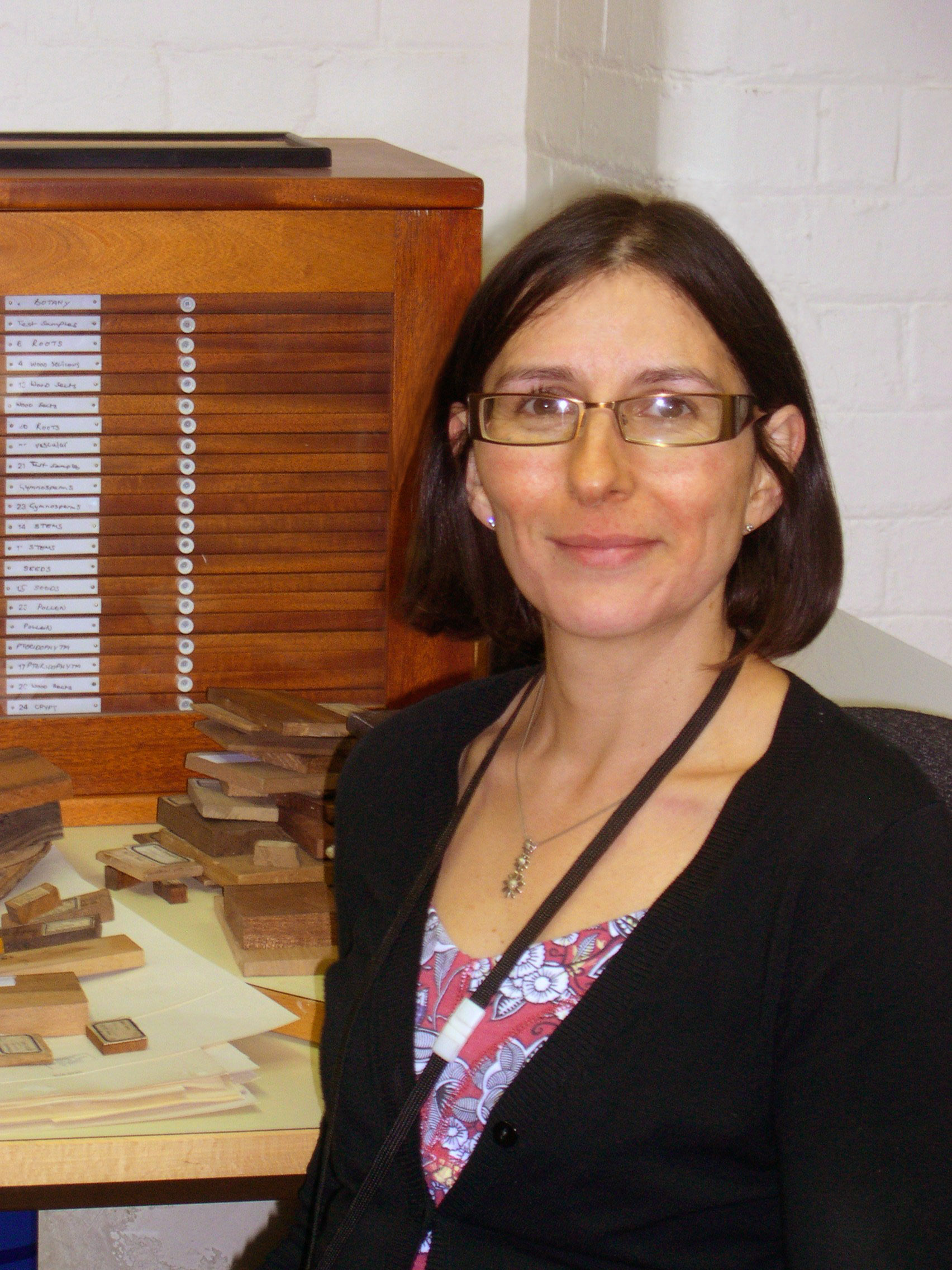
Mark Carnall
Curator – Grant Museum of Zoology, UCL

Introducing the new Conservation Representative for NatSCA

After many years of sterling work, Simon Moore has decided to step down from NatSCA committee, and so, with his continuing support, I have taken up the reins as Conservation Representative for NatSCA.

Vicky_1

Quick introduction…My background is biology and ecology. I am an accredited natural sciences conservator, specialising in plants, paper, bound herbaria and historic biocides.

Since graduating, I worked at the National Museum Wales (AC-NMW) as the botanical conservation and research officer. During this time I achieved an MSc in Conservation Science, and later a doctorate in devising a simple tool to identify mercury in herbarium collections and for mitigating hazardous biocides from the working environment.

This area of work still interests me, and I provide advice to individuals and institutions on how best to tackle this area. I recently left the museum after 24 years (I know!) and have set up my own conservation consultation company.

I have been very fortunate in gaining some really interesting projects to work on since leaving the museum and will post snippets about these shortly.

DSCN0188

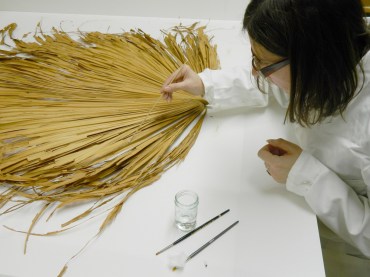
Conserving Kew’s Wallace Palm collection

NatSCA is a highly motivated and inspirational institution and requires a lot of time and energy from its committee. To keep this
level of commitment to its membership, NatSCA is now championing Volunteer roles to aid committee core roles. To help with sourcing information and input for this blog, I will be supported by Lucie Graham Natural History Conservation Officer at Lancashire Conservation Studio, Manchester. Thanks very much Lucie!

Apologies in the long delay in this announcement but please watch this space as there is plenty of upcoming conservation news and events, which will be posted regularly to this blog; the NatSCA calendar and the notes and comments where more detailed information will be posted. I look forward to hearing your news and hopefully we can keep this a lively and informative blog.

Vicky Purewal

Dr V Purewal ACR
Pure Conservation
Cardiff

vjpurewal@gmail.com

NatSCA Digital Digest

NDD-EvilEye


In the Blogosphere

Our conference has drummed up a lot of blog interest. The Museums Association and Museums & Heritage Advisor both ran posts on it, written by our wonderful members. Also see Rachel’s piece Tweeting up a Storm on the conference and the power of social media hashtags.

Claire Madge has written an excellent piece on her experience of volunteering. Regular readers will remember Claire from the interview she gave on autism and museums last year.

Upcoming Events

The Cheltenham Science Festival has begun and will be continuing until the 7th June. If you’re free this weekend, pop along. Among the many reasons to go, seeing NatSCA patron Ben Garrod quiz palaeontologist Jack Horner has got to be right up there.

Professor of Zoology Matthew Cobb at Manchester University will be giving a talk with evolutionary biochemist Nick Lane on the 11th June at the Royal Institute called The Story of Life – a look at how genetics has impacted our understanding of biology.


There are some exciting things in the pipeline, which I want to tell you about here but I can’t yet *sits on hands*. Just watch this space.

Content assembled by Samuel Barnett

#NatSCA2015: The Aftermath

Another NatSCA conference is done and dusted. This year has been one of our most successful and enjoyable conferences yet, and we’d like to thank everyone who helped to organise such a brilliant event!

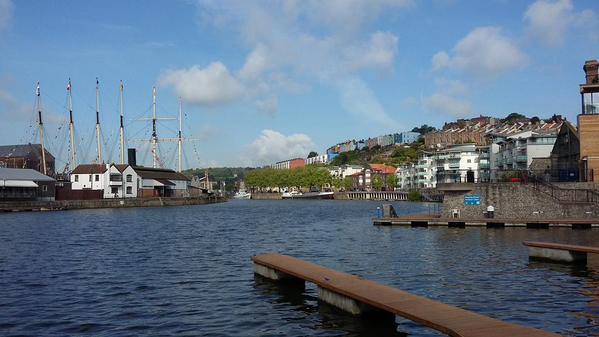
A bright Friday morning in Bristol for NatSCA 2015 (Image: David Gelsthorpe, via Twitter)

A bright Friday morning in Bristol for NatSCA 2015 (Image: David Gelsthorpe, via Twitter)

If you missed the conference, or just want to relive it, we’ve collected a selection of the live-tweets from the conference into a Storify, which you can find here: https://storify.com/Nat_SCA. There were so many tweets, we had to split it into four parts! Also check out the Storify of the Bristol Museum tours made by journalist Henry Nicholls, who was one of our speakers: https://storify.com/WayOfThePanda/natsca-tour-of-bristolmuseum.

For more conference analysis, see the write-up in the Museums Journal by Vicky Pearce of the Natural History Museum, and a piece in Museums and Heritage Advisor by Jan Freedman of Plymouth City Museum and Art Gallery.

All of our fantastic speakers will be writing up their talks for us, and these will appear soon in the Journal of Natural Sciences Collections, NatSCA Notes & Comments, and on the blog.


Rachel Jennings, NatSCA Blog Editor

NatSCA Digital Digest

NatSCA polar bear

Jobs

Education Assistant – National Museum of Ireland – Natural History

Duration: Permanent

Closing date: 5th June 2015

To apply, click here

Conferences and Workshops

A few exciting talks are coming up at the Natural History Museum soon, which I thought would be worth highlighting for you. The first is the Annual A. R. Wallace Lecture which this year will take place on the 2nd June 16:30-17:30. The subject is ‘Wallace, Darwin, and Spiritualism: The Trial of the Spirit-Medium Henry Slade, 1876’. For more information, click here.

On the 24th July at 16:30, the SciFri Seminar series brings to you ‘The Greatest Living Naturalist- The Life and Conflicts of Professor Richard Owen’, in celebration of Richard Owen’s birthday. It will be in the Neil Chalmers Seminar Room. For more information, click here.


Exhibitions

The long awaited ‘Power of Poison’ exhibition has opened at the Old Truman Brewery in London. The website invites you to ‘discover the alluring, seductive and terrifying role of poison and how it affects our everyday lives through nature, myth, medicine and healing’ and of course, will contain spiders, snakes, and other lovelies. For more information, click here.

Content assembled by Emma-Louise Nicholls