Collecting Coventry, a Temporary Exhibition at the Herbert Art Gallery & Museum

Written by Ali Wells, Curator (Herbert Collections), Herbert Art Gallery & Museum.

This blog post details a temporary exhibition at the Herbert, how it was presented, how decolonisation and feedback were integrated into the show. This is an overview, please get in touch if you would like more information on any aspect of the exhibition.

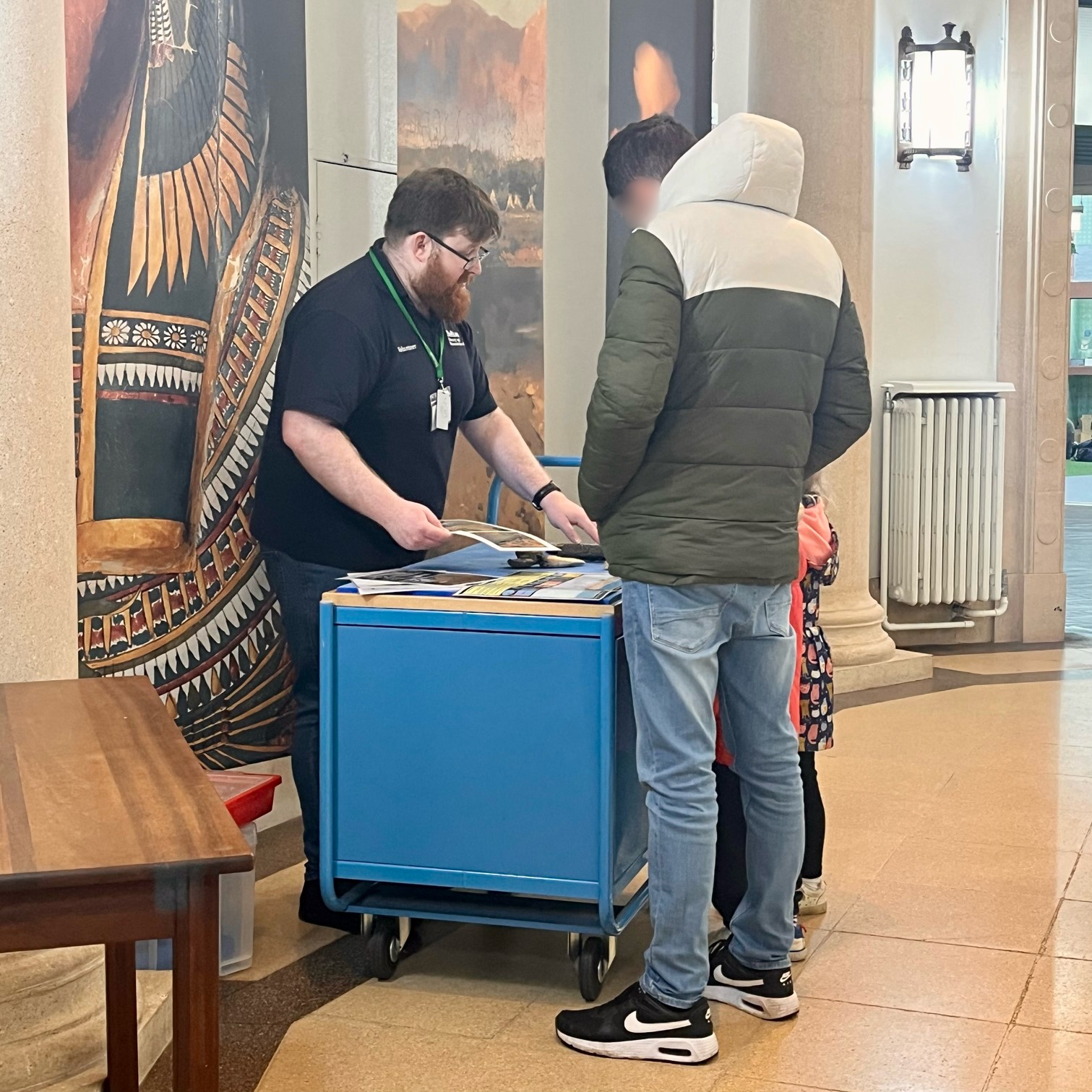
In May 2024 the Herbert launched its latest major temporary exhibition, Collecting Coventry. The display focuses on the history of collecting in Coventry museums and showcasing the breadth of the collections.

The main aims were to

  • Present the Herbert’s collections after several years of external or predominately loan-based temporary exhibitions.
  • Get out visitor favourites like the Lowry and display stored objects for the first time.
  • Look like a museum store.
  • Give visitors the opportunity to comment on aspects of museum work and ask questions relating to collections and displays. For example, Collections Development policy, display of human remains, use of technology, future exhibitions, representation.
Continue reading

NatSCA Digital Digest – December 2024

Compiled by Olivia Beavers, Assistant Curator of Vertebrate Zoology at World Museum, National Museums Liverpool.

Welcome to the December edition of NatSCA Digital Digest.

A monthly blog series featuring the latest on where to go, what to see and do in the natural history sector including jobs, exhibitions, conferences, and training opportunities. We are keen to hear from you if you have any top tips and recommendations for our next Digest, please drop an email to blog@natsca.org.

Sector News

NatSCA Conference & AGM 2025

The 2025 NatSCA conference Call for Papers is open! The deadline to submit is 5pm GMT Friday 17th January. In the meantime, don’t hesitate to reach out to the committee with questions. (conference@natsca.org) We look forward to reading your submissions!  

Making a Difference: Showing the Positive Impact of Natural History Collections

The Annual Conference & AGM of the Natural Sciences Collections Association will be held on Thursday 8th and Friday 9th May 2025 at The University of Manchester, Manchester Museum.

Natural history collections are involved in a huge range of work that has enormous positive impacts on people and the planet – this is a conference to share these stories. The #NatSCA2025 conference invites proposals for presentations looking at impact, how our work is making a difference, how we measure it, how we show success, and how we advocate for collections.

We seek ideas from the natural history collections community, educators, collaborators, and beyond. We are interested in practical lessons, unique solutions, new collaborations, and to show what has and hasn’t worked. We are particularly looking for presentations that share the differences museums are making in:

Continue reading

Addressing Biodiversity Loss and Climate Change Together: A Great Opportunity for Museums with Natural History Collections

Written by Henry McGhie, Curating Tomorrow, henrymcghie@curatingtomorrow.co.uk

This year has seen not one but two ‘COPs’ (Conference of the Parties), the big meetings where governments monitor their progress towards international agreements. In early November, COP16 for biodiversity was held in Cali, Colombia. In the second half of November, COP29 was held in Baku, Azerbaijan. These big meetings get a lot of press attention, but they are rather poorly understood and are not always reported that well. If you think the COPs are where the leaders of the world get together to hammer out the world’s future, the reality is much more humdrum. By the time countries gather together, they have usually made up their minds on their negotiating positions and not much will change from there on. COP has also become too big and has many ‘layers’ to it. For the climate COPs, there is the Blue Zone, which you need to get a special accreditation to enter (referred to as a ‘badge’), and within that there will be really big plenary events and smaller side events that everyone with a badge can attend. There are also lots of negotiations taking place, inside rooms, that you often can’t access as well as a mass of pavilions, mostly from countries and in some years, businesses. Outside the Blue Zone, there is a public-facing Green Zone that the public can access (sometimes it is in a museum, as it was in 2021 when it was in Glasgow Science Centre). When the climate COP is on there is also a lot of activity going on outside of COP itself, mostly organized by civil society groups, and also by businesses. So, when people say they’ve ‘been to COP’ it can mean a few different things.

Continue reading

Thoughts on Working with Natural Sciences Collections (and hoping to continue) in the United Kingdom as an Emerging Conservator.

Written by Anais Ellis, Project Conservator, Nature + Love at the Horniman Museum and Gardens.

Around a year ago I concluded three years of formal training to become a conservator. At the Institute of Archaeology, University College London (UCL) the training is taught in two sequential parts.  First, the MA, Principles of Conservation, grounds an understanding of conservation practice within ethical frameworks and principles. Following this, the MSc, Conservation of Archaeology and Museums, includes a year of developing remedial conservation skills in a lab and a 9-month placement in a museum or adjacent environment. The formative moment during this placement was my first experience working with natural sciences collections. There were fossils to clean, fluid specimens to top-up, and a taxidermy ringed seal with several claws missing that the curator asked to be reconstructed. Now, a year later, having finished studying and having worked consistently with natural sciences collections in the United Kingdom (UK) it feels like a good moment to reflect on these experiences. As hoped, they have been wonderful.

Continue reading

Conservation Matters in Wales – Christmas Conference 2023

Written by Sebastien Lherondel-Davies, 2nd year BSc student, Swansea University, whilst on placement at National Museum Cardiff and Swansea Museum.

On Wednesday 13th December 2023, conservators and curators from all over Wales gathered in Swansea for the first in-person Conservation Matters Wales Christmas Conference since the pandemic. Conservation Matters Wales is a collaboration between Amgueddfa Cymru – National Museum Wales, the Federation of Museums and Art Galleries in Wales, and Cardiff University. The event, hosted by the delightful Swansea Museum, was an opportunity for professionals in the museum collections conservation sector to come together and share the wide range of projects they have been working on. The conference provided us with the chance to present our research project on a historic Lepidoptera collection. 

Swansea Museum
Continue reading