Five Lessons for Life from Working on the Horniman’s Historical Herbarium

Written by Imogen Crarer during a student placement at the Horniman Museum and Gardens early last year. Imogen recently graduated from King’s College, London with an MA in Modern History with Distinction and is currently training as a curator at the Museum of Cornish Life.

You may think that I have taken slight leave of my senses or perhaps am being a pinch too ambitious in claiming that the Horniman’s historical botany collection is the source of 5 significant life lessons. However, “Yes! To science and history but also yes to life!” is my cheerful reply. Instead of dancing away merrily in a fit of musical theatre style exuberance, I shall explain how my student placement with the Natural History department researching the Herbarium gave me such insight.

Life Lesson Number 1: Often, the Simple or Basic Tasks are the Most Important.

Everything starts somewhere. My time at the Horniman highlighted that research processes and the museum journey of cataloguing, conserving and interpreting specimens for scholarly and public benefit has to begin with the basic “’ello ‘ello, what have we here?”. In my case, what we had were unbound volumes of Flora Britannica- physical specimens attached to annotated sheets collected mostly within the 1840s.

Having never previously been catalogued, the data from the handwritten labels on these specimens needed entering into the Horniman’s Collections Management System, Mimsy XG. Recording information on the database, such as scientific name, locality, and date collected, allows Horniman staff, volunteers and future researchers to know what is in the herbarium and explore its significance without having to disturb the specimens. While handy for convenience, it also helps us to conserve the specimens as repeated handling can damage these fragile, and beautiful, preserved plants. However it soon became apparent that the basic task of deciphering the handwriting and researching historical localities and common names was time-consuming, frustrating but also very rewarding. Transcribing the data from the specimens onto the database, I felt was my most useful contribution to the Horniman, and therefore my biggest achievement. It reminded me that taking the time to give yourself a solid foundation helps in anything that you do!
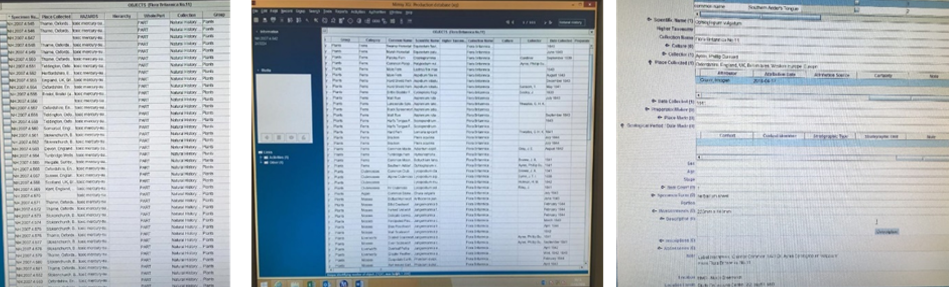
The collections management database used by the Horniman Museum; Mimsy XG. © Horniman Museum and Gardens.

Life Lesson Number 2: Little Things can Tell us a Great Deal.

The 175+ year old botanical specimens preserved in the herbaria have both historical and scientific significance. The specimens vary in size from approximately 2 cm to 30 cm in length, and the detail of delicate moss spores, flower buds, and leaf structures for example is wonderful. The specimen sheets tell us about the plants themselves. They also reveal a snapshot of the English countryside in the 1840s, particularly around Thame, Oxfordshire. Knowing the historical what, when and where allows us to make comparisons with current ecological data. This helps us to understand if and how plant species have spread or declined. This is particularly important for meadow flowers (represented strongly in the volumes I was working on) given that 97% of British meadows have been lost since 1945[1]. I feel that the Horniman’s historical botany collection and the present drive to conserve Britain’s green spaces and limit climate change, habitat destruction and pollution are much more linked than we might think.
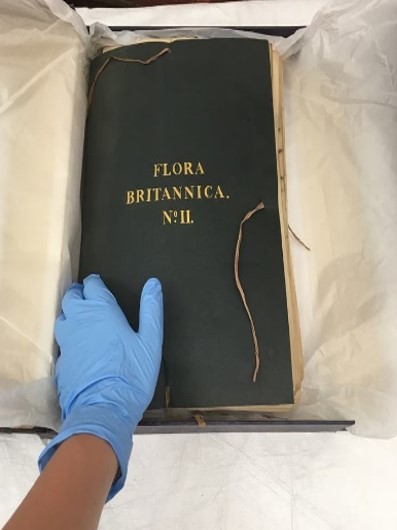
One of a number of unbound herbaria held in the collections. © Horniman Museum and Gardens.

Continue reading

NatSCA Digital Digest – February

Compiled by Sam Barnett, NatSCA Volunteer and PubSci Committee Member.

What should I read?

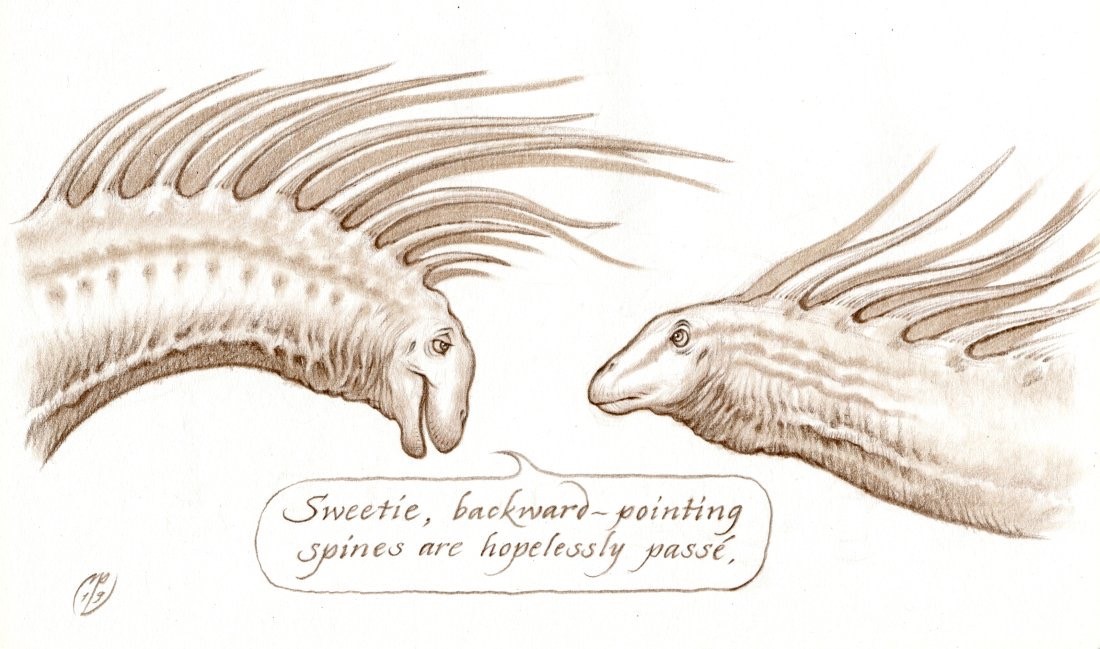
If you’ve not been keeping up with your South American sauropod discoveries, this next item might have completely passed you by. A new dinosaur has been named Bajadasaurus pronuspinax and hails from the Bajada formation of Patagonia. It bears a similarity to Dave Hone’s favourite dinosaur Amargasaurus but with far more flamboyant adornments – as illustrated here by Natee Himmapaan. You can read all about Bajadasaurus over at Nature or you can find a very good piece on it by Ed Yong here.

Bajadasaurus pronuspinax. (C) Natee Himmapaan.

In China, Qiang Fu and colleagues have proposed an earlier date for flowering plants; much, much earlier. This has been met with some cynicism from the palaeobotanical community and we’re looking forward to seeing how that plays out. Continue reading

NatSCA Digital Digest – January

Compiled by Dr Emma Nicholls, Deputy Keeper of Natural History at the Horniman Museum and Gardens.

What Should I Read?

Prolific author Darren Naish (of TetZoo) has pulled together a collection of exciting tetrapod-based scientific discoveries of 2018 in his latest article The Most Amazing TetZoo Themed Discoveries of 2018.

The government of New Zealand is under pressure to act on the trade of moa bones. This article is good food for thought re private sales of fossils; Moa for sale: trade in extinct birds’ bones threatens New Zealand’s history.

Of interest to many more of us than just curators, the top three most popular 2018 blogs posted on the Geological Curators’ Group website are:

1) Pyrite Oxidation: Where Are We Now? an excellent and informative article on the menace of pyrite decay

2) Up Inside Historic Dinosaurs about the Crystal Palace Dinosaurs, and

3) Contradictions, Conundrums and Lies which looks at the issues we face in museums!

Continue reading

Caring for Natural Science Collections – My First NatSCA Conference

Written by Hannah Clarke, Curatorial Assistant (Collections Access) University of Aberdeen, Museum Collections Centre.

This October I was lucky enough to attend my first ever NatSCA conference, thanks to funding from one of the NatSCA bursaries. I was originally a little daunted, as this was my first Natural History Conference, but I knew that I had to throw myself in the deep end!

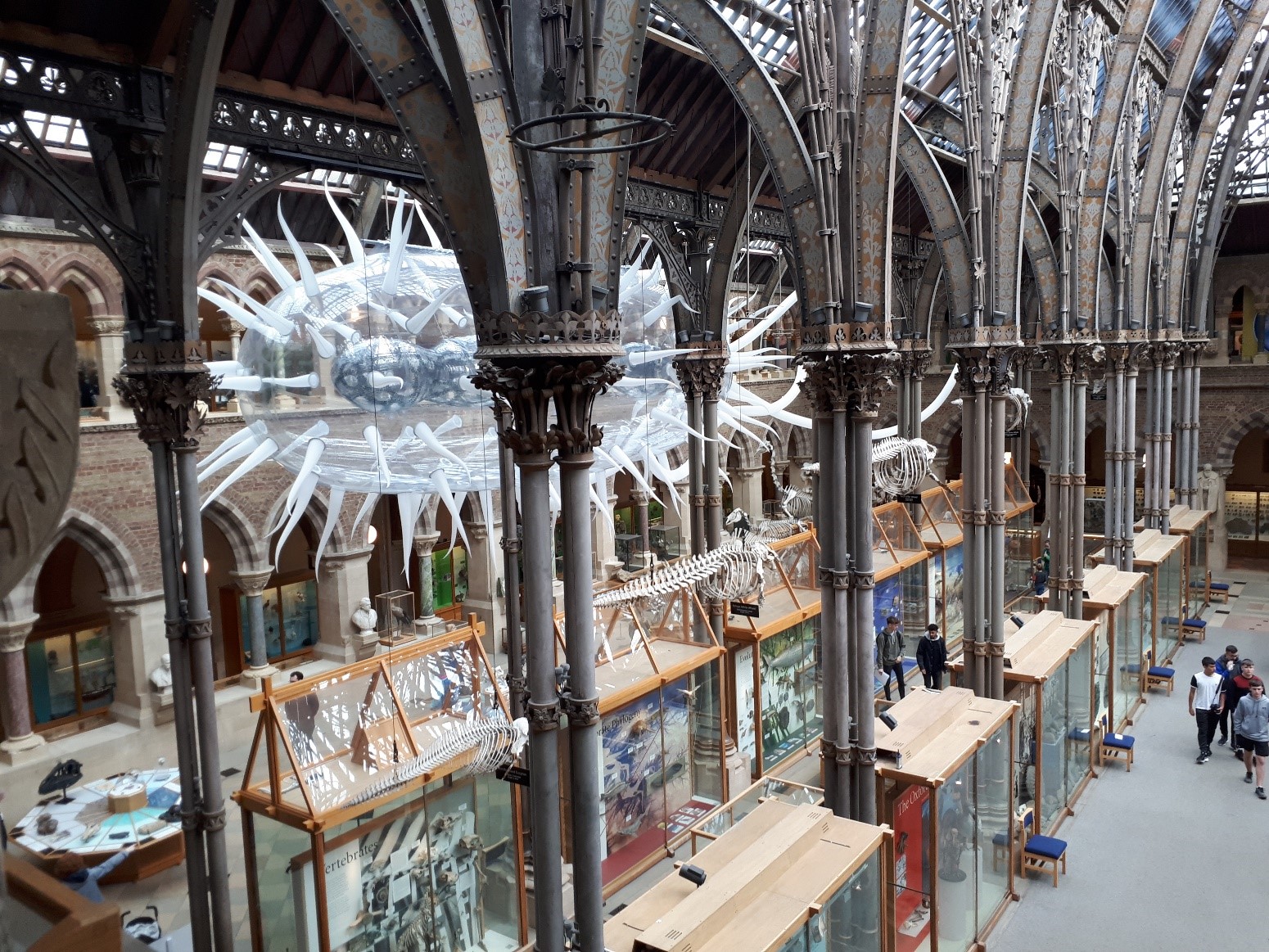
However, these worries soon dissolved, as everyone was really friendly, passionate about their specialism and eager to share their knowledge and experiences with everyone else in the room. Not only this, but the setting at Oxford University Museum of Natural History was a real treat, and I had a chance to take in the collection from above during coffee breaks.

View from the first floor at Oxford University Museum of Natural History, showcasing the impressive architecture and collections below. © Hannah Clarke.

Having originally trained as a conservator, I am now working in a collections access role, with responsibility for the upkeep of the Zoology Museum within my institution. Having been more focused on collections care in the last few years, I was keen to learn more about current advances in the conservation of natural history collections.

There were many highlights from the day, and as always at these kinds of events, new connections were made and advice offered openly to those with questions in the audience.

Continue reading

NatSCA Digital Digest – December

Written by Jan Freedman, NatSCA Committee Member and Curator of Natural History at Plymouth Museums Galleries Archives.

It’s the most wonderful time of the year! Festive celebrations are beginning, and this monthly digest is a bonanza of great things!

What Should I Do?

Big Natural Science conferences: Dates for your diaries!

Dead Interesting: Secrets of Collections Success: The NatSCA 2019 conference and AGM will be held at the National Museum of Ireland, Dublin between 1st and 3rd May 2019. The conference aims to unlock the secrets of collections success by sharing how we have used collections to benefit their organisations, communities and the wider world. The conference will focus on three themes:

  • Collections: Reveal your collections care, research and access secrets.
  • Engagement: What are your engagement success stories and how did you make them happen?
  • Museums and Tech: How has technology helped you unlock, understand and unleash your collections?

The call for abstracts is open, so have a look and present some of your amazing work to colleagues! All the information is here.

Continue reading