The Legacy of Entomologist Harold Edward Hammond

A Fellow of the Royal Entomological Society, Harold Edward Hammond, (1902 – 1963), was a keen Lepidopterist. Coupled with this affinity for butterflies and moths he was also interested in entomology generally and would take up a new order every couple of seasons, afterwards giving the carefully mounted specimens to some young aspiring student of the subject. Before his health failed a few years before his death, it was not unusual to find Hammond out in the snow on Boxing Day, splitting logs with an axe to find beetle larvae. Generous, almost to a fault, he was content with gaining new knowledge and found reward in encouraging a new generation of enthusiasts.

Hammond’s main focus was on the larvae of Lepidoptera and, as can be seen by the associated article, he became an expert in their preservation. Raising many larvae into a suitable size for mounting could be somewhat problematic, so his Birmingham garden became a cross between a sanctuary and a fattening pen for many caterpillars. This miniature farm was orderly and well maintained, where trees were pruned to the size of bushes for easy access and micro habitats were constructed to help manage conditions for more demanding food plants.

The skills that Hammond developed in preserving caterpillars were much in demand by fellow entomologists, and he would sometimes receive dozens of boxes of live larvae a week, all dutifully delivered by a postman oblivious to their wriggling contents. His fee for this service was a request that he could have a larva or two for his own collection. During his preparations he encountered many parasitic hymenopteran and dipteran larvae, so he became quite the expert on those also, co-authoring several papers in the Entomologist’s Gazette.

Continue reading

‘What is the Work of a Curator of a “Closed” Museum?’

There are many of us that have had to justify our job’s existence, especially in these times of never ending cuts. Often those with the purse strings have no idea what a curator does on a day to day basis, and this lack of understanding is something that we are constantly trying to rectify to help ensure the safety and future accessibility of the collections under our care.

Depending on your point of view, it may be sad or comforting to know that this is something curators have had to deal with for generations. The following article was written by Miss Joan Harding, the curator of Warwickshire Museum from 1938 to just after WW2. The museum was closed and emptied for refurbishment in 1938 and Miss Harding packed up the collections with little help to a draughty, leaky building nearby. Before works began, the museum was requisitioned by the army as a Civil Defence store, and all of the collections had to remain in their rather inadequate temporary location for a lot longer than was originally planned. To add insult to injury, the Education Committee tried to disperse the collection in 1947, but this was fortunately not approved.

Despite her best efforts over this decade of mothballing, some objects were lost during the constant battle of attrition, and Miss Harding left and emigrated to South Africa in 1948, possibly after running out of patience. Miss Jocelyn Morris took her place shortly afterwards and oversaw the long overdue renovations for the next 3 years, opening up the museum to great fanfare in May of 1951.

Without further ado, here is a transcription by Janet Vaughan of the observations of Miss Harding:


What is the Work of a Curator of a “Closed” Museum?

From Miss Harding’s Notebook, CR 2547/146, held at Warwickshire County Records Office

“This question suggested itself to me when an educational authority (and one who should know better since this particular human is administered by an Education Committee) voiced in my hearing “I can’t think what she finds to do.”

Continue reading

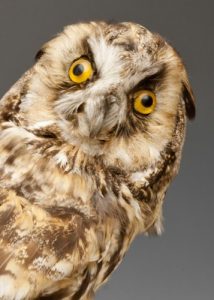
The formerly googly-eyed owl

The long-eared owl: BEFORE. LDUCZ-Y1604

In a move unprecedented in Specimen of the Week history, I have chosen to blogify the same specimen as I selected in my last Specimen of the Week. The reason is that in many ways it is not the same specimen as it was six weeks ago: it has undergone a profound transformation. We used to call this specimen “the googly-eyed owl”, due to its comedy wonky eyes, but it is googly-eyed no longer. This week’s Specimen of the Week is…

Continue reading

Confessions of an Amateur Aquarist: Having an Aquarium in a Museum Exhibition

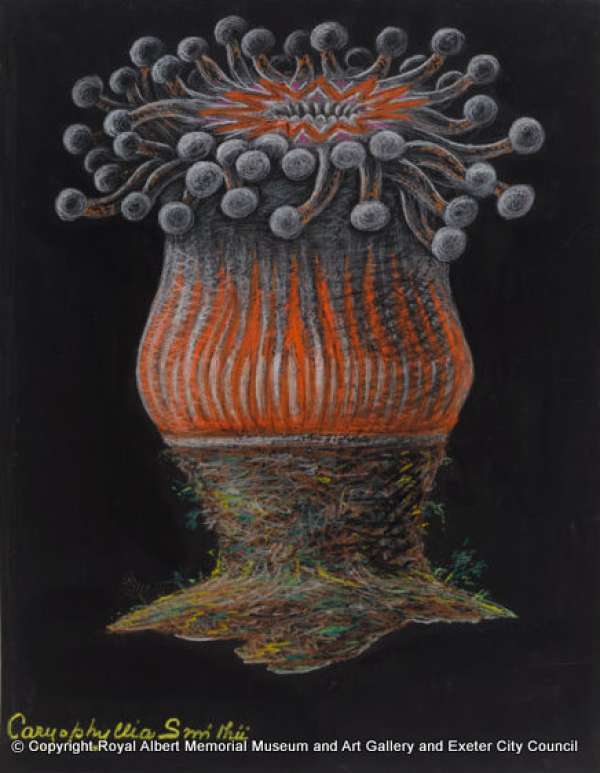
Sea Life: Glimpses of the Wonderful‘ is the Royal Albert Memorial Museum & Art Gallery’s (RAMM) 2017 summer exhibition. It takes inspiration from the works of PH Gosse. Gosse was a Victorian naturalist who lived near Torquay and spent his time exploring the coast. He wrote many popular books and RAMM is fortunate to have over 100 of his original artworks.

Devonshire cup coral. Teaching aid drawn in coloured chalk by PH Gosse. (Image courtesy of Royal Albert Memorial Museum and Art Gallery).

Gosse is well known for his interest in aquariums. He invented the word aquarium and was among the first to keep animals alive successfully. In 1856 he published a book; ‘The aquarium: an unveiling of the wonders of the deep sea’, and was also partly responsible for the aquarium craze that gripped Victorian England.

The exhibition team decided that no exhibition on rock pooling and aquariums was complete without a real one set up in the gallery.  Kids keep fish as pets – can’t be that hard … or so we thought. I’d like to share a few things we have learnt over the past few months: Continue reading

NatSCA Digital Digest – June

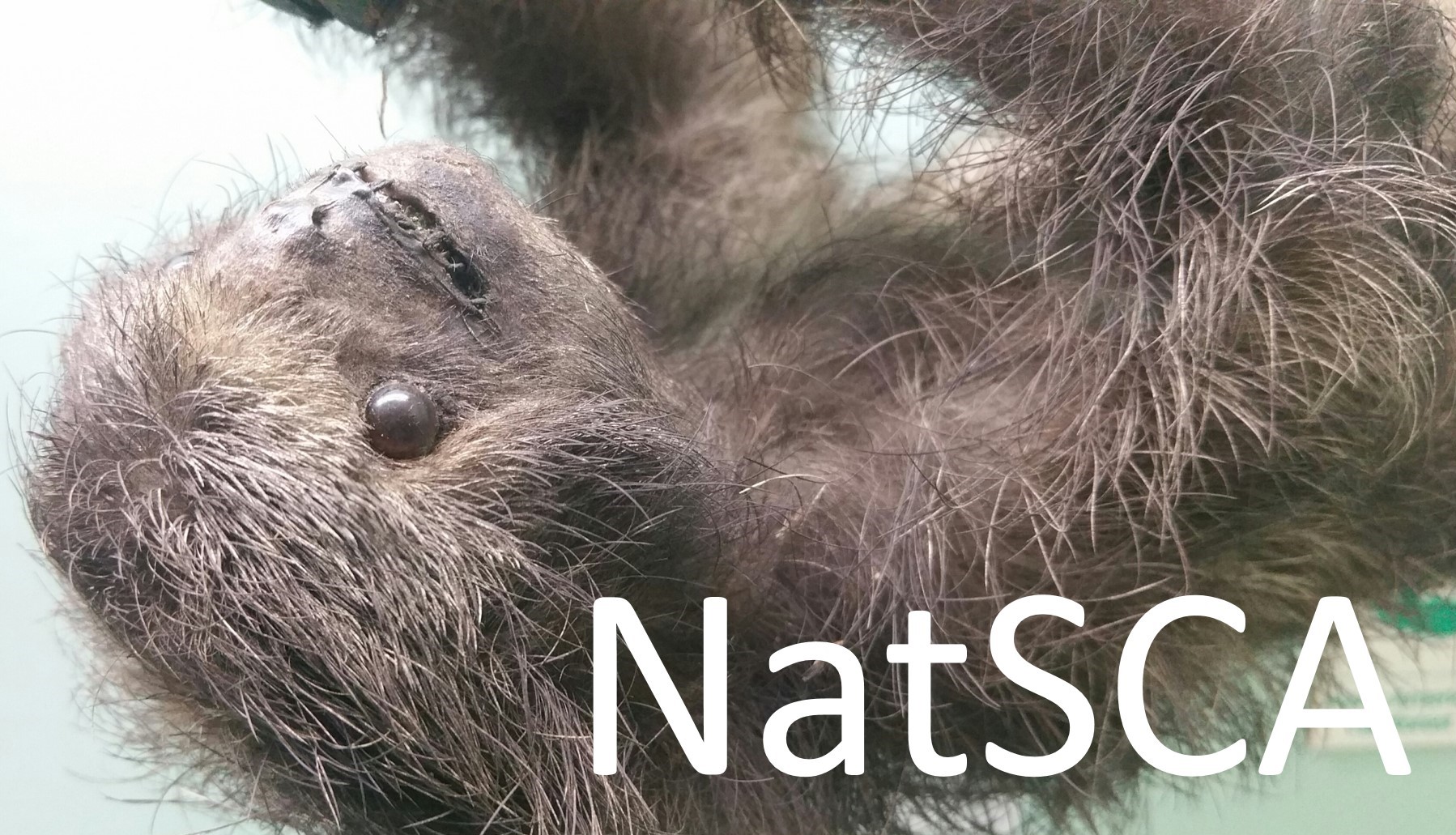
Three-toed sloth (C) Horniman Museum and Gardens

What Should I Read?

Four new dinosaurs all under one article, plus a good reason to check what’s in your museum stores more carefully. Dr Dave Hone introduces a cavalcade of new giant dinosaurs.

We all want to live in a perfect world where all museum records are available online, so why don’t we just digitise everything huh? Peel Art Gallery, Museum and Archives tackles The Question so many of us seem to get asked: Why don’t archivists digitize everything?

Not so much a blog or article to read, but definitely something to have a quick look at for it’s wow factor alone. If you’re looking for inspiration for your next event, be it for children or adults, it doesn’t come much better than these balloon animals and insects. These incredible balloon sculptures are by artist Masayoshi Matsumoto, and are just amazing. Continue reading