NatSCA Digital Digest


NatSCA 2

Your weekly round-up of news and events happening in the world of natural sciences

Conferences and Workshops

As PalaeoSam mentioned in the last Digital Digest, the Symposium of Vertebrate Palaeontolotgy and Comparative Anatomy is on next week. It is my personal palaeo highlight of the year and so am sad that I will miss it this year. (Though not too sad given I am missing it to be in Italy for the Grand Prix.) If you are attending and would like to do a super write up of the weeks’ events, please do let us know.  I look forward to experiencing SVPCA through the eyes of a blogger.
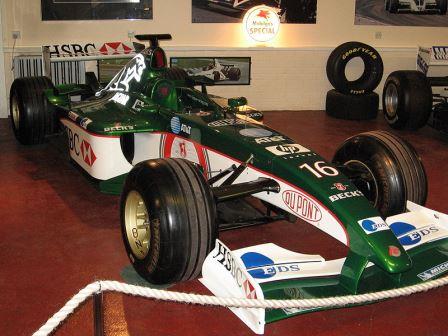
Jaguar

Those of you who are fans of F1 will know why this car is relevant to natural history (image in public domain)

News

Not really on the subject of natural history, but a topic that will touch the heart of any museum professional or visitor. ISIS have taken even more away from the us, the global nation, via the destruction of an Ancient temple in Palmyra. These open air museums are original sites of cultural heritage and are irreplaceable once gone. Not at the top of the list of the most tragic event of the last couple of weeks by any means, but a sad day for museums nevertheless.

News from the Blogosphere

The #MuseumInstaSwap phenomenon has launched as staff from some of the top museums in London (including the NHM and the Horniman) swap museums and take to social media to chat about it. An article in Time Out nicely summarises what is going on but a lot of the museums involved have their own exciting blogs on it worth looking up. Hence this is in the News from the Blogosphere section, see?

Highlights from the Papers

More and more, scientists are relying on Citizen science, as a means of collecting data. The mode of research is especially important in fields such as marine biology where the incorporation of sightings made by anglers, for example, can add significantly increase the size of datasets. An article in Nature called Rise of the Citizen Scientist explores the good the bad and the ugly of this practice as a research tool.


As ever, if you would like to write a blog for NatSCA on anything natural sciences related, give us an online shout blog@natsca.org.

NatSCA Digital Digest

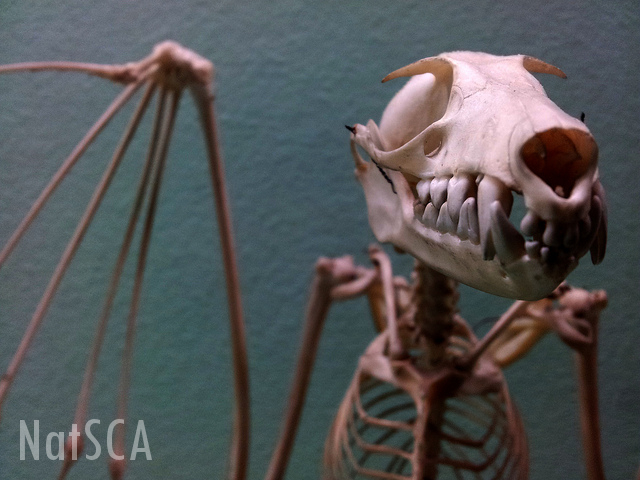
A mounted skeleton of a fruitbat leers at the cameraYour weekly round-up of news and events happening in the world of natural sciences

Jobs

Research Assistant, Vertebrate Palaeontology – University of Birmingham. 12 month post researching 375 million years of the diversification of life on land!

Curator of Microlepidoptera – NHM, London. A great opportunity for any fans of minimoths!

Curator of Natural Sciences and Collections Access ManagerTullie House Museum. Still a couple of days to apply for these two. The deadline is 10th August.

As always, see out jobs page for more opportunities.

Events

‘Digitisation’ seems to be the keyword for September…

NBN Crowdsourcing Data Capture Summit. The National Biodiversity Network is holding a one-day meeting on digitising specimen data through crowdsourcing, at Manchester Museum on 25th September.

iDigBio Vertebrate Digitization Interest Group will be holding a 4-part webinar series entitled The Value of Digitizing Vertebrate Collections. They will be held on Tuesdays in September at 3 – 4 p.m. EDT (7 – 8 pm GMT).

All webinars are 3-4 p.m. EDT and accessible at https://idigbio.adobeconnect.com/vertdigitization. Here is the schedule:
September 8: The Value of Digitizing Mammal Collections, Cody Thompson, University of Michigan
September 15: The Value of Digitizing Fish Collections, Andy Bentley, University of Kansas Biodiversity Institute and President of SPNCH
September 22: The Value of Digitizing Herpetology Collections, Chris Phillips, Illinois Natural History Survey, University of Illinois
September 29: The Value of Digitizing Bird Collections, Carla Cicero, UC Berkeley and Lead PI for Vertnet

Around the Web

Time to re-curate those canid specimens? Genetic evidence indicates that the African golden jackal is a distinct species from the European golden jackal, and is actually much more closely related to wolves! And new genomic research has clarified the status of Eastern wolves and other North American canids.

'But I'm still a fox, right?'

‘But I’m still a fox, right?’

Working with the Public: How an Unusual Museum Enquiry Turned into Travels Through Time and Space. A great example of how engaging with enquiries can lead to fascinating insights into the past.

…And Finally

A request: We would love you to get involved in the NatSCA blog! It’s been rather quiet of late. I know you’re all probably off enjoying yourselves on holiday, but if you happen to visit a museum or an interesting exhibition while you’re away, why not review it for us? We’d love to hear tales of your adventures! And don’t forget, if you’re working on any projects or specimens that you think other people would be interested in, then the blog is the perfect place to share! Email submissions to: blog@natsca.org

NatSCA Digital Digest

natscaYour weekly round-up of news and events happening in the world of natural sciences

Jobs

Curator, Grant Museum of Zoology, UCL I can tell you from three years of first-hand experience (pseudo-first-hand; as curatorial assistant) that this is the job all curators should be applying for. The Grant Museum of Zoology is an amazing place to work and in this role I know you will have the opportunity to spread your curatorial wings and make a real difference in the natural history sector. The kind of job where you don’t mind getting up in the morning. Closing date for applications is 3rd August. Good luck!

If only for the superb job title, anyone with experience of learning programmes for families and children with ASC (Autistic Spectrum Condition) should definitely take a look at the current vacancy for the Dawnosaurs Programme Co-ordinator at the Natural History Museum. This looks like an amazing opportunity for the right person. The closing date for applications is the 22nd July.

See the job page of the NatSCA website for more exciting opportunities.

News

The next Museums Association exhibition and conference is due to take place on 5th and 6th November, in Birmingham. There is still time to register as an early bird who gets the cheaper worm rates. Early bird registration ends on the 7th August, click here for more.

Around the Web

Sun bear, fox, hippo or pangolin. What tickles your natural history bones the most? Choose your favourite to be the new museum mascot for Derby Museum and Art Gallery! If you are on Twitter, you can whip up some support for the sun bear, errr, I mean, your favourite using: @DMNature and @derbymuseums. The winning specimen will be announced on the 7th August. I’ve already chosen mine, can you guess what it is…?

The Friends of Crystal Palace Dinosaurs have been working up a storm of support lately, with ongoing events at the park complemented by a very dynamic talk at the Grant Museum by the master of science comedy- Prof Joe Cain, from UCL. These incredible statues are a vivid reminder of the evolution our concept of dinosaur appearances has gone through. They are also an important part of our British cultural heritage, that helped shape the palaeontological world in the mid 1800s. Find out more about these iconic statues that are in desperate need of conservation on the Friends of Crystal Palace Dinosaurs website.


Handle with care: bringing museum egg collections to life

This post is another in our series of presentation write-ups from the 2015 NatSCA Conference, Museums Unleashed!


How can we bring museum egg collections to life?

Egg collecting is now illegal in the UK and has been for many years. Possibly because of the legal situation, and the social stigma understandably attached to egg collecting today, museums can be reluctant to publicise their egg collections, even though they are entitled to do so. For example, out of the thousands of eggs held by Glasgow Museums, only a handful are currently on public display, which is a pity as they are beautiful and fascinating objects.

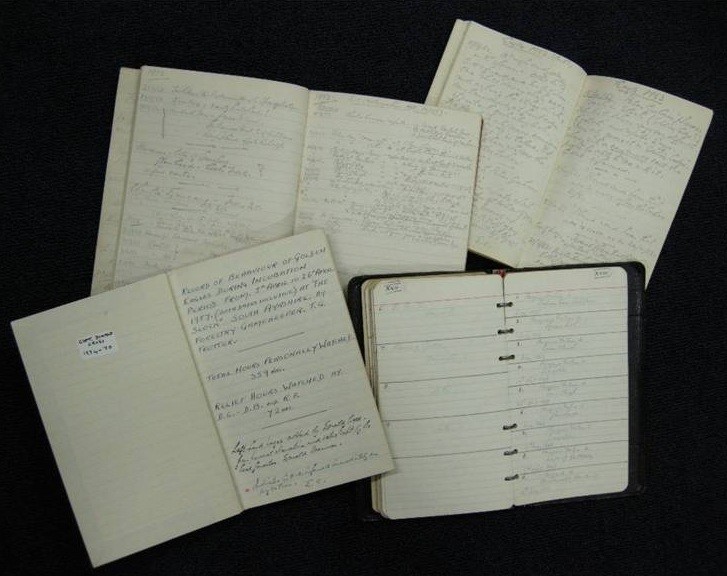
These issues form the basis of my PhD, which is a Collaborative Doctoral Award with Glasgow Museums and the Geography Department at the University of Glasgow. I have been researching the cultural and social aspects of egg collecting (also known as ‘oology’), which was a very popular pastime among both adults and children from the Victorian era well into the twentieth century. I have been researching collectors’ diaries held by Glasgow Museums, and also investigating the wider world of British egg collecting via old egg collecting magazines. This material has revealed some of the people, places, and practices of egg-collecting, which could provide new possibilities for communicating the stories of the birds’ eggs held by Glasgow Museums.

A selection of egg collectors' notebooks and diaries

A selection of egg collectors’ notebooks and diaries

Egg-collecting interconnections

One of the most striking aspects of this research has been the interconnectedness of the British egg-collecting world. These connections can take various different forms. For example, egg collections have been donated to Glasgow Museums by individual collectors who knew each other, such as Captain Donald Cross and Peter Hay, who both lived in Ayrshire in the 1940s, where Cross was a farmer and Hay was a schoolboy. Cross shared his collecting knowledge with Hay, and sometimes even gave him eggs to add to his collection.

Eggs taken by a collector called E. S. Steward over 100 years ago have arrived at Glasgow Museums by two very different routes. Some were given by Steward to his friend Robert Arbuthnott, whose son donated his collection in 1967. More recently, in 2014, we received an egg collection confiscated by police after a collector was convicted of trading in eggs, some of which were very old. A few of these eggs were also taken by Steward, and must have passed through various different intermediate collections, along convoluted geographical journeys, before arriving at Glasgow Museums.

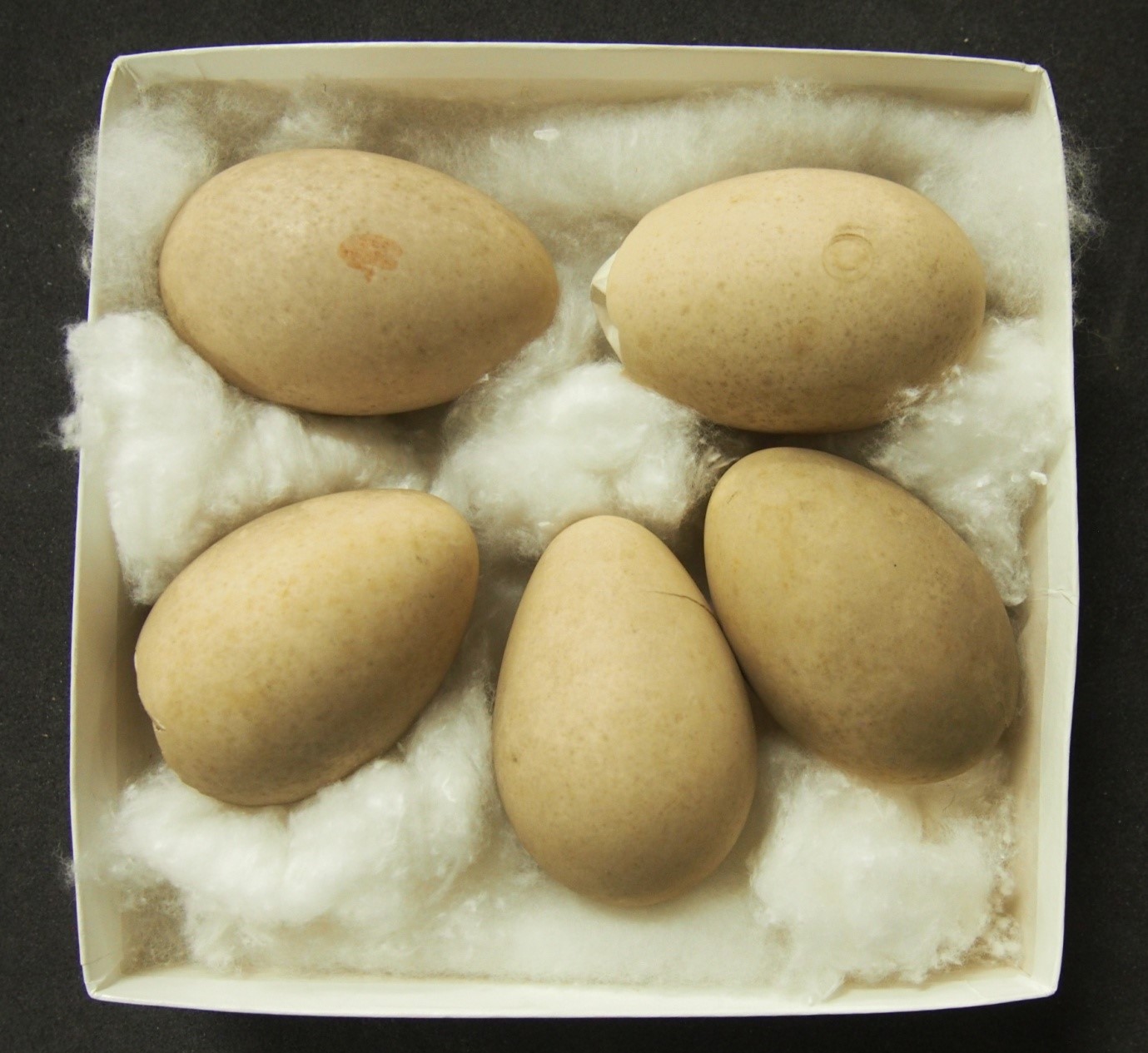
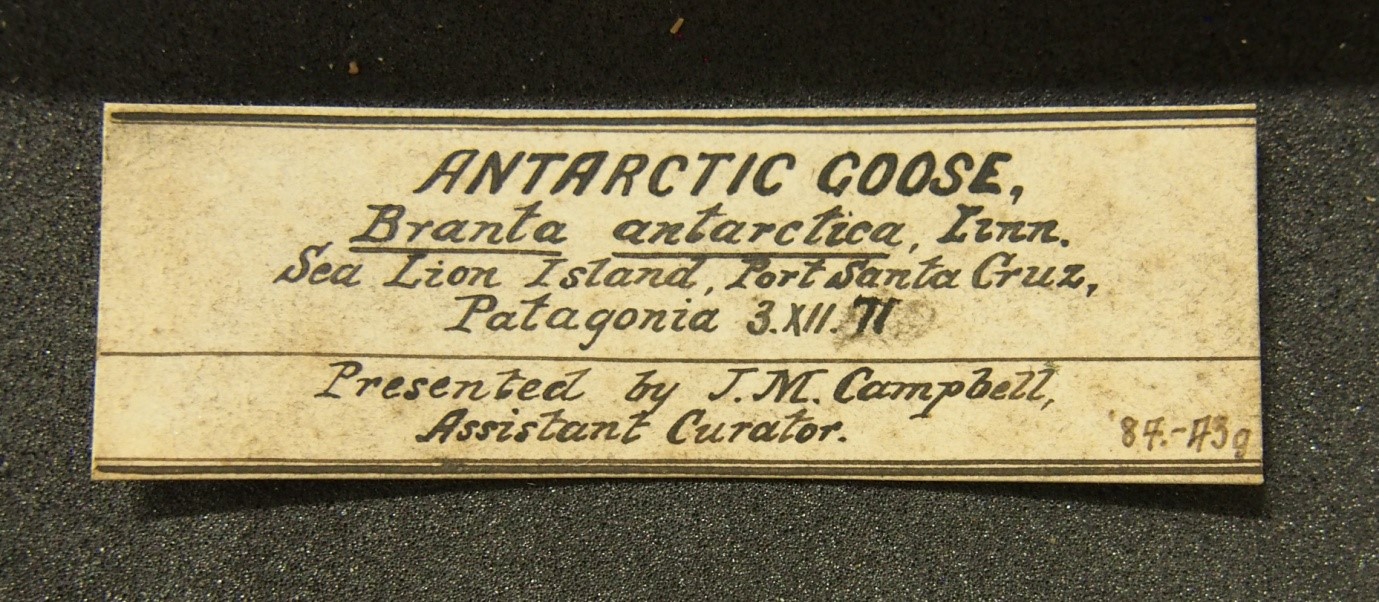
Eggs taken by another collector have ended up at different museums. On National Handwriting Day in January, the Natural History Museum’s brilliant oology Twitter feed featured a beautifully scribed red-legged cormorant egg from a collector called John MacNaught Campbell. He was the second Natural History curator at Kelvingrove Museum in Glasgow, and one of the earliest egg collectors to visit South America. Glasgow Museums also have some of his eggs, including this Antarctic goose set collected just three days after the Natural History Museum’s egg, on 3 December 1871.

Clutch of Antarctic goose eggs collected by John MacNaught Campbell in 1871

Label for Campbell's goose egg clutch

Clutch of Antarctic goose eggs collected by J. M. Campbell in 1871

Telling the interconnecting stories of these collectors, and others, could be a way of showing the human side of egg collecting, while being careful not to encourage the practice today. This could be via traditional media, such as museum exhibitions, online catalogues, or using social media.

Finally, a request: I’m keen to trace any other eggs that were collected by ES Steward, as I’d like to see how widely his collection has been dispersed. If any of you know of any of his eggs in your collections, I’d be very interested to hear from you, at e.cole.1@research.gla.ac.uk.


Edward Cole
PhD student, University of Glasgow/Glasgow Museums

NatSCA Digital Digest

natscaYour weekly round-up of news and events happening in the world of natural sciences

Events

12th-14th October: Discovering Collections, Discovering Communities: Exploring new digital destinations for heritage and academia at The Imperial War Museum North, Manchester. Free conference exploring the use of digital, in museums environments.

22nd July: Digital vs. Analogue at Oxford University Museum of Natural History. One day conference looking at four themes: Tactile Engagement, Story Telling, Families and Schools, and Digital Displays.

8th September: Osteology Day at University Museum of Zoology, Cambridge. A one day hands-on workshop covering aspects of osteology such as bone cleaning, rearticulation, restoration, identification and preparation.


News

The Palaeontological Association is advertising for a new Executive Officer, after the sad news of Tim Palmer’s retirement. Closing date for applications is 21st August 2015.

Did you know that Dubai Aquarium in the UAE has the world’s largest single piece of acrylic. It is pretty hefty at an impressive 70 cm thick, but it is not always with the most reliable seals, as they found out in 2010


Around the Web

What do you do with a dead fish? Check out this blog for a unique idea: Printing and Reanimating the Dead.

**JURASSIC WORLD IS OUT** And smashing Box Office records. Of course. This review is great, but if you haven’t seen the film yet (firstly- why not? and secondly…) it contains spoilers!


Got a submission for the blog or Digital Digest? Email us at blog@natsca.org