How to Get a Job Working with Museum Collections

Written by Sarah Burhouse, Caitlin Jamison, Bethany Palumbo & Vicky Ward. Compiled by Jennifer Gallichan, Vertebrate Curator, Amgueddfa Cymru – Museum Wales.

Those of us that that are lucky enough to work with natural science collections will be familiar with the question ‘How do you get a job in a museum’? At a time when cuts to the sector mean that museum jobs seem even fewer and farther between, I felt it was important that we share some of our combined experiences to hopefully give some tips (and hope) for emerging museum professionals.

I reached out to colleagues across the sector to get their ‘origin’ stories and see if they had any advice for those seeking a museum job working with collections. Many thanks to Sarah, Caitlin, Bethany and Vicky for sharing your stories with us.

Continue reading

Bark Tanning Skins into Leather for Taxidermy – A Sustainable, Natural and Non-harmful Alternative to Commercial Tanning Products?

Written by Jazmine Miles Long, Taxidermist.

When a taxidermy mount is made, the skin of the mammal (and in some cases reptiles and birds) is usually tanned. Tanning is the process of turning a raw skin into leather using chemistry. By turning the skin into leather, we are changing a fragile perusable material into something durable that can be sculpted into taxidermy and be more resistant to insect attack. Tanning the skin involves removing proteins in the skin and loosening the collagen fibres and then attaching tannins to these structures. Leather can be made with either the hair on or off the skin. When we are making taxidermy, we want the fur to stay attached to the skin and so the process is different to when the fur is to be removed. With hair on tanning, we want the pH to stay low to prevent the fur from falling out. The skin starts by going into a pickle solution of around pH 2 and after it has been through the tanning process it ends up at about pH 4.5 -5.

Continue reading

A Hundred Feet Through the Door – A Chance Encounter with some Centipedes set me on a Curatorial Path…

Written by Dan Gordon, Keeper of Biology, The Great North Museum: Hancock.

So, how did I get started in museums? Like perhaps many people, it began with a stroke of luck.

I’d decided to study Biology at university—I suppose I’d vaguely pictured myself at some point in the future, white-coated in the lab, pouring over spectrophotometer readings or agar plates. But by the end of the first year, I found myself staring out of the window during practicals. Nineteen-year-old me was slowly becoming disillusioned: Botany was biochemistry; Zoology was elegant mathematics; even Ecology was really an intricate forest of statistics, not trees. There was beauty in the numbers, but it was all a long way from my childhood passion for birdwatching, rock pooling and reading travel books. One day, peering at smudges on a petri dish and trying to work out if I’d just induced gene expression, I realised I might not be cut out for that imagined future. I was fascinated by the soul of the subject, but the finer points of its language were losing their magic.

Continue reading

Make Plastic History

Written by Glenn Roadley, Curator of Natural Science, The Potteries Museum & Art Gallery, Stoke-on-Trent.

In May 2023, Professor Claire Gwinnett reached out to me with an opportunity to host a public event at The Potteries Museum & Art Gallery (PMAG). Claire, Professor of Forensic and Environmental Science at Staffordshire University, is an expert in the study of plastic pollution and has worked with the museum before to lead activities at our various science events, so immediately thought of us when seeing the call for applications for the British Academy’s SHAPE Involve and Engage grants. The programme offered grants of up to £8,000 for innovative engagement activities which highlight humanities research, with partnerships between academic and cultural institutions eligible to apply. Claire and I put our heads together and came up with a plan for a day of family-friendly activities aimed at raising awareness of plastic pollution and the research being undertaken to tackle it. At the centre of these activities would be a workshop run by Dan Lewis, an artist who uses plastic fragments found on the beach to create works of art.

Continue reading

Welcome to a ’Wild, Wonderful World’ at the Natural History Museum Denmark.

Written by Bethany Palumbo, Head of Conservation, Natural History Museum Denmark.

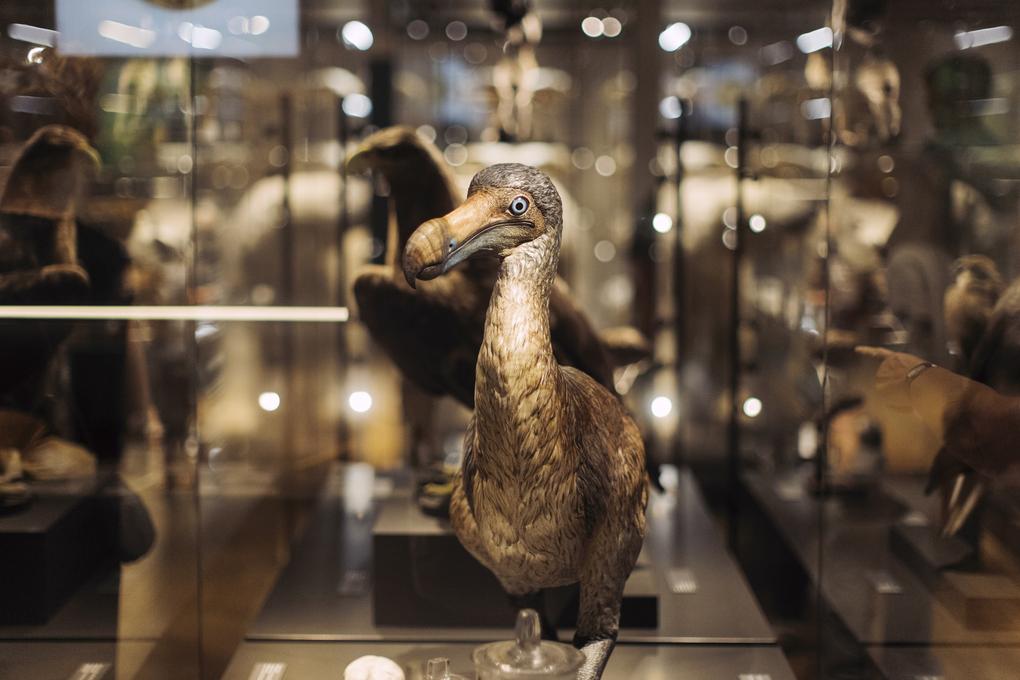
Dodo Model at the Wild, Wonderful World Exhibition (© Andreas Haubjerg NHMD)

In June 2024, the Natural History Museum Denmark opened a new temporary exhibition titled ‘Wild, Wonderful World or ‘Vilde, Vidunderlige Verden’ in Danish. The exhibition presents the colourful, authentic stories behind specimens, and introduces new perspectives on how to think about nature and the significance of the natural history collections.

For the past several years, temporary exhibitions at the museum had all been loaned exhibitions from other institutions. We decided that this one would instead be entirely from our own historical collections, with some of the specimens on display dating as far back as 400 years. This blog post will present 3 fascinating object stories from the exhibition that I am especially excited to share.

Continue reading