NatSCA Digital Digest – July

What Should I Read?

If you like a good nose, the second part of TetZoo’s Elephant Seal article has just been published, which you can read here. And here is a thoughtfully placed link to the first part in case you missed it and wanted to catch up.

For a fun bit of ‘history of natural history’, this article is all about the secret that the Natural History Museum’s blue whale has been hiding since the 1930s, unknown to anyone until it’s recent clean prior to the big unveiling next week. Those naughty conservators… chuckle.

Whilst some of this article raised my quizzical-shark-scientist’s-eyebrow, such as the scale bar for instance, researchers believe they have uncovered a big clue as to why the Megalodon went extinct. Definitely worth a read if, like everyone, you like sharks. Although this article came out in January, it is receiving media attention at the moment so I thought I’d treat you to it.

Continue reading

Private Bone/Taxidermy Collection: The Good, The Bad and The Illegal

This article is re-posted from the Adventures in Natural History Illustration blog by natural history illustrator Beth Windle.

This blog has taken a while to write. It’s a complicated subject that can be hard to condense into a simple blog post. However, I feel that it is now necessary to write about it due to growing, worrying, illegal, and unethical trends that are resurfacing due to a private natural history collection resurgence in recent years. Aside from this, I am aware of the positive aspects of private collections and therefore I do not want to come across as too preachy or completely ridicule those with private collections who work extremely hard to promote conservation and education. But I feel that some things now need to be said, as well as how these new problems need to be fixed with realistic solutions. Continue reading

Confessions of an Amateur Aquarist: Having an Aquarium in a Museum Exhibition

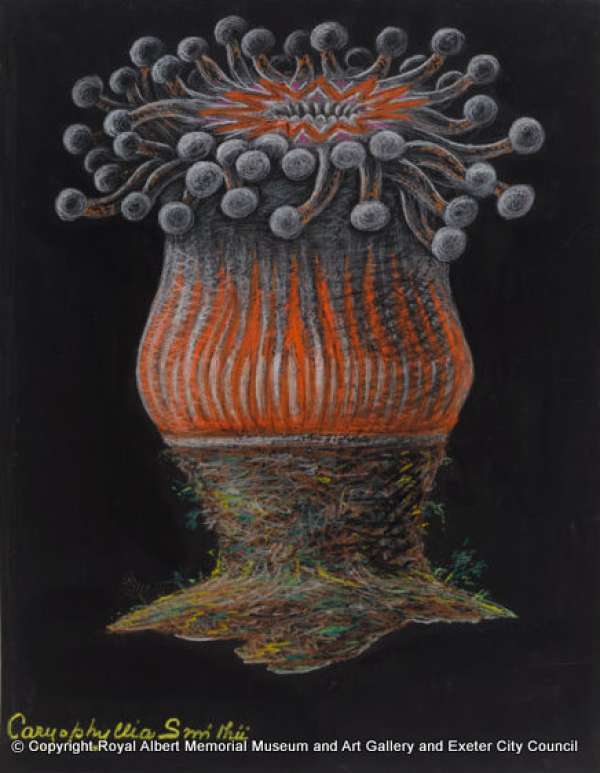
Sea Life: Glimpses of the Wonderful‘ is the Royal Albert Memorial Museum & Art Gallery’s (RAMM) 2017 summer exhibition. It takes inspiration from the works of PH Gosse. Gosse was a Victorian naturalist who lived near Torquay and spent his time exploring the coast. He wrote many popular books and RAMM is fortunate to have over 100 of his original artworks.

Devonshire cup coral. Teaching aid drawn in coloured chalk by PH Gosse. (Image courtesy of Royal Albert Memorial Museum and Art Gallery).

Gosse is well known for his interest in aquariums. He invented the word aquarium and was among the first to keep animals alive successfully. In 1856 he published a book; ‘The aquarium: an unveiling of the wonders of the deep sea’, and was also partly responsible for the aquarium craze that gripped Victorian England.

The exhibition team decided that no exhibition on rock pooling and aquariums was complete without a real one set up in the gallery.  Kids keep fish as pets – can’t be that hard … or so we thought. I’d like to share a few things we have learnt over the past few months: Continue reading

‘Provocative Practice’: New Ways of Working with Natural Science Collections

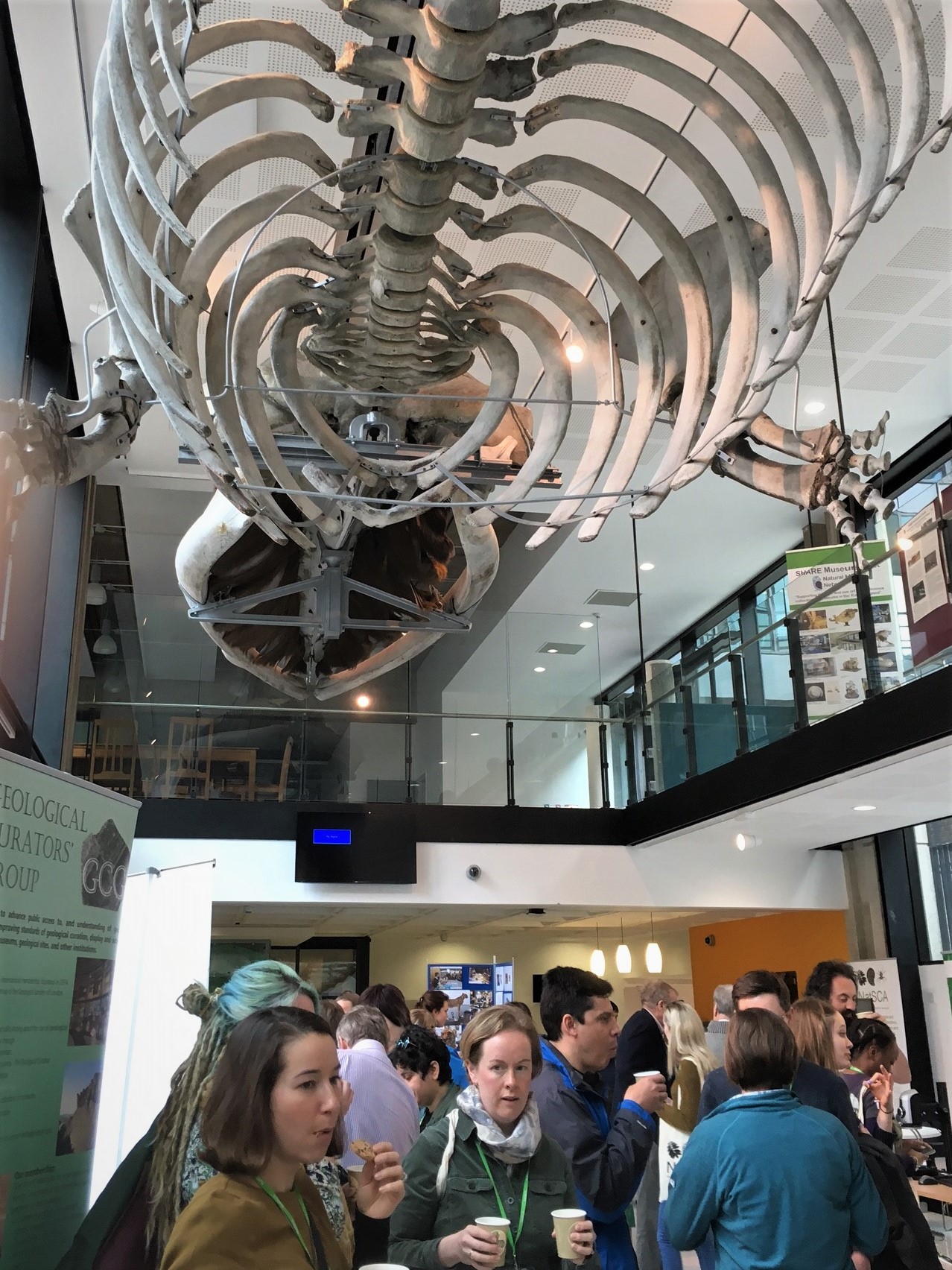
A 70 foot long whale skeleton hangs overhead a fantastic ‘collection’ of natural science curators, collection managers, conservators, and education and museum professionals, busily gathering around and eagerly greeting each other at this year’s annual Natural Sciences Collections Association (NatSCA) conference. As Natural History Museum ‘fly’ specialist Erica McAlister tweeted: “If that fell that’s most of UK’s natural history curators & conservators wiped out”.

NatSCA delegates gathering below the newly hung Fin Whale. Photograph by Simon Jackson, shown thanks to University Museum of Zoology, Cambridge.

This year’s event (#NatSCA2017), at the University Museum of Zoology, Cambridge, had a record 110 delegates, and as such was the biggest NatSCA conference to date. At the heart of the conference was the new Whale Hall, part of an enormous redevelopment project of the David Attenborough Building. As many of us marvelled at the huge leviathan overhead, the rest of us rushed between advertising sponsor stalls, exchanged ideas, caught up with one another and most importantly, fuelled up on coffee!

Feeling inspired, we were ready to begin this year’s talks on the theme: “Evolving Ideas: Provocative New Ways of Working with Collections” as Paolo Viscardi, NatSCA Chair, keenly ushered us in to the main lecture theatre. Continue reading

National Gorilla Day! (or Racist Skeletons in our Closets)

Happy National Gorilla Day!

We don’t usually cover “national *insert_animal* day” specially on this blog, but this year we’re particularly excited about gorillas because a book was recently published that contains a comprehensive list of all the gorillas held in natural science collections worldwide.

Screenshot 2017-05-26 at 12.31.47 - Edited

This impressive resource has been compiled by John Cooper and Gordon Hull over the course of many years and not only are specimens listed, their collection and/or acquisition data are also reported. Cooper and Hull have also offered suggestions for use of specimens in collections as well as guidance on the different types of preservation available and how they can be achieved. This only forms part of the book, with the first section more concerned with the health and conservation of these impressive animals. Continue reading