The Rediscovery of a Challenger Expedition Specimen in William Herdman’s Zoology Museum Collection at the University of Liverpool (and how digitisation is transformative).

Written by Leonie Sedman, Curator of Heritage & Collections Care, University of Liverpool.

Along with many other NatSCA members, I care for a mixed collection, meaning that one inevitably becomes something of a ‘Jack of all trades’ missing out on the academic satisfaction created by specialisation. As a curator who finds collections research to be the most satisfying part of my job, it can be frustrating when that research is often only possible on a ‘need-to-know’ basis – usually when a new display or exhibition is being planned, or when the specimens are to be used in teaching. Looking on the bright side though – this does provide glimmers of joy when the research produces something exciting!

In 2004 when I was first employed to manage the University of Liverpool’s Heritage Collections (medical & scientific museum collections built up through research or teaching), I retrieved a large proportion of the collections from attics and cellars where they languished because the objects and specimens were no longer actively used in teaching (this is now changing – but that would be a different blog). The Zoology Museum collection was one of these.

Continue reading

From Deck to Decant: A Marine Biologist’s Déjà Vu After a Year in a Natural History Museum

Written by Dr Jamie Maxwell, Collections Assistant, National Museum of Ireland, Natural History.

Not every job takes you to a windswept beach on Ireland’s west coast to recover the head of a stranded True’s beaked whale calf. But then again, my past year as a Collections Assistant at the Natural History Museum in Dublin has been anything but ordinary. As we collected the head of the slightly decomposed whale calf, I was reminded of my previous fieldwork experiences, mainly on research cruises during my academic career. Before joining the museum, I spent a decade in education and research as a marine biologist, specializing in deep-sea invertebrates. During that time, I not only investigated freshly collected specimens but also engaged with museum collections. It wasn’t until I became a collections assistant at the National Museum of Ireland, Natural History that I became fully immersed in the day-to-day workings of a museum. Much of the past year was taken up with decanting the contents of the Merrion Street building in preparation for renovation. In this blog, I’ll explore how decanting a museum is remarkably like being involved with a research cruise. 

Continue reading

NatSCA Digital Digest – March 2025

Compiled by Olivia Beavers, Assistant Curator of Vertebrate Zoology at World Museum, National Museums Liverpool.

Welcome to the March edition of NatSCA Digital Digest.

A monthly blog series featuring the latest on where to go, what to see and do in the natural history sector including jobs, exhibitions, conferences, and training opportunities. We are keen to hear from you if you have any top tips and recommendations for our next Digest, please drop an email to blog@natsca.org.

Sector News

NatSCA Annual Conference & AGM 2025: Registration Now OPEN!

Booking is open for the 2025 Natural Sciences Collections Association (NatSCA) conference. This year’s theme is: Making a Difference: Showing the Positive Impact of Natural History Collections, and it will be hosted by the University of Manchester: Manchester Museum, UK.

Due to the size of the venue there are only a limited number of spaces, so please book promptly to avoid disappointment. Visit the webpage to find out more: https://www.natsca.org/event/2881

This year’s conference meal is at Zouk and we would love to see you there. Please make sure to add the separate ticket to your basket.

Don’t hesitate to get in touch if you any questions. If you would like to become a member, which would qualify you for the conference discount or bursaries, please see our website NatSCA.org for details. 

30th Symposium on Palaeontological Preparation and Conservation: Call for abstracts

Please send abstracts of up to 250 words plus an image to sppc@geocurator.org by 10th April. Abstracts will be considered on any topic of earth science excavation, conservation, preparation mount-making and exhibition. Please state if the abstract is for a poster or platform presentation.

The 30th Symposium on Palaeontological Preparation and Conservation will be held in the Netherlands this year on 26 – 27th June.

The theme will be ‘From Excavation to Exhibition’ and they hope to broaden their usual remit to include more aspects of the story of how geological collections end up on display in our museums, as well as their conservation and preparation. Examples of previous years’ abstracts can be found online at https://www.geocurator.org/events/97-sppc

Continue reading

Digitisation of the National Herbarium of Ireland: Moving on from Manual to Semi-Automatic Imaging.

Written by Wuu Kuang Soh, botanist at the National Botanic Gardens of Ireland (OPW).

The National Herbarium (DBN) at the National Botanic Gardens of Ireland is home to an ever-expanding collection of approximately 600,000 plant and fungal specimens from across Ireland and around the globe. This rich collection spans mainly from the early 1800s to the present day, including specimens gathered from voyages of exploration, ranging from the Americas to Asia. Some of the oldest specimens, dating back to 1661, are over 350 years old. Apart from our herbarium, the other important plant collections on the island of Ireland are held by the Ulster Museum and Trinity College Dublin. This makes the DBN collection invaluable not only as a source of natural heritage but also as a part of Ireland’s cultural legacy. 

Herbarium collections are crucial to enhancing our understanding of the natural world. Beyond documenting plant species, these specimens reveal the intricate relationships between plants and their environments and tell the story of botanical discovery over time. The wealth of data gathered from this collection allows us to track historical and geographical changes in flora and helps predict future environmental impacts. Digitising this vast collection is a key step toward preserving these resources for future generations. Digital records not only provide greater access for researchers and the public but also safeguards the physical specimens by minimising handling and potential damage.

Continue reading

Conservation Matters in Wales – Christmas Conference 2023

Written by Sebastien Lherondel-Davies, 2nd year BSc student, Swansea University, whilst on placement at National Museum Cardiff and Swansea Museum.

On Wednesday 13th December 2023, conservators and curators from all over Wales gathered in Swansea for the first in-person Conservation Matters Wales Christmas Conference since the pandemic. Conservation Matters Wales is a collaboration between Amgueddfa Cymru – National Museum Wales, the Federation of Museums and Art Galleries in Wales, and Cardiff University. The event, hosted by the delightful Swansea Museum, was an opportunity for professionals in the museum collections conservation sector to come together and share the wide range of projects they have been working on. The conference provided us with the chance to present our research project on a historic Lepidoptera collection. 

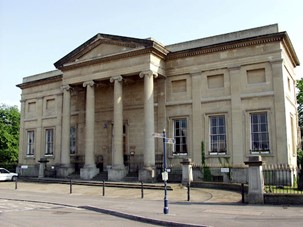
Swansea Museum
Continue reading