From Deck to Decant: A Marine Biologist’s Déjà Vu After a Year in a Natural History Museum

Written by Dr Jamie Maxwell, Collections Assistant, National Museum of Ireland, Natural History.

Not every job takes you to a windswept beach on Ireland’s west coast to recover the head of a stranded True’s beaked whale calf. But then again, my past year as a Collections Assistant at the Natural History Museum in Dublin has been anything but ordinary. As we collected the head of the slightly decomposed whale calf, I was reminded of my previous fieldwork experiences, mainly on research cruises during my academic career. Before joining the museum, I spent a decade in education and research as a marine biologist, specializing in deep-sea invertebrates. During that time, I not only investigated freshly collected specimens but also engaged with museum collections. It wasn’t until I became a collections assistant at the National Museum of Ireland, Natural History that I became fully immersed in the day-to-day workings of a museum. Much of the past year was taken up with decanting the contents of the Merrion Street building in preparation for renovation. In this blog, I’ll explore how decanting a museum is remarkably like being involved with a research cruise. 

Continue reading

It’s Getting Better

Written by Dr Amy Geraghty, Assistant Keeper/Curator of aquatic zoology collections with responsibility for fluid collection management.

The National Museum of Ireland (NMI) Natural History Division (NHD) holds about 2 million specimens in its collection. The collection is ordinarily split between three locations: the museum and two off-site storage buildings. However, at the time of writing, nearly all specimens are in one of the two storage buildings. The museum galleries are being emptied to facilitate investigative works on and the refurbishment of building itself.

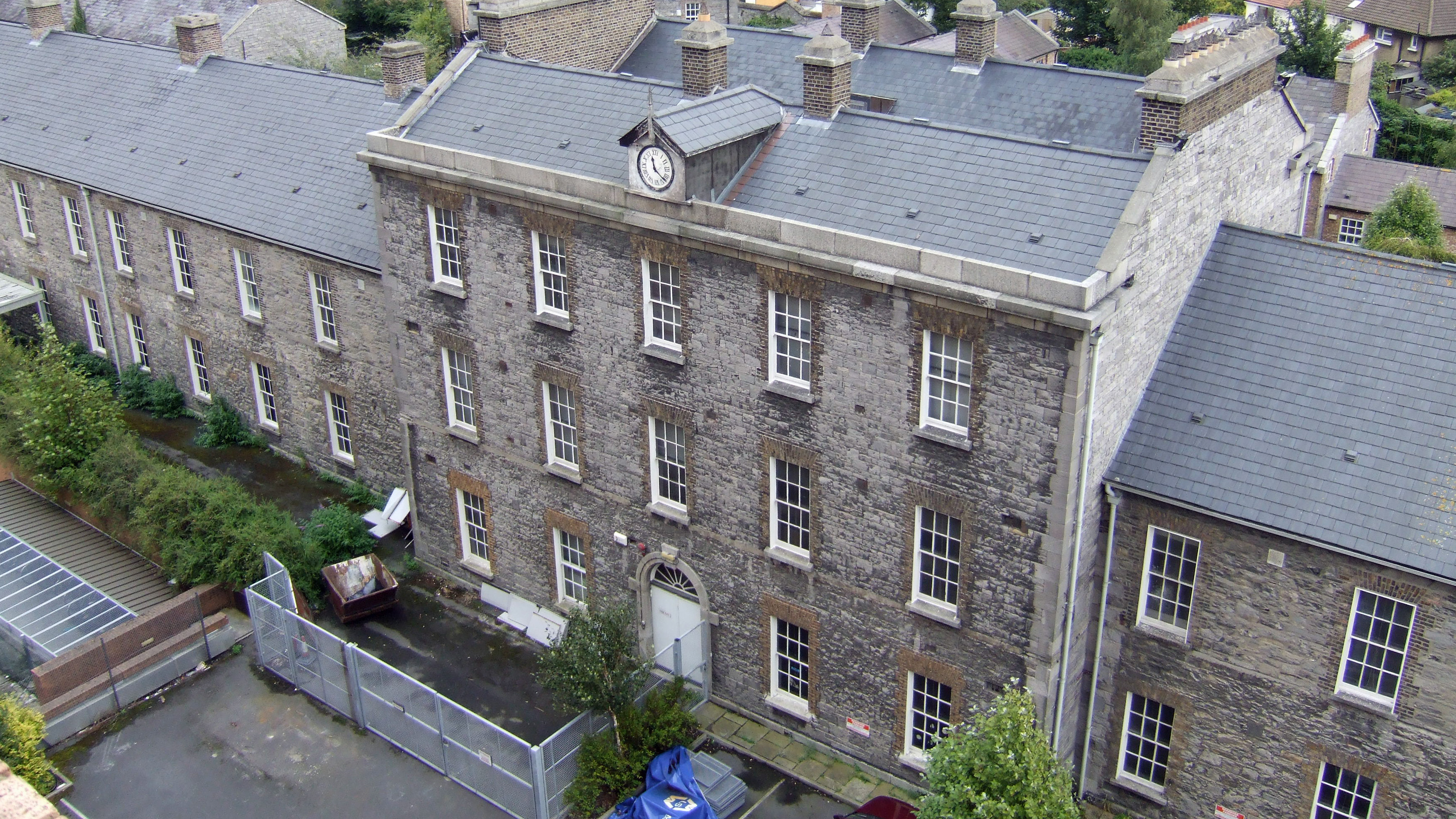
One of the National Museum of Ireland’s two storage buildings in 2006. It is an old British army barracks that now stores the fluid collection, some of the dry zoology, mineralogical and paleontological collections. (Image courtesy of Nigel Monaghan)

One of the storage buildings is a mid-nineteenth century British army barracks that came to NMI in the mid-1990s and now stores NHD collections. Retrofitting the building for collection storage has involved the installation of plasterboard ceilings, internal doors, and security and fire alarm systems. Toilets, telephones, a tearoom, shelving, and internet facilities were later installed in the 2000s.

Continue reading

Bryozoans on the Move: Trials and Challenges of Packing Collections.

Written by Abbie Herdman, Curator of Invertebrates (Non-Insects), Natural History Museum, London.

The Natural History Museum, London (NHM) is currently undertaking one of the biggest collections moves in history, around 38 million specimens total (with 28 million moving off site). A diverse range of collections are expected to move to the new site in Reading including fossils, wet, dry, taxidermy and osteological specimens. This blog will focus on some examples and challenges faced when preparing the bryozoan collections to move.

Bryozoans are an astounding yet little known phylum of predominantly colonial aquatic invertebrate animals, found in both freshwater and marine ecosystems. Known as the ‘moss animals’, for a long time, they were thought to be plants which still confounds the record of this group in aquatic collections due to their growth patterns encrusting on rocks, as seaweed-like and sometimes as gelatinous blobs. There are bryozoan reefs which support diverse marine species, they are recognised bioindicators in aquatic habitats and are ‘blue carbon’ stores (Porter, J, S. et al., 2020).

Continue reading

Dropping a Pin on the Salter Collection

Written by George Seddon-Roberts, PhD Student, John Innes Centre, work completed whilst on placement as a Curatorial Intern at Amgueddfa Cymru – Museum Wales.

When accessing an entomology collection, there are a few things that a researcher can expect to find. Each specimen should be pinned with labels describing its species and information about where it was collected – two valuable pieces of information which can help researchers to trace the specimen’s origin geographically and in time. Knowing where and when a specimen was collected can help researchers better understand the historical landscape and ecology and make predictions into the future. However, when collections receive specimens from private collectors, this standard of labelling might not be met. As part of a 3-month internship at Amgueddfa Cymru – Museum Wales, I aimed to transform one such collection.

The collection in context 

John Henry Salter (1862-1942) was an academic and naturalist, who spent much of his life as a lecturer at University College of Wales in Aberystwyth, where he would later be appointed as the first Professor of Botany. Outside of academia, Salter was a prolific collector of insects across several groups, most notably including coleoptera (beetles) and lepidoptera (butterflies and moths). Salter’s collection contains specimens from across Wales, as well as England, Tenerife and south-east France; regions where he spent time during his retirement. The specimens, which amount to over 15,000 individuals, were meticulously recorded in field logs by Salter, which were also donated to the museum with the collection.  

Continue reading

Mary De La Beche: Lady Lepidopterist

Written by Kanchi Mehta, 2nd year BSc student, Swansea University, whilst on placement at National Museum Cardiff and Swansea Museum.

Born in Swansea in June 1839, the young Mary grew up in a house where she had every freedom. Taught in politics, photography, languages, art and science, young Mary was a smart, outspoken, and opinionated girl. As she grew up, she learnt from her father, Lewis Llewelyn Dillwyn, in the forests and beaches around Swansea. Over the years, she took a particular interest in the biology around her family home and kept that interest throughout her life.

She married in Sketty Church to John Cole Nicholl in 1860. He shared her adoration for the outdoors and over the course of their honeymoon the couple went all over Europe seeing the sights, scaling every mountain they could and documenting it all in their diaries. Mary alone filled roughly six diaries with her thoughts on the nature she saw, the people she met and the languages she learnt all accompanied by her sketches. By the Christmas of 1860, the pair made it home with two puppies in tow, brought for Mary by John, and a baby on the way.

© Grandmother Extraordinary by Hilary M. Thomas
Continue reading