Frequently Asked Questions in Taxidermy

Written by Ella Berry (also available here), amateur taxidermist & MSc Conservation Practice student, Cardiff University. An extended version of this blog was published here on 12 March 2020.

In March of this year I helped out on the Conservation stand at an evening event as part of my role as Volunteer Intern at National Museum Cardiff. It was a fun event, with a turnout of 852 curious visitors. Art conservators and natural history conservators collaborated to show how natural history specimens could inform and create imagery and art.
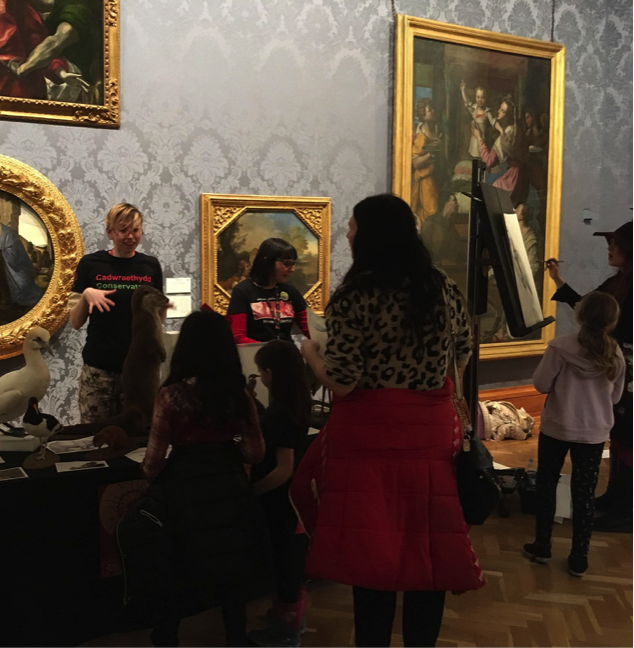
Photo of me (left) talking to guests at the National Museum Cardiff ‘After Dark’ event alongside Vertebrate Curator Jennifer Gallichan (centre) and local artist Nichola Hope (right) drawing. Photo courtesy of Caitlin Jenkins.

Throughout the event both children and adults came up and asked a lot of questions about the objects, and I noticed some reoccurring queries, especially around the ethics of taxidermy. I have attempted to answer some of these here, so that if anyone else reading this faces the same conundrums, this article will set their mind at ease, or enable them to answer the questions confidently.

Is it ‘ethical’?

‘Ethical’ is a subjective term, therefore what is considered ethical varies between taxidermists. Whether the preservation of animal remains, without the inherently unobtainable consent of the animal, is in itself ethical is up to each individual to decide. ‘Ethical-taxidermy’ has become a more frequently used term generally referring to the animal not being killed specifically for the purpose of becoming a mount. However, this refers to a wide range of sources and can range from accidental deaths such as finding an animal dead or road kill, right through to by-products of culling, pet food supply animals and pest control salvages.

Continue reading

Playing with Wire: The Conservation of a Wallaby Skeleton

Written by Caitlin Jenkins, MSc Conservation Practice student, Cardiff University and volunteer at National Museum Cardiff.

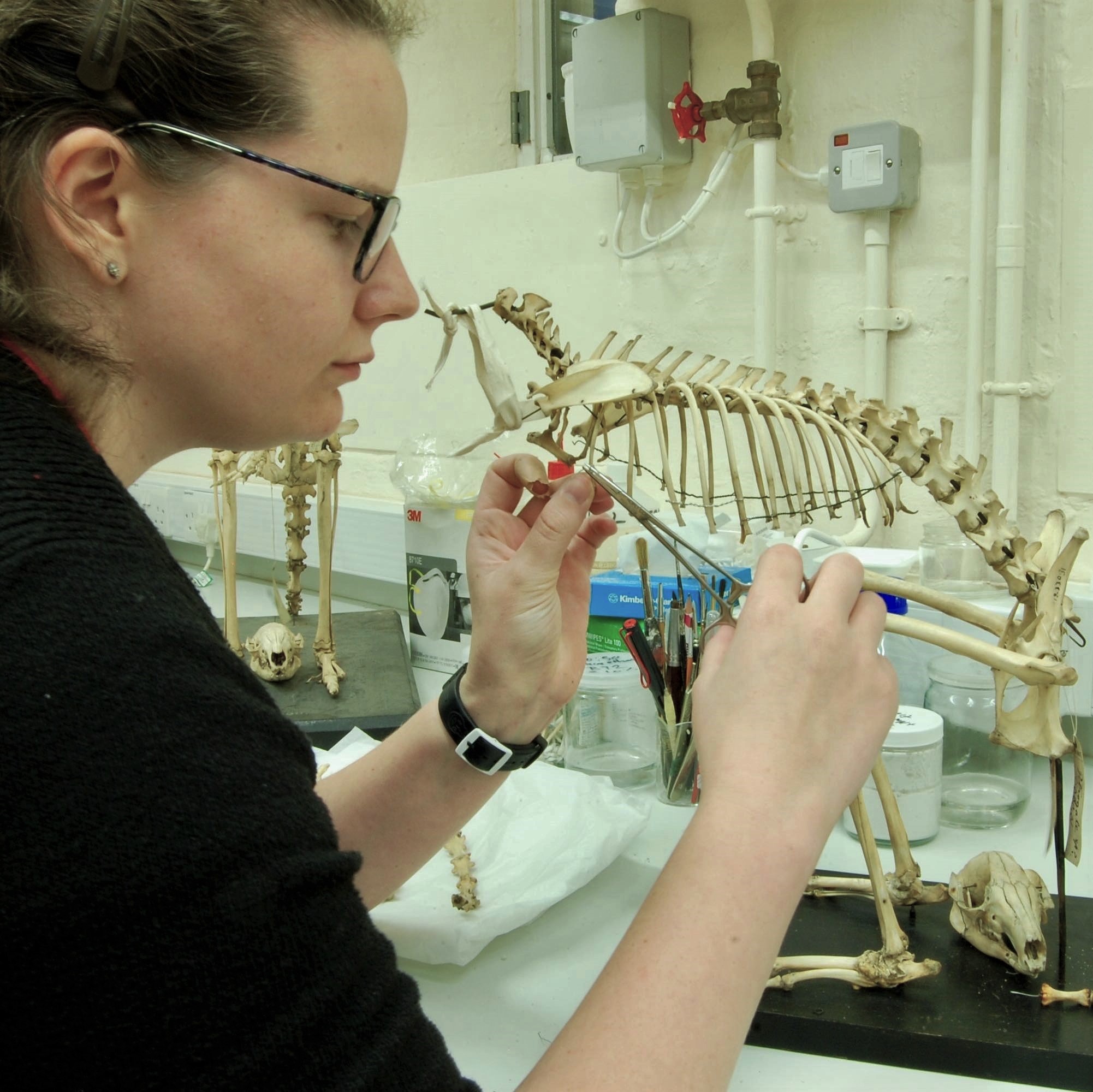
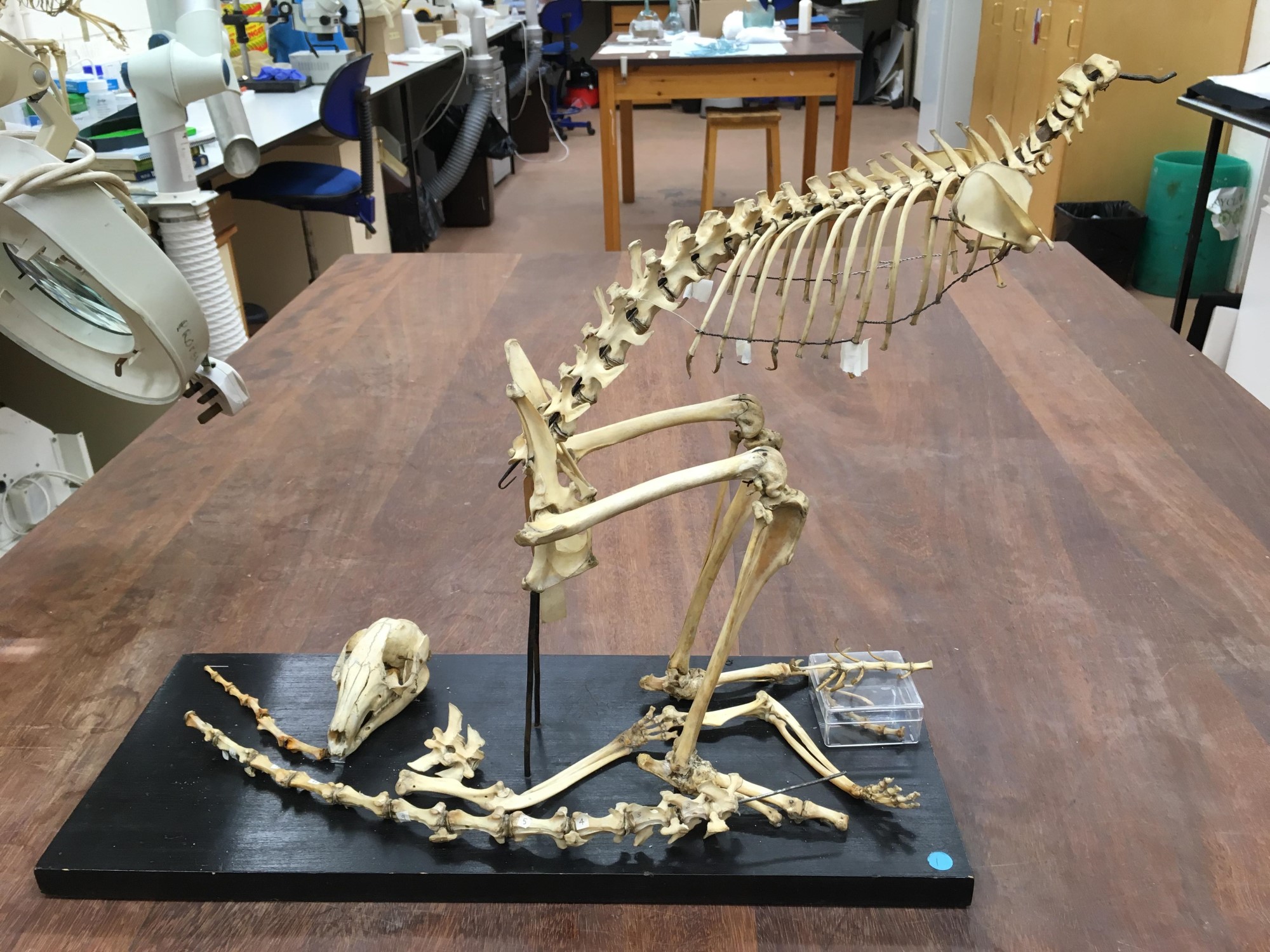
While volunteering with natural history conservator Julian Carter at National Museum Cardiff, I was given the opportunity to work on a wallaby skeleton. This was the first skeleton of any kind I had conserved. Although it initially appeared to be in relatively good condition, there were lots of small areas needing attention that made it a surprisingly complicated job.

A bony jigsaw…

The first step was to remove dirt that had built up on the bones over the years. This was cleaned away using cotton swabs and small interdental brushes dipped in a sodium bicarbonate solution; care was taken to not over-wet the bones as this can damage them.

One of the main conservation tasks was to re-wire a portion of ribcage that was hanging loose and distorting the alignment of the left side. In keeping with the pre-existing work, this required me to stabilise the free end of each rib using a single piece of wire twisted at intervals. This provided support and appropriate spacing of the bones. I had previously made jewellery using a similar technique, so my experience came in handy during the fiddliest parts!

Beginning the ribcage wiring

Continue reading

Giant Sequoia at the Natural History Museum

Written by Lu Allington-Jones, Senior Conservator & Chelsea McKibbin, Conservator, at the Natural History Museum, London.

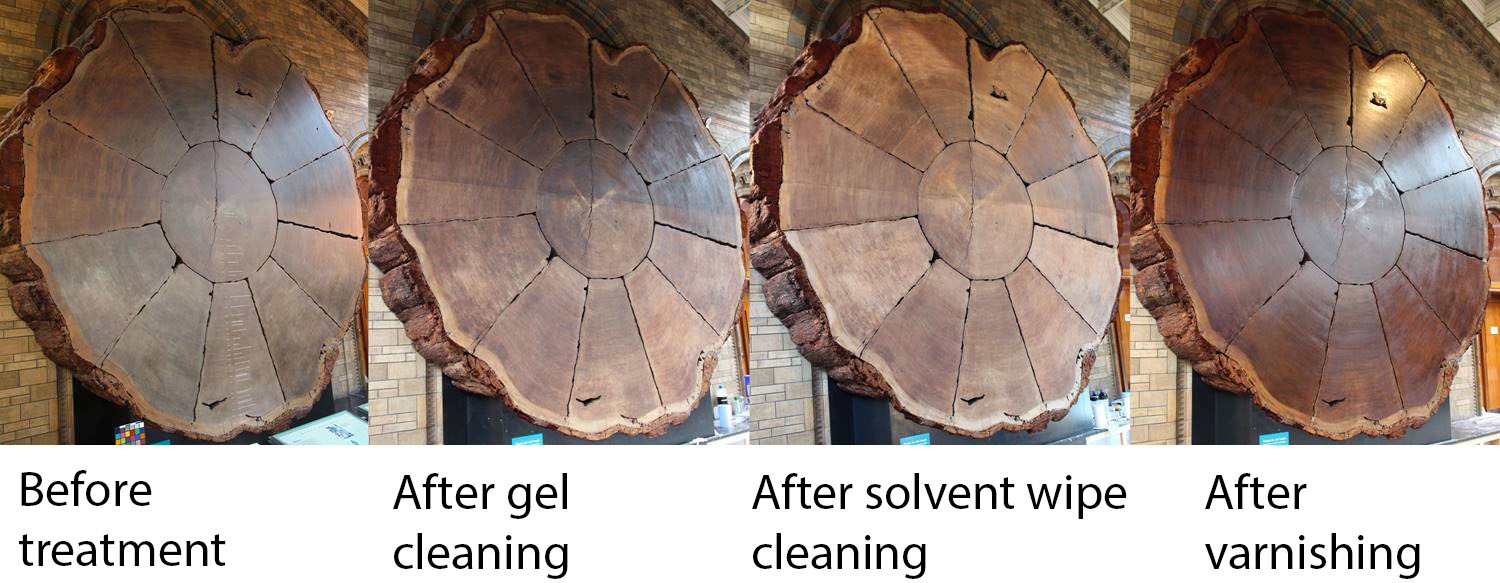
In 2016 a team undertook conservation of the slice of giant sequoia tree which is on display in Hintze Hall of the Natural History Museum in London. Following condition mapping, the treatment involved dry cleaning, removal of the old varnish with solvent gel and applying a fresh coat of varnish. A time-lapse video was taken of the whole process, which spanned 12 weeks, and can be viewed at the end of this post.

Figure 1. The stages of treatment

The Specimen

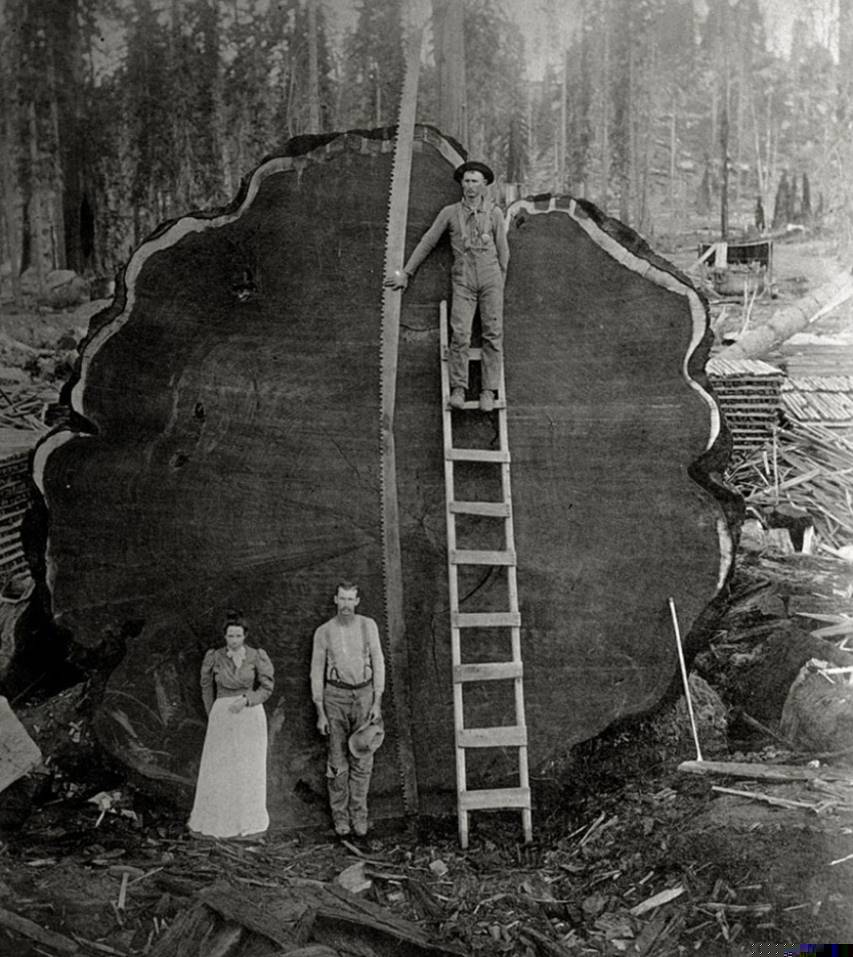
The giant sequoia (from Kings Canyon National Park, California, USA) was felled in 1891 at the age of 1,341 years. It had been 101 m tall and just over 5 m in diameter. Two sections were cut for display. The bottom and slightly larger one was sent to the AMNH while the top section was split into 12 pieces: one central disc and 11 radial segments to enable shipping to the UK. They arrived at the South Kensington site in April 1893.

Figure 2. The tree when it was felled

The giant sequoia section went on display the following year, in one of the bays of the central hall. It was moved in 1902 to stand against the wall dividing the north and central halls, and again in 1971 to its current location on the second-floor balcony.

Continue reading

Resurrection 101

Written by Paolo Viscardi, Curator of Zoology, National Museum of Ireland – Natural History

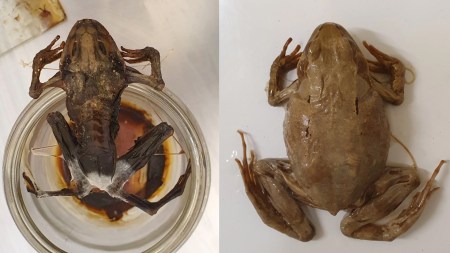
Anyone who has to deal with fluid collections, without the support of a natural history conservator, probably has nightmares about cracked jar lids and desiccated specimens. But would you sleep more easily if I told you that it’s possible to get a transformation like this using a straightforward and inexpensive method?

Frog_before-after

Here’s my account of how I resurrected this dehydrated specimen using stuff you probably have sitting in your museum cupboards or that you can buy for less than £20. It’s worth noting that the technique will not always work and if you plan to use it on a specimen that may have useful DNA to contribute, you should take a sample before rehydrating, since it is likely to reduce the quantity and quality of DNA you can extract.

Continue reading

Diminished Scales – The Plight of The Pangolin and The Role of Museums

Written by Dan Gordon, Keeper of Biology, The Great North Museum: Hancock.

To explain grace requires a curious hand’ wrote Marianne Moore, in her 1938 poem, The Pangolin. Moore first learned about pangolins at college in biology class and remained fascinated by them for the rest of her life. Curiosity was what first drew me to pangolins, too. Not just about their curious, clawed hands – when I first encountered a stuffed pangolin at the Great North Museum, its whole appearance was like nothing I’d ever seen. A small quadruped, clad in precisely overlapping rows of jagged scales, like steel plating welded onto a badger. A huge tail at one end, a tapering snout at the other. It was an animal that suggested a host of comparisons – a pinecone, an artichoke, a dinosaur. What on earth was it? I decided to investigate.

I soon learned it was a Ground Pangolin (Smutsia temnickii), one of eight species of pangolin that make up the family Manidae. Pangolins are the only scaled mammals and are found in tropical Africa and Asia. Most species live nocturnal, solitary lives. They’re notable for all sorts of reasons. The Ground Pangolin can walk on its back legs, like a tiny T-rex in a suit of armour. The Black-bellied Pangolin has a tail so long it has more bones than any other mammal.

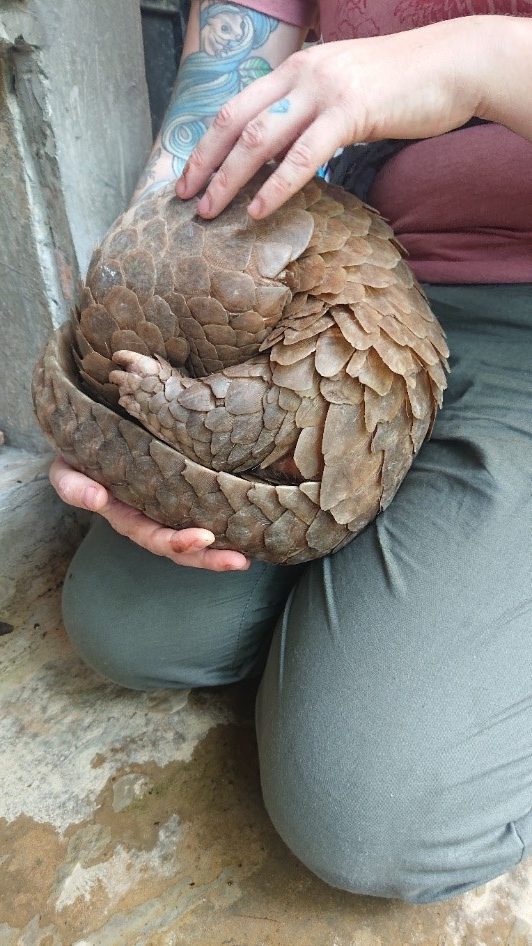
Sunda Pangolin (Manis javanica) at SVW Rescue Centre, Vietnam. When threatened pangolins curl into a defensive ball. This animal was found wedged beneath a seat on a bus travelling from Laos to Hanoi and rescued by SVW staff (© Dan Gordon)

Continue reading