NatSCA Digital Digest

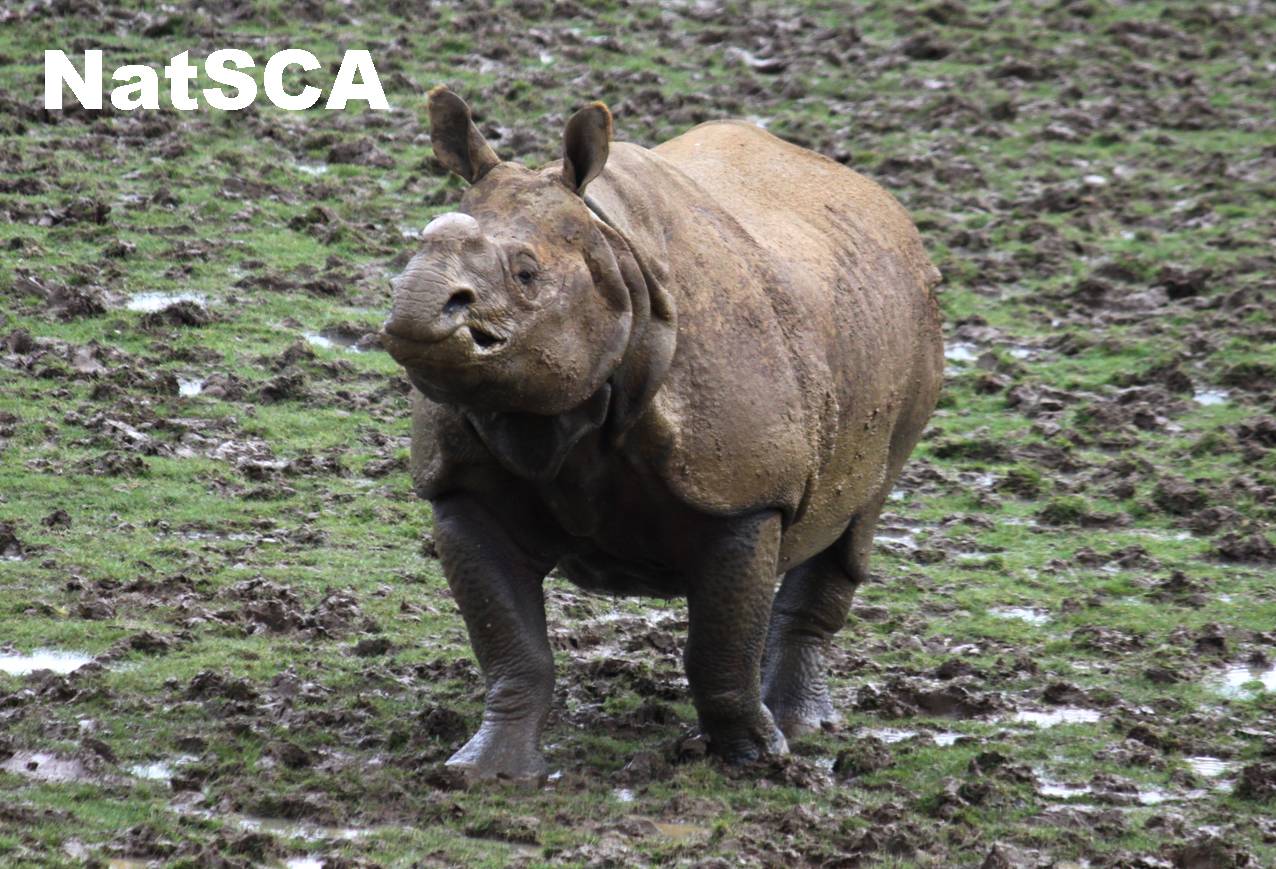
Greater one horned rhino (C) E-L Nicholls

Greater one horned rhino (C) E-L Nicholls

Jobs and Traineeships

Post Doctoral Research Assistant- Origin of Land Plants, at the Natural History Museum. Applications for this externally funded two year project close on 7th December 2015.

Education Assistant; Bookings Administrator and Family Programming Officer, at the Oxford University Museum of Natural History. The position is for 3 years and deadline for applications is 12pm on 16th December.

Events and Exhibitions

Call for papers for the April 2016 conference Objectively Speaking at the British Museum. The conference is set to explore four main themes:

  1. How can museums connect collections with classroom and academic teaching?
  2. How can objects facilitate creative teaching practice?
  3. What is the impact and opportunity of digital technology for object based teaching?

The deadline for proposals is 12pm on 15th January 2016.

A day conference on 11th December called Conservation Matters in Wales – ‘Conservators in Action’ is taking place at the National Museum Wales, in Cardiff. It will include presentations, short tours, and drinks in the pub afterwards (optional!)

Around the Web

Got literary inspiration to find or time to kill? Check out 100 Best Museum and Curator Blogs.

Rachel Petts graces the PalaeoManchester blog with beautiful sharks teeth (I’m not biased) (that might be a lie) as she introduces us to a collection of Eocene Chondrichthyan fossils, found in the UK, and recently donated to Manchester Museum. Hooray!

Funny Bones

I wanted to be an Archaeologist when I was 11, and this was certainly down to a fascination with the bones of animals. My inspiration from a very young age came from the wonderful series of ‘Funny Bones’ books by Allan and Janet Ahlberg. The skeletons certainly made me think about how the bones of humans and animals (admittedly not 100% accurate) moved together. I trace my later interest to the many books on dinosaurs and prehistoric life that I assiduously read in my school library. Fast forward 20 years and as an intern at Auckland War Memorial Museum in 2012, I was allowed to ‘have a go’ at preparing some native birds for skeletonisation by de-fleshing them. At Exeter’s Royal Albert Memorial Museum, I worked on a small project to re-house some Moa bones whose storage and provenance needed to be updated. However, I wasn’t aware of the methods to clean and maintain bone and re-mount skeletal collections in museums.

I was therefore pleased when NatSCA and conservators from the Cambridge Museum of Zoology put together an amazing conference and workshop called ‘Bone Collections: using, conserving and understanding osteology in museums’. Depending on your area of interest, you could attend for some or all of the talks, or take part in a bone cleaning workshop hosted by Bethany Palumbo, Conservator at Oxford University Museum of Natural History, and Vicky Singleton and Natalie Jones of Cambridge University Museums. By taking part, I was able to gain some practical hands on experience of handling and observing bones in collections, and using a variety of dry and wet cleaning methods that are recommended as safe to use, easy to apply, and non-invasive.

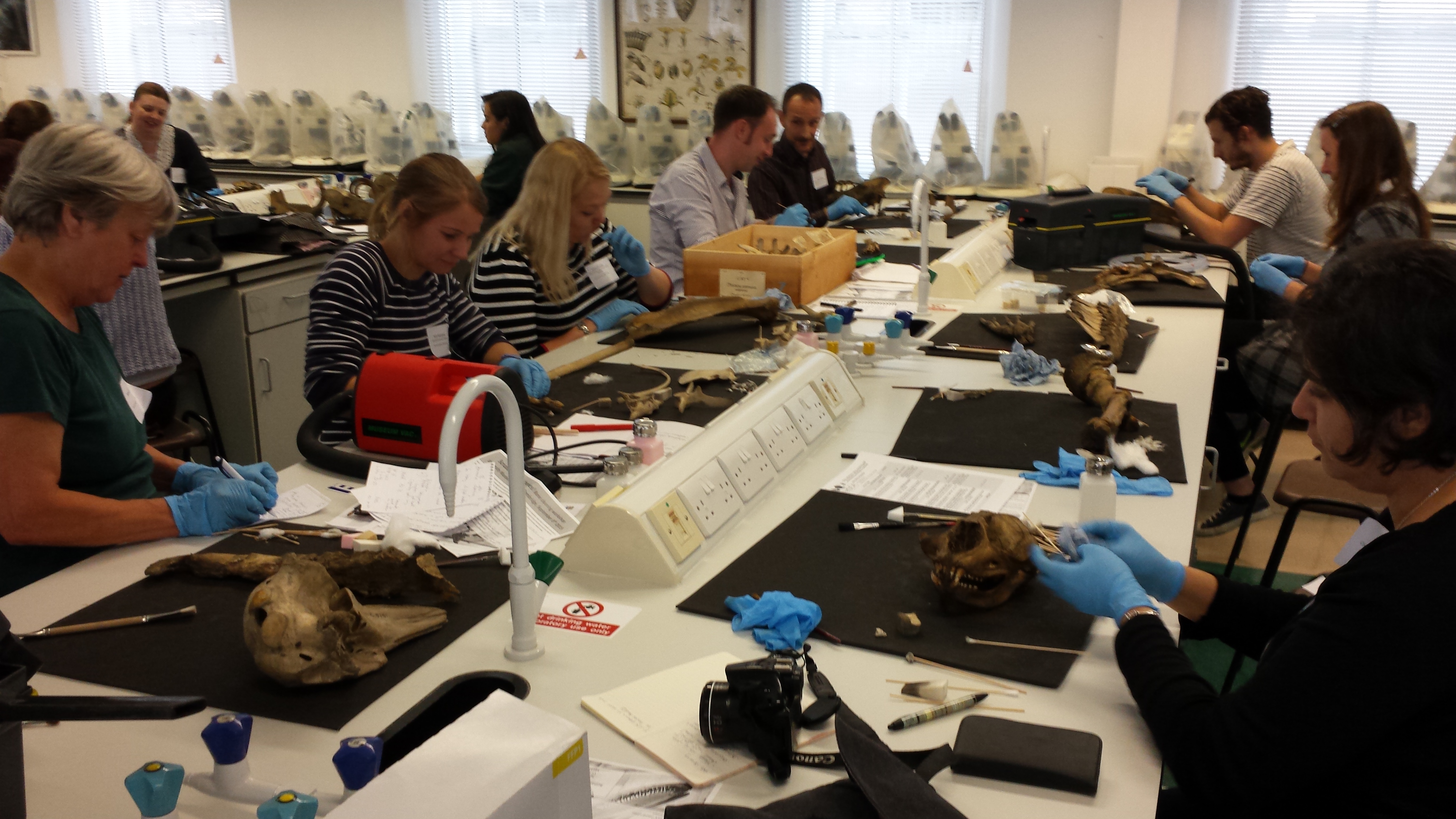
Bone cleaning in progress (Image: Anthony Roach)

Bone cleaning in progress (Image: Anthony Roach)

Bethany began by outlining the structure and composition of bone and the impact that light, humidity, and temperature can have on bone if not properly cared for. Bone can become bleached through exposure to light. The surface of bones can crack if they become too hot or suffer mould damage if left in cold, damp conditions. Bethany explained that the bone itself can also cause problems, such as with the secretion of natural fats and oils, which are acidic and can ooze out of specimens long after they have been cleaned and erected for display. This can lead to acid burn. Mechanical damage of bones can also occur, where wire is excessively tight in articulated specimens, or fatty acids react with copper wire and pins to cause Verdigris.

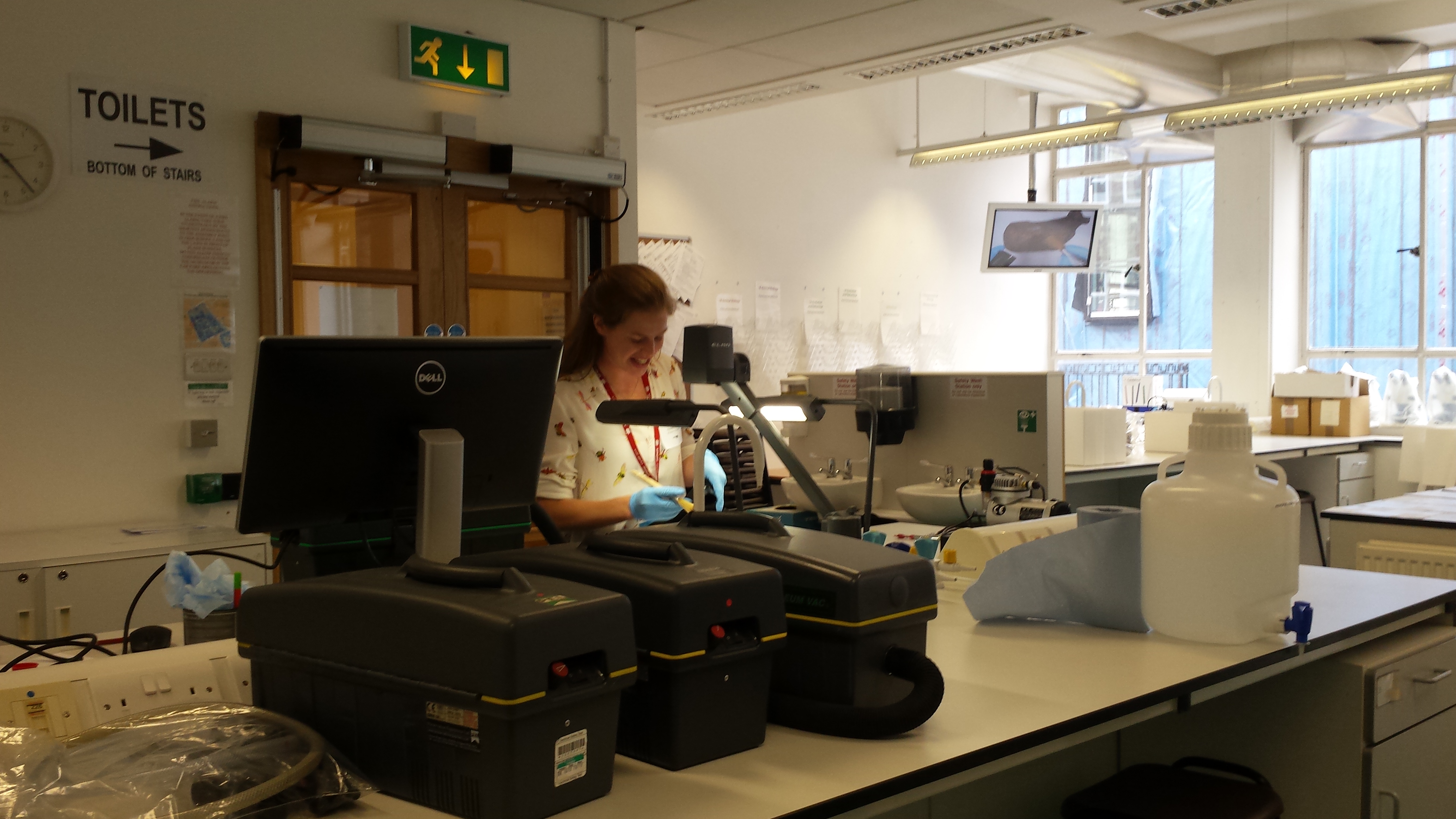
Vicky Singleton,  Conservator at Cambridge University Museums  pictured demonstrating dry cleaning methods (Image: Anthony Roach)

Vicky Singleton, Conservator at Cambridge University Museums pictured demonstrating dry cleaning methods (Image: Anthony Roach)

Vicky Singleton and Natalie Jones then systematically went through the various methods for dry and wet cleaning of bones. The methods for dry cleaning include using a vacuum and brush, smoke sponge, a ‘groom stick’ made of natural rubber, and air. These methods are less time consuming, less invasive, and more cost effective than wet methods. I was able to choose specimens from a box of assorted bones, and see the impact of the methods for myself. I could see the difference literally first hand on the digits of a primate hand, using the various dry methods. I then used the wet methods on a collection of horse vertebrae. The wet methods made a dramatic difference to the surface of the bone. These include using solvents such as de-ionised water, ethanol, and white spirit, enzymes, and detergents (e.g. Synperonic A7). I was amazed by the impact of white spirit on greasy bones, where water made little or no impact. The clear favourite to remove dirt in general was actually something I hadn’t ever considered: human saliva, which is full of enzymes. Human saliva! Who knew?

Bones shown partially cleaned by various solvents including water, ethanol and white spirit, as part of the wet cleaning methods (Image: Anthony Roach)

Bones shown partially cleaned by various solvents including water, ethanol and white spirit, as part of the wet cleaning methods (Image: Anthony Roach)

The talks were equally excellent, such as the session by Paolo Viscardi on the uses of skeletal reference collections at Sheffield University, which consists of over 1800 specimens, organised in a useful way for teaching and research. Jack Ashby’s #BoneIdols talk about the successful crowdsourcing project to protect some of the Grant Museum’s most scientifically important and rare specimens was also inspiring. The quagga, for instance, has became something of a celebrity in its own right through a very successful marketing campaign where visitors could see the conservation, re-mounting, and re-storage of the specimen. Interest was also maintained through press releases and blogs about the Quagga and the use of technology used in museums. Jan Freedman’s ‘Game of Bones’ talk on the methods for preparing animals for skeletonisation and using bone collections was also memorable.

Anthony Roach, Natural History Museum (NHM)

Caring for your Bones – No Calcium or Exercise Required!

In our modern, health-conscious society, just about everyone knows that properly caring for one’s own bones involves adequate ingestion of certain nutrients (calcium, vitamin D, vitamin K) and maintaining bone mineral density through exercise – or so the common wisdom goes, anyway. What about caring for someone else’s bones, however? When that “someone else” turns out to be vertebrate animals whose bones have wound up in a museum collection, the answer involves neither mineral supplements nor resistance training exercises, although saliva might come into the picture (more about this below)!

I learned all about the basics of curating an osteological collection at the NatSCA event entitled ‘Bone Collections: Using, Conserving and Understanding Osteology in Museums’, held at the University Museum of Zoology in Cambridge on September 8, 2015. The day involved a workshop focused on cleaning bone specimens, talks touching on osteology from both biological and museological perspectives, and a series of posters presenting various case studies concerning the treatment of skeletal material (ranging in nature from modern to sub-fossil and fossil) that required cleaning and repair.
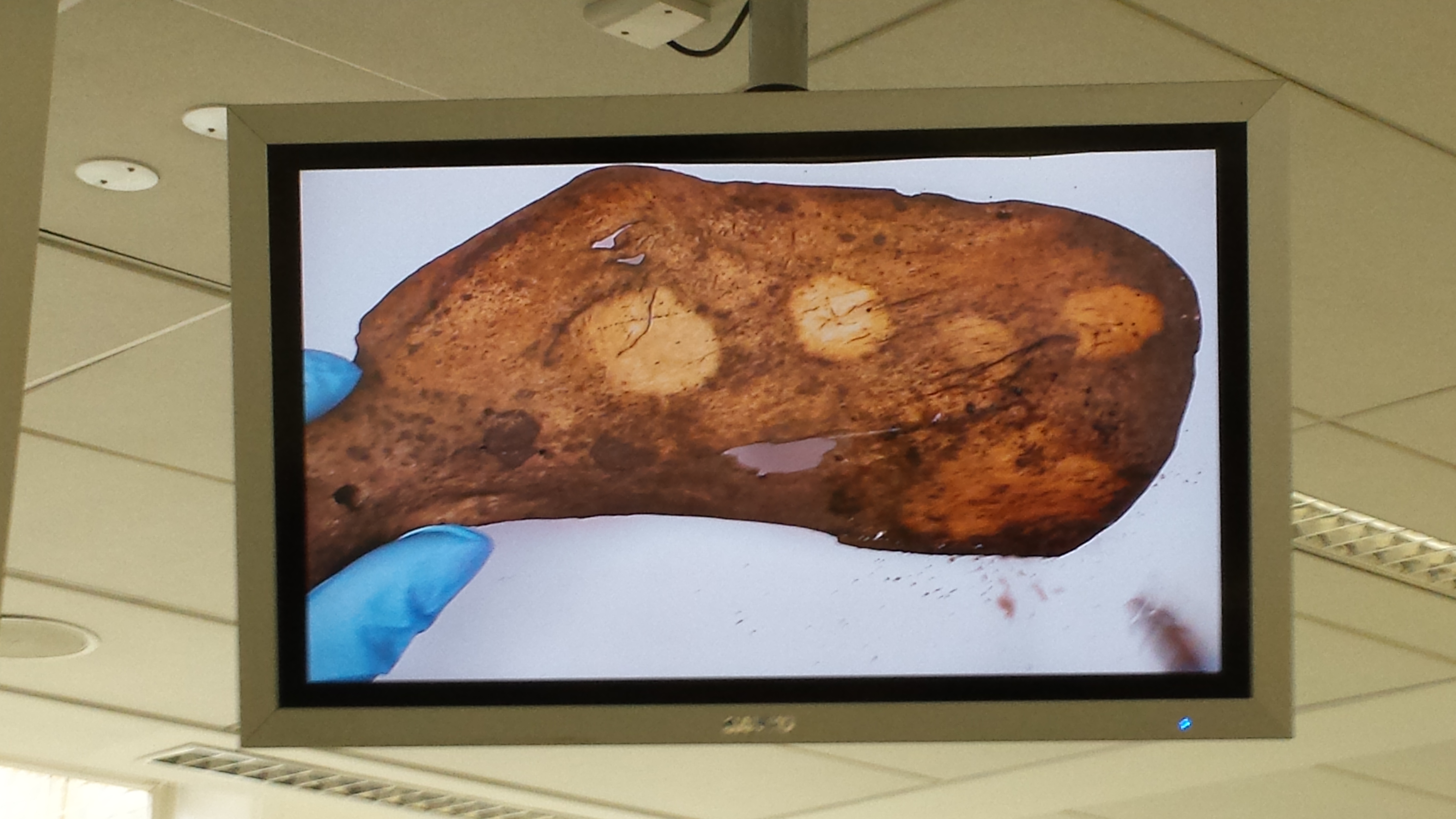
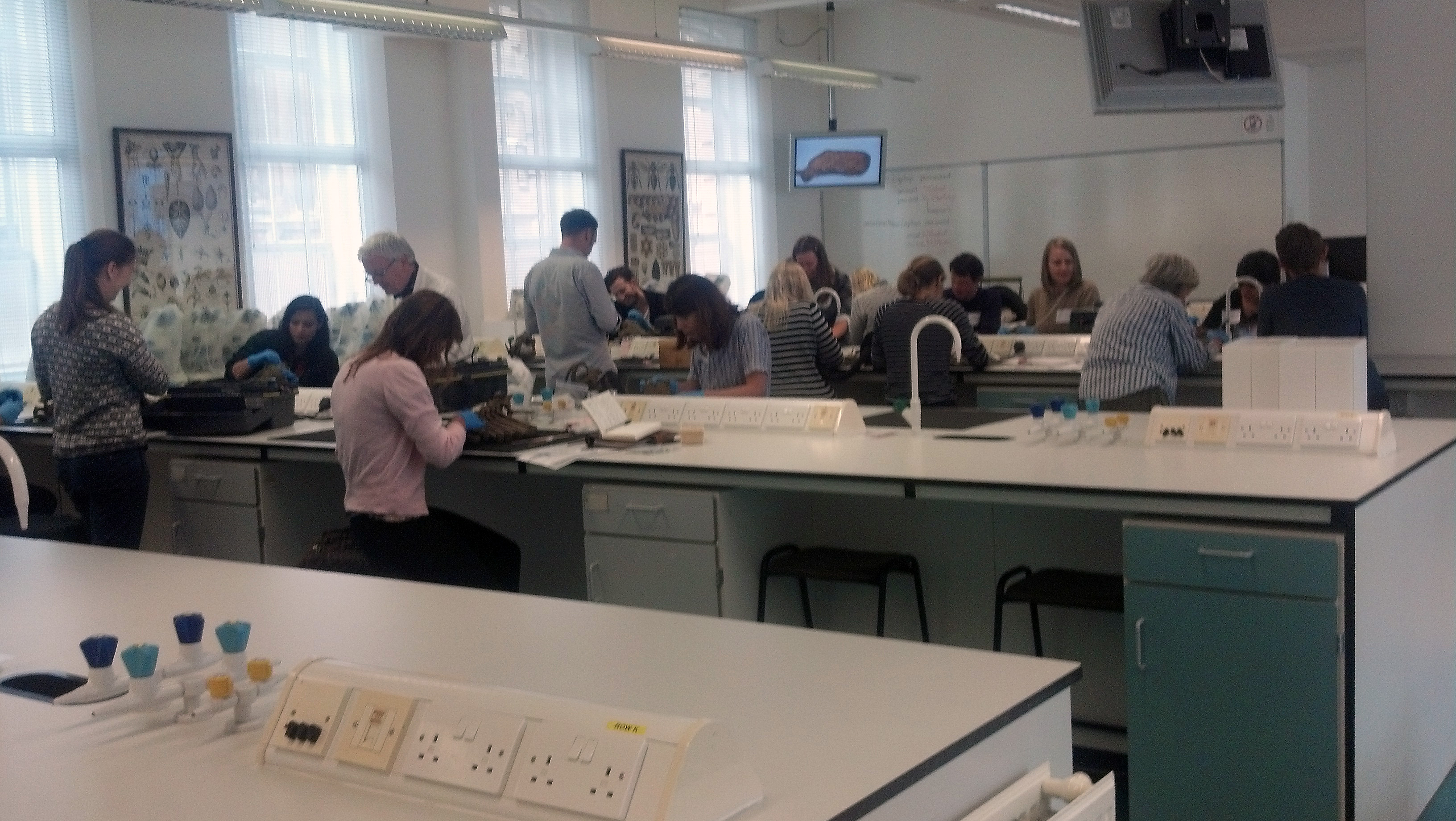
Workshop participants busily trying out various techniques for cleaning osteological specimens that had just been demonstrated on the monitors seen overhead.

Workshop participants busily trying out various techniques for cleaning osteological specimens

At the Canadian Museum of Nature (CMN), where I am employed as a research assistant and collections manager, we have an extensive osteological collection that was established through the collaboration of the museum’s vertebrate zoology staff and the researchers who operated the now defunct Zooarchaeology Identification Centre (ZIC). Use of our osteological comparative material has declined greatly since ZIC ceased to operate in 1996, and relatively few zooarchaeologists working in Canada are aware of our holdings, which is a shame as the osteology collection represents a great national resource that would benefit archaeological research in the country. I am setting out to change this situation.

Having a research background in zooarchaeology – something I have in common with Kathlyn Stewart, head of the CMN Palaeobiology Section – I would love to see the rebirth of an active zooarchaeology programme at the museum. Kathy and I are joining forces to foster growth of the osteology collection in several directions, including expanding the number of specimens to include taxa that are currently underrepresented, increasing knowledge of the collection as a comparative research tool in the archaeological community, and developing CMN-based zooarchaeological research projects.

The Bone Day in Cambridge was therefore the perfect opportunity for me to gain hands-on experience in the care and maintenance of osteological collections.  I spent many years working with osteological collections as a research aid, but I have had little experience in curating such collections. Supported in part through a generous NatSCA bursary, I was able to attend the workshop and conference, affording me the occasion to investigate several topics in greater depth with osteology experts and fellow museum workers. Most important for my goals was learning about techniques for the care of bone and the preparation of skeletal specimens from carcasses.

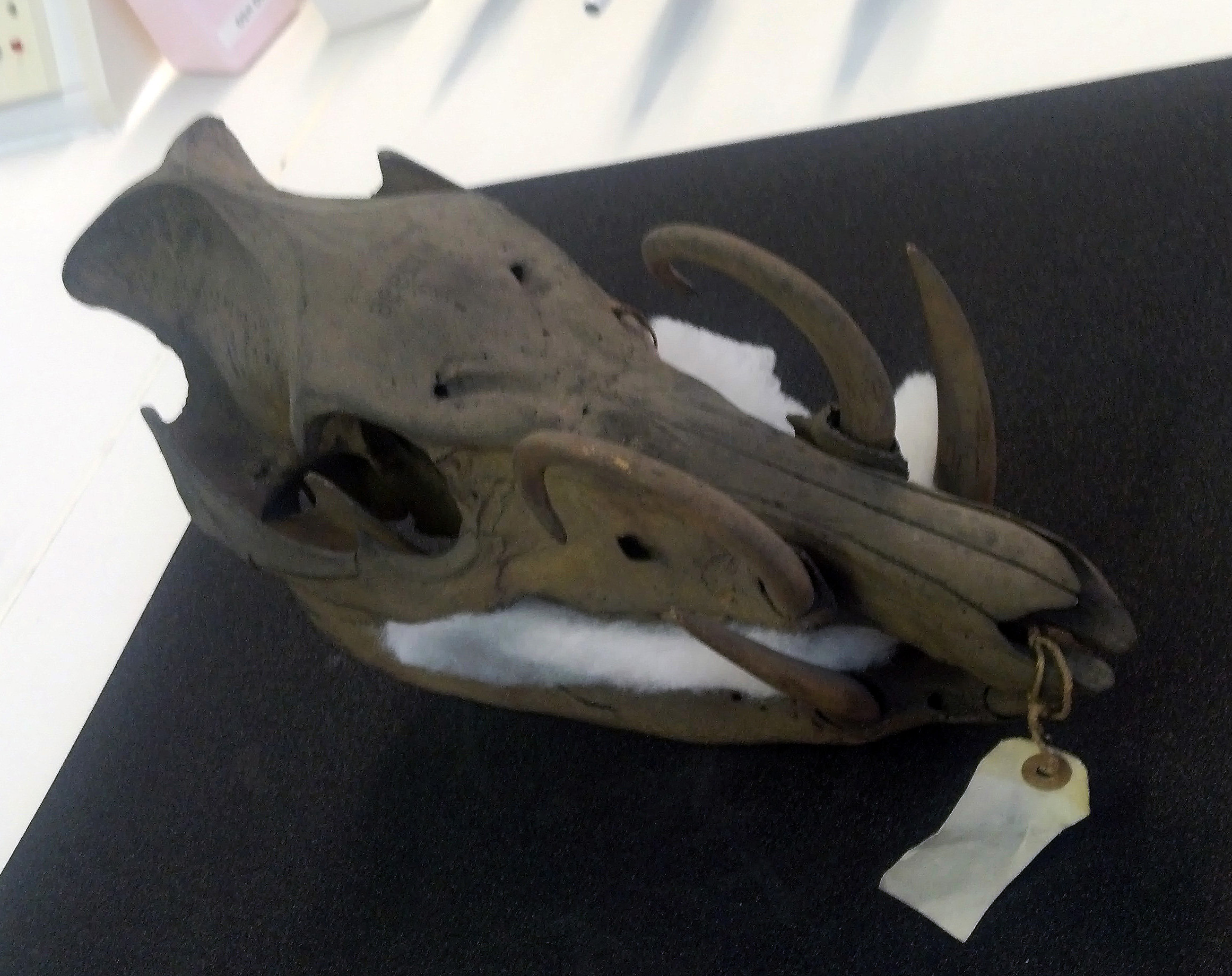
The skull of a babirusa, and Indonesian wild pig, used in the workshop to test cleaning methods.

The skull of a babirusa, and Indonesian wild pig, used in the workshop to test cleaning methods.

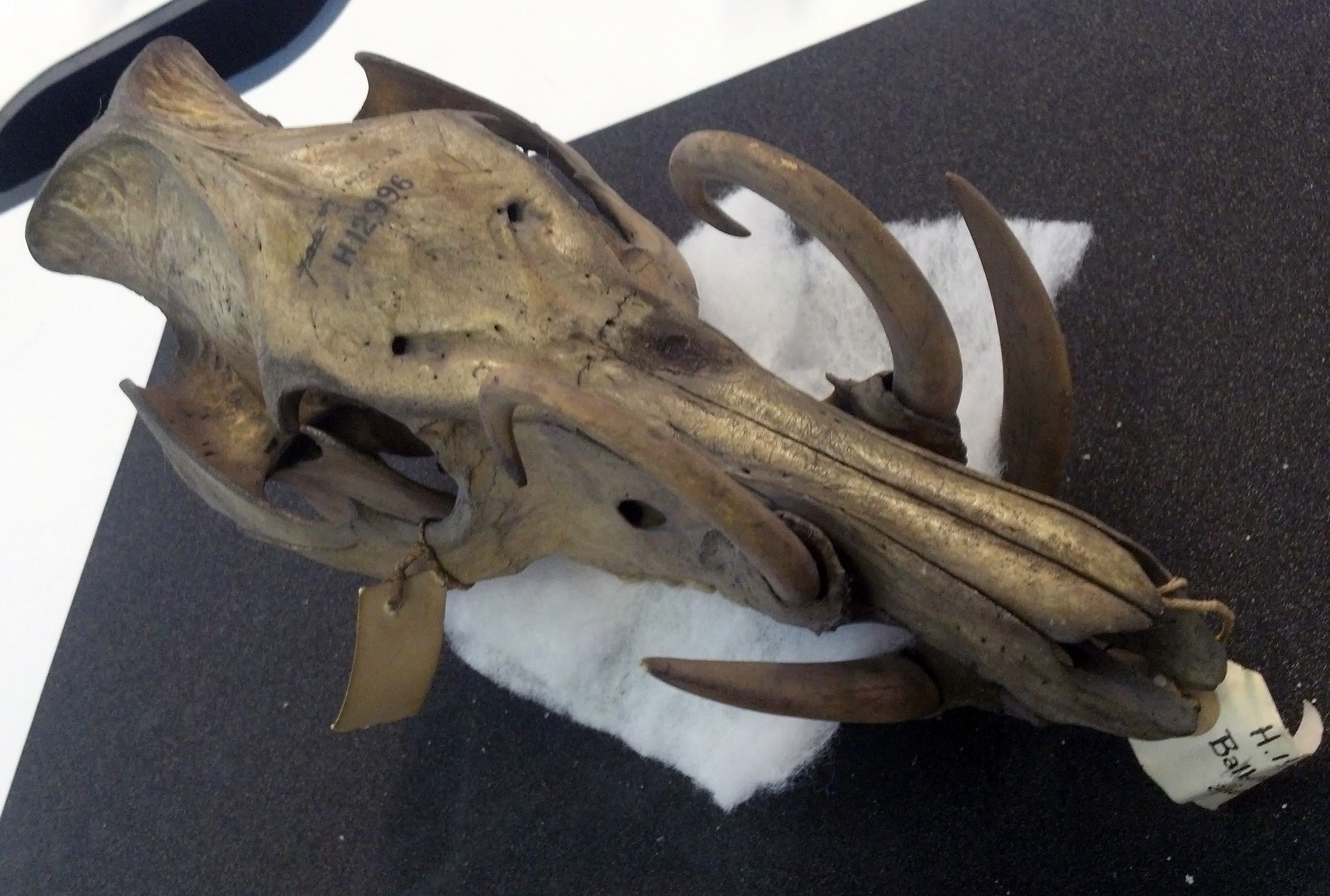
The babirusa skull after a cursory cleaning using brushes, smoke sponge, swabs dipped in Synperonic A7, and yes, even some spit.

The babirusa skull after a cursory cleaning using brushes, smoke sponge, swabs dipped in Synperonic A7, and yes, even some spit.

The day began for me with the morning bone cleaning workshop, where we were introduced to some of the safest and most effective ways of removing deposits that accumulate on the surface of bone specimens, ranging from dust and dirt to bone grease and adipocere (a waxy substance that develops from fats such as bone grease under certain conditions). Gentle brushing and vacuuming, combined with the use of products such as smoke sponge and Groom/Stick natural rubber, remove a significant amount of particulate matter from the surface of bone. For stubborn accumulations, especially those involving bone grease, ethanol solutions and surfactants such as Synperonic A7 (an alcohol ethoxylate) work wonders. Surprisingly, saliva is also an effective cleaning agent, the enzymes in human spit serving quite well to loosen up agglomerations of dust and oil!

The afternoon talks, which included an overview of the importance of osteological collections for archaeological work as well as a discussion concerning an enzyme-based method for skeletonising carcasses, were particularly relevant for me with regard to resurrecting zooarcheological research at the CMN. I believe that several of the presenters from the conference’s slate of lecturers, as well as the leaders of the workshops, are considering submitting blog posts about their contributions to the osteology event, so I will refrain from providing any additional details here. Rather, I will encourage you to stay tuned for future entries concerning the care of bone.

I learned a great deal during the NatSCA Bone Day and made several fruitful contacts with NatSCA members, making it well worth the time and effort of “crossing the pond” from Canada to the UK. I certainly look forward to continuing my association with NatSCA into the future.  Many thanks to the organisation for sponsoring the osteology event and kindly providing support for my attendance, and I hope that I will be able to work with NatSCA to hold a similar ‘bone day’ here in North America sometime soon—I know it would be well received!

Scott Rufalo, Canadian Museum of Nature

NatSCA Digital Digest

(Image by Ton Rulkens, in public domain)

(Image by Ton Rulkens, public domain)


Your weekly round-up of news and events happening in the world of natural sciences

News

The BBC just posted a down to earth (or sea) article called The man who swims with sharks, by Melissa Hogenboom, feature writer for BBC Earth. Combined with beautiful images, it talks about swimming with and photographing sharks and summarises some very interesting facts about these majestic animals.

Exhibitions

If you haven’t seen the Natural History Museums’ exhibition Coral Reefs: Secret Cities of the Sea, you should definitely go this weekend. If you have seen the Natural History Museums’ exhibition Coral Reefs: Secret Cities of the Sea, you should definitely go this weekend. It will be your last opportunity to see (or re-see) the exhibition as it closes on the 13th September. There are fantastic specimens, cool interactive games and a video of the only coral spawning ever to have occurred in captivity. I personally recommend it to you.

Opened just last week is the new exhibition In the Footsteps of Elephants. This two and a half week exhibition is only open from the 3rd to the 20th September, so if it’s up your street you need to get a wriggle on. The exhibition is being held at the Nature in Art Museum and Gallery in Gloucestershire, which looks really worth too.

Jobs

If you are looking to move, or move into a, role in natural sciences the Naturejobs Career Expo in London on Friday 18th September should be a great place to meet others in the field, attend workshops and conference talks, schmooze with potential employers, and even get your CV looked at.

If Brachiopods are your thing, then the Natural History Museum in London is currently looking for a curatorial assistant to join them in the Earth Sciences Department. The contract is for a year, and the deadline is the 14th September. Sounds like a shell of a good opportunity (!)

As ever, if you would like to write a blog for NatSCA on anything natural sciences related, give us an online shout blog@natsca.org.

Exciting new natural science workshops and a new book

Time is racing away, and in just a few days we will be at the NatSCA Bone Collections day in Cambridge (8th September 2015). The talks and posters promise to be really varied, interesting, and hugely informative. There is also the added bonus of a practical session to get your hands on some skeletal material, and, under the expert guidance of Bethany Palumbo, learn all about the basics of bone conservation.

Just a month later (15th October 2015), Paolo Viscardi will be leading a workshop on the identification of natural materials, a free course run by NatSCA and held at the Royal Albert Memorial Museum in Exeter (now sold out).

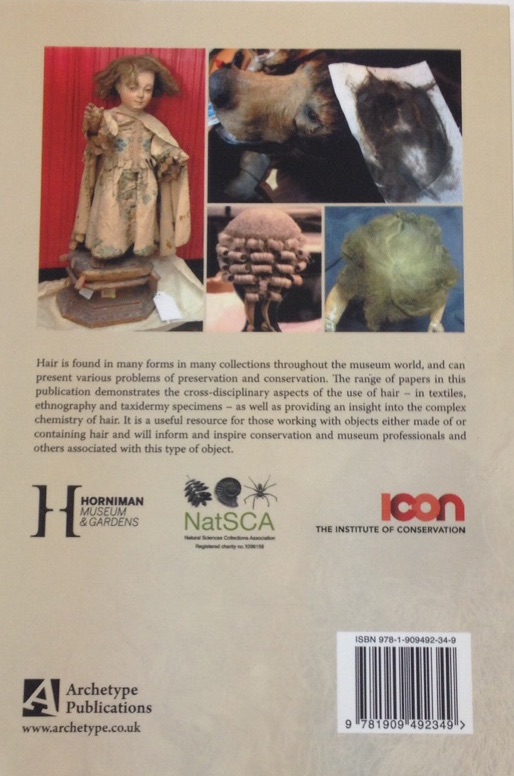
There is still more good news in that NatSCA, the Horniman Museum and Gardens, and Icon have published a book containing the full papers given at the Conservation of Hair conference held in June 2014. The book is published by Archetype books.

Conservation of Hair Publication

back_hair