NatSCA Digital Digest – January

Compiled by Dr Emma Nicholls, Deputy Keeper of Natural History at the Horniman Museum and Gardens.
What Should I Read?

Prolific author Darren Naish (of TetZoo) has pulled together a collection of exciting tetrapod-based scientific discoveries of 2018 in his latest article The Most Amazing TetZoo Themed Discoveries of 2018.

The government of New Zealand is under pressure to act on the trade of moa bones. This article is good food for thought re private sales of fossils; Moa for sale: trade in extinct birds’ bones threatens New Zealand’s history.

Of interest to many more of us than just curators, the top three most popular 2018 blogs posted on the Geological Curators’ Group website are:

1) Pyrite Oxidation: Where Are We Now? an excellent and informative article on the menace of pyrite decay

2) Up Inside Historic Dinosaurs about the Crystal Palace Dinosaurs, and

3) Contradictions, Conundrums and Lies which looks at the issues we face in museums!

Continue reading

Caring for Natural Science Collections – My First NatSCA Conference

Written by Hannah Clarke, Curatorial Assistant (Collections Access) University of Aberdeen, Museum Collections Centre.

This October I was lucky enough to attend my first ever NatSCA conference, thanks to funding from one of the NatSCA bursaries. I was originally a little daunted, as this was my first Natural History Conference, but I knew that I had to throw myself in the deep end!

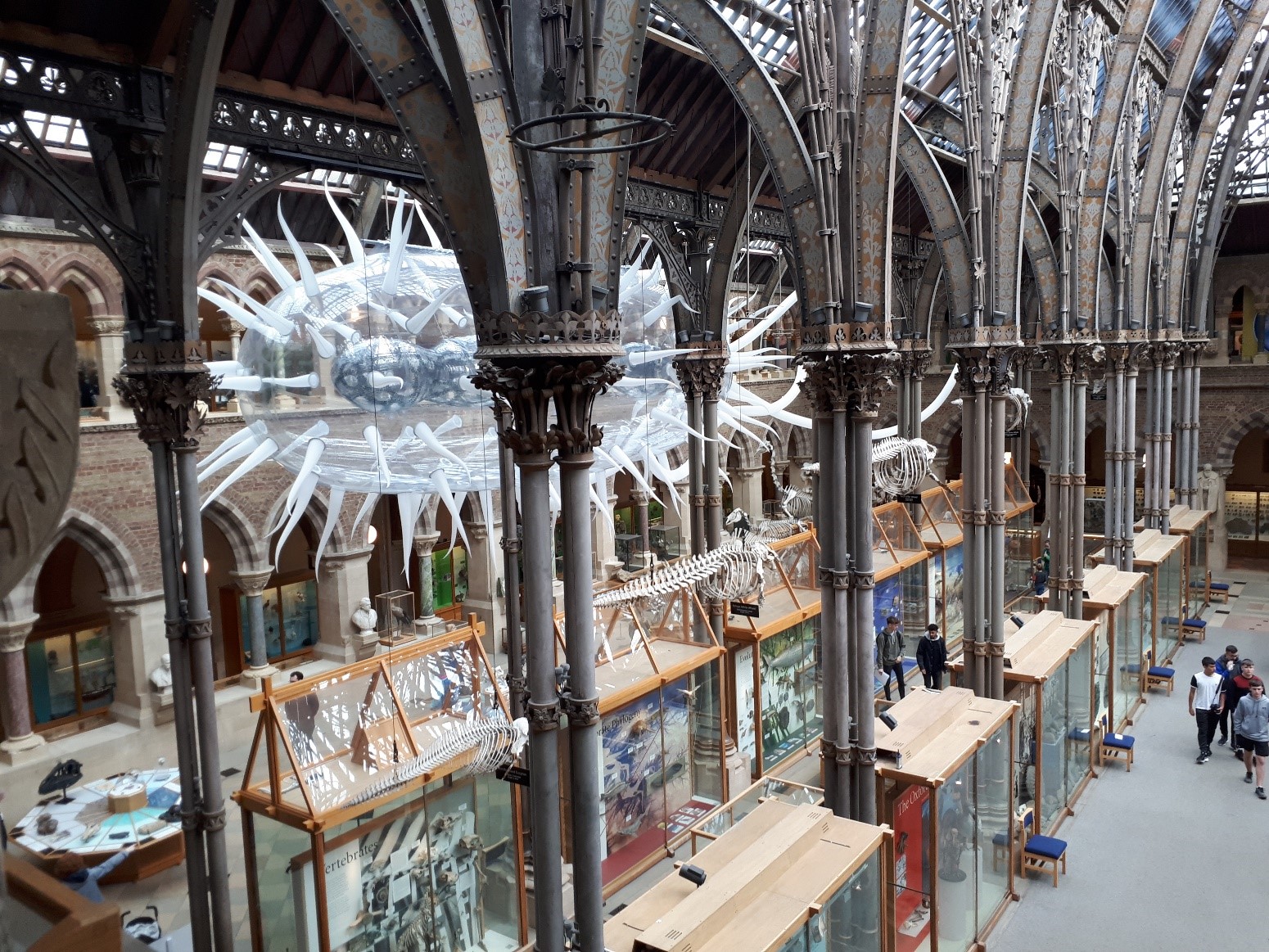
However, these worries soon dissolved, as everyone was really friendly, passionate about their specialism and eager to share their knowledge and experiences with everyone else in the room. Not only this, but the setting at Oxford University Museum of Natural History was a real treat, and I had a chance to take in the collection from above during coffee breaks.

View from the first floor at Oxford University Museum of Natural History, showcasing the impressive architecture and collections below. © Hannah Clarke.

Having originally trained as a conservator, I am now working in a collections access role, with responsibility for the upkeep of the Zoology Museum within my institution. Having been more focused on collections care in the last few years, I was keen to learn more about current advances in the conservation of natural history collections.

There were many highlights from the day, and as always at these kinds of events, new connections were made and advice offered openly to those with questions in the audience.

Continue reading

NatSCA Digital Digest – December

Written by Jan Freedman, NatSCA Committee Member and Curator of Natural History at Plymouth Museums Galleries Archives.

It’s the most wonderful time of the year! Festive celebrations are beginning, and this monthly digest is a bonanza of great things!

What Should I Do?

Big Natural Science conferences: Dates for your diaries!

Dead Interesting: Secrets of Collections Success: The NatSCA 2019 conference and AGM will be held at the National Museum of Ireland, Dublin between 1st and 3rd May 2019. The conference aims to unlock the secrets of collections success by sharing how we have used collections to benefit their organisations, communities and the wider world. The conference will focus on three themes:

  • Collections: Reveal your collections care, research and access secrets.
  • Engagement: What are your engagement success stories and how did you make them happen?
  • Museums and Tech: How has technology helped you unlock, understand and unleash your collections?

The call for abstracts is open, so have a look and present some of your amazing work to colleagues! All the information is here.

Continue reading

NatSCA Digital Digest – November

Written by Sam Barnett, NatSCA Volunteer and PubSci Committee Member

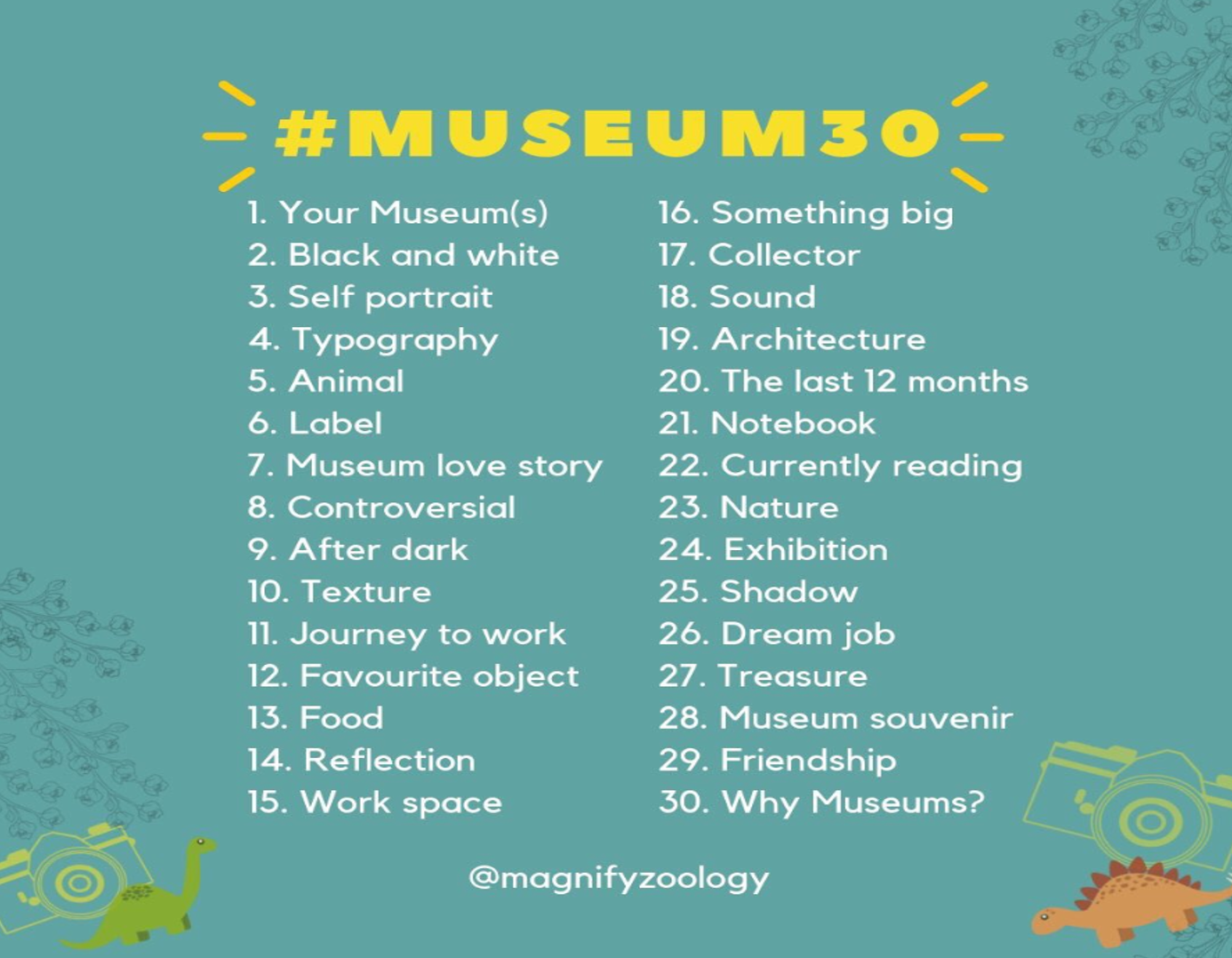
Welcome one and all to the November installment of the NatSCA Digest. First of all, I hope you’re all enjoying the #Museum30 social media event, which runs throughout November on Twitter. It’s not too late to get involved with it, check out the list here:

The Museum 30 list is compiled by Museum Studies and Archaeology student Gracie Price.

First, an Announcement

It’s that special time of year again when NatSCA release their Call for Papers for next year’s NatSCA Conference. Due to be held in May 2019, the conference will be exploring themes under the banner Collections Success. You have until the 4th of January to submit your abstract, and can find the full details here – we can’t wait to see what you come up with for us next year!

Where Should I Work?

Continue reading

Collectors, Collections and the Geology of SW Britain – A View from the Audience

Written by Nadine Gabriel, a recent UCL geology graduate and an emerging museum professional.

This article is a joint paper for the Geological Curators’ Group and the Natural Sciences Collections Association, and has subsequently been published on both blogs.

On the 18th September 2018, I attended the Collectors, Collections and the Geology of Southwest Britain meeting. This joint meeting between the Geological Curators’ Group (GCG) and the History of Geology Group (HoGG) was held at the Bath Royal Literary and Scientific Institution (BRLSI), and it was also my first ever GCG event! If you have an interest in British geology, you probably know that the southwest of Britain has amazing geology, but this meeting – with around 80 attendees – also looked at the people who have dedicated their lives to exploring this geologically diverse region.

The day started off with a keynote speech from Steve Etches who spent over 35 years collecting fossils from the Jurassic Kimmeridge Clay deposits of southwest England. His collection of over 2,300 fossils found an exciting new home in 2016; the Etches Collection museum in Kimmeridge, Dorset. It was interesting to find out about the difficulties associated with starting a museum from scratch, but despite the initial challenges, the museum looks incredible and is filled with a diverse array of scientifically important specimens.

Many of the talks focused on the enthusiastic collectors of the southwest. My favourite story was about Charles Moore (1815-1881), a palaeontologist from Ilminster, Somerset. In 1858, he purchased three tonnes of gravel from Holwell, Somerset for 55 shillings. This massive purchase turned out to be filled with Rhaetian (208.5 to 201.3 million years old) fish, mammal and reptile fossils. Moore also collected fossils from the Lower Jurassic limestone of Strawberry Bank in Ilminster, and these fossils are now cared for by our hosts, the BRLSI. During the coffee break, Matt Williams (the BRLSI collections manger) showed us a selection of Moore’s stunning fossils.

Continue reading