NatSCA Digital Digest

Three-toed sloth (C) Horniman Museum and Gardens

Three-toed sloth (C) Horniman Museum and Gardens

The October NatSCA Digital Digest is here already, where does the time go?

What’s New to Read?

Dana Andrew recently went to Jamaica to track down the original location of some museum specimens, and has reported back to ICOM. She was funded by a WIRP international travel grant, and you can read about her blustery adventures, so far, here.

Eighty full years of mourning have now taken place for the Thylacine, since it was deliberately driven to extinction in 1936. Thylacine expert, Jack Ashby, makes sure it’s not forgotten and talks about how it feels to be in the area where it happened in a tribute blog here.
What’s New to See?

On the 19th October the Grant Museum of Zoology will bring you some sex, some creativity, and some trickery. A new exhibition looks at the colourful world of reproduction in nature.

Two days later, the Wildlife Photographer of the Year exhibition opens at the Natural History Museum on the 21st October. Always a crowd pleaser, I’ve had some sneak peeks which prove this year will be no different.

And just one day after that, the Horniman Museum will also be ready to entertain with a new exhibition. This one, called Memorial: A Tribute to Taxidermy, exhibits historic Horniman Museum taxidermy specimens alongside Jazmine’s modern day interpretations. Elegant and beautiful, this exhibition is a must-see, and comes complete with a fascinating timelapse film of how she did it.
What to do with your Sawfish

If you have any sawfish rostrums in your collection, particularly if they have locality data, there is something important you really need to do! The Sawfish Conservation Society, the Shark Trust, and The Deep (aquarium) have begun a joint venture to research museum specimens and data with the aim to protect wild populations. If you can help, please get in touch with any of the aforementioned lovely people, and to thank you for your efforts, your institution will be acknowledged in any scientific papers that get published. Double win.
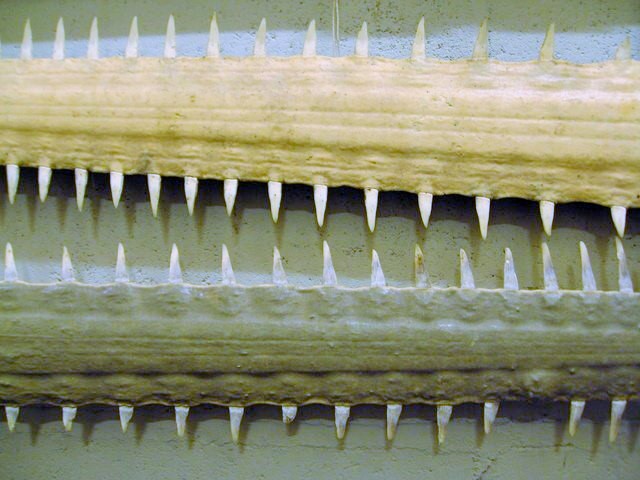
Sawfish rostra (Wikimedia Commons)

Sawfish rostra (Wikimedia Commons)
Curators of the Caribbean

300-year-old plant collection brings Bristol Museum & Art Gallery and the Natural History Museum Jamaica together!

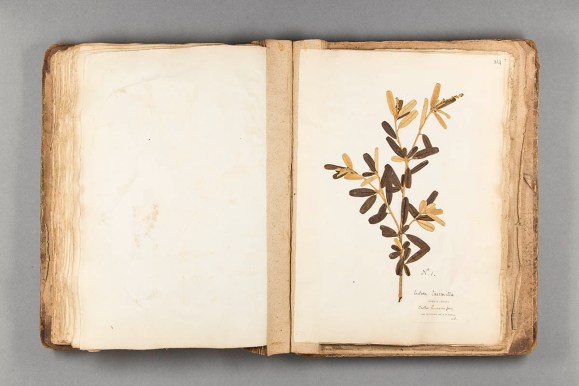
vol_3_jamaican_p324

A digitised page from Volume 4 of the Jamaican herbaria

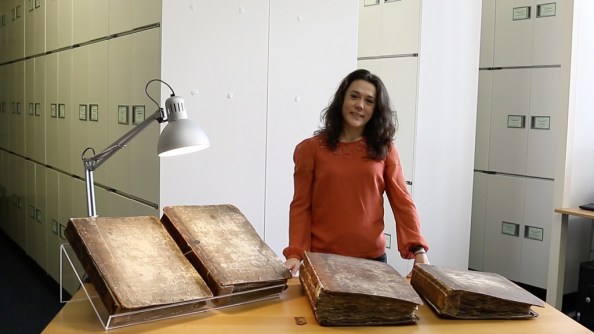
In the autumn of 2014, I was fortunate to be contracted by Bristol Museum to conserve and digitise 4 bound volumes of plant specimens dating from the 1770s and collected by the prestigious botanist Dr Arthur Broughton. The conservation and digitisation was completed in early 2015, yet two years on I am still working with and fascinated by this fabulous collection.

slide1

Rhian Rowson and the 4 volumes of 18th century bound herbaria

Dr Arthur Broughton, was a Bristolian who made the mammoth journey to Jamaica, due to ill health, and myself and Rhian Rowson, biology curator at Bristol Museum & Art Gallery, are trying to piece together his years studying botany in Jamaica and the impact this renowned botanist has had on the island and the world of botany. The volumes are large, heavy, leather bound books holding c. 1000 specimens including extremely rare and type material. The books were analysed for biocides, cleaned in preparation for digitisation, digitised and then each specimen was painstakingly removed from the volumes and re-mounted onto archival sheets. This project has mitigated the risk of contamination from handling the treated pages, has increased access and ease of handling but most importantly the images have been shared with other institutions. The ebook highlights some of the star specimens in the collections

The most exciting connection made during the research side of this project was with the Natural history museum of Jamaica (NHMJ). Through this collaboration, the opportunity has arisen for both me and Rhian to travel to Jamaica to collect modern material, research the historic plant specimens and illustrations held in Bristol museum and the collectors behind them. We have been extremely fortunate to gain funding from both WIRP (Working Internationally Regional Project) and the Jonathan Ruffer Curatorial Grant. Both funders were extremely supportive and constructive in helping towards our submitting a successful application.

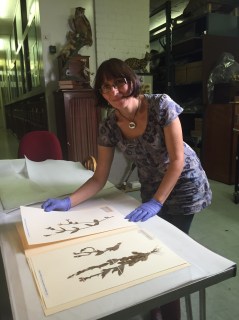
Victoria Purewal viewing Broughton plant specimens

Victoria Purewal viewing remounted specimens from one of the Jamaican volumes.

We fly into Kingston, Jamaica on Tuesday 27th September and will be gathering historical data on Dr Broughton and other prestigious botanists including Robert Long and the Reverend Lindsay, both of whom were collecting and working during this interesting time in history. We will be met by Keron Campbell, the botany curator at the NHMJ and together with the natural history team we will be escorted around the island, helping us to identify and verify plant specimens and localities. Modern day specimens will be collected to help interpret our historic material and provide a contemporary and fresh perspective that we can use to engage with our Bristol and Jamaican communities. We will be keeping active on social media whilst there, and hopefully offer some insight on the specialisms and research being conducted in Jamaica but also on the botany and the habitats on the island of Jamaica.

bmagnhmjcultureicomart


NatSCA Digital Digest

(Image by Ton Rulkens, in public domain)

(Image by Ton Rulkens, public domain)


Your weekly round-up of news and events happening in the world of natural sciences

News

The BBC just posted a down to earth (or sea) article called The man who swims with sharks, by Melissa Hogenboom, feature writer for BBC Earth. Combined with beautiful images, it talks about swimming with and photographing sharks and summarises some very interesting facts about these majestic animals.

Exhibitions

If you haven’t seen the Natural History Museums’ exhibition Coral Reefs: Secret Cities of the Sea, you should definitely go this weekend. If you have seen the Natural History Museums’ exhibition Coral Reefs: Secret Cities of the Sea, you should definitely go this weekend. It will be your last opportunity to see (or re-see) the exhibition as it closes on the 13th September. There are fantastic specimens, cool interactive games and a video of the only coral spawning ever to have occurred in captivity. I personally recommend it to you.

Opened just last week is the new exhibition In the Footsteps of Elephants. This two and a half week exhibition is only open from the 3rd to the 20th September, so if it’s up your street you need to get a wriggle on. The exhibition is being held at the Nature in Art Museum and Gallery in Gloucestershire, which looks really worth too.

Jobs

If you are looking to move, or move into a, role in natural sciences the Naturejobs Career Expo in London on Friday 18th September should be a great place to meet others in the field, attend workshops and conference talks, schmooze with potential employers, and even get your CV looked at.

If Brachiopods are your thing, then the Natural History Museum in London is currently looking for a curatorial assistant to join them in the Earth Sciences Department. The contract is for a year, and the deadline is the 14th September. Sounds like a shell of a good opportunity (!)

As ever, if you would like to write a blog for NatSCA on anything natural sciences related, give us an online shout blog@natsca.org.

NatSCA Digital Digest

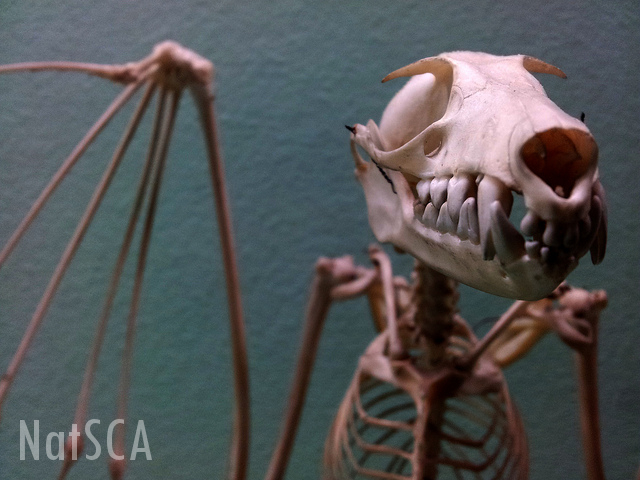
A mounted skeleton of a fruitbat leers at the cameraYour weekly round-up of news and events happening in the world of natural sciences

Jobs

Research Assistant, Vertebrate Palaeontology – University of Birmingham. 12 month post researching 375 million years of the diversification of life on land!

Curator of Microlepidoptera – NHM, London. A great opportunity for any fans of minimoths!

Curator of Natural Sciences and Collections Access ManagerTullie House Museum. Still a couple of days to apply for these two. The deadline is 10th August.

As always, see out jobs page for more opportunities.

Events

‘Digitisation’ seems to be the keyword for September…

NBN Crowdsourcing Data Capture Summit. The National Biodiversity Network is holding a one-day meeting on digitising specimen data through crowdsourcing, at Manchester Museum on 25th September.

iDigBio Vertebrate Digitization Interest Group will be holding a 4-part webinar series entitled The Value of Digitizing Vertebrate Collections. They will be held on Tuesdays in September at 3 – 4 p.m. EDT (7 – 8 pm GMT).

All webinars are 3-4 p.m. EDT and accessible at https://idigbio.adobeconnect.com/vertdigitization. Here is the schedule:
September 8: The Value of Digitizing Mammal Collections, Cody Thompson, University of Michigan
September 15: The Value of Digitizing Fish Collections, Andy Bentley, University of Kansas Biodiversity Institute and President of SPNCH
September 22: The Value of Digitizing Herpetology Collections, Chris Phillips, Illinois Natural History Survey, University of Illinois
September 29: The Value of Digitizing Bird Collections, Carla Cicero, UC Berkeley and Lead PI for Vertnet

Around the Web

Time to re-curate those canid specimens? Genetic evidence indicates that the African golden jackal is a distinct species from the European golden jackal, and is actually much more closely related to wolves! And new genomic research has clarified the status of Eastern wolves and other North American canids.

'But I'm still a fox, right?'

‘But I’m still a fox, right?’

Working with the Public: How an Unusual Museum Enquiry Turned into Travels Through Time and Space. A great example of how engaging with enquiries can lead to fascinating insights into the past.

…And Finally

A request: We would love you to get involved in the NatSCA blog! It’s been rather quiet of late. I know you’re all probably off enjoying yourselves on holiday, but if you happen to visit a museum or an interesting exhibition while you’re away, why not review it for us? We’d love to hear tales of your adventures! And don’t forget, if you’re working on any projects or specimens that you think other people would be interested in, then the blog is the perfect place to share! Email submissions to: blog@natsca.org

Bringing the Dead Back to Life, with Paolo Viscardi

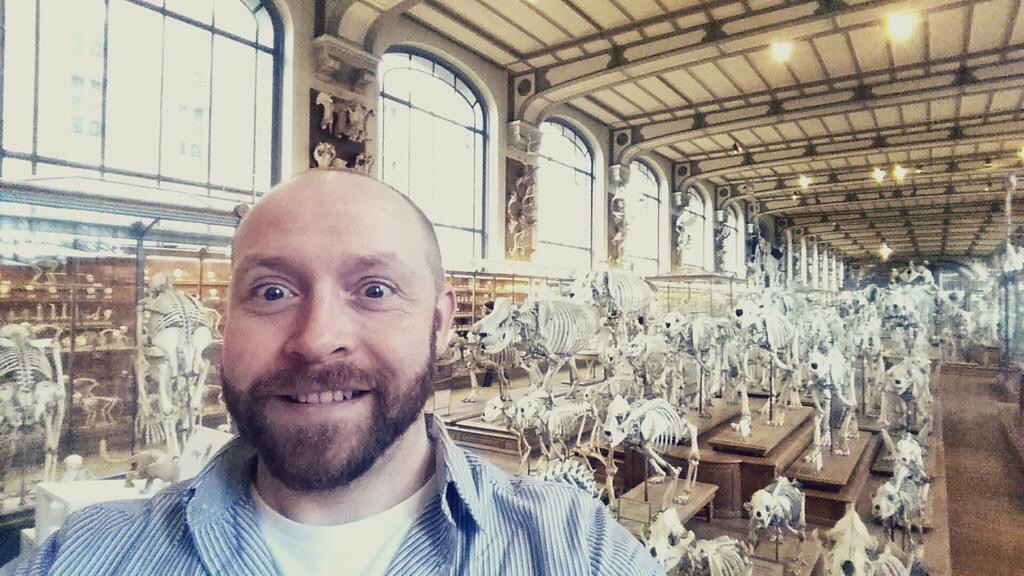
Paolo at the Museum of Comparative Anatomy, Paris

Last week saw the first PubSci talk by NatSCA Chair Paolo Viscardi since we moved venues to the King’s Arms near London Bridge. The subject, Bringing the Dead to Life, is less a Frankenstein manual and more of a description of his role as Deputy Keeper of Natural History at the Horniman Museum and Gardens. He works with dead things every day and he does so for the public’s benefit, because these collections are yours: both yours as a national collective, and yours as an individual if you want to do something with them.1

A large part of the reason we have these amazing collections is due to massive amount of world exploration by wealthy industrialists, tradesmen, and philanthropists. Frederick John Horniman was a tea trader, and collected all sorts of things in his travels. The stuff he brought back captured the public imagination because it introduced them to international cultures they would otherwise have no idea about. We take global information for granted today because we all have access to internet resources in our pockets, so it is hard for us to grasp how unusual it must have been for people in 1948 to see frescoes from Ceylon temples for the first time.

One of the fun side effects of this close encounter with the unusual is that oftentimes people preparing the specimens from overseas were only going by descriptions, and were not at all familiar with the species they were working on. A great example of this is the iconic Horniman Walrus, who was overfilled until he was wrinkle-free – in the style of a seal. There is an exhibit at the Grant Museum of Zoology at the moment discussing this phenomenon and featuring a lovely Stubbs painting of a kangaroo that resembles a giant mouse. Knowing how meticulous Stubbs was about his animal anatomy, one has to believe that this is exactly how he understood them to look and is not in any way an accident of the proportions.

The topic of proportions and measurement brings me on to a study done by Paolo et al. in 2010, looking at the variation in measurements taken of a section of owl bone, so naturally the paper was titled How long is a piece of Strix. Comparative measurement is a fundamental part of species identification, so naturally one would assume a consensus of readings taken by professionals. The results were somewhat different: when working alone, the measurements were accurate. When working as part of a team, the measurements strayed, and the more people collaborating, the greater the disparity between measurements.

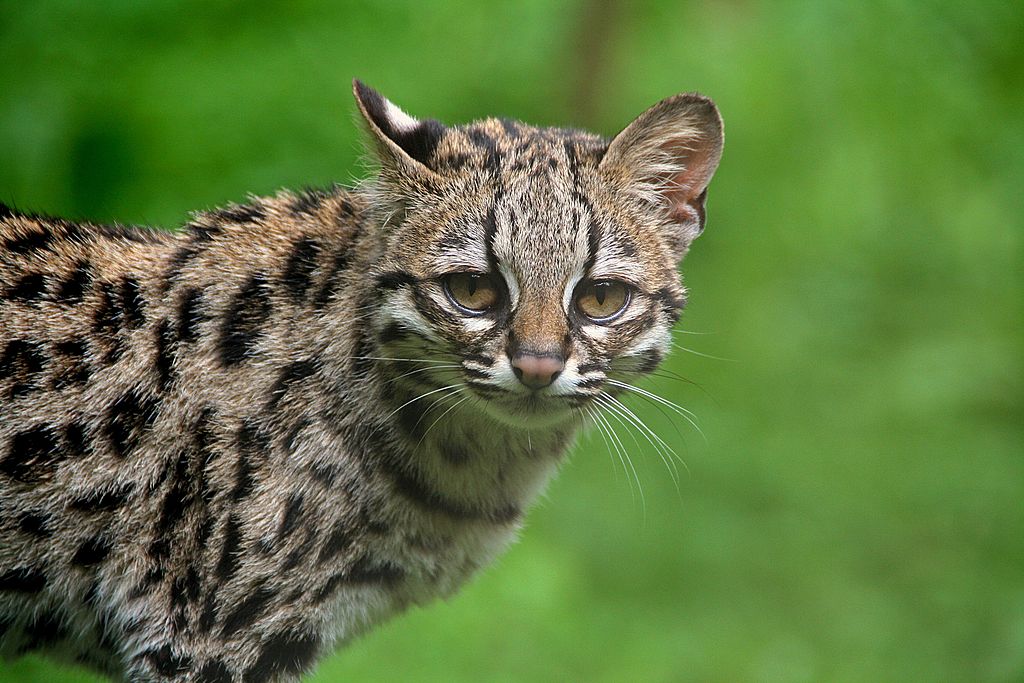
As a science communicator both at the museum and through his blog, Paolo has had the opportunity to work on some interesting projects: he has advised BBC television series such as our patron Ben Garrod‘s Secrets of Bones and he has been interviewed for The One Show to explain why cats get stuck up trees (they can’t rotate their ankles). This allowed Paolo to introduce the viewing audience to the Margay (Leopardus wiedii): a cat that can rotate its ankles. He has shared his love of osteology with 13-year-old fellow-blogger Jake McGowan-Lowe, which led to Jake publishing a book on the subject! To promote a recent Horniman exhibition on extreme animal adaptations, Paolo was subjected to the harshest elements in nature, which earned him the title ‘Extreme Curator’, and his very own Lego action figure.

Margay

Margay. By Clément Bardot (Own work) [CC BY-SA 3.0 (http://creativecommons.org/licenses/by-sa/3.0)%5D, via Wikimedia Commons

Where next for Paolo’s science communication? You’ll have to ask him at the next PubSci with Professor Ian Barnes. If you’re a fan of pleistocene megafauna (and, let’s face it, who isn’t), I wouldn’t miss it.

Sam Barnett, NatSCA Blog Editor

1. Depending on what it is you want to do with them and how run-ragged the museum staff are.