Discovering Treasures in the Depths of the Dagnall.

Written by Ruth Cowlishaw of Liverpool School of Tropical Medicine.

This year marks Liverpool School of Tropical Medicine’s 125th anniversary. The school was the first institute of its kind back in 1898, built to help investigate some of the tropical diseases brought back to the busy port city from shipping expeditions and trade. To celebrate such a major milestone an array of events and activities have been planned by the school, including outreach events and fundraising, whilst also giving us a chance to reflect on our history. One such planned scheme was the distribution of internal funds for exciting projects, proposed by staff members that would make a difference in this very special year.
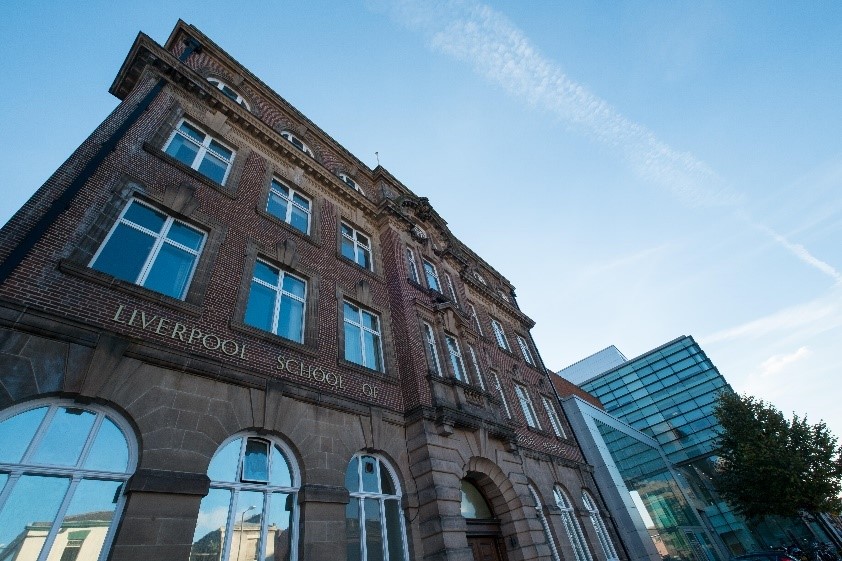
Mary Kingsley Building, LSTM. ©LSTM

The Dagnall Laboratory situated in the Mary Kingsley Building is the main teaching laboratory for the school. Within its walls it houses many historical pathological and entomological samples, from mosquito wings and blood films to seven-meter-long tapeworms. Throughout the years a selection of these samples has been used to help educate thousands of medical professionals, postgraduate students and armed forces personnel. However, a large part of the collection became forgotten and neglected as specimen preservation skills and staff were lost over time. With news of potential funding myself and the team saw an opportunity to rediscover these “lost” specimens and decided to put together a bid with the aim to reinvigorate our collection. The project not only aligned with the 125 Anniversary theme of Heritage and History but also looked forward to the future.

Continue reading

How to Find Ectoparasites on Study Skins and Explore Natural Heritage Shared between Colonial and Provincial Museums

Written by John-James Wilson, Lead Curator of Zoology at World Museum, National Museums Liverpool & Jing Jing Khoo, Postdoctoral Research Associate at Institute of Infection, Veterinary & Ecological Sciences, University of Liverpool.

Selangor Museum was established in Kuala Lumpur by British colonial officials in 1887. A purpose-built museum building, opened in 1907, was designed by Liverpool-born architect Arthur Hubback, but there is a stronger link between Selangor Museum and Liverpool.

Selangor Museum’s early director Herbert Robinson was also born in Liverpool and had worked as an assistant at the Liverpool Museums, now known as World Museum. Selangor Museum wasn’t a large institution, with just three British curators and three museum hunters from Sarawak, one being Charles Ulok. But through the museum’s work, a European knowledge system was imposed onto the local wildlife.

The museum’s work included extensive hunting on the hill and mountains and islands of Malaysia, Thailand and Indonesia. The museum soon ran out of storage space in Kuala Lumpur and specimens were routinely sent to England. Hundreds of specimens were sent to Robinson’s former workplace, World Museum, in 1914.

https://archive.org/embed/from-selangor-museum-to-liverpool

Click link above for 3-minute video about Selangor Museum and its connection to Liverpool made for the Green Representatives Network at Monash University in Selangor.

Continue reading

What is Taxidermy? An Intimate Relationship between Death and Maker.  

Written by Jazmine Miles Long, Taxidermist. https://www.jazminemileslong.com, Twitter: @TaxidermyLondon; Instagram: @Jazmine_miles_long

For taxidermy to exist an animal must have died. This brutal truth creates unease and leaves the viewer to ponder how the death occurred. And secondly how the death and the body is managed. A fluffy rabbit, cute and cuddly in life, suddenly becomes hideous and untouchable in death. Due to my profession, I am raising a child who has been exposed to dead animals and the concept of death his whole life. This has not made him desensitised to death, I’d say the opposite. He is deeply hurt by the death of any animal; he is a self-proclaimed vegetarian and last week at the age of 4 he asked me if his job when he grows up could be to stop people eating animals. He shouts at cars to slow down in case they hit anything and one of my favourite things he asks me when we meet new people is if they are a vegetarian or a carnivore eyeing them up suspiciously. Does a good understanding of death at a young age give a person greater empathy for animals and take us closer to not seeing them as ‘other’? 

When my son is asked what a taxidermist does, he says they look after animals when they die. I get at least one phone call a week from someone mourning their dead pet, I give advice on what to do next, ideas for memorials and how to store the body in the freezer while they decide what to do. I didn’t expect as a taxidermist to be a councillor, a listening ear, someone who is qualified to talk about death. 

Continue reading

William Thomas March, a Jamaican Collector, Naturalist and Early Pioneer of Biological Data Recording in Jamaica.

Written by Olivia Beavers, Assistant Curator of Vertebrate Zoology at World Museum, National Museums Liverpool.

Figure 1. William Thomas March’s bird skins stored in the Vertebrate Zoology collection at World Museum, National Museums Liverpool © National Museums Liverpool (World Museum: NML-VZ T1134, NML-VZ T760, NML-VZ T5652, NML-VZ 1989.66.1279, NML-VZ T19525, NML-VZ T12817, NML-VZ T9981, NML-VZ T1128, NML-VZ T14037, NML-VZ T14031/ Olivia Beavers)

August celebrates Jamaican independence, so what better way to celebrate than to talk about a Jamaican collector from the 1800s whose contributions to understanding Jamaican biodiversity are not yet fully recognised. 

I recently finished the project stage of the Associateship of the Museum Association (AMA). My project focused on helping to tell untold stories of the collections held at World Museum. 

Through trial and error, I started to look through World Museum’s database and Google the names of collectors to see if we had collectors who had black or brown heritage – with a focus on collectors with specimens from the Caribbean. I ended up finding William Thomas March. Only two previous papers were written about him, both by Catherine Levy (Managing Director of Windsor Research Centre, former President of the Caribbean Birds, and of BirdLife Jamaica). 

To coincide with the research and my project, I created a new dataset titled ‘Bird skins from Jamaica in the collections of World Museums Liverpool’ – now available on the Global Biodiversity Information Facility (GBIF) website. It includes specimens from William Thomas March.

Continue reading

Biobanking on a Shoestring

Written by Louise Gibson, ZSL biobank manager at the Institute of Zoology, Zoological Society of London (ZSL).

Lurking in the depths of the Zoological Society of London (almost 200 years old), are vast collections of frozen, wet, and dry biological specimens. Amassed over several decades, procurement of these items has come via scientific fieldwork researching wildlife conservation, standard pathological investigation of captive animal mortality, contributions from Border Force and police wildlife crime investigations, and from the occasional public donations, dropped off on our doorstep.

Photo of octopus preserved in formalin – a octopus was left on the doorstep of ZSL, 2021, donor unknown. © Louise Gibson/ ZSL

Although the collections are extensive, knowledge of their contents is limited to those who have collected samples or managed them, many of which have long since left ZSL. Potential was seen to create a biobanking programme with the objective of preserving the collections and the knowledge that comes with them and in turn creating an accessible biological archive open to the scientific community and beyond. As a not-for-profit charity with minimal resources, we are aiming to achieve this on a shoestring budget.

Continue reading