
Written by Diana Arzuza Buelvas, Curator of Entomology & Lucy Edematie, Curator of African Collections from Colonial Contexts, Manchester Museum, The University of Manchester.
Manchester Museum cares for more than 4.5 million items across humanities and natural sciences. Approximately 40,000 came from the continent of Africa. Gaps and silences in the museum records mean that collections are often under-provenanced. When places and communities of origin are listed, they are not always accurate. And while we learn the names and opinions of donors and collectors, the records do not reflect the voices and perspectives of communities from which items were taken.
Inspired by ‘Ubuntu’ an African philosophy centred on connectedness, justice and reconciliation, Manchester Museum and African community partners are collaborating on a project funded by The John Ellerman Foundation. Titled Ubuntu: A Connected Approach to African Collections from Colonial Contexts, the project seeks to:
- Reconnect African collections with communities for whom they are important.
- Provide a framework to facilitate collaborative research between the Museum and African partners based locally and further afield.
- Develop long-term relationships with African community partners. These communities are important not only as co-researchers, but also as voices shaping the future of African collections and their interpretation in museums.
Many initiatives exploring museum collections from colonial contexts have focused on ethnographic items, often omitting the natural sciences. Our aim is to research natural sciences and humanities materials, using a cross-disciplinary approach.
The Entomology department is contributing to sharing African collections with visitors and communities. This creates opportunities for conversation and feedback that will inform not only museum records, but also how we care for African materials.
Africa Hub – Using exhibition as a method to uncover what is ‘not yet known’
Following the redesign of an existing gallery, Africa Hub opened in December 2025 (Figure 1). Object labels reveal what is ‘not yet known’ about African collections on display – such as their local name, or traditional use. Visitors are invited to leave comments or share insights about items they may recognise.
Displays are updated approximately every four months and available online to facilitate participation beyond the museum. For the first rotation, Humanities and Natural Sciences curators explored the theme of African culinary traditions.
This was an opportunity to engage with edible insects as a traditional food source for African communities. The migratory locust (Locusta migratoria) and the giant jewel beetle (Sternocera orissa) were selected (Figure 2). The objects’ labels contain what we know from the specimen labels and the Entomology Collection Register Book. They also include more general information about the species, while leaving space for input from communities.
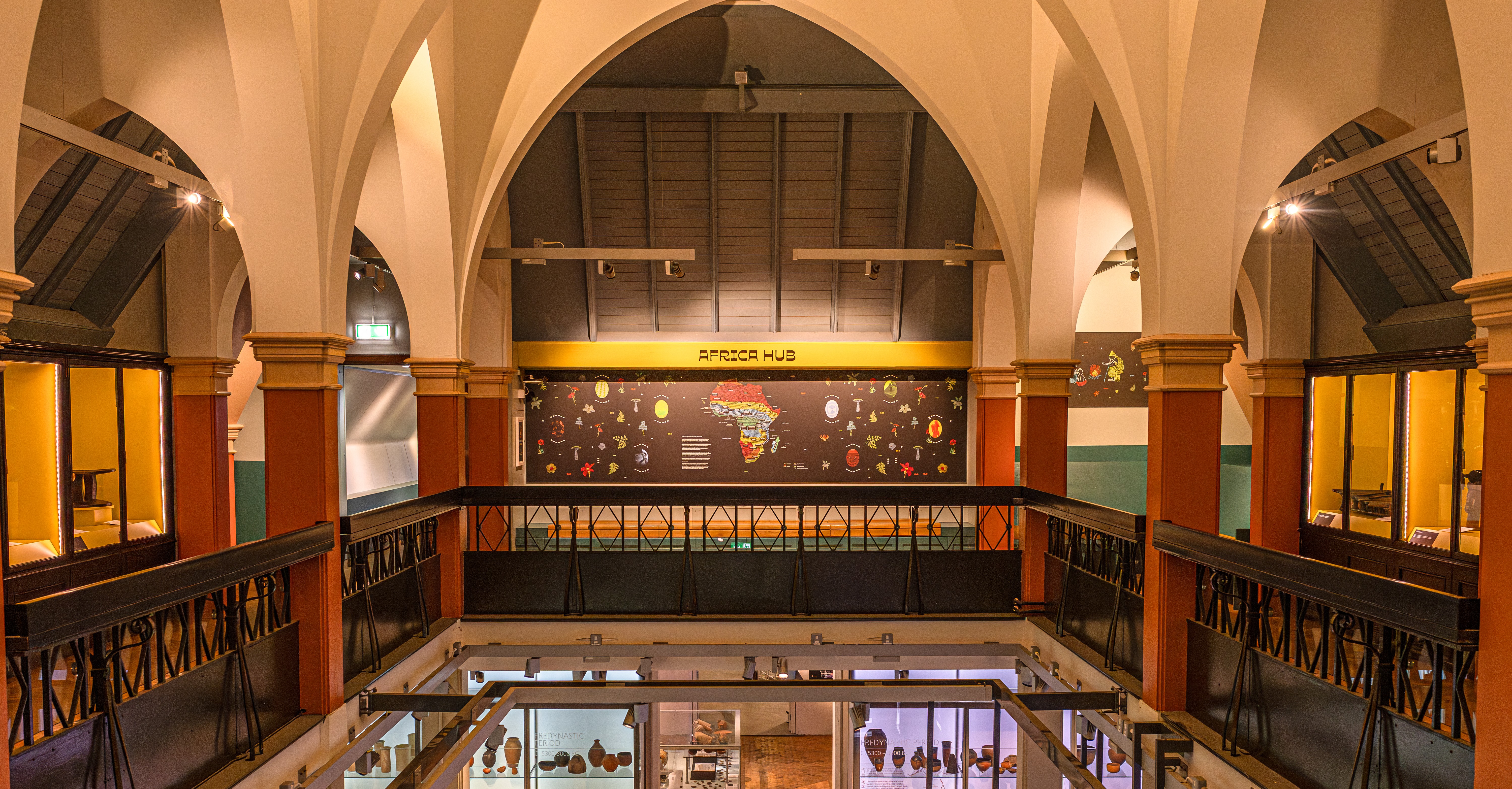
Figure 1. General view of Africa Hub, Manchester Museum ©Manchester Museum, The University of Manchester
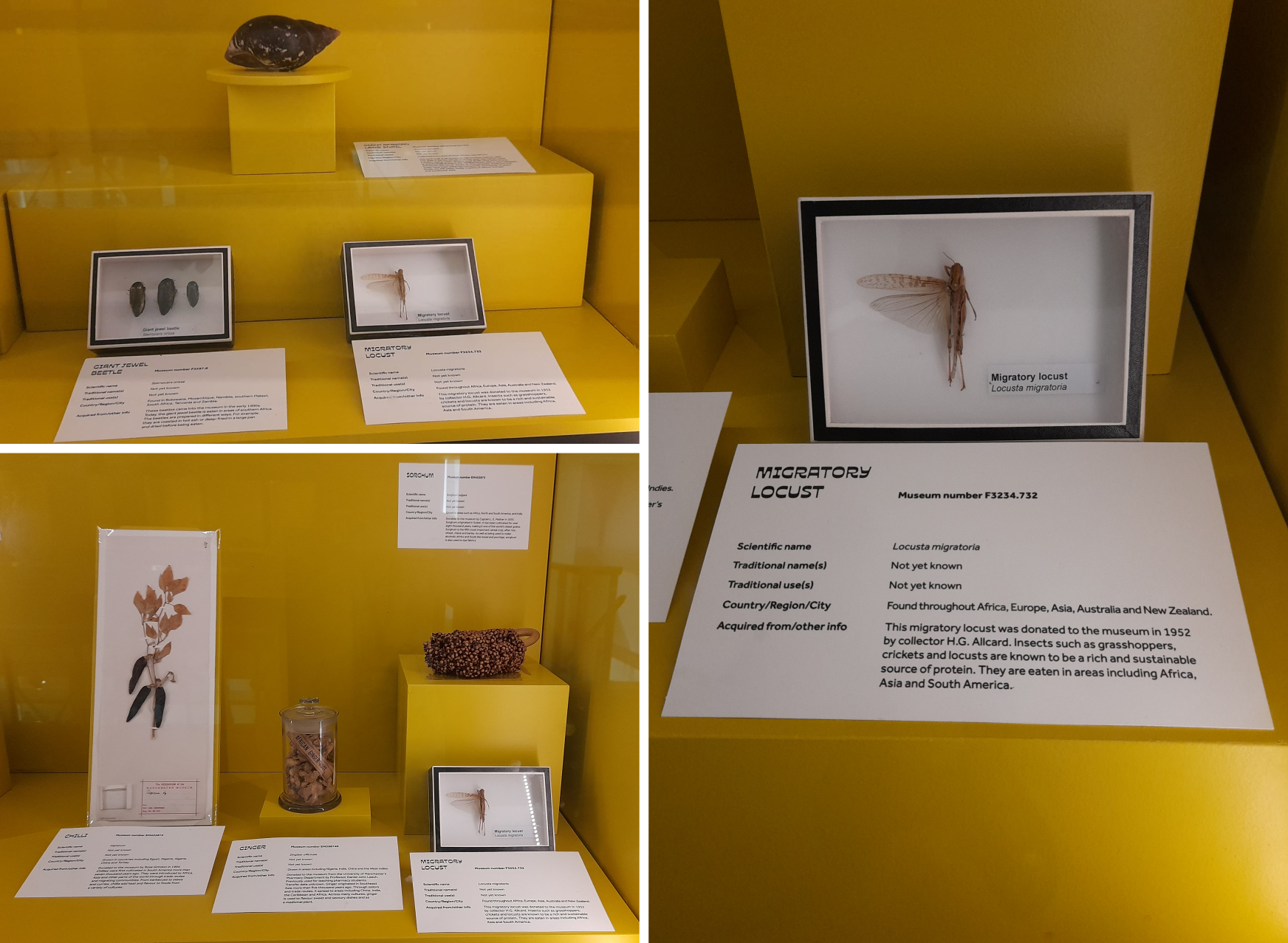
Figure 2. New display cases with natural history specimens, such as the giant African land snail from the Zoology Collection; giant jewel beetle and migratory locust from the Entomology Collection; sorghum, chilli and ginger from the Botany Collection ©Manchester Museum, The University of Manchester
A visitor of Nigerian heritage shared that Ataktak is the name given to grasshoppers in the Efik-Ibibio languages. A member of the Museum Visitor Team shared that locusts are called Mhashu in Shona and Intethe in Ndebele, both languages spoken in Zimbabwe. He explained that names are not restricted to one particular species of grasshopper or locust and vary depending on whether they are solitary or swarming.
Community visits behind the scenes
In addition to inviting communities to share their knowledge through Africa Hub, we are working with partners to research collections provenanced to countries and ethnic groups. For instance, diaspora partners visited behind the scenes to gain an overview of collections from Southern Africa in Humanities and Natural Sciences.
From Entomology, we showed collections connected to Sheffield Airey Neave, Rawdon Goodier, and William R. Wooff (Figure 3), all of whom worked in health departments in Africa, particularly in relation to the eradication of sleeping sickness caused by the tsetse fly.
The visit enabled partners to select items for research conversations which will involve them sharing information such as local names, traditional uses and symbolisms. This project will culminate in a co-curated display of Southern African materials in Africa Hub.
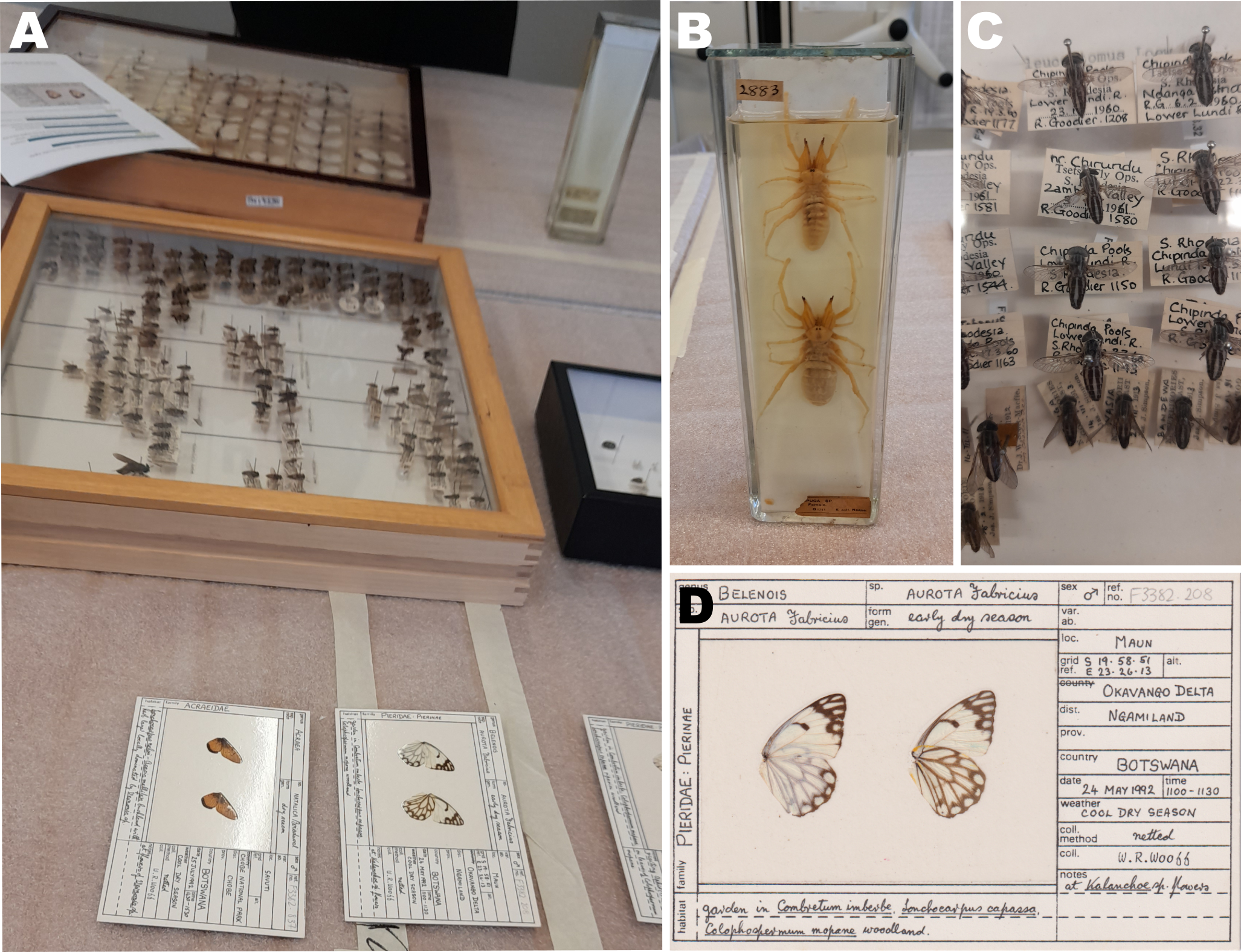
Figure 3. Examples of African specimens held in the Entomology Collection at Manchester Museum. A. Range of entomological drawers and specimens from Zimbabwe. B. Battery jar with two Solifuga sp. specimens in 70% ethanol, collected by S.A. Neave; locality data recorded as N. W. Rhodesia (now Zimbabwe and Zambia). C. Horse-fly specimens, family Tabanidae, with handwritten labels, collected by R. Goodier from several locations recorded as S. Rhodesia (now Zimbabwe). D. Butterfly wings mounted on index cards collected by W.R. Wooff in Botswana, including very complete data ©Manchester Museum, The University of Manchester
Engaging with communities at public facing events
As part of an event to mark the opening of Africa Hub, Natural Sciences curators shared stories about provenance, collectors, and species from Africa. For example, we displayed a large drawer of mounted butterflies and moths (Figure 4), as well as papered specimens from Kenya, still in their original envelopes. We also showed a drawer of jewel beetles and discussed their cultural significance in daily life and consumption in many African countries.
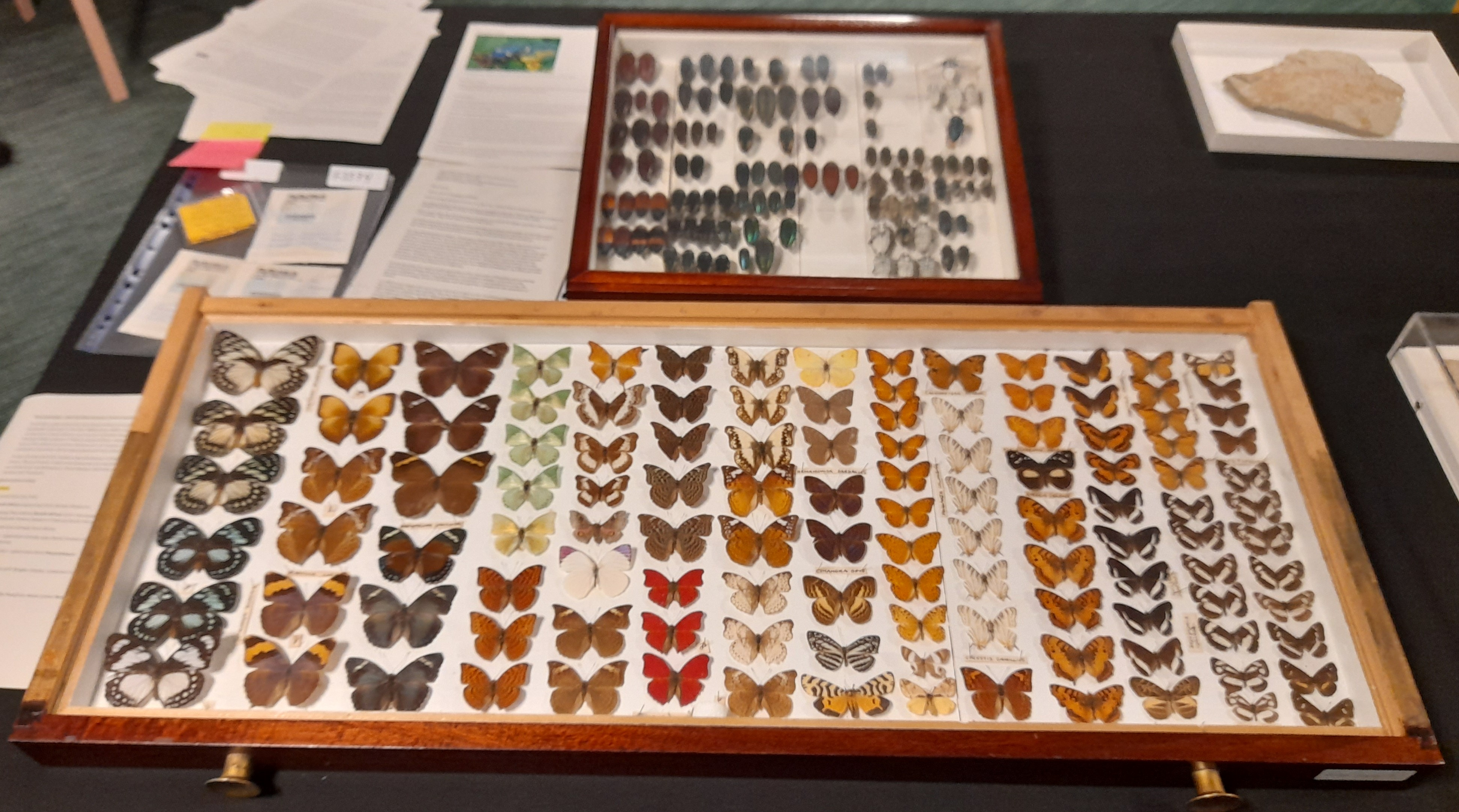
Figure 4. One of the 10 drawers containing mounted butterflies and moths, and papered specimens mostly from Kenya, collected by R. Coulson; behind a drawer with jewel beetles © Manchester Museum, The University of Manchester
All attendees were curious and amazed by the diversity and colours of the butterflies and beetles. One attendee in particular shared memories of her childhood growing up in Kenya and spoke at length about the butterflies she saw in the area. She also expressed concern about the notable loss of species and diversity during her recent visits.
Learning from communities to shape museum practice
Through continuing conversations with communities, we are increasing our understanding of the relationships between people and the collections we hold, including the lasting impact of the loss and extraction of cultural items from their original contexts. By working in partnership and dialogue, we are able to update museum records, make space for community knowledge, and reshape how African collections are cared for, interpreted and displayed now and into the future. Ultimately, this contributes to Manchester Museum’s mission to build understanding between cultures for a more just and sustainable world.


