
Written by Dr Shea (Tiffany) Slater, Taphonomist, Experimental Officer, University College Cork.
Valuable Biodiversity Archives
Fluid-preserved collections are increasingly valued as long-term biodiversity archives that can help us understand environmental change and biodiversity loss. Spirit collections contain specimens from taxonomic groups that are now of considerable conservation interest, including lampreys, seahorses, sharks and other ecologically important or understudied species. These specimens have traditionally been used for taxonomic and morphological study but are increasingly recognised as valuable molecular resources.
While recently collected specimens stored in ethanol are widely known to preserve DNA, formalin-preserved specimens have long been considered unsuitable for genomic research. In recent years, however, researchers have shown that genomic data can be recovered from many of these specimens using bespoke extraction protocols for highly altered DNA. These advances have helped unlock millions of museum specimens for molecular research, with recent studies exploring historical microbiomes and genome expression through time.
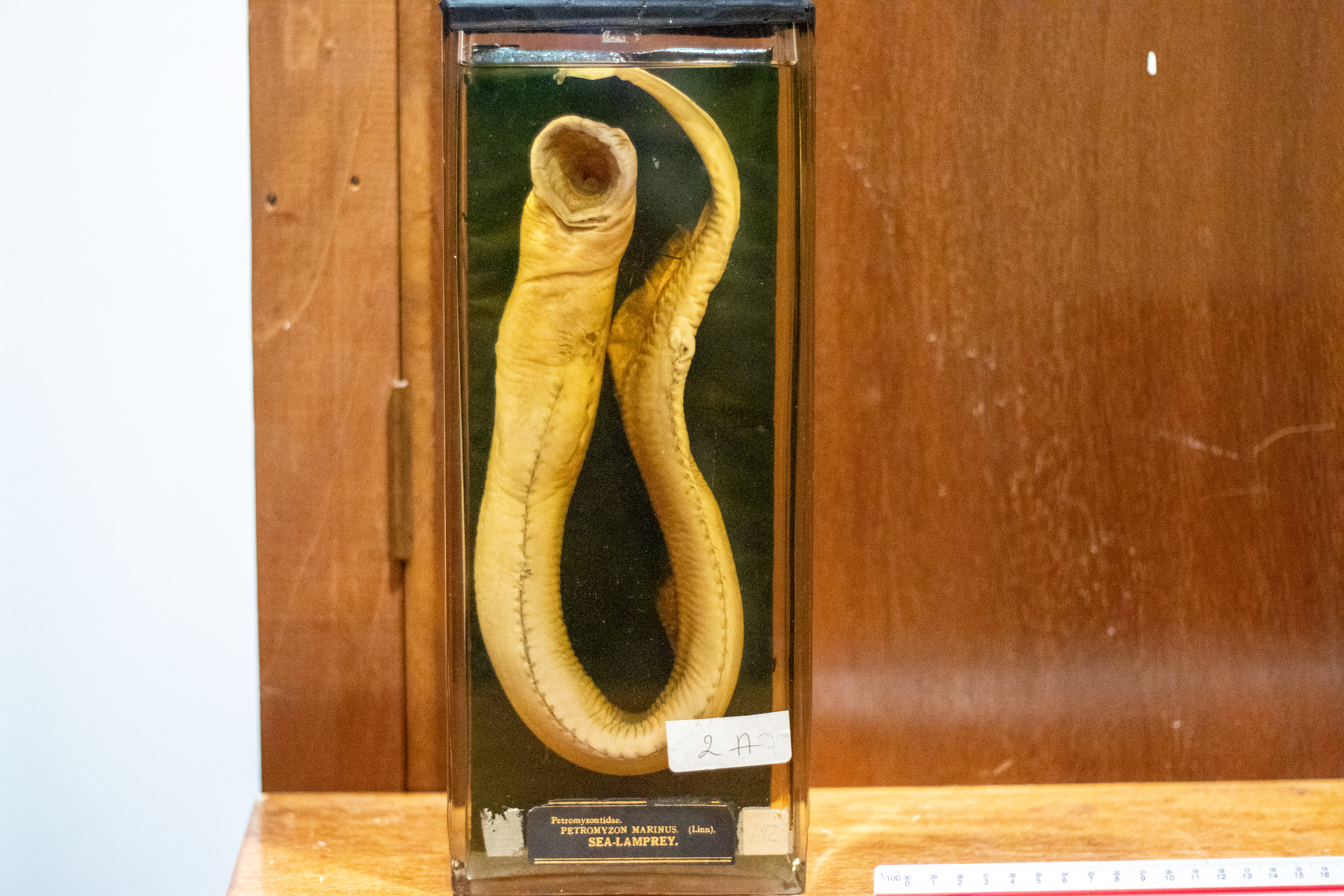
Historic sea lamprey (Petromyzon marinus) preserved in fluid held in the University College Cork Natural Collections.
Despite the growing interest in fluid collections as a source of molecular information, proteins have received comparatively little attention. Proteins are, in general, stable on longer timescales than DNA and can provide insights into evolutionary history, physiology and how organisms respond to environmental change. Understanding how proteins survive in fluid collections could broaden the range of questions that these collections can help answer, particularly those relating to species response to environmental stress.
Problems with Pickling
Alcohols and formalin are commonly used as preservative fluids but they are far from chemically inert. Formalin can modify proteins through crosslinking reactions, while alcohol-based preservatives – often favoured for DNA preservation – can dehydrate tissues and induce protein precipitation. Over time, preservation fluids may also evaporate, oxidise, become contaminated or be routinely topped up and replaced. These processes can alter the chemistry of both the specimen and the surrounding fluid, yet their long-term consequences remain poorly understood.
Many of these chemical changes present issues that are familiar to collections managers, including fluid discolouration, cloudiness, evaporation and exposed tissues. Management of historic fluid collections is often further complicated by incomplete documentation, making it difficult to determine which fixative and preservative fluids were originally used or how concentrations may have changed over time. These uncertainties can also make it difficult to assess which specimens are most suitable for molecular research.
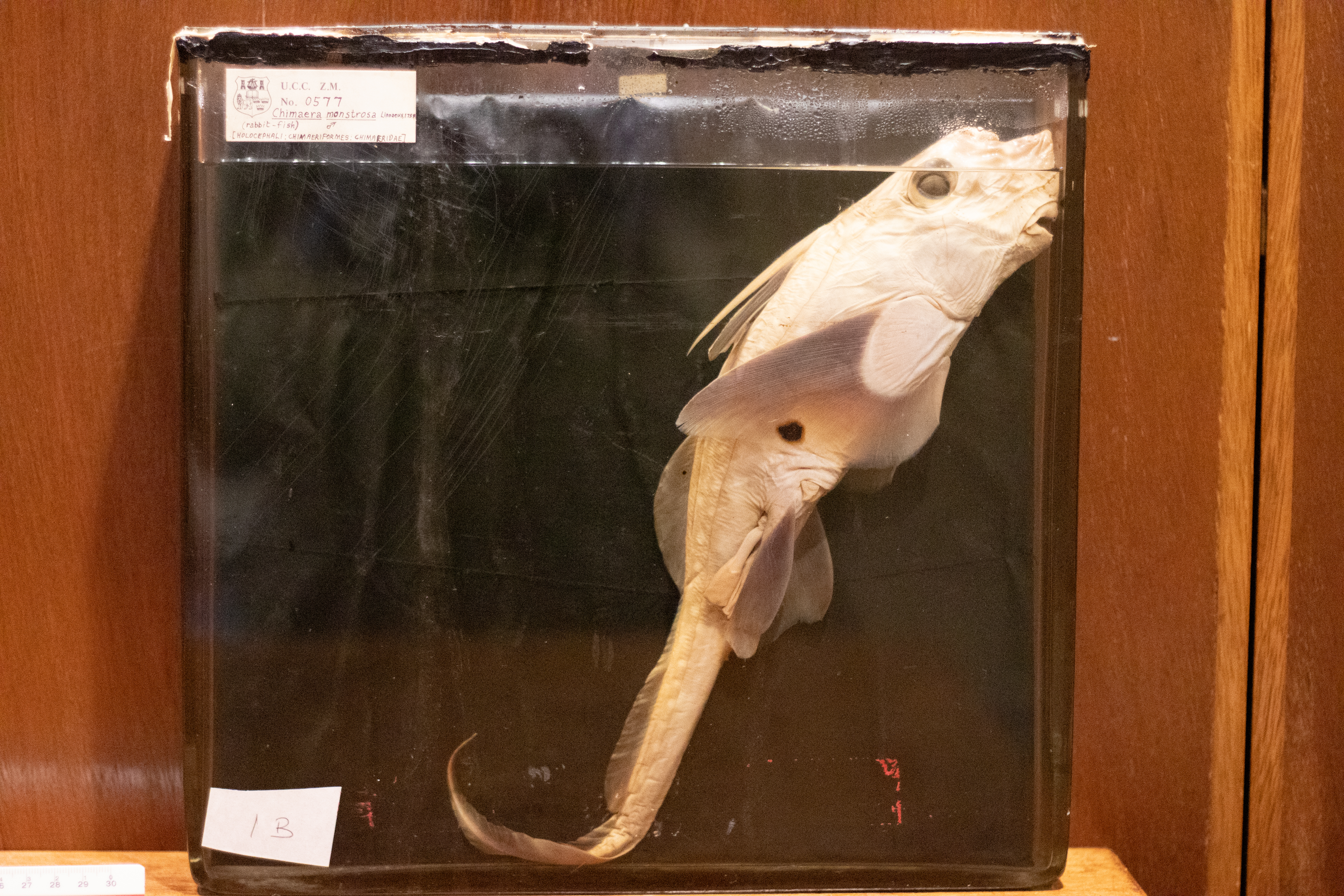
Historic chimaera (Chimaera monstrosa) specimen held in the University College Cork Natural Collections.
Thinking Inside the Jar
If fluid composition influences long-term biomolecular survival, understanding preservative chemistry may help identify specimens that are best suited to future molecular analyses while also informing collections care. As such, researchers are beginning to look at preservation fluids more closely.
Recent work led by the London Natural History Museum demonstrates the potential of non-invasive spectroscopy to identify preservation fluids and residual fixation products through sealed historic jars. Their approach can even detect lipids and protein fragments that have leached into the surrounding fluid, helping to reconstruct aspects of a specimen’s preservation history and conservation status. Studies such as this suggest that preservation fluids are more than just passive storage media. Instead, fluids that are often discarded during routine care may contain valuable information about specimen condition, preservation history and the chemical processes occurring within collections.
A New Study in Fluid Preservation Taphonomy
A new project using the University College Cork fluid collections is investigating the chemical processes that contribute to both the preservation and degradation of specimens. The project will examine how preservation fluids influence the degradation and leaching of proteins and lipids, and whether these processes vary between taxonomic groups. The results may provide useful indicators of specimen degradation while improving our understanding of how preservation conditions influence long-term biomolecular survival.
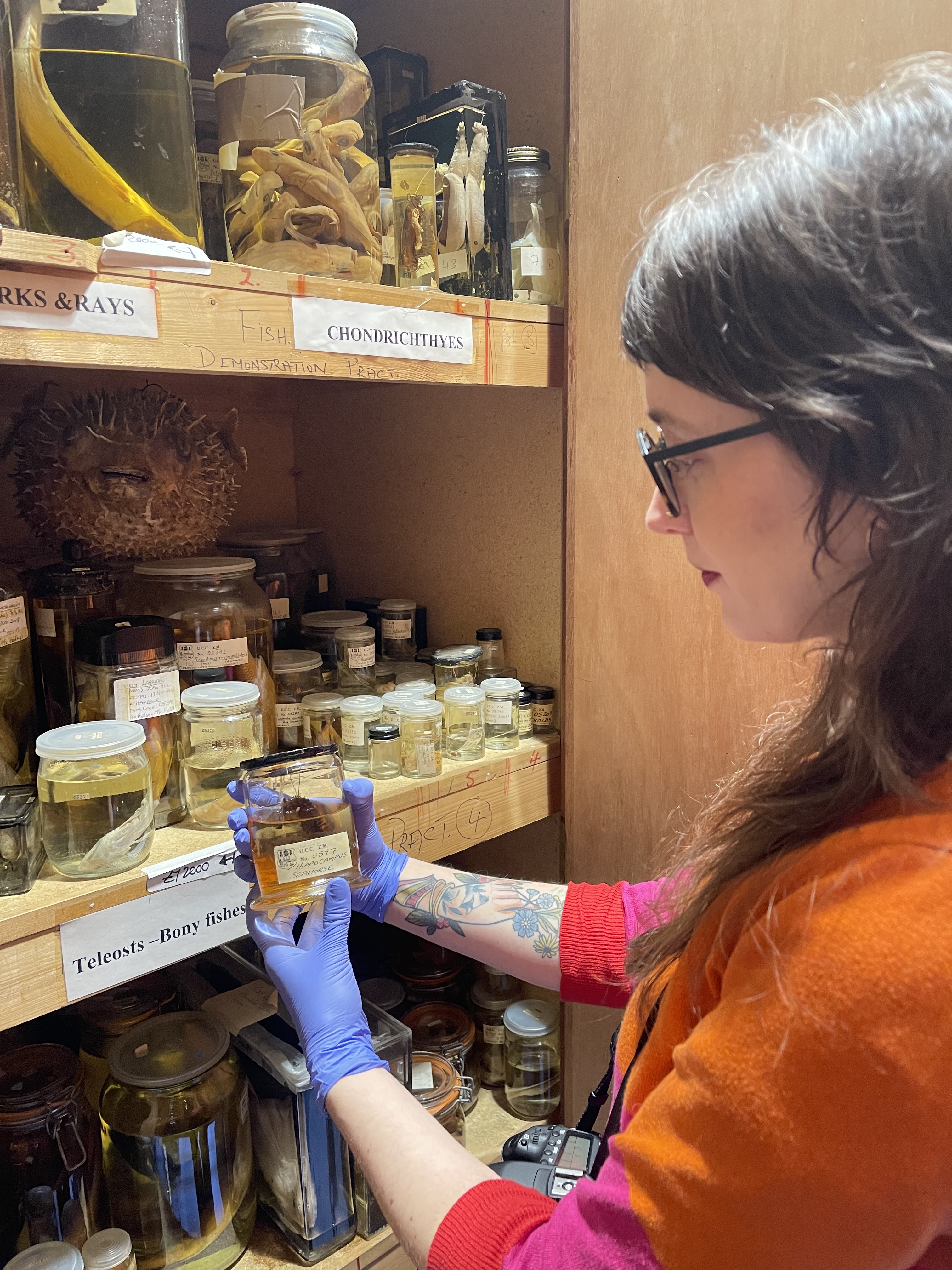
Dr Slater holding a historic seahorse (Hippocampus hippocampus) specimen in the University College Cork natural collections.
Ultimately, this work is intended to provide a foundation for future research into protein preservation in fluid collections while also supporting the conservation of fluid-preserved specimens. As spirit collections become increasingly important for biodiversity research, understanding their preservation chemistry is essential for interpreting data derived from the specimens themselves.


