Moving a ‘Monster’ – the Ups and Downs of Exhibiting a Japanese Spider Crab

Written by Hannah Clarke – Assistant Curator (Collections Access), University of Aberdeen.

In May this year, I was given the slightly terrifying task of overseeing the removal and transportation of Aberdeen University’s much-loved Japanese Spider Crab (Macrocheira kaempferi) specimen. The crab, who is usually proudly displayed in the foyer of the University’s Zoology Building, had been requested for loan by Aberdeen Art Gallery & Museums, for their exciting new exhibition ‘Monsters of the Deep.’
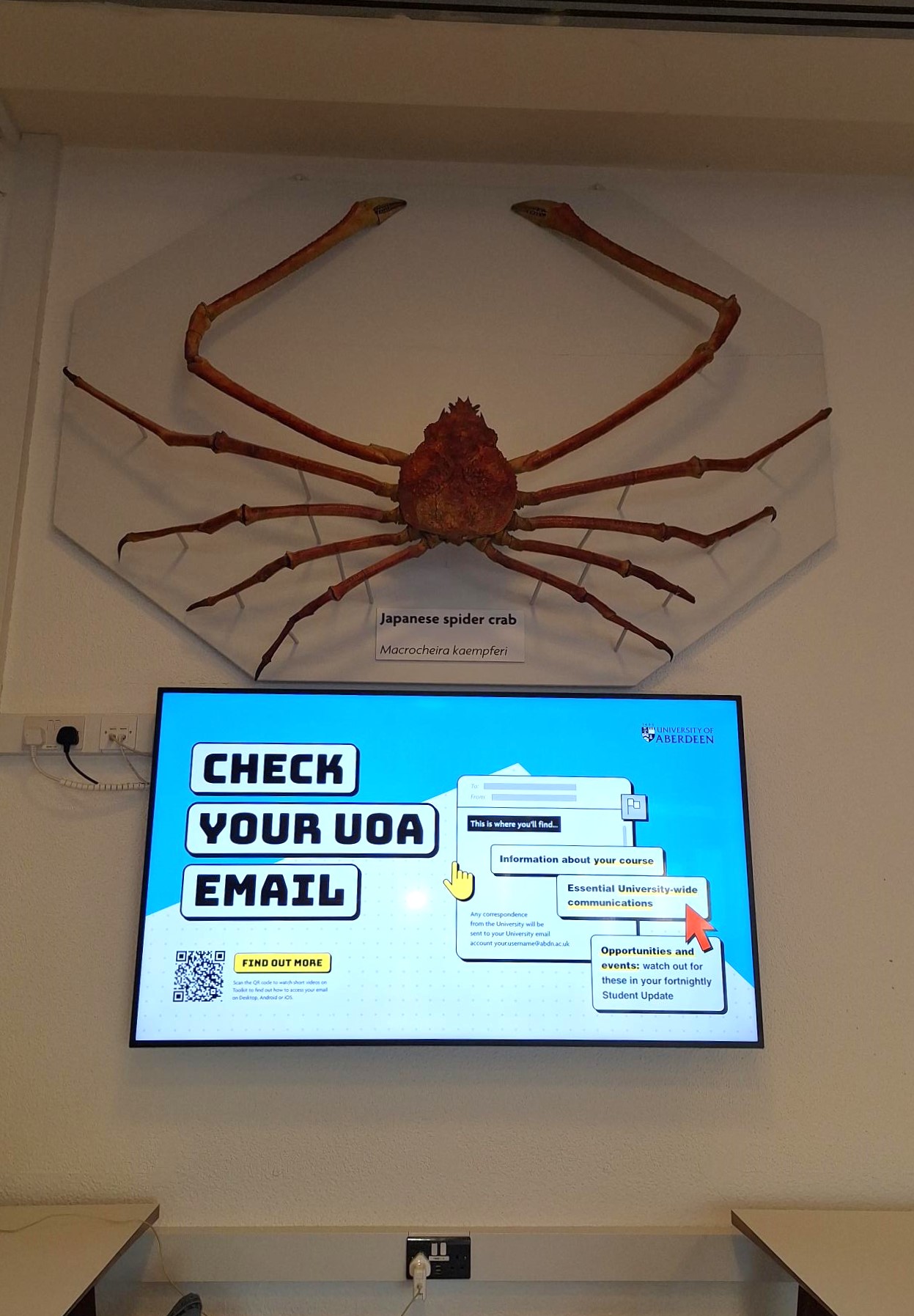
The crab had previously been removed during renovation work in 2019, without hiccup, so recalling how ‘straightforward’ this had been last time, I was confident that we could get the crab removed, cleaned, packed, and ready for transport in just under three days.

Continue reading

‘Marvellous Molluscs’ – Increasing Accessibility, Improving Storage & Unlocking Research Potential At The University Of Aberdeen

Written by Hannah Clarke, Assistant Curator (Collections Access), University of Aberdeen.

In April 2021, The University of Aberdeen’s Zoology Museum, with support from NatSCA’s Bill Pettit Memorial Award, undertook a year-long project to rehouse and improve the accessibility of the University’s mollusc collection.

The collection comprises approximately 2550, mostly British specimens, collected from the 1840s to the 1970s. The specimens were gifted to the museum by former students, academic staff, and amateur shell collectors, they also include several specimens from as far afield as the Pacific, Africa, China, Madagascar, America, and Canada.

The molluscs form part of the University’s extensive Zoology Collections, which are recognised as being of National Significance. As such, we are constantly striving to improve access to these collections, and the ‘Marvellous Molluscs’ Project aimed to do just that.

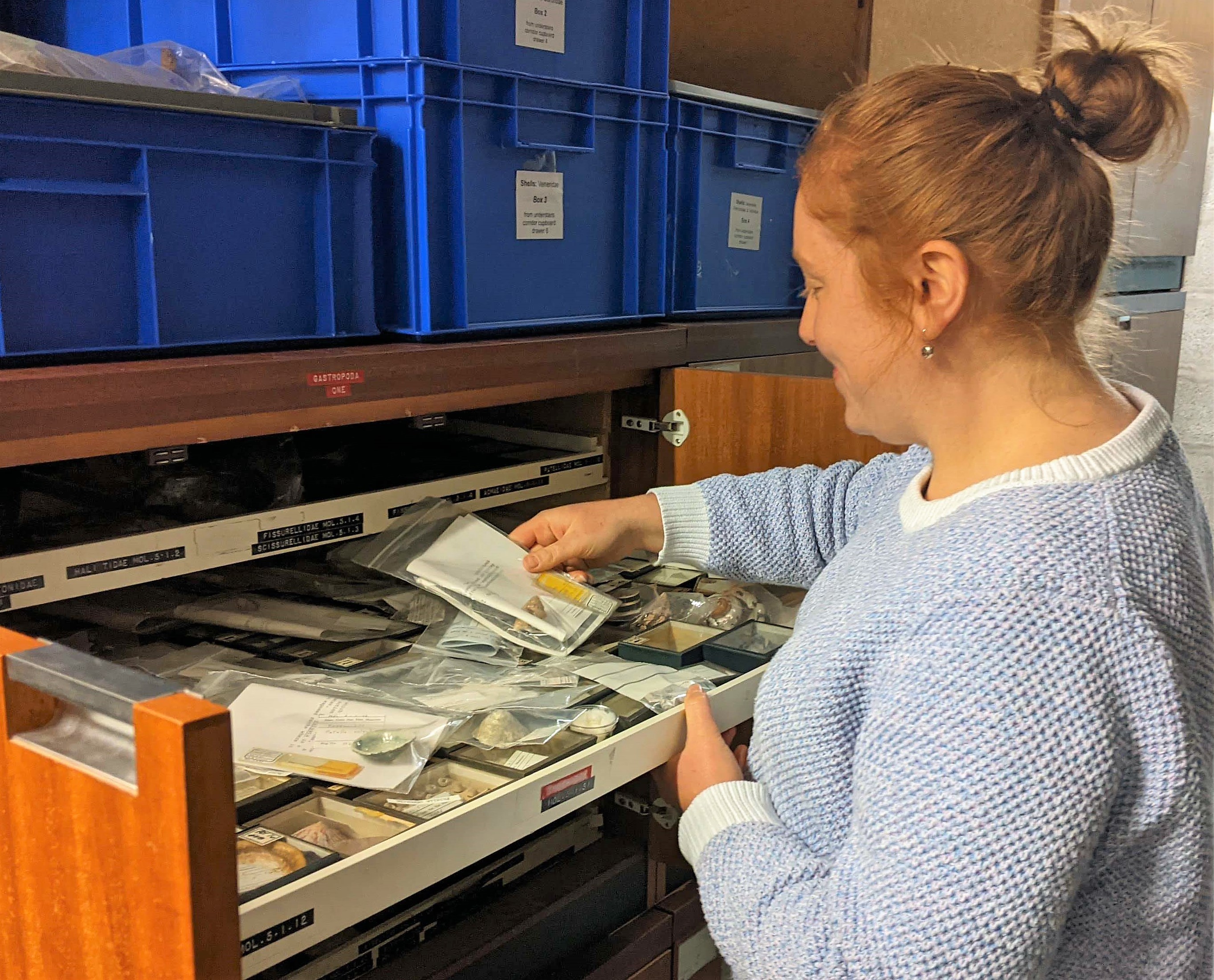
Assistant Curator, Hannah Clarke, identifying storage issues in specimen cupboards.

Having identified the collections both in storage and on display, a project plan was created that would tackle not only the rehousing, but also the documentation of the specimens on the museum database. The majority of specimens were poorly stored several layers deep in drawers, had outdated taxonomy, and lacked any database records or collections data.

Continue reading