Written by Ella Berry (also available here), amateur taxidermist & MSc Conservation Practice student, Cardiff University. An extended version of this blog was published here on 12 March 2020.
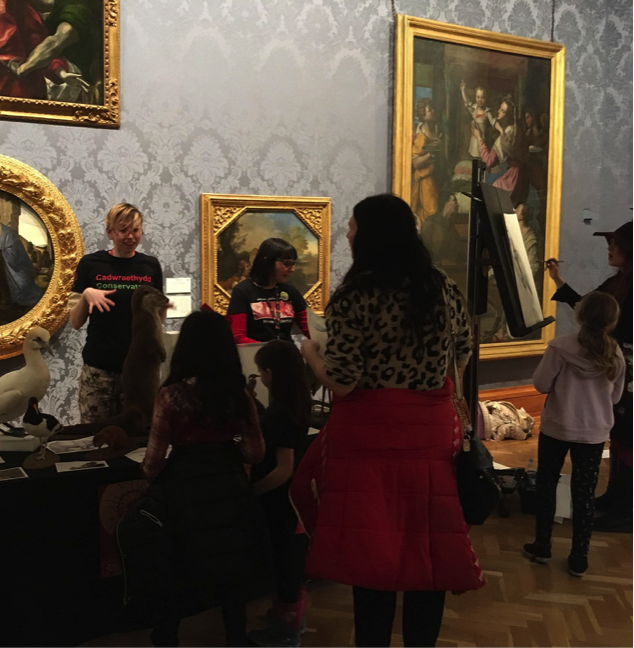
In March of this year I helped out on the Conservation stand at an evening event as part of my role as Volunteer Intern at National Museum Cardiff. It was a fun event, with a turnout of 852 curious visitors. Art conservators and natural history conservators collaborated to show how natural history specimens could inform and create imagery and art.
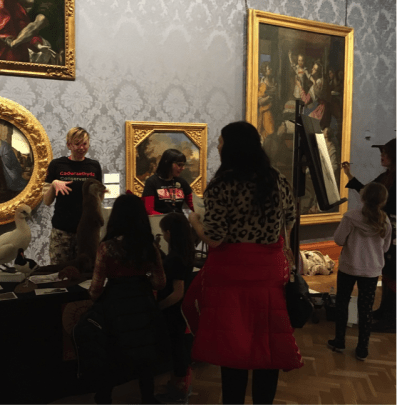
Photo of me (left) talking to guests at the National Museum Cardiff ‘After Dark’ event alongside Vertebrate Curator Jennifer Gallichan (centre) and local artist Nichola Hope (right) drawing. Photo courtesy of Caitlin Jenkins.
Throughout the event both children and adults came up and asked a lot of questions about the objects, and I noticed some reoccurring queries, especially around the ethics of taxidermy. I have attempted to answer some of these here, so that if anyone else reading this faces the same conundrums, this article will set their mind at ease, or enable them to answer the questions confidently.
Is it ‘ethical’?
‘Ethical’ is a subjective term, therefore what is considered ethical varies between taxidermists. Whether the preservation of animal remains, without the inherently unobtainable consent of the animal, is in itself ethical is up to each individual to decide. ‘Ethical-taxidermy’ has become a more frequently used term generally referring to the animal not being killed specifically for the purpose of becoming a mount. However, this refers to a wide range of sources and can range from accidental deaths such as finding an animal dead or road kill, right through to by-products of culling, pet food supply animals and pest control salvages.
Continue reading →






 NatSCA