
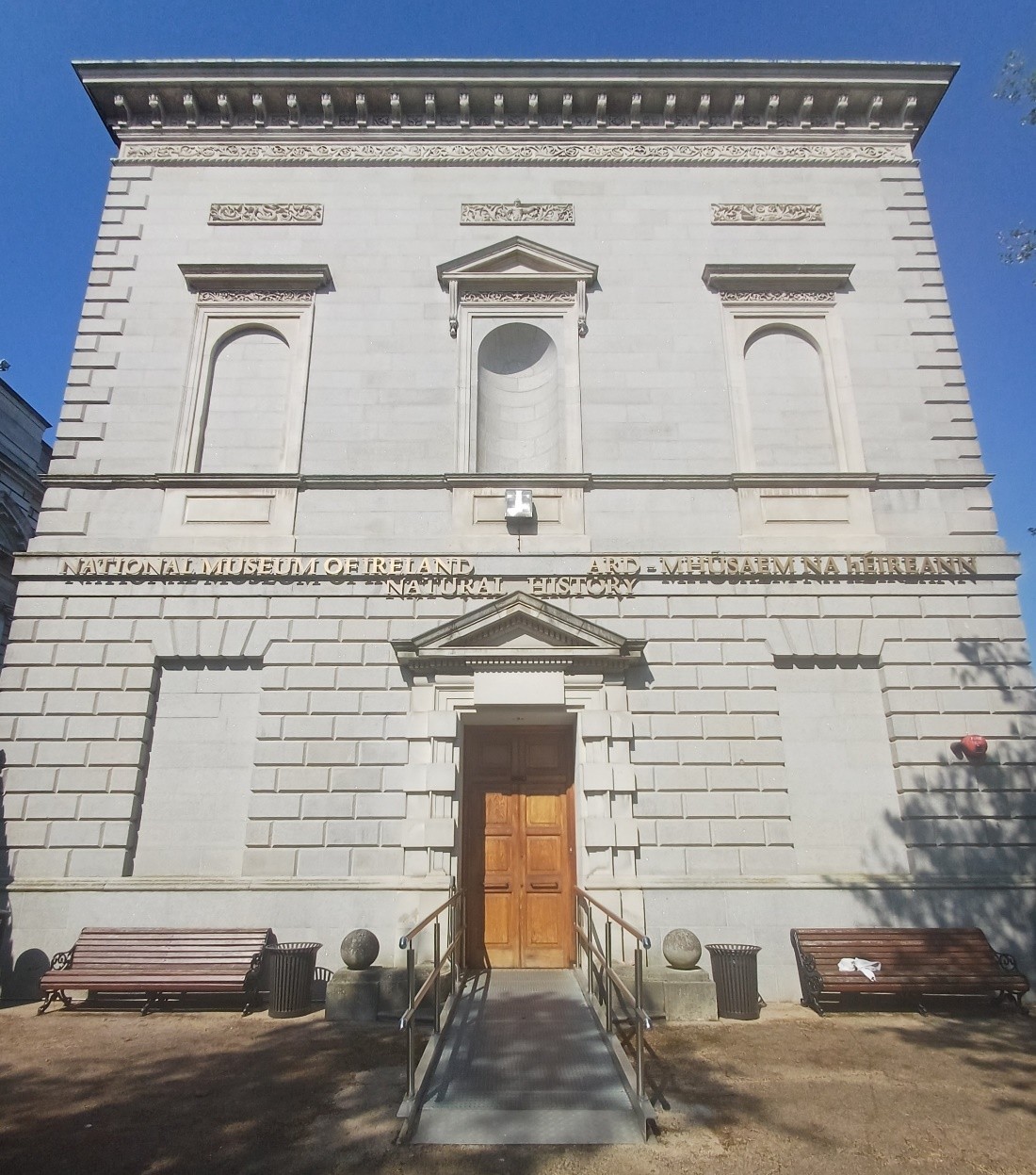
Written by Adriana Ballinger, Yale University Charles P. Howland Postgraduate Research Fellow at the National Museum of Ireland, Natural History.
Natural history specimens are often inaccessible to the communities from which they were collected. As a result, source communities lack opportunities to connect with elements of their local heritage, and museums and their publics overlook the place-based expertise that many of these communities hold about the specimens we research and see on display. Scientists lead the knowledge creation process surrounding natural history specimens, but source communities can also contribute valuable information, especially regarding the meanings that flora, fauna, and geological features embody in their environments of origin. Although these cultural contexts are often intangible and unquantifiable, they are nevertheless important facets of specimens’ natural histories. For the past year, I have led “Our Irish Natural History,” a community-driven research and exhibition project at the National Museum of Ireland (NMI). I set out to increase the accessibility of the NMI’s natural history collections, explore innovative avenues for community-led interpretation, and create new opportunities for public engagement.





 NatSCA