Taking a walk through a forest, running through fields of wheat or even just gazing at trees, all a far-cry from dealing with the sheets of pressed, long-dead dried plants you come across in museum collections. Good taxidermy at least looks like the original animal.
Other problems with plant specimens include their need for low light, extremely careful handling and, occasionally, mercuric chloride. Despite being phenomenally important to researchers, for everything from tracking climate change to curing cancer, plant collections are not at the top of many people’s lists when it comes to exhibitions, events and workshops.
So, what public-facing engagement can you do with herbarium specimens? Here I’ve looked at a few great case studies where creative collections are delivering brilliant botany…Continue reading →
Compiled by Ellie Clark, Collections Moves Team Leader at the Natural History Museum
Welcome to the February edition of NatSCA Digital Digest.
Digital Digest is a monthly blog series featuring the latest on where to go, what to see and do in the natural history sector including jobs, exhibitions, conferences, and training opportunities. We are keen to hear from you if you have any top tips and recommendations for our next Digest, please drop an email to blog@natsca.org.
Sector News
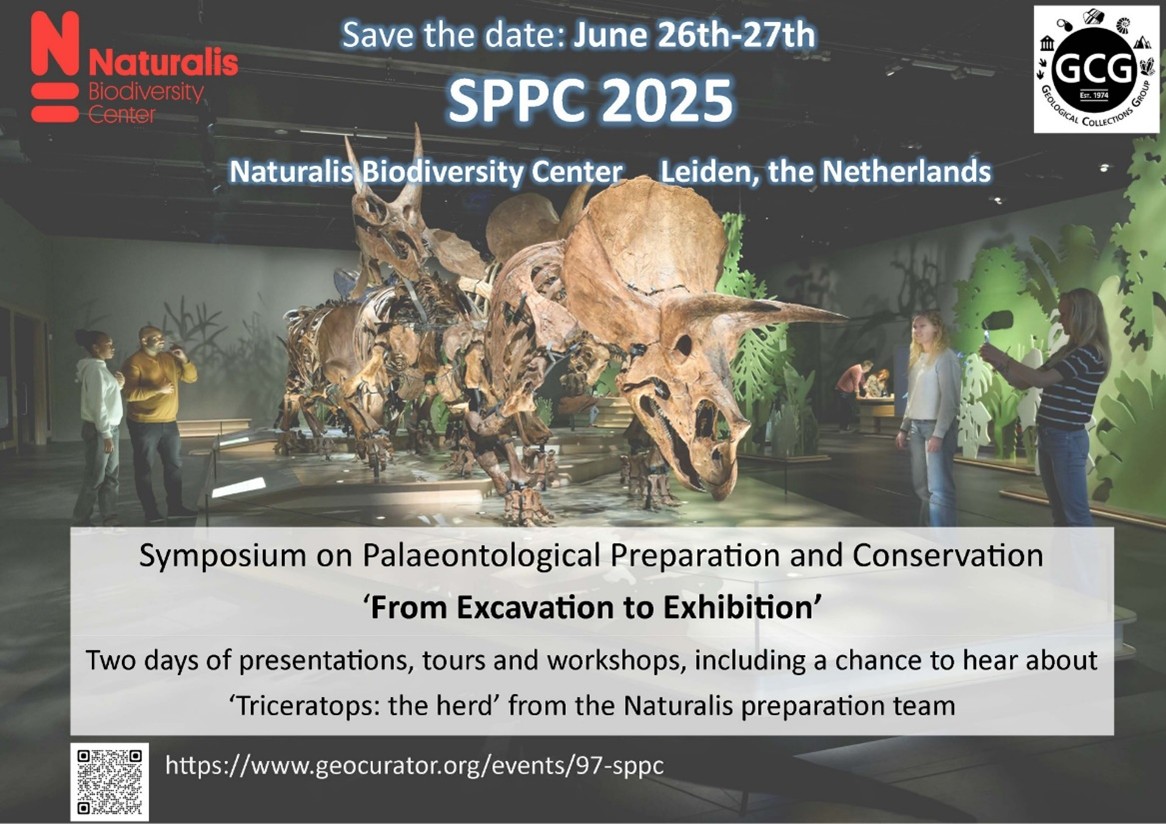
Save the Date: SPPC, June 26th – 27th 2025
The 30th Symposium on Palaeontological Preparation and Conservation will be held in the Netherlands this year on 26-27th June.
The theme will be From Excavation to Exhibition including aspects of the story of how geological collections end up on display in our museums, as well as their conservation and preparation. A call for abstracts and registration is coming soon. For more details visit: https://www.geocurator.org/events/97-sppc
Manchester Museum is currently undergoing an exciting transformation, building two new galleries, a South Asia Gallery and the Lee Kai Hung Chinese Culture Gallery. This sparked interest and further research into our natural history collections from Asia.
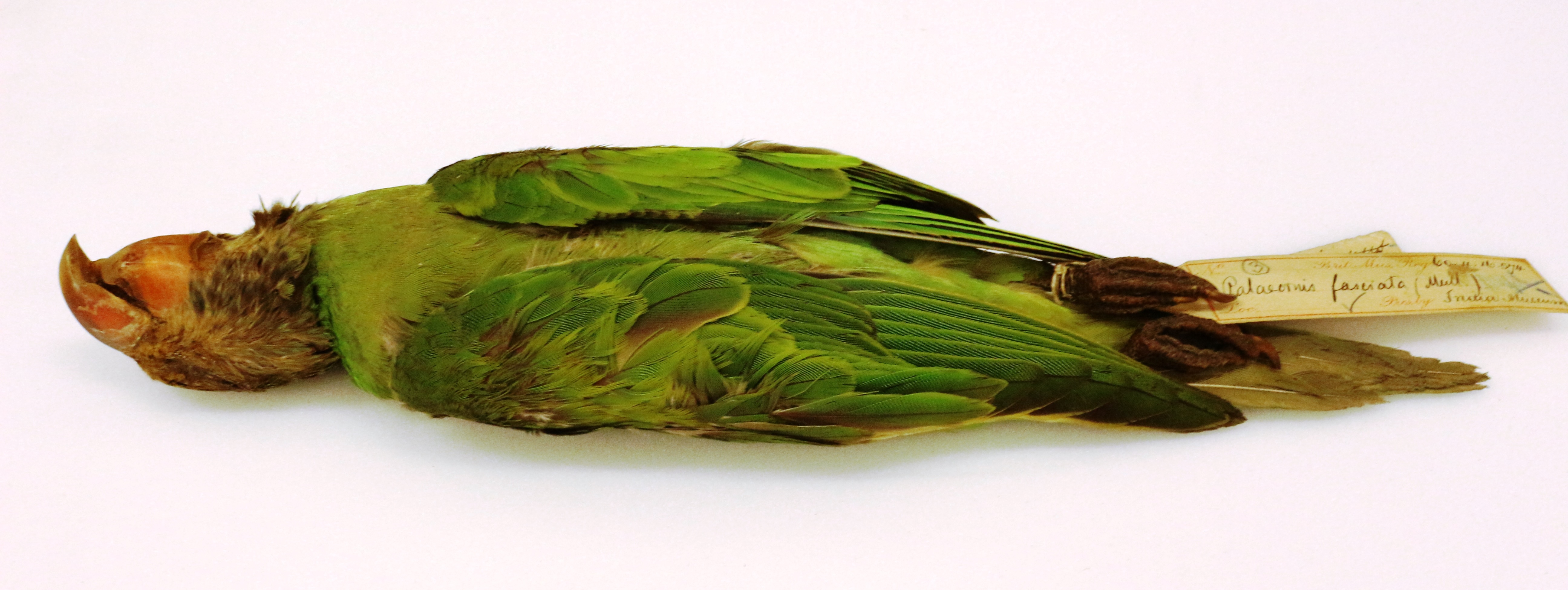
Manchester Museum has a large collection of 18,000 bird skins; including many specimens from the former British Empire. Further study of the collection has identified over 100 birds linked to the East India Company Museum.
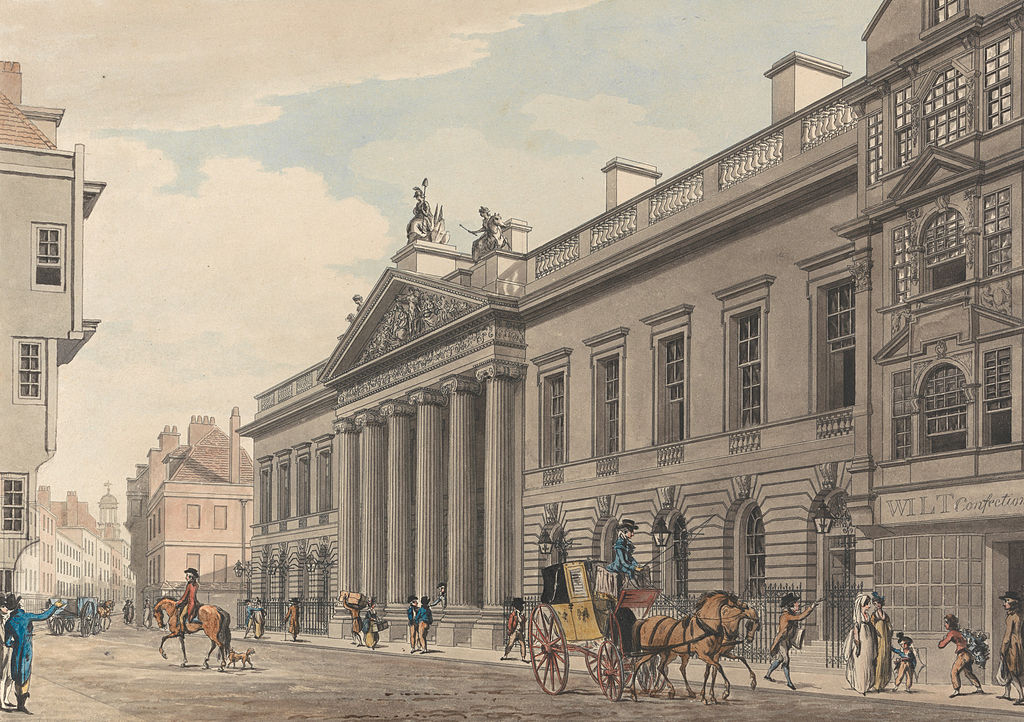
The East India Company was established in 1600 by a royal charter signed by Queen Elizabeth I. It gave the company the monopoly on trade in South Asia for over 250 years. The museum was established in 1798, as an ‘Oriental Repository’ to exhibit the returns of the East India Company’s commerce. It was known as the India Museum, and was housed in the company’s headquarters at India House, Leadenhall Street, London. Company servants were encouraged to expand their knowledge of South Asia in order to advance the company’s commercial and territorial ambitions.
Figure 2: East India House by Thomas Malton the Younger (1748-1804), Public domain, via Wikimedia Commons
Modelled on the Royal Society of London, the Asiatic Society of Bengal was formed in 1784 by a number of East India Company employees in Calcutta. The aim of the society was to carry out research into the history, arts, literature and Natural History of Asia. The Asiatic Society was closely associated with the India Museum in London. Charles Wilkins one of the founding members of the Asiatic Society would go on to propose the formation of the East India Company Museum in London and would become its first curator. The Indian Museum in Calcutta was established in 1814 with the founding collections from the Asiatic Society.
The history of Black people, people from indigenous cultures and the role of empire in museum natural history collections is largely ignored. This talk uses Manchester Museum’s mineral collection to take the first steps to uncover these stories, analyse the role of empire and expose racism. For the first time, archive photographs from the early 1900s are used in a new display, to tell the story of the people who mined the Museum’s South African gold ore specimens. Recent research and the Museum’s Sierra Leone diamond are used to tell the story of ‘Blood Diamonds’. Data analysis of the mineral collection reveals that 24% of the collection comes from colonial countries. 50% of the Museum’s minerals from the British Empire are Australian, of which 33% came from the Imperial Institute. This research has shown that Manchester Museum’s mineral collection is intimately connected to empire, but the history of Black and indigenous people is ignored or unknown. This is institutional racism and museums need to be proactive in addressing this. There are enormous opportunities to develop this research through fostering partnerships with source communities around the world. This paper is a call to action.
Decolonising museums is in the headlines a lot at the moment and so it should be. I’ve chatted to a few people about this recently and it isn’t very clear what it means, how it relates to natural science collections and how we can start to decolonise our collections, so I thought I’d share my own thoughts.
Much of the discussion in the museum sector has been around ethnography collections with some great work that goes some way to redress our colonial past (including from my own institution Manchester Museum who have returned sacred aboriginal objects). Some ethnography objects are made from bark, fur or ivory, but these materials don’t often form part of the decolonisation debate.
The reality is that many natural history collections, particularly in the western world have a colonial origin. Many objects were traded on slave ships and were an attempt to map and tame the British Empire. Miranda Lowe and Subhadra Das have done some brilliant work to highlight this and the Grant Museum’s new exhibition on their Colonial Histories is a great first step in bringing this to the public.






 NatSCA
