NatSCA Digital Digest – August

Compiled by Ellie Clark, Collections Move Team Leader at the Natural History Museum

Welcome to the August edition of NatSCA Digital Digest.

A monthly blog series featuring the latest on where to go, what to see and do in the natural history sector including jobs, exhibitions, conferences, and training opportunities. We are keen to hear from you if you have any top tips and recommendations for our next Digest, please drop an email to blog@natsca.org.

Sector News

Registration is now open for the 13th European Bird Curators Meeting, October 2024, in Liverpool.

The European Bird Curators Meetings aim to promote cooperation, dissemination of best practices and new techniques in the curation, management, and use of bird collections. Presenters in the scientific programme often include curators, collection managers, museum historians and ornithological researchers. These are friendly meetings and anyone with an interest is welcome to join us.

The meeting will include plenary and submitted presentations, discussion sessions, collections tour, conference dinner (optional – Tuesday 29th October) and field excursion (optional – Thursday 31st October). 

Please follow the ‘Tickets available here’ link from the event webpage to register. They have single day registration options and have kept costs as low as possible to encourage attendance by local natural history curators. 

If you have any questions, please email vertebratezoology@liverpoolmuseums.org.uk.

Continue reading

A Collection of Sri Lankan Bird Skins.

Written by Eimear Ashe, Documentation Officer, National Museum of Ireland – Natural History.

The Temporary Number

During the course of my work in the Natural History Division of the National Museum of Ireland, (NMI) I came across a couple of boxes of bird skins that were in the wrong place. By deciding to move them to their correct place, I opened a metaphorical can of worms. It turned out that these 200 bird skins had been assigned modern numbers during a volunteer project 16 years ago. In the intervening period, the original accession number had been discovered. Never one to leave a wrong number in place, I took on the challenge to renumber this collection before rehousing them.

The Donor

First, I read the acquisition register and found the donor to be a gentleman named Colonel James Grove White, a career British Army officer. Upon retirement, Grove White came to live in Co. Cork in the south of Ireland, and like many British men in Ireland at that time, he came to hold high office during various periods, and was very active in the local community. It was during his time in Ireland, almost 100 years ago, that he donated his collection of “Ceylonese” bird skins. Presumably these were collected by him while on duty in Sri Lanka, although there is no documentation in the NMI to contribute the field collection details, other than the labels on the birds themselves.

Continue reading

‘Tom’ The Burlingham Bird

Written by Anthony Roach FLS (He/Him), Archives Assistant, Worcestershire Archive and Archaeology Service.

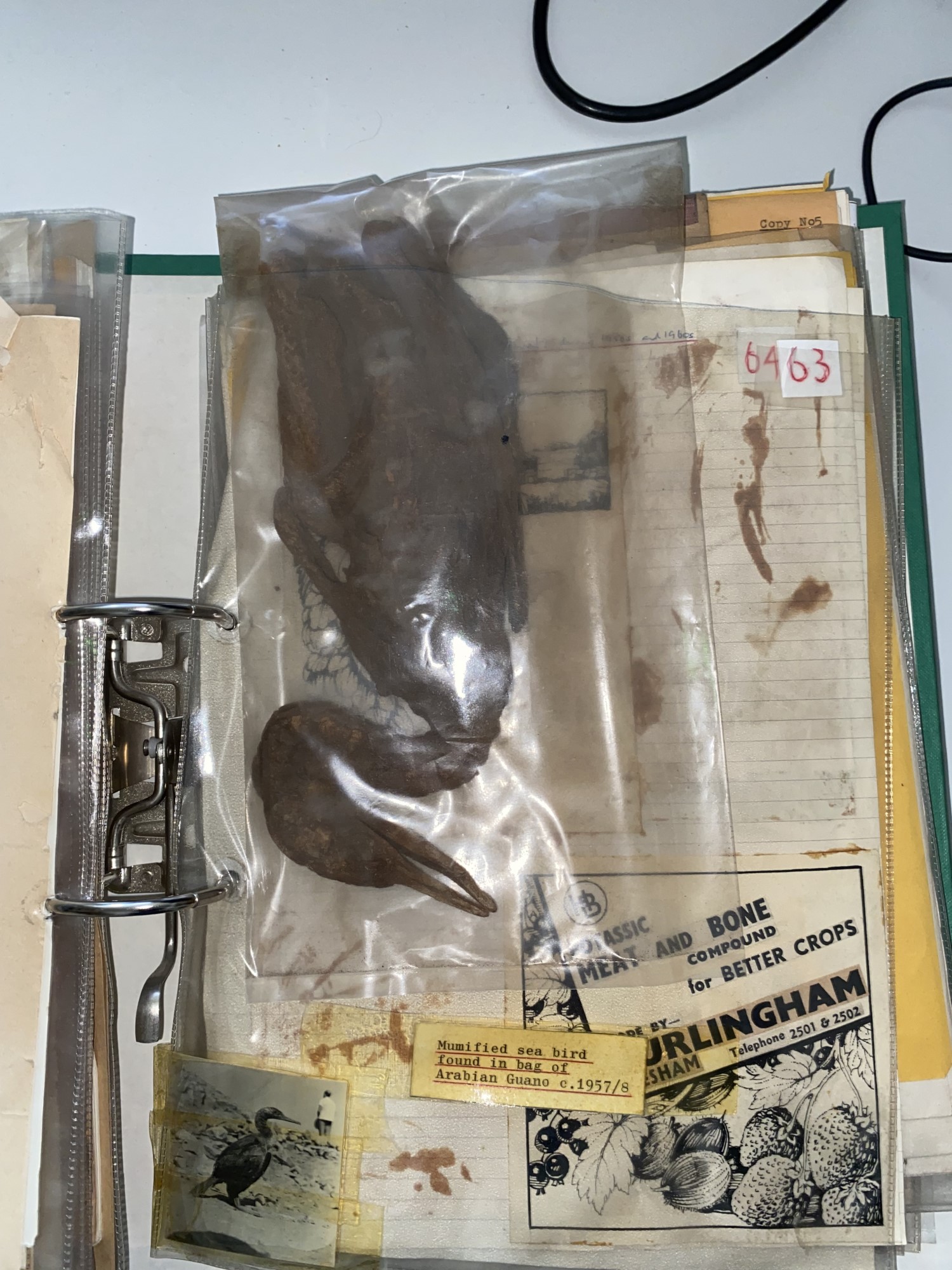
Whilst we do have some objects held at Worcestershire Archives, a mummified bird filed in a plastic pocket was a hugely surprising find all the same! The bird was ‘filed’ – its place as important as other key events in the history of Burlingham & Co., Evesham, a business, which from the late 19th century onwards was managed by Henry Burlingham.  

Image of the Burlingham bird when first discovered Ref 705.1373 BA12963.6.63 © WAAS

Either side of the mummified bird contains photographs of the Evesham premises charting its changing fortunes, a catalogue of products sold, adverts and circulars sent out to clients. Whilst Burlingham & Co. began as merchants and agents of a wide range of goods, including coal, their interests narrowed as sellers of construction materials, garden machinery, and fertiliser.

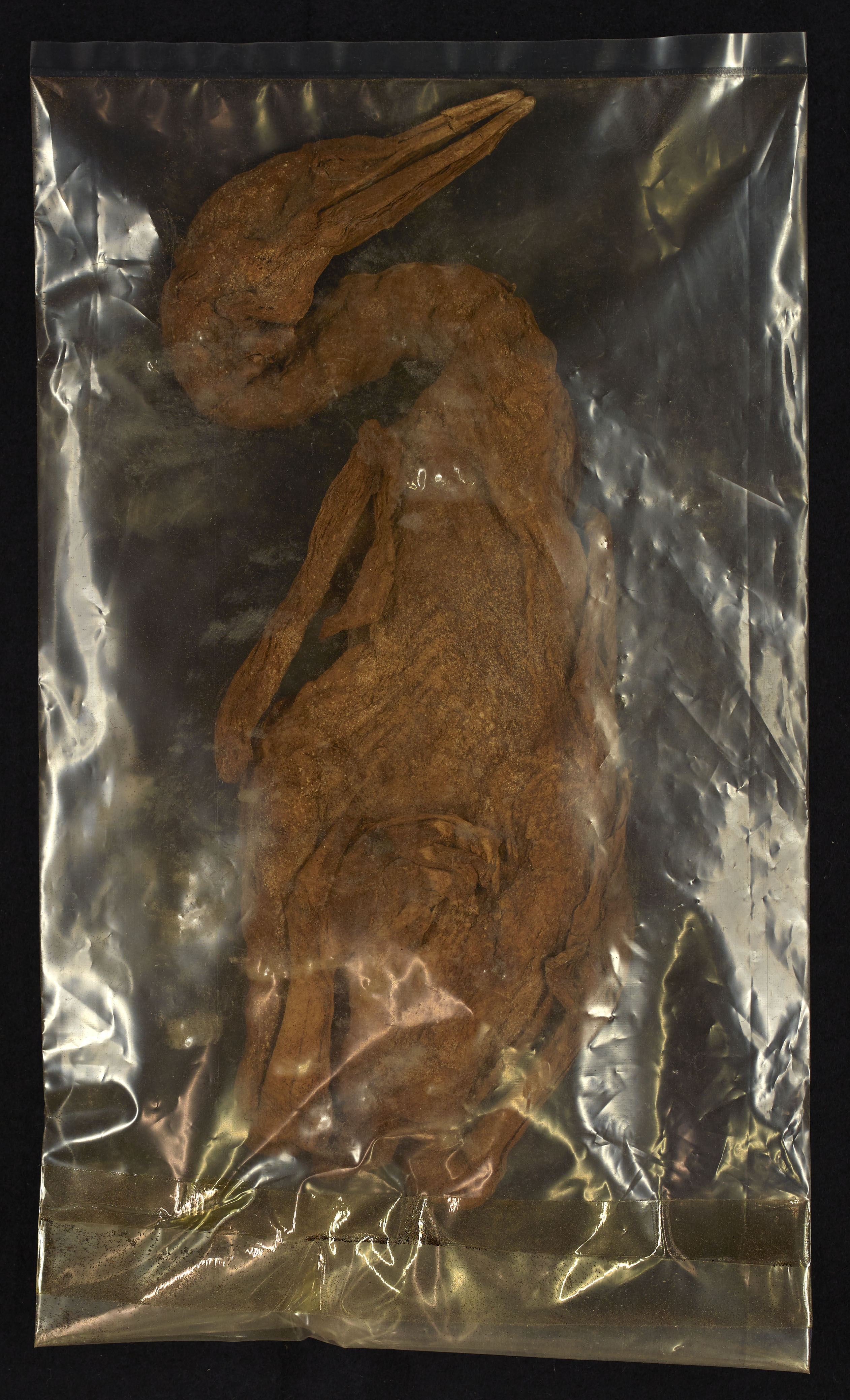
Close up of the Burlingham Bird Ref 705.1373 BA12963.63 © WAAS

I was excited by ‘The Burlingham Bird’ find and set about the challenge of learning more about it and also how best to conserve and safely store the specimen in our archives.

The Mummy Bird

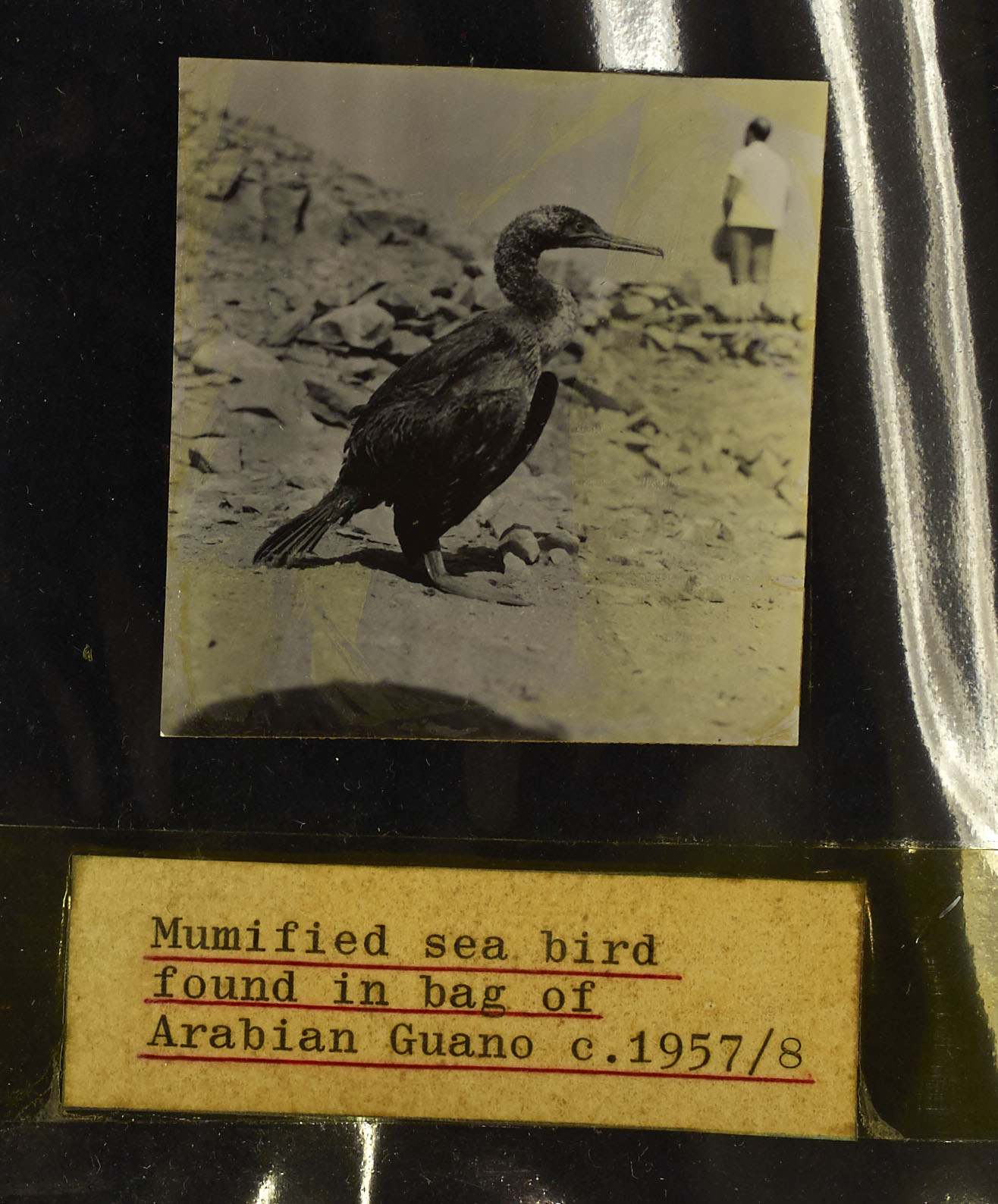
Close up of image with text ‘Mummified seabird found in bag of Arabian Guano’ c.1957-8 Ref 705.1373 BA12963.6.63 © WAAS

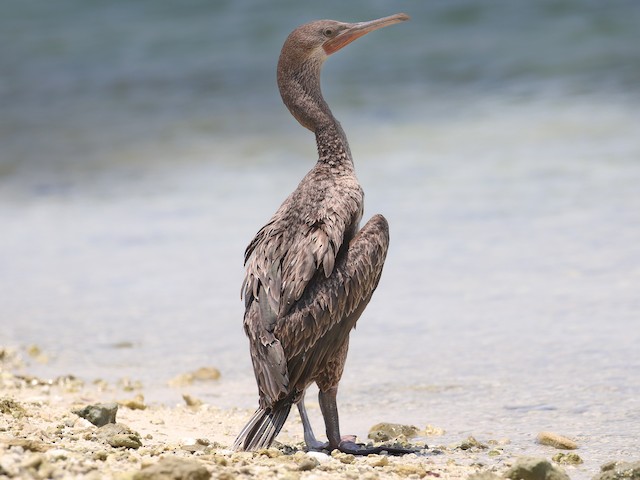
As you can see it was described as ‘Mummified sea bird found in bag of Arabian Guano c.1957/8’  When I first examined it, I thought it most resembled either a cormorant or a shag having been used to seeing both around the coasts and estuaries in Devon. Having reviewed the different species found in Arabia using the image supplied with the bird and the morphology of the mummified bird itself, it most closely resembles the Socotra cormorant (Phalacrocorax nigrogularis) – endemic to the Persian Gulf and the south-east coast of the Arabian Peninsula.

Socotra cormorant – Phalacrocorax nigrogularis – Cornell Lab of Ornithology Macauley Library © Oscar Campbell
Continue reading

The East India Company and Natural History Collecting

Written by Rachel Petts, Curatorial Assistant Zoology (part time), Manchester Museum.

Manchester Museum is currently undergoing an exciting transformation, building two new galleries, a South Asia Gallery and the Lee Kai Hung Chinese Culture Gallery. This sparked interest and further research into our natural history collections from Asia.

Manchester Museum has a large collection of 18,000 bird skins; including many specimens from the former British Empire. Further study of the collection has identified over 100 birds linked to the East India Company Museum.

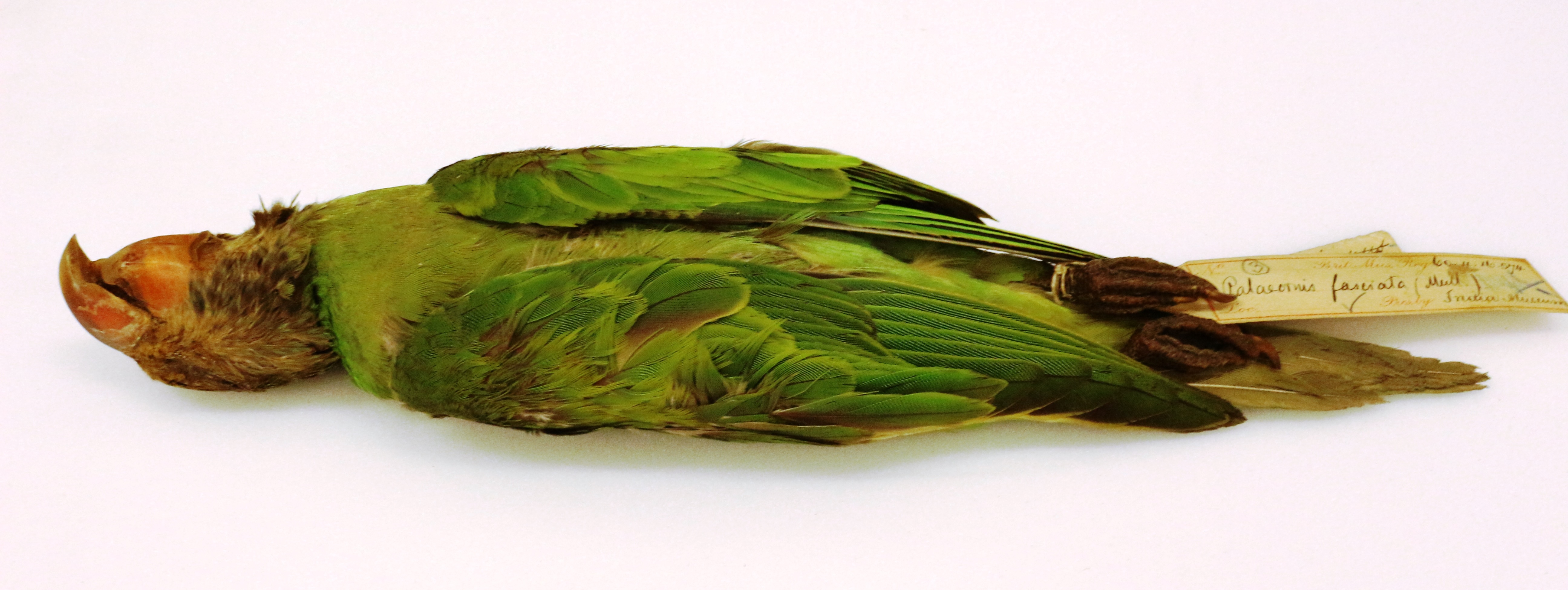
Figure 1: B.2574 Psittacula alexandri fasciata (Statius Muller, 1776) Red-breasted Parakeet, Andaman Islands, South Asia. Presented by the India Museum, London. © Manchester Museum, The University of Manchester

A Brief History of the East India Company Museum

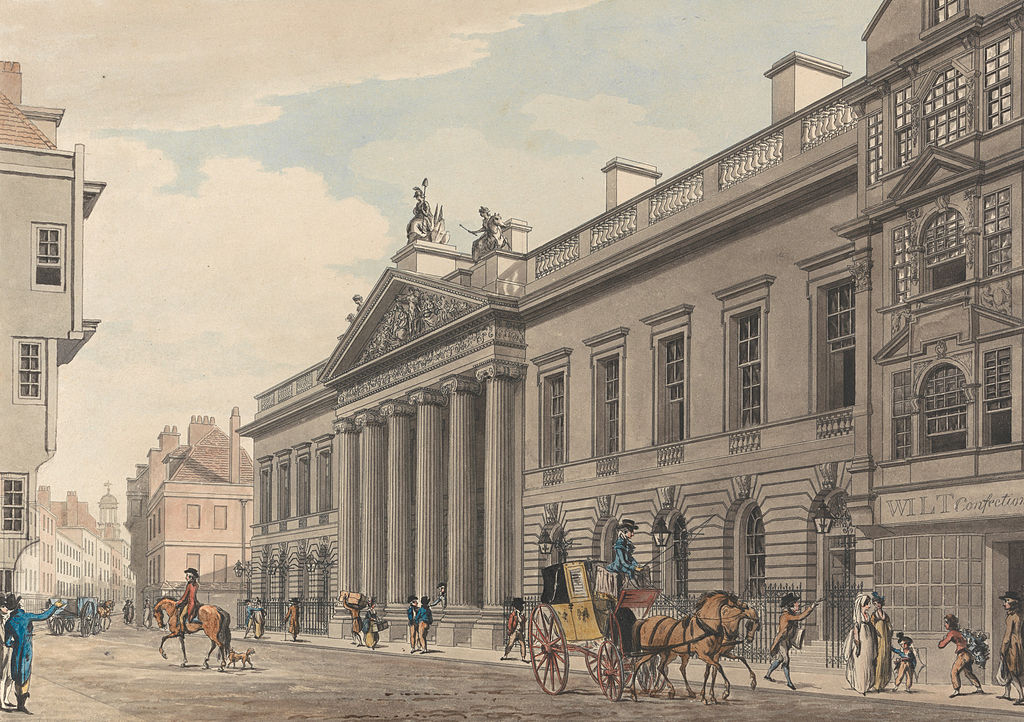
The East India Company was established in 1600 by a royal charter signed by Queen Elizabeth I. It gave the company the monopoly on trade in South Asia for over 250 years. The museum was established in 1798, as an ‘Oriental Repository’ to exhibit the returns of the East India Company’s commerce. It was known as the India Museum, and was housed in the company’s headquarters at India House, Leadenhall Street, London. Company servants were encouraged to expand their knowledge of South Asia in order to advance the company’s commercial and territorial ambitions.

Figure 2: East India House by Thomas Malton the Younger (1748-1804), Public domain, via Wikimedia Commons

Modelled on the Royal Society of London, the Asiatic Society of Bengal was formed in 1784 by a number of East India Company employees in Calcutta. The aim of the society was to carry out research into the history, arts, literature and Natural History of Asia. The Asiatic Society was closely associated with the India Museum in London. Charles Wilkins one of the founding members of the Asiatic Society would go on to propose the formation of the East India Company Museum in London and would become its first curator. The Indian Museum in Calcutta was established in 1814 with the founding collections from the Asiatic Society.

Continue reading

Not Just Old Birds in Cases

This article is reposted from the Stories from the Museum Floor blog by the Visitor Team at Manchester Museum

Not Just old Birds in Cases – The Value of Natural History Collections

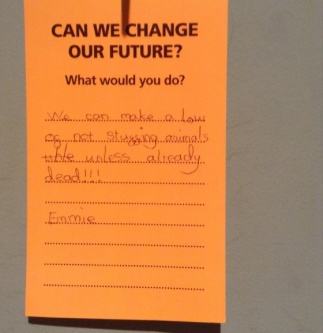
The most recent exhibition ‘Extinction or Survival?’ at Manchester Museum has brought many interesting ideas and suggestions from a wide group of visitors about how we can change our future. Several comments have mentioned animals kept in museums and collections, for example, “Stop killing animals to put in a museum” or “help all the animals by collecting DNA … and … not get stuffed like … in museums”. These comments have inspired me to write about the importance of natural history collections, especially the value of bird collections.

deana 2Comment card left at the ‘Extinction or Survival?’ exhibition at Manchester Museum, 2017.

Whether collecting birds for science is still necessary remains a hotly debated topic. However, the value of scientific collections cannot be questioned. Research or reference collections are still making crucial contributions in documenting biodiversity in time and space, and understanding species’ ecology and evolution, vital for conservation strategies. Furthermore, collections and museum have an important role in preserving and caring for past and present natural heritage and providing educational opportunities. Continue reading