NatSCA Digital Digest

Three-toed sloth (C) Horniman Museum and Gardens

Three-toed sloth (C) Horniman Museum and Gardens

The October NatSCA Digital Digest is here already, where does the time go?

What’s New to Read?

Dana Andrew recently went to Jamaica to track down the original location of some museum specimens, and has reported back to ICOM. She was funded by a WIRP international travel grant, and you can read about her blustery adventures, so far, here.

Eighty full years of mourning have now taken place for the Thylacine, since it was deliberately driven to extinction in 1936. Thylacine expert, Jack Ashby, makes sure it’s not forgotten and talks about how it feels to be in the area where it happened in a tribute blog here.
What’s New to See?

On the 19th October the Grant Museum of Zoology will bring you some sex, some creativity, and some trickery. A new exhibition looks at the colourful world of reproduction in nature.

Two days later, the Wildlife Photographer of the Year exhibition opens at the Natural History Museum on the 21st October. Always a crowd pleaser, I’ve had some sneak peeks which prove this year will be no different.

And just one day after that, the Horniman Museum will also be ready to entertain with a new exhibition. This one, called Memorial: A Tribute to Taxidermy, exhibits historic Horniman Museum taxidermy specimens alongside Jazmine’s modern day interpretations. Elegant and beautiful, this exhibition is a must-see, and comes complete with a fascinating timelapse film of how she did it.
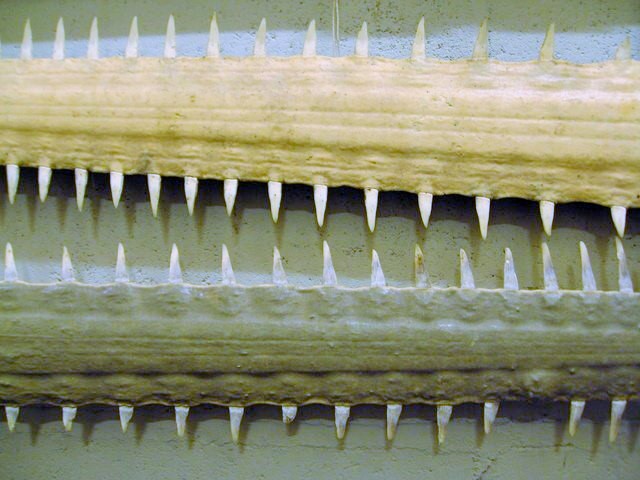
What to do with your Sawfish

If you have any sawfish rostrums in your collection, particularly if they have locality data, there is something important you really need to do! The Sawfish Conservation Society, the Shark Trust, and The Deep (aquarium) have begun a joint venture to research museum specimens and data with the aim to protect wild populations. If you can help, please get in touch with any of the aforementioned lovely people, and to thank you for your efforts, your institution will be acknowledged in any scientific papers that get published. Double win.

Sawfish rostra (Wikimedia Commons)

Sawfish rostra (Wikimedia Commons)

Curators of the Caribbean

300-year-old plant collection brings Bristol Museum & Art Gallery and the Natural History Museum Jamaica together!

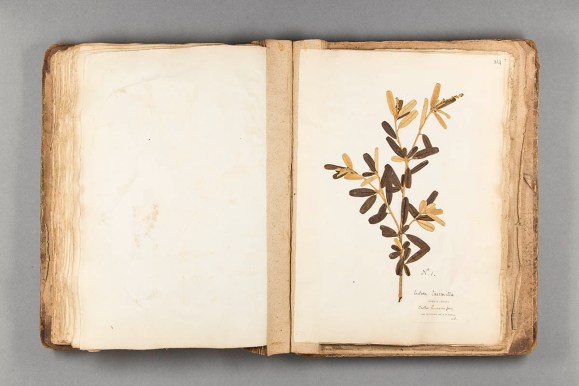
vol_3_jamaican_p324

A digitised page from Volume 4 of the Jamaican herbaria

In the autumn of 2014, I was fortunate to be contracted by Bristol Museum to conserve and digitise 4 bound volumes of plant specimens dating from the 1770s and collected by the prestigious botanist Dr Arthur Broughton. The conservation and digitisation was completed in early 2015, yet two years on I am still working with and fascinated by this fabulous collection.

slide1

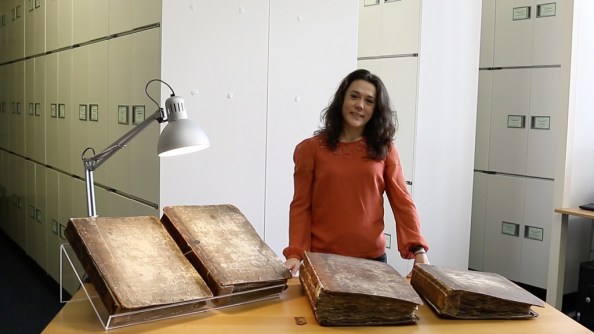
Rhian Rowson and the 4 volumes of 18th century bound herbaria

Dr Arthur Broughton, was a Bristolian who made the mammoth journey to Jamaica, due to ill health, and myself and Rhian Rowson, biology curator at Bristol Museum & Art Gallery, are trying to piece together his years studying botany in Jamaica and the impact this renowned botanist has had on the island and the world of botany. The volumes are large, heavy, leather bound books holding c. 1000 specimens including extremely rare and type material. The books were analysed for biocides, cleaned in preparation for digitisation, digitised and then each specimen was painstakingly removed from the volumes and re-mounted onto archival sheets. This project has mitigated the risk of contamination from handling the treated pages, has increased access and ease of handling but most importantly the images have been shared with other institutions. The ebook highlights some of the star specimens in the collections

The most exciting connection made during the research side of this project was with the Natural history museum of Jamaica (NHMJ). Through this collaboration, the opportunity has arisen for both me and Rhian to travel to Jamaica to collect modern material, research the historic plant specimens and illustrations held in Bristol museum and the collectors behind them. We have been extremely fortunate to gain funding from both WIRP (Working Internationally Regional Project) and the Jonathan Ruffer Curatorial Grant. Both funders were extremely supportive and constructive in helping towards our submitting a successful application.

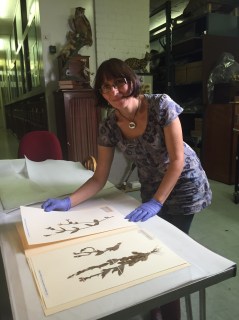
Victoria Purewal viewing Broughton plant specimens

Victoria Purewal viewing remounted specimens from one of the Jamaican volumes.

We fly into Kingston, Jamaica on Tuesday 27th September and will be gathering historical data on Dr Broughton and other prestigious botanists including Robert Long and the Reverend Lindsay, both of whom were collecting and working during this interesting time in history. We will be met by Keron Campbell, the botany curator at the NHMJ and together with the natural history team we will be escorted around the island, helping us to identify and verify plant specimens and localities. Modern day specimens will be collected to help interpret our historic material and provide a contemporary and fresh perspective that we can use to engage with our Bristol and Jamaican communities. We will be keeping active on social media whilst there, and hopefully offer some insight on the specialisms and research being conducted in Jamaica but also on the botany and the habitats on the island of Jamaica.

bmagnhmjcultureicomart


NatSCA Digital Digest

frankie-ndd


Welcome to the August 2016 edition of the NatSCA Digital Digest: an oasis of calm in a raging tempest of olympics, Trump, brexit, austerity, and celebrity deaths.

News from the Blogospbere

Hannah Cornish has been writing about the often-overlooked gems of the museum collection: the slides. You can read it here.

psyduck-spirit-collection

Image courtesy of the Oxford University Museum of Natural history

So Pokémon Go happened last month: the Smartphone game that has been an unintended boon for the museum world. Several curators have weighed in on the phenomenon; here is Jack Ashby’s take on it.
News from Nature

The organisation which used to call itself “Nature First” has just demonstrated why that name was no good. In a shock announcement last week, Natural England seems to be favouring the lives of human-reared pheasants over the lives of the wild buzzard. We have watched buzzard numbers slowly recover over the past thirty years, it would be dreadful to see all that progress lost now – and even worse if the hunters mistake other struggling raptors (the Hen Harrier, e.g.) for a buzzard. Here is the RSPB’s response.
News from the Museums

I’ve been doing some travelling lately. I visited the Natural History Museum in Doncaster. It’s a small but delightful museum which has struggled through some hard times, as so many have, but makes the most of what it has. Its collections are benefitting greatly from having a specialist curator right now – long may it continue.

A little closer to home: I visited the Natural History Museum’s new Colour and Vision exhibition, which is beautiful despite not mentioning the Tuatara anywhere. The exhibition looks at the evolution of the eye throughout nature and the beautiful ways in which nature tries to catch the visual attention of others. If you’re in the area, I highly recommend it.

trilobite-montage

A montage of Trilobite sensory organs

Announcements

I am delighted to announce that Deputy Keeper of the Horniman Museum, co-blogger, and good friend Emma Louise Nicholls is engaged to be married! I wish her and her fiance every happiness for the future.

Micromuseum: The slide collection of J T Quekett

How many natural history collections contain drawers and drawers of unloved microscope slides? With a few notable exceptions, such as the Grant Museum Micrarium, museums often find slides difficult to display and use.

The Royal College of Surgeons (RCS) has a particularly large collection of 50,000 slides, making up more than half of all the objects in the collections here. Hardly any are on display in the Hunterian Museum. A closer look however, reveals that the RCS microscope slide collections are really something special. From William Osman Hill’s Yeti slides to William Hewson’s 240 year old microscope vials, the slide collection here is every bit as exciting and important as the other objects in the museums.

As Collections Assistant for the microscope slide collection most of my work over the last six months has been on the John Thomas Quekett collection. His name is not well known, but if you have heard of it that is probably because you have come across the society of microscopists named in his honour. The Quekett Microscopical Club (QMC) has generously funded a project to care for Quekett’s original slides.

John Thomas Quekett (1815 -1861) was a leading histologist and microscopist who was Richard Owen’s deputy at the Royal College of Surgeons.  Quekett took over as conservator of the Hunterian Museum in 1856 when Owen left for the British Museum to become the superintendent of the natural history department and oversee the building of what would become the Natural History Museum, London. Quekett was at the cutting edge of a revival of the popularity of the microscope in the Victorian period. He wrote A Practical Treatise on the Use of the Microscope which became a classic text for microscopists, and is known to have instructed Prince Albert in the use of his silver microscope. He was a fellow of the Linnaean Society and the Royal Society, and worked with famous scientists such as geologist Charles Lyell, palaeontologist Gideon Mantell, explorer David Livingstone, botanist Joseph Hooker and Charles Darwin himself.

John Wu

John Thomas Quekett (1815-1816). (Image Royal College of Surgeons)


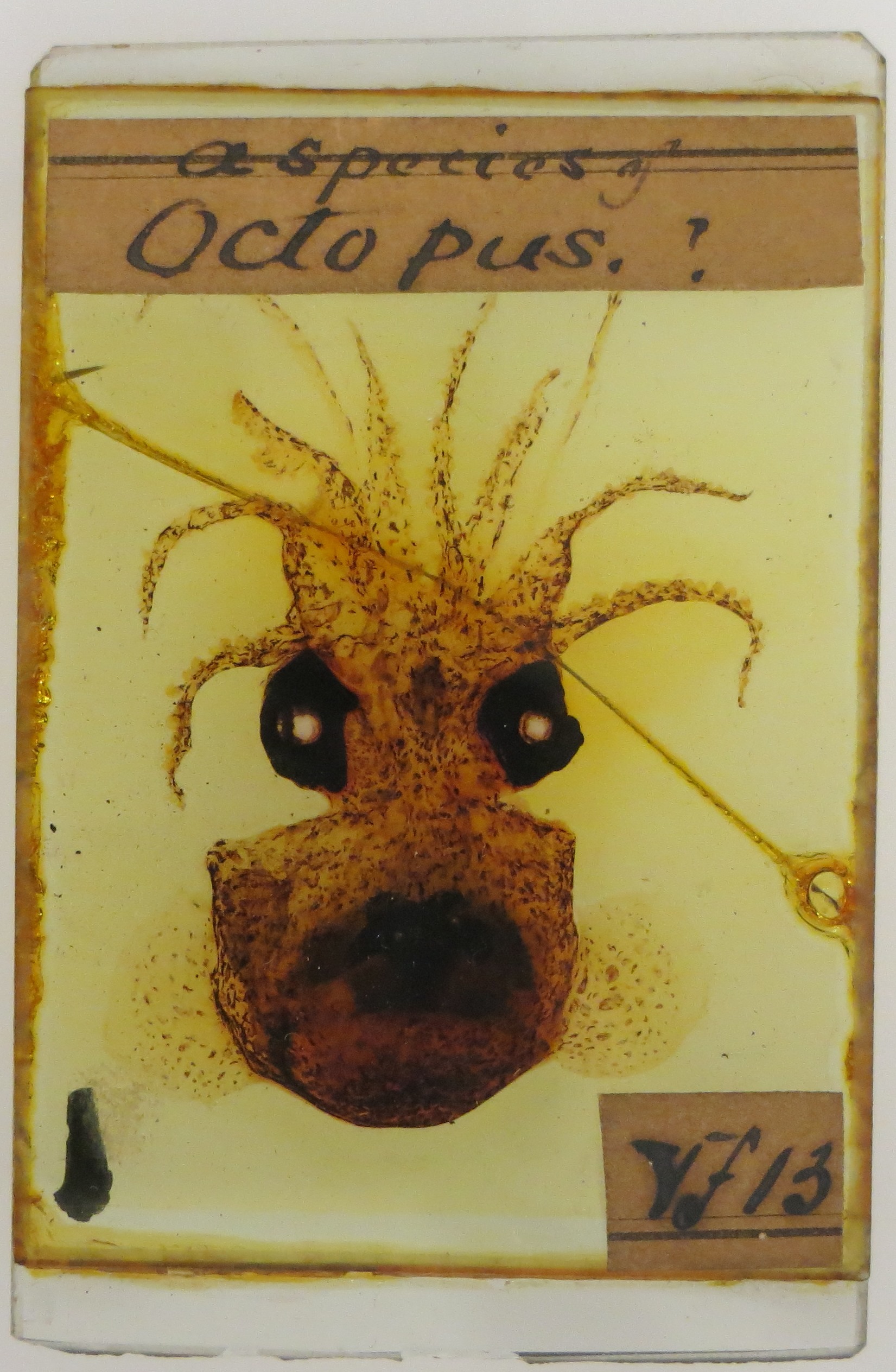
An octopus

An octopus from the Quekett Microscope slide collection. (Image Royal College of Surgeons)


Quekett was a pioneer in histology and microscopy, designing his own microscope and producing stunning histological preparations, especially injected specimens. Furthermore he put every natural object he could get his hands on onto a microscope slide. Animal, vegetable, mineral, everything. Tissue samples of every organ in the human body, a whole octopus, tiny flakes of silver, the exquisitely prepared respiratory system of a caterpillar. He prepared diatoms, ferns and coal, delicate sections of pterosaur bone, thylacine teeth and oak wood. There are even hair samples disturbingly labelled ‘vampyre’, although this probably refers to the bats rather than the undead.

He carefully labelled and catalogued his slides to produce a comprehensive natural history collection on a microscopic scale, and 12,000 of these slides remain today. It is not surprising that a recent review of the RCS collections concluded that the Quekett material is “one of the strongest representative collections of Victorian microscopy and scientific practice in general in the UK and possibly the world” (RCS Significance Review June 2015).

Given their age the slides are in relatively good condition, but there are some issues to contend with such as cracked glass, missing labels and leaking fluid. Since the 1880s microscope slides have been a standard size – 2.5cm x 7.5cm, but the Quekett collection predates this. His slides range in size from 1.8cm x 4.8cm up to a whopping 8.5cm x 20cm. Some of the slides are also very thick and all this makes storage difficult and any type of automated scanning nigh on impossible.

thyl

Slices through the teeth of thylacines. (Image Royal College of Surgeons)

The collection is obviously of interest to those working on the history of science and microscopy, but impressively the slides are still being used for scientific research, 170 years after Quekett made them. Preparations of harder materials such as fossils, bones and teeth have survived in excellent condition, enabling modern researchers to gather data from the collection. The image below was taken recently using reflected light fluorescence microscopy by a PhD student studying bone remodelling in mammal species.

Transverse section of the humerus of a mountain hare. Prepared by J T Quekett, photographed by Alessandro Felder, Royal Veterinary College. Image taken at 4x magnification using reflected light fluorescence microscopy

Transverse section of the humerus of a mountain hare. Prepared by J T Quekett, photographed by Alessandro Felder, Royal Veterinary College. Image taken at 4x magnification using reflected light fluorescence microscopy. (Image Royal College of Surgeons)

With the upcoming RCS decant and new Hunterian Museum planned for 2020 there is an opportunity to bring this collection to prominence again. We plan to include Quekett’s story in the new exhibits and make his collection better known, better protected and more easily accessible online. At first glance an old microscope slide collection might not look like much, but if you investigate further you never know what you might find.

Written by Hannah Cornish

(Collections Assistant, Royal College of Surgeons)

For more information about J T Quekett see:

https://www.rcseng.ac.uk/library/blog/quekett-and-exploration

http://www.quekett.org/about/who/history

A fond thank you

The number 8. A significant number in many different cultures around the world. It is the number of balance for the Ancient Egyptians, and in China it represents fortune. It’s a common number in the natural world too, and appears to be important in the genetic make-up of some groups of animals. Spiders have 8 legs (and the Orb-weaver spiders have 8 eyes). Octopuses (or octopodes) have 8 arms, and comb jellies have 8 tiny plates with which they use to swim.

For me the number 8 is particularly significant. I was 8 years old when I first watched The Land Before Time; the film that cemented my passion for dinosaurs and the natural world. More recently, and more relevant to this blog post, I was the Editor for the NatSCA committee for 8 years. At the last NatSCA AGM, we had our first ever vote for a committee member resulting in a new Editor for NatSCA.

The postrer for The Land That Time Forgot. It certainly was an adventure I never forgot! (Poster of teh film by Tom Chantrell. Public Domain)

The original poster for The Land That Time Forgot. It certainly was an adventure I never forgot! (Poster for the film by Tom Chantrell. Public Domain)

With 8 years of being your Editor, I thought I would write this little post. Not as a farewell, but as a thank you.

Starting back in 2008, I worked on the more informal NatSCA newsletter, NatSCA News. There were two, or sometimes three, issues of NatSCA News a year. Behind the scenes, it was a lot of work: formatting Word files into Publisher, sizing up images, font sizes, boarders, editing, references… It sounds glum, but really it was a great job to be involved in. I loved reading about other people’s projects, and networking with so many curators and other museum staff across the country.

Do you remember this? The old NatSCA newsletter,

Do you remember this? The old NatSCA newsletter, NatSCA News.

I remember the article in NatSCA News that changed it all. (Obviously I won’t say which one, but this sweet article was full of holes.) Authors would send me papers, and then I would check them and format them for NatSCA News. My background is geology, so I know my rocks, minerals and fossils. But best practice in microscope slide conservation? What about standards in care of herbaria specimens? I wasn’t an expert in those areas. Something had to change.

I wanted to create something new. Something that would be a good source of information for people working with natural science collections. Many curators, particularly in the regional and independent museums look after such a huge variety of collections, from plants to rocks. Talking ideas through with the committee, we decided to put together a new Journal. A Journal that people could really use to help with their every day work.
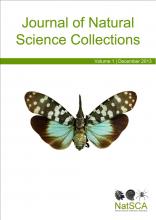
The First Volume of

The First Volume of the Journal of Natural Science Collections. Just beautiful.

In 2013 it came. My baby; the new NatSCA Journal. Surprisingly the name of the Journal did take several emails back and forth before it was finalised: The Journal of Natural Science Collections. The new Journal is a big step up from NatSCA News. All articles are peer reviewed by two reviewers. Comments and recommendation are given to authors to improve and clarify points. Articles are written clearly for any curator to understand, even if it is not their area of specialism. Some articles have been rejected. The Journal is something which is accessible, and more importantly, useful, to those working with natural science collections.

Eight years as Editor. I am proud of the new Journal. Proud of how it looks, and proud of the high quality articles it contains. It is not easy work being an Editor: finding peer reviewers, chasing authors, formatting, sending off proofs and endless other little bits. Without the ongoing support of the fantastic NatSCA committee, and amazing volunteers, the Journal would not be what it is today.

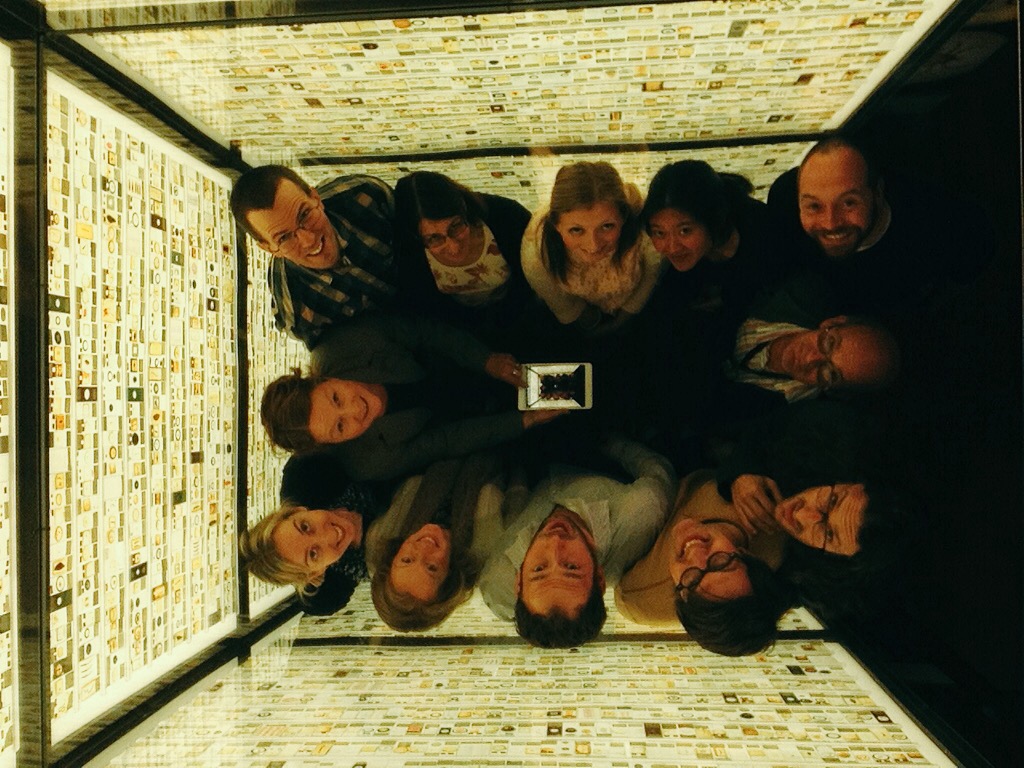
More than half of the wonderful NatSCA committee.

More than half of the wonderful NatSCA committee in the Micrarium at the Grant Museum of Zoology. (Photo by Donna Young)

Behind the scenes the committee are working hard throughout the year, organising training, conferences, and grant applications to support the work you and I do every day, so we can do it better. They work hard at making sure they update us with the latest issues that may affect us and our collections. Perhaps more importantly, they make sure we all stay connected. Without our wonderful network of friends and colleagues, I know I would be very lonely.

I am still on the NatSCA committee, dipping my hand into other projects. I am now looking after the NatSCA blog, which is my new baby to help develop and grow. The blog is a great place for us to share projects we are working on, hidden collectors, quirky stories, or interesting training. The most wonderful thing about the blog is that it not only shares with our peers, but also the general public too. The blog is one way to reach new audiences, potentially worldwide.

I joked in the last committee meeting that there would be tears when writing this post. There may well be tears behind this writing. I have immensely enjoyed being Editor, and truly honoured to have stood for eight great years. I have been lucky enough to have met countless other curators through the role, and discover the exciting things they have been working on. There were difficult times, and late nights, formatting, proof reading, editing. But it has been a true pleasure to have served as your Editor.

This is Jan Freedman, NatSCA Editor from 2008 to 2016. Signing off. (For now).

Jan Freedman

Curator of Natural History,

Plymouth City Museum and Art Gallery