People and Plants Workshop Three: Sharing Knowledge in the Amazon

March 10th, 2023, Royal Botanic Gardens, Kew

Written by Fiona Roberts (Collaborative ESRC PhD student, Cardiff University & Amgueddfa Cymru-National Museum Wales) and Violet Nicholls (Assistant Curator in Herbarium, Portsmouth Museums).

This post is dedicated to Dr Dagoberto Lima Azevedo (1979-2023), Tukano researcher, translator, scholar, author and a voice for the Indigenous peoples of the Rio Negro in the northwestern Amazon.

The third and final workshop of a one-year project ran in March 2023, at Royal Botanic Gardens, Kew. The project, “People and Plants: reactivating ethnobotanical collections as material archives of indigenous ecological knowledge”, began in January 2022, and was supported by NatSCA (Natural Sciences Collections Association). Funded by the Arts and Humanities Research Council (AHRC), it was led by National Museums Scotland, the Powell-Cotton Museum and Royal Botanic Gardens, Kew. 

The workshop ran in partnership with Museu Goeldi, Brazil and the Department of Cultures and Languages, Birkbeck, University of London. It addressed the question, ‘how ethnobotanical collections in museums can best be used to support Indigenous communities?’. Dr Dagoberto Lima Azevedo, from the Federação das Organizações Indígenas do Rio Negro, and Claudia Leonor López Garcés (Museu Paraense Emílio Goeldi) travelled from the Brazilian Amazon for the event. They met with fellow panellists Professor Mark Nesbitt (Royal Botanic Gardens, Kew), Professor Luciana Martins (Birkbeck, University of London), Cinthya Lana (University of Gothenburg) and Dr William Milliken (Royal Botanic Gardens, Kew).
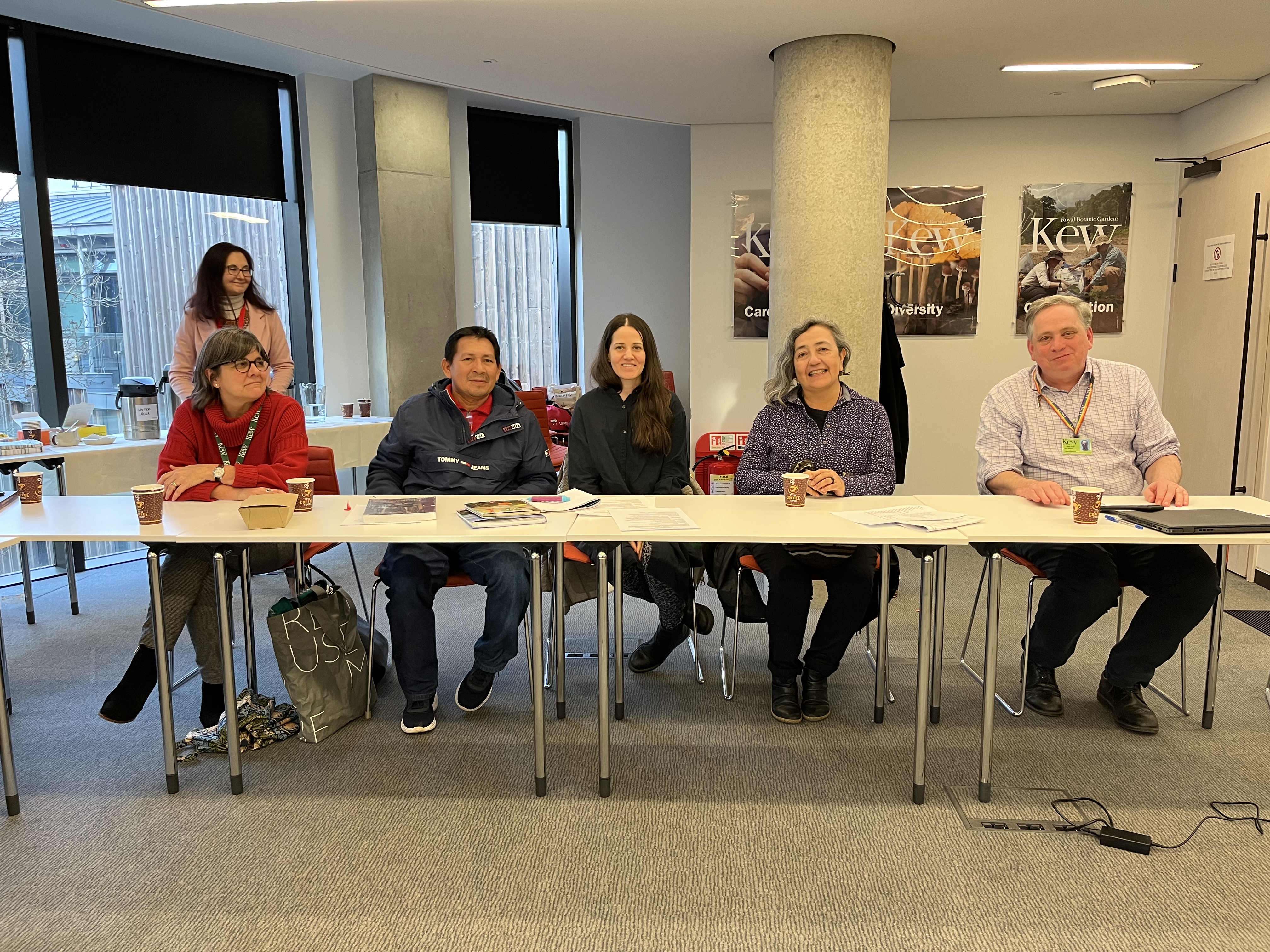
Fig. 1. Some members of the panel at the workshop with, from left to right, Cynthia Sothers, Luciana Martins, Dagoberto Lima Azevedo, Cinthya Lana, Claudia Leonor López Garcés and Mark Nesbitt. Photo by Gayathri Anand.

The Richard Spruce collection (1849-1864) was used as a case study. Spruce collected plants and recorded their uses in South America, and is considered to be an early ethnographer, as he also recorded the traditions and customs of the different communities that he met on his travels.1 He collected over 14,000 herbarium specimens in the Andes and Amazon regions, and 350 items are in his ethnobotanical collections.2

Continue reading
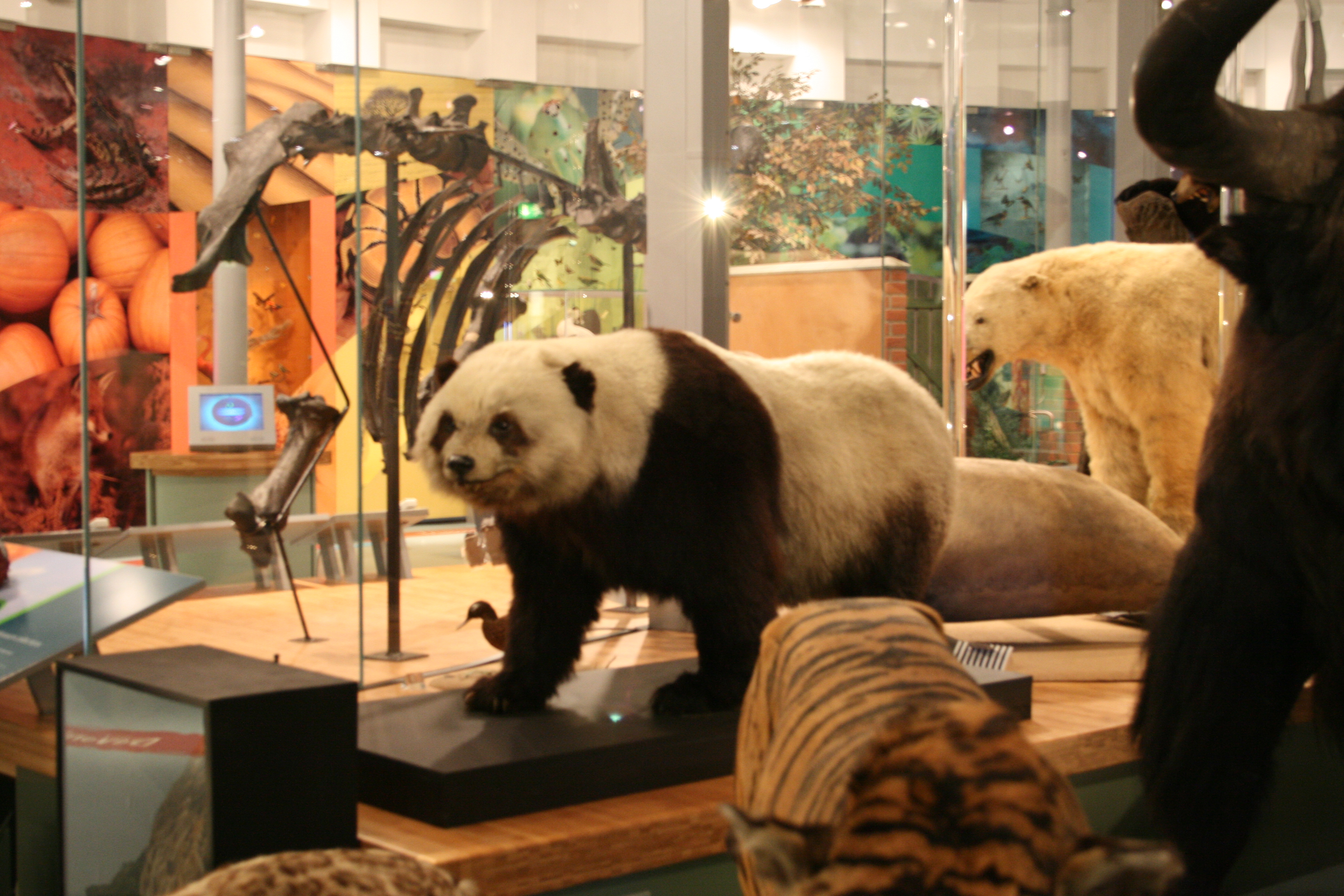
How a Giant Panda – possibly called Grandma – ended up at Leeds City Museum.

Written by Clare Brown, NatSCA Membership Secretary & Curator of Natural Science, Leeds Museums and Galleries, Leeds Discovery Centre.

On display in the basement gallery of Leeds City Museum is a stuffed Giant Panda. We’ve always known and referred to her as “Grandma”, the panda that died only a few days after arriving in London in 1938.

Photograph of a taxidermy giant panda at Leeds Museum.
‘Grandma’ the Giant Panda ©Leeds Museums and Galleries.

Grandma, named as she was the oldest of the group, and her compatriots Happy, Grumpy, Dopey and Baby (Snow White was released in March that year) were the first live Giant Pandas to arrive in the UK. They had taken a long and complicated journey out of central China. Trapped in the forests above Weizhou, Sichuan, the pandas were initially kept at Chengdu under the care of Elizabeth and Floyd Tangier Smith.

Over several weeks, paperwork was prepared and plans were put in place for moving six pandas across the country during a Japanese invasion. It was then Elizabeth who, leaving a poorly Floyd to catch a plane, navigated her way to the Hong Kong Society for Prevention of Cruelty to Animals’ Dogs Home, a journey of some 1400km. One panda died en route.

Continue reading

Designated Status for Ipswich Museums’ Post-Cretaceous Geology Collection.

Written by Dr Simon Jackson, Collections and Learning Curator (Natural Sciences), Colchester + Ipswich Museums.

Ipswich Museums’ Post-Cretaceous Geology Collection, which includes our outstanding ice age collection, has been awarded Designated status by Arts Council England. The team here are delighted!

“OK, what exactly is Designation?” some of you may be thinking… Well, the scheme is administered by Arts Council England and identifies the pre-eminent collections of national importance held in England’s non-national museums, libraries and archives, based on their quality and significance. So, this award is a mark of distinction which is useful, for instance, in securing funding. If this has piqued your interest, and, for instance, you may be thinking “perhaps my collection is eligible for the scheme?” you can read more about Designation here: Designation Scheme | Arts Council England or my 2020 paper about the Tullie House bid I led on then, here https://www.natsca.org/article/2578 .

So, what’s been Designated at Ipswich? The Ipswich Post-Cretaceous Geology Collection includes c.30,000 specimens. The greatest strength of the collection includes Suffolk Plio-Pleistocene fossils, the remains of animals which lived during the Pleistocene ice age, and the warmer Pliocene before it. Suffolk has an outstanding Plio-Pleistocene record, with the only exposures of the Coralline Crag (Middle Pliocene) and extensive exposures of the Red Crag (the only exposed British deposit to document the transition into the ice age). The county’s deposits also document the dramatically changing environments of the ice age between warmer, wetter episodes (interglacials) and colder, drier episodes (glacials).  With pre-eminent collections covering this period, the collection now attracts international research, which, for instance, includes searching for the oldest mammoth DNA from Europe in c. 200,000 year old teeth from Suffolk – research led by the Centre for Palaeogenetics, at the Stockholm University and the Swedish Museum of Natural History, and the NHM). You can read more about the project here: https://cimuseums.org.uk/mammothdna/

Continue reading

Aliens Escape the Herbarium

Written by Annette Townsend (Interdisciplinary Natural History Artist) & Sally Whyman (Curator: Botany Curator, Amgueddfa Cymru – National Museum Wales).

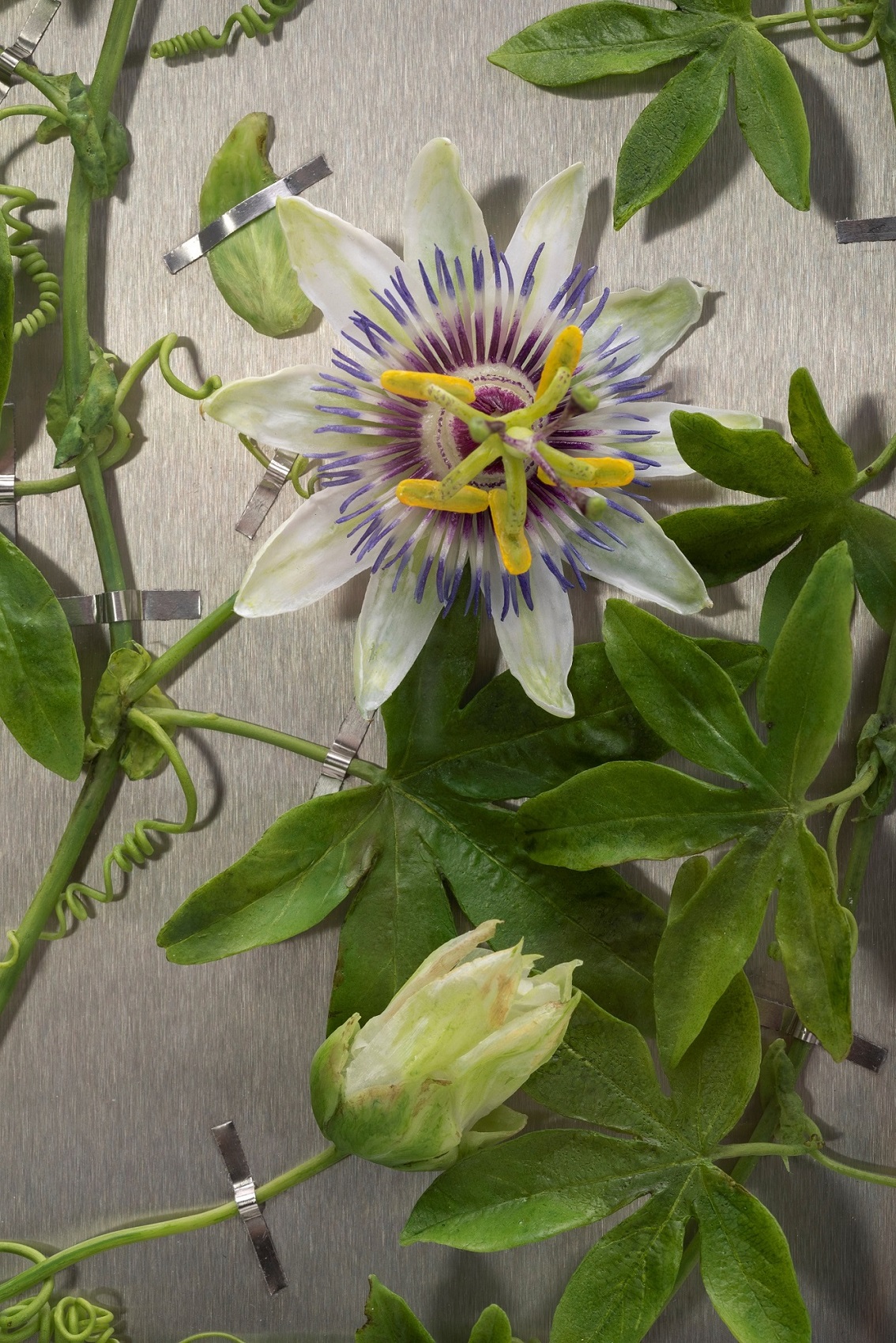
Aliens 1956. Close-up. Annette Marie Townsend. Image Dewi Tannatt Lloyd

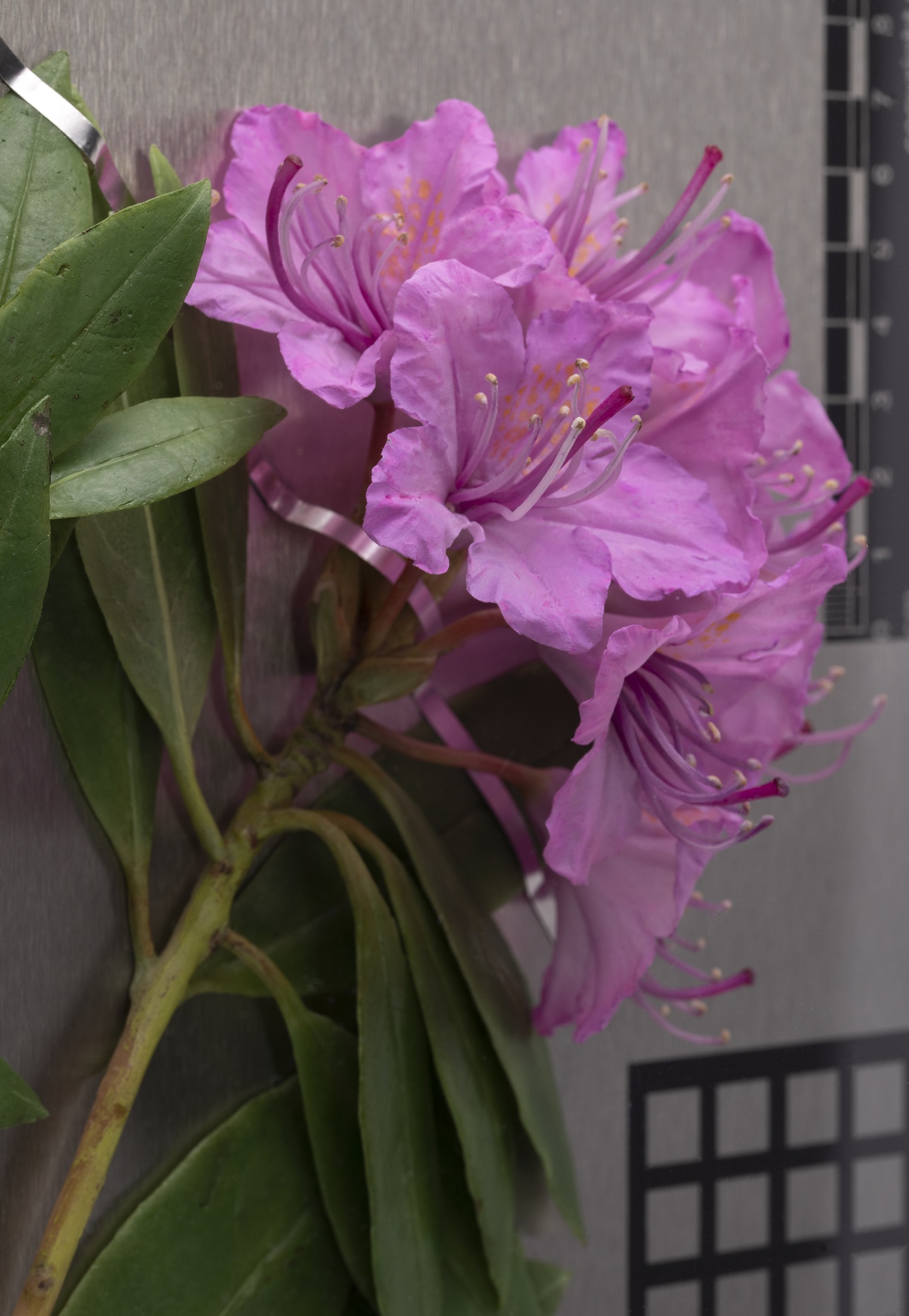
Plants growing on the wall of a London art gallery!! On closer inspection you discover they are alien plants, introduced to the UK. Looking even closer you realise they are delicate sculptures, handmade from beeswax, paraffin wax, tinned copper wire, tissue paper, cotton thread, artists’ pigments, acrylic paint and acrylic varnish.

Aliens 1992. Close-up. Annette Marie Townsend. Image Dewi Tannatt Lloyd

Mounted on stainless steel plates with stainless steel strips, and epoxy printed collector labels, in a juxtaposition of historic and modern materials and techniques, each sculpture mimics a real herbarium sheet, found in the Welsh National Herbarium, Amgueddfa Cymru.   

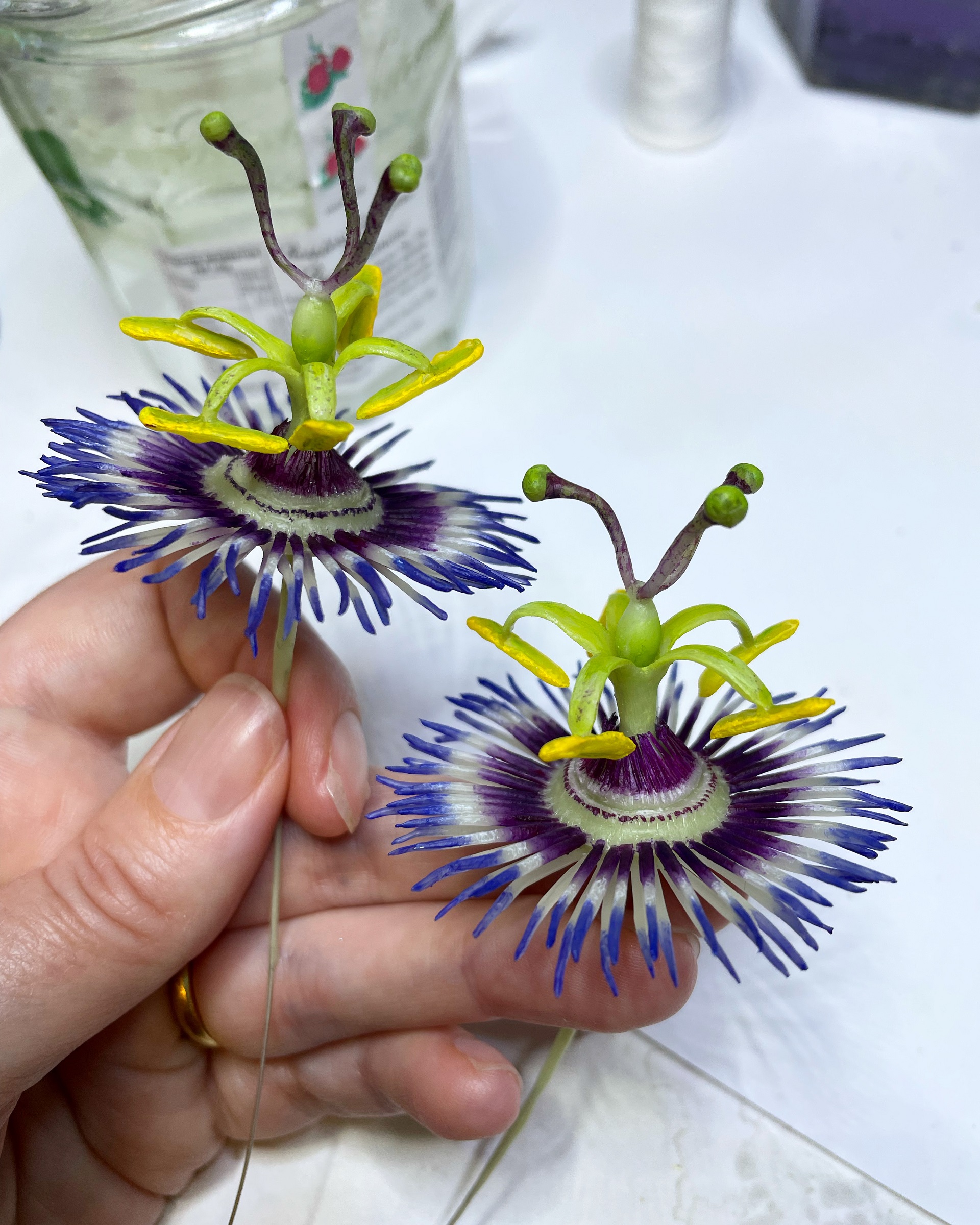
Wax passion flowers in progress. Image A.M. Townsend

The brainchild of Annette Marie Townsend and Sally Whyman who wanted to combine the skill, vision and dexterity of the artist with the depth of collection knowledge of the curator, allowing the plants to come to life and escape the confining folders and cabinets of the herbarium. This Aliens series allows the plants tell their stories of biodiversity change and invasive species to new audiences, further afield than museum visitors and botanical researchers.    

Continue reading

Flora Explorer: Opening the Cabinets at Portsmouth Museums.

Written by Violet Nicholls, Assistant Curator (Herbarium), Portsmouth Museums.

Plants, lichens and fungi have captured the interests of collectors, scientists and artists for centuries, and I have discovered something about them for myself. As time passes from them being found in the field, they don’t get any less complicated, any less fascinating or any less beautiful. I am about 6 months into a two-year project working on the Guermonprez Herbarium called “Flora Explorer”, which is funded by the Headley Trust.

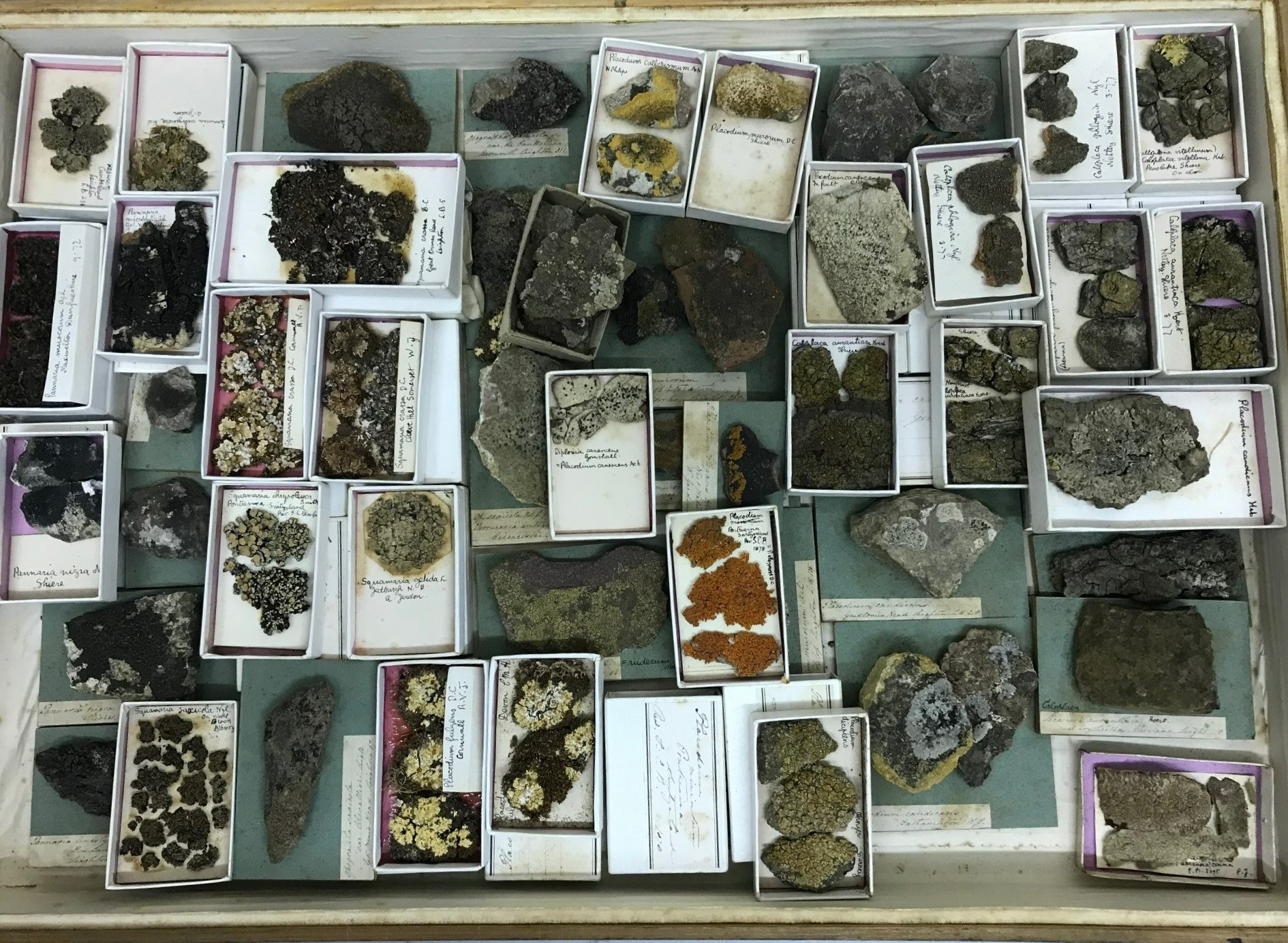
Image of lichen specimens in open trays
Fig. 1. Drawer of colourful specimens from the lichen cabinet.

The Herbarium

I have been cataloguing and studying the plant, fungi and lichen collections at Portsmouth Museums, and am learning a huge amount about past collecting practices, as well as taxonomy and the collectors themselves. There were so many! Sixty-two different names have cropped up whilst cataloguing the herbarium, with nearly 1000 plant specimens recorded on the database so far. There are around 10,000 plants in the Guermonprez Herbarium in total. How many more names will appear?

Henry Leopold Foster Guermonprez (1858-1924) was a taxidermist, ornithologist and “a botanist who should have been better known”.1 The herbarium is made up of plants collected by Guermonprez and members of his family, plants that were sent to him, and others that were purchased. The large collection was transferred from Bognor Regis Museum to Portsmouth Museum in the 1970’s. Many specimens were collected from West Sussex, where I have lived for most of my life.

“Flora Explorer” builds on work carried out during the “Wild about Portsmouth” project, funded by the National Lottery Heritage Fund. The herbarium is organised into taxonomic order, stored in sealed herbarium cabinets, and the specimens are being catalogued using the relational database used by over 650 museums in the UK, Modes Complete. Digitising the collection has many benefits as it increases access for researchers, and for people who may need the data but can only obtain it remotely. Through the process I have also been updating the taxonomy where necessary, which adds further value to the collection.

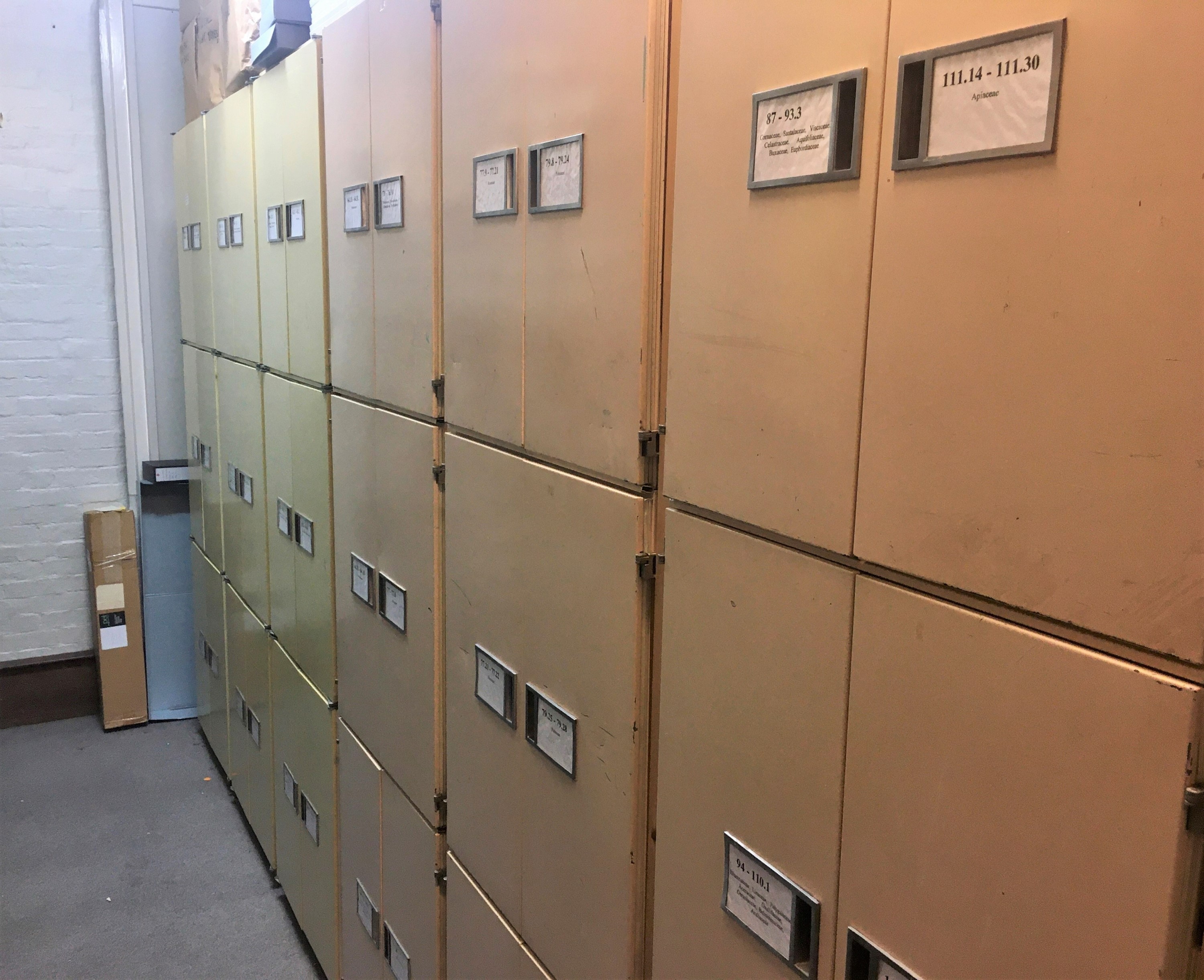
Image of herbarium cabinets at Portsmouth City Museum
Fig. 2. Herbarium cabinets at Portsmouth City Museum, containing plant specimens arranged into taxonomic order.
Continue reading