To Dress a Wolf

I like a nice little link to a place I am visiting. And there is a wonderful (if not a little tenuous) link between where I work in Plymouth and Cambridge. Charles Darwin studied theology at University of Cambridge in the old oak clad lecture theatres. And it was through the connections he made at Cambridge that set him on board the HMS Beagle, on a journey that would change the world of scientific thinking forever. The HMS Beagle, with Darwin and all the crew, set sail from in Plymouth after a three month delay. It’s a neat little link.

With such a strong historic links to science, there was perhaps no better place suited to hold the NatSCA  conference 2017. Even the theme title linked in, with a little nod to Darwin (those clever committee members): Evolving ideas: provocative new ways of working with collections.

Continue reading

Not Just Old Birds in Cases

This article is reposted from the Stories from the Museum Floor blog by the Visitor Team at Manchester Museum

Not Just old Birds in Cases – The Value of Natural History Collections

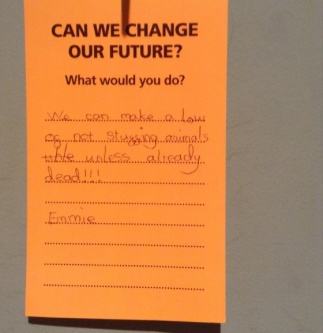
The most recent exhibition ‘Extinction or Survival?’ at Manchester Museum has brought many interesting ideas and suggestions from a wide group of visitors about how we can change our future. Several comments have mentioned animals kept in museums and collections, for example, “Stop killing animals to put in a museum” or “help all the animals by collecting DNA … and … not get stuffed like … in museums”. These comments have inspired me to write about the importance of natural history collections, especially the value of bird collections.

deana 2Comment card left at the ‘Extinction or Survival?’ exhibition at Manchester Museum, 2017.

Whether collecting birds for science is still necessary remains a hotly debated topic. However, the value of scientific collections cannot be questioned. Research or reference collections are still making crucial contributions in documenting biodiversity in time and space, and understanding species’ ecology and evolution, vital for conservation strategies. Furthermore, collections and museum have an important role in preserving and caring for past and present natural heritage and providing educational opportunities. Continue reading

Meet the NatSCA Committee – Paul A. Brown

What is your role on the NatSCA Committee?

I am the Archivist, responsible for collecting together the archives from our previous incarnations; The Biology Curators’ Group and The Natural Sciences Conservation Group and more recent NatSCA documents. Most of this sits by my desk. Do any of you membership have anything that could be added?

Job title and institution

Senior Curator, Hemiptera (Sternorrhyncha), Thysanoptera, Phthiraptera, Psocoptera, Collembola, Thysanura, Archaeognatha, Diplura & Protura, Insect Small Orders section, Life Sciences Department, Natural History Museum, London.

Twitter username

I am too old to learn how to have one!

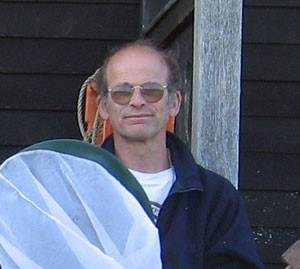
On field work at Scolt Head, Norfolk

On field work at Scolt Head, Norfolk

Tell us about your day job

I am presently responsible for part of the ‘small’ orders listed above. This entails re-curating and data-basing the mostly microscope slide collections and dealing with scientific visitors, loans of material and answering enquiries. I still do some research into the taxonomy of Aphids in particular (see research-gate). Almost 40 years in Museums so according to some, I might know something? If you have problems with microscope slides then who ya gonna call, ‘slide busters?’! Continue reading

NatSCA Digital Digest

Three-toed sloth (C) Horniman Museum and Gardens

Three-toed sloth (C) Horniman Museum and Gardens

The October NatSCA Digital Digest is here already, where does the time go?

What’s New to Read?

Dana Andrew recently went to Jamaica to track down the original location of some museum specimens, and has reported back to ICOM. She was funded by a WIRP international travel grant, and you can read about her blustery adventures, so far, here.

Eighty full years of mourning have now taken place for the Thylacine, since it was deliberately driven to extinction in 1936. Thylacine expert, Jack Ashby, makes sure it’s not forgotten and talks about how it feels to be in the area where it happened in a tribute blog here.
What’s New to See?

On the 19th October the Grant Museum of Zoology will bring you some sex, some creativity, and some trickery. A new exhibition looks at the colourful world of reproduction in nature.

Two days later, the Wildlife Photographer of the Year exhibition opens at the Natural History Museum on the 21st October. Always a crowd pleaser, I’ve had some sneak peeks which prove this year will be no different.

And just one day after that, the Horniman Museum will also be ready to entertain with a new exhibition. This one, called Memorial: A Tribute to Taxidermy, exhibits historic Horniman Museum taxidermy specimens alongside Jazmine’s modern day interpretations. Elegant and beautiful, this exhibition is a must-see, and comes complete with a fascinating timelapse film of how she did it.
What to do with your Sawfish

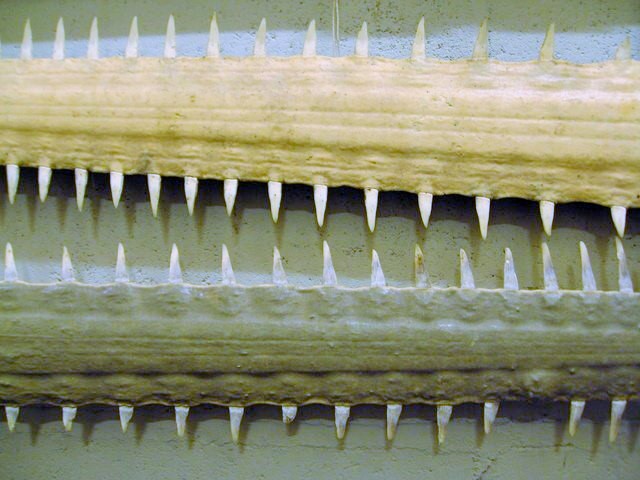
If you have any sawfish rostrums in your collection, particularly if they have locality data, there is something important you really need to do! The Sawfish Conservation Society, the Shark Trust, and The Deep (aquarium) have begun a joint venture to research museum specimens and data with the aim to protect wild populations. If you can help, please get in touch with any of the aforementioned lovely people, and to thank you for your efforts, your institution will be acknowledged in any scientific papers that get published. Double win.
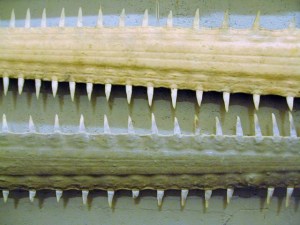
Sawfish rostra (Wikimedia Commons)

Sawfish rostra (Wikimedia Commons)

NatSCA Digital Digest

natsca

Jobs and Traineeships

If, like many, your world will never be the same again once Dippy the Diplodocus retires from his position adorning the entrance hall to the Natural History Museum in South Kensington, you can at least help secure him a happy future by going for the job of Corporate Partnerships Manager- Dippy the Dinosaur on Tour at the NHM. The deadline is the 25th January so there’s still time to affect the life of this semi-retired much loved icon.

If digital engagement is more your thing then the University of Cambridge Museums (UCM) are currently looking for a Digital Engagement Specialist. The deadline for this post is also the 25th January, with interviews on the 8th February.

Events and Exhibitions

The London Transport Museum is holding an interesting half day symposium on 7th March 2016 called Contemporary Collecting. The symposium is free and includes an evening reception at the Museum. There are six areas of focus listed on the website, ranging from risks of collecting to acquisitions that ‘are inherently, and/or overtly, political’. Sounds exciting!

Around the Web

The project of digitising the Charles Lyell Fossil Collections is well underway at the Oxford University Museum of Natural History. The blog (link above) is a fun and interesting read but more importantly, if you have any Charles Lyell specimens in your collection, Sarah Joomun and Eliza Howlett at the OUMNH would love to hear from you.