Creating a New Diorama at the Booth Museum of Natural History

Editors note: This is the second of two concurrent blogs about the new diorama at the Booth Museum. Click here to read the first and find out more about how the diorama was created.

Written by Su Hepburn, Head of Learning & Engagement, Brighton & Hove Museums.
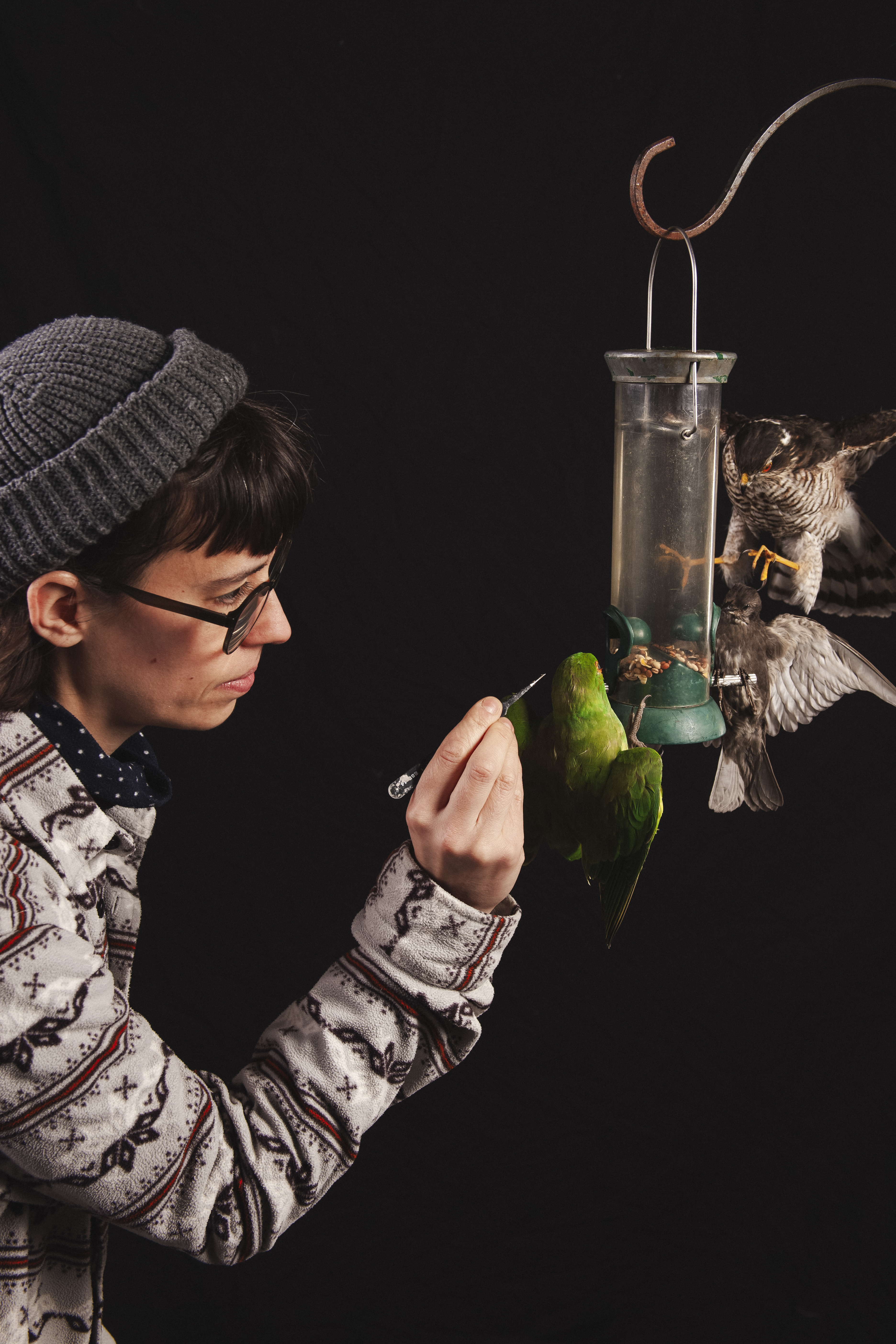
Jazmine Miles-Long, Taxidermist © Laurence Dean Photography

Why a new diorama?

In the autumn of 2022, we started our ‘Discover our Dioramas’ project at the Booth Museum of Natural History, part of Brighton & Hove Museums. Funded by an Esmée Fairbairn Collections Fund of £50,000 we set about building the first natural history diorama at the museum in 92 years. This was a significant project for a museum whose Victorian creator Edward Booth had lined every wall with dioramas of birds. Dioramas are an ideal way of storytelling. They are visual and can get a lot of key information to audiences without the need for words.

Alongside this we were also given £3000 from Rampion Windfarms to research and display more information about people especially women involved in the museum’s history. 

These projects gave us the time and space to be playful and to make friends. To impact on our audiences, our staff, our collections, and our future practices. It has brought joy to the museum, visitor and staff alike. 

Continue reading
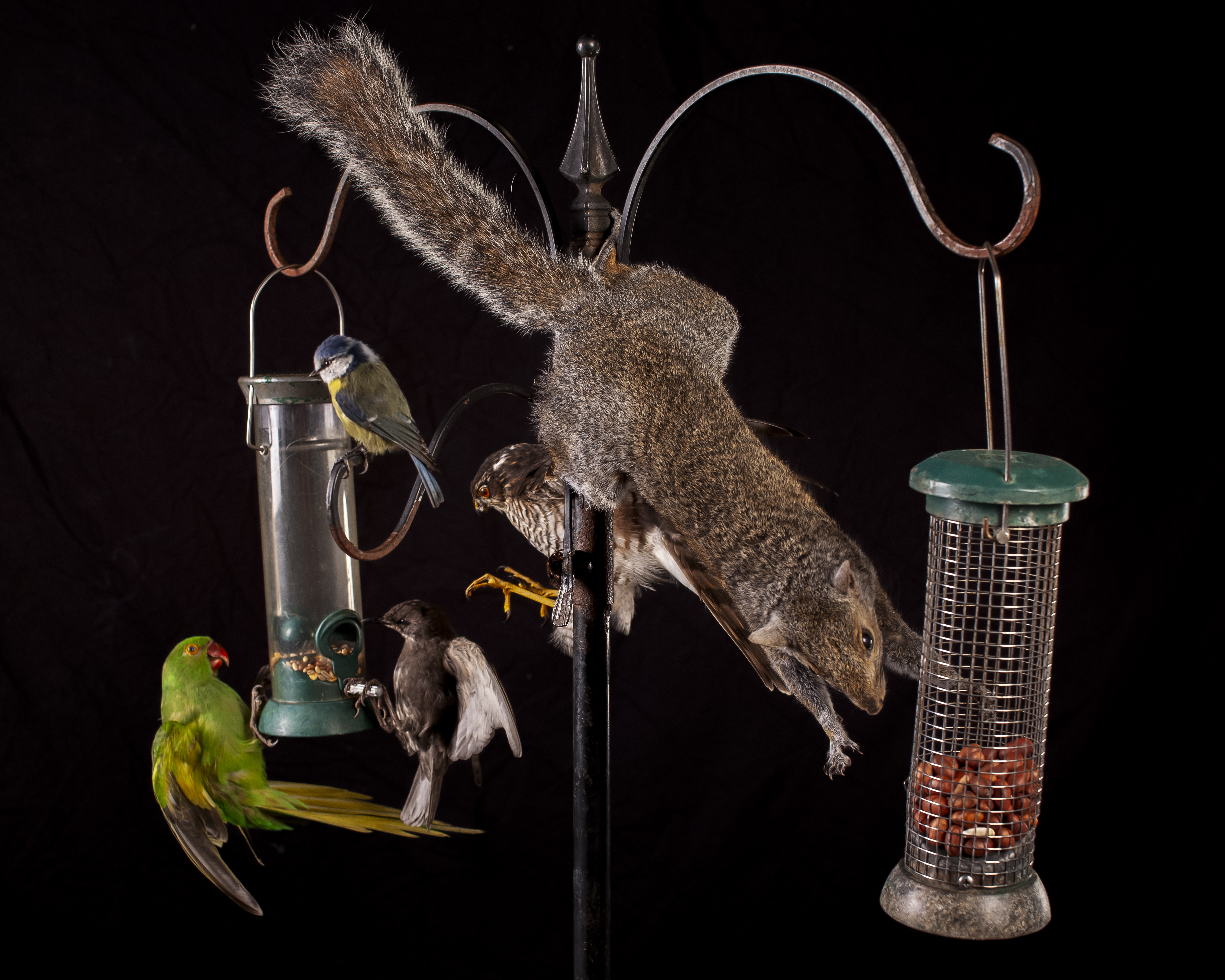
Creating a New Diorama for The Booth Museum of Natural History – Taxidermy, Silk flowers and Wax Slugs.

Editors note: This is the first of two concurrent blogs about the new diorama at the Booth Museum, you can read the second one here.

Written by Jazmine Miles Long, Taxidermist. https://www.jazminemileslong.com, Twitter: @TaxidermyLondon; Instagram: @Jazmine_miles_long

The Booth Museum of Natural History was founded in 1874 by naturalist and collector, Edward Thomas Booth. Mr Booth collected a huge variety of British birds and was a pioneer of the taxidermy ‘diorama’, displaying birds in their natural habitat. His collection of over 300 detailed cases were donated to the city of Brighton in 1891 with the proviso the dioramas would not be changed. In 1971 the Booth became a Museum of Natural History. Today alongside the dioramas the museum has a huge collection of 525,000 insects, 50,000 minerals and rocks, 30,000 plants and 5,000 microscopic slides.

Life in the Garden. Image credit: Laurence Dean.
Continue reading

Putting Natural History Museums to Work for Human Rights

Written by Henry McGhie, Curating Tomorrow, henrymcghie@curatingtomorrow.co.uk.

Every year, 10th December is commemorated as International Human Rights Day, the date when the Universal Declaration of Human Rights was adopted by the members of the United Nations. This year is particularly momentous, as it is the 75th anniversary of the Declaration’s adoption. What has this got to do with museums? The original Declaration includes a number of commitments (set out in 30 Articles) that are obviously related to the work of museums: the right to education, the right to information and freedom of expression, the right to take part in public affairs, among others. Museums often focus on one (article 27) that gets summarized as being ‘the right to participate in cultural life’, but that isn’t it’s full or proper title or scope: more correctly, it is that “Everyone has the right freely to participate in the cultural life of the community, to enjoy the arts and to share in scientific advancement and its benefits.” Note especially the part about sharing in scientific advancement and its benefits: we will come back to this.

Now, the Universal Declaration is not perfect, it is 75 years old after all, and it reflected a world rather different than our world today. Hundreds of millions of people were still under colonial rule. The environment didn’t feature in the Declaration, as human impacts on the environment were not as massive, and not as obvious. Nevertheless, the Declaration has been supplemented by many additional agreements, many of which have a legal standing. However, the necessity of a decent quality environment has been recognized for decades. Indeed, it has been argued that most or possibly all of the 30 rights in the original Universal Declaration rely on a decent quality environment. Sustainable development really got going in the early 1970s, with the Stockholm Conference on the Human Environment, that recognized that people have a right to a decent quality environment. Fast forward 50 years, to 2022, and that right was finally formally recognized by the United Nations. More recently, the inherent rights of nature have been the subject of court cases and in some cases natural features have been granted rights, which helps protect them and to take polluters to court for environmental damage. 

Continue reading

How Do You Do Decolonial Research in Natural History Museums?

Written by Jack Ashby, Assistant Director of the University Museum of Zoology, Cambridge.

Subhadra Das and Miranda Lowe’s paper, Nature Read in Black and White: Decolonial Approaches to Natural History Collections (2018) acted as a wake-up call to our sector, effectively founding a discipline in natural history museums. In the five years since, a lot of work has begun to address the colonial legacies underpinning collections of animals, plants, fungi and rocks.[i] The principal aims of this work include telling more honest stories about the different kinds of injustice involved in the acquisition of collections; and addressing the fact that our museums have long been prioritising narratives elevating white individuals over everyone else. In doing so, it is hoped that a greater diversity of people will feel represented by our museums, thereby enhancing the relevance of the collections.

Natural history collections dwarf those of any other museum discipline, and unlike sectors which have been thinking about this for decades, the practices underpinning their creation have not traditionally prioritised recording associated cultural or social histories. Like others who felt inspired by Subhadra and Miranda’s call to action, faced with contemplating how to begin to unpick the stories hidden behind literally millions of ‘scientific’ specimens, it was fundamental to consider the question, where do you start with decolonial research in natural history museums? Obviously, there is no one answer, but I thought it could be helpful to list a few possible approaches. One underlying element is to recognise how colonialism and its framings have shaped the way that events took place – from major historical moments to minute individual acts – and how the stories about these events have been told.

Below is a list of possible starting points for research, with examples of what that could look like in practice (in reality most of these overlap). For me, each has something to say about the entwined human and environmental costs of the colonial project – questions that natural history museums are uniquely placed to address.

Continue reading

Deaccessioning of the Non-Manx Herbarium in the Natural History Collection, Manx Museum.

Written by Laura McCoy, Curator of Natural History, Manx National Heritage.

The Manx Museum, part of Manx National Heritage, is both the national museum and part of the National Trust of the Isle of Man, which is technically not a part of the UK, it is a Crown Dependency. Its collecting focus is to represent the Island and its history, similar to county museums in the UK. No other museum represents our Island better and that is our strength. When accessing our material, researchers are looking for something relating to the Island itself or how it sits in context to a wider geographical area. We are an Accredited museum and, like many others, we have a collections development forum, made up of curatorial and collections management staff, through which any new proposed acquisitions have to be assessed – but this has not always the case. We still have objects within the collection which would not pass our collections development policy today. 

Continue reading