Discovering Treasures in the Depths of the Dagnall.

Written by Ruth Cowlishaw of Liverpool School of Tropical Medicine.

This year marks Liverpool School of Tropical Medicine’s 125th anniversary. The school was the first institute of its kind back in 1898, built to help investigate some of the tropical diseases brought back to the busy port city from shipping expeditions and trade. To celebrate such a major milestone an array of events and activities have been planned by the school, including outreach events and fundraising, whilst also giving us a chance to reflect on our history. One such planned scheme was the distribution of internal funds for exciting projects, proposed by staff members that would make a difference in this very special year.
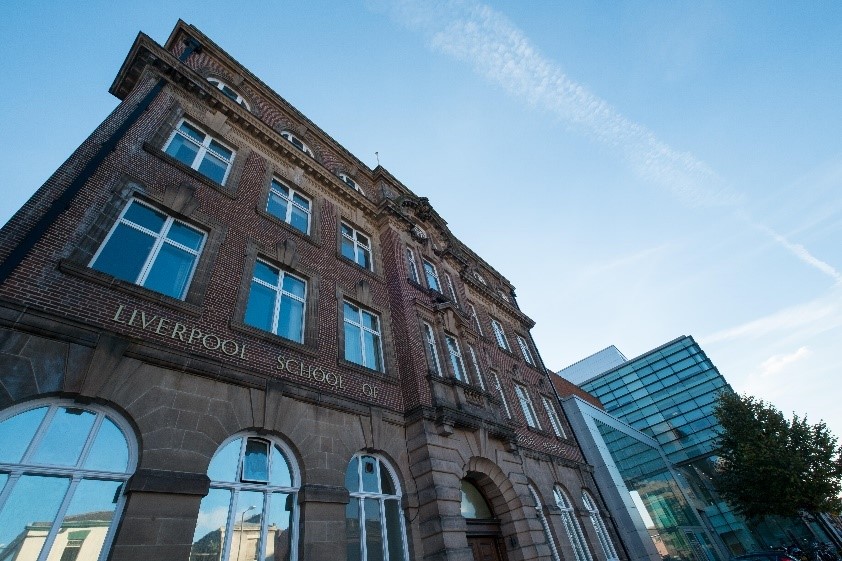
Mary Kingsley Building, LSTM. ©LSTM

The Dagnall Laboratory situated in the Mary Kingsley Building is the main teaching laboratory for the school. Within its walls it houses many historical pathological and entomological samples, from mosquito wings and blood films to seven-meter-long tapeworms. Throughout the years a selection of these samples has been used to help educate thousands of medical professionals, postgraduate students and armed forces personnel. However, a large part of the collection became forgotten and neglected as specimen preservation skills and staff were lost over time. With news of potential funding myself and the team saw an opportunity to rediscover these “lost” specimens and decided to put together a bid with the aim to reinvigorate our collection. The project not only aligned with the 125 Anniversary theme of Heritage and History but also looked forward to the future.

Continue reading

Deaccessioning of the Non-Manx Herbarium in the Natural History Collection, Manx Museum.

Written by Laura McCoy, Curator of Natural History, Manx National Heritage.

The Manx Museum, part of Manx National Heritage, is both the national museum and part of the National Trust of the Isle of Man, which is technically not a part of the UK, it is a Crown Dependency. Its collecting focus is to represent the Island and its history, similar to county museums in the UK. No other museum represents our Island better and that is our strength. When accessing our material, researchers are looking for something relating to the Island itself or how it sits in context to a wider geographical area. We are an Accredited museum and, like many others, we have a collections development forum, made up of curatorial and collections management staff, through which any new proposed acquisitions have to be assessed – but this has not always the case. We still have objects within the collection which would not pass our collections development policy today. 

Continue reading

William Thomas March, a Jamaican Collector, Naturalist and Early Pioneer of Biological Data Recording in Jamaica.

Written by Olivia Beavers, Assistant Curator of Vertebrate Zoology at World Museum, National Museums Liverpool.

Figure 1. William Thomas March’s bird skins stored in the Vertebrate Zoology collection at World Museum, National Museums Liverpool © National Museums Liverpool (World Museum: NML-VZ T1134, NML-VZ T760, NML-VZ T5652, NML-VZ 1989.66.1279, NML-VZ T19525, NML-VZ T12817, NML-VZ T9981, NML-VZ T1128, NML-VZ T14037, NML-VZ T14031/ Olivia Beavers)

August celebrates Jamaican independence, so what better way to celebrate than to talk about a Jamaican collector from the 1800s whose contributions to understanding Jamaican biodiversity are not yet fully recognised. 

I recently finished the project stage of the Associateship of the Museum Association (AMA). My project focused on helping to tell untold stories of the collections held at World Museum. 

Through trial and error, I started to look through World Museum’s database and Google the names of collectors to see if we had collectors who had black or brown heritage – with a focus on collectors with specimens from the Caribbean. I ended up finding William Thomas March. Only two previous papers were written about him, both by Catherine Levy (Managing Director of Windsor Research Centre, former President of the Caribbean Birds, and of BirdLife Jamaica). 

To coincide with the research and my project, I created a new dataset titled ‘Bird skins from Jamaica in the collections of World Museums Liverpool’ – now available on the Global Biodiversity Information Facility (GBIF) website. It includes specimens from William Thomas March.

Continue reading

Preparing Collections for a Big Move

Written by Ellie Clark (Collections Move Team Lead) and Lizzy Devenish (Collections Move Team Lead Digitisation), Natural History Museum, London.

Introduction

The Natural History Museum is in the process of preparing 38 million specimens to be moved, 28 million of which will be rehoused to a new Science and Digitisation Centre at Thames Valley Science Park (TVSP) in Reading – the largest move of natural history specimens globally. Part of NHM Unlocked, this is an ambitious programme to secure the future of our irreplaceable collections, accelerate scientific research and enhance the Museum’s public offer. 

As part of this process, new workflows are being developed to ensure the safety of specimens before, during and after the move. Below, Team Leads Ellie Clark and Lizzy Devenish discuss a couple of ways this is currently being accomplished.

Physical Interventions Survey

It is important to gain a good understanding of the condition and housing needs of specimens before they move to TVSP. To do this, the NHM Unlocked Moves Team are currently undertaking a Physical Interventions Survey across the Palaeontology Collections to better understand these needs. The level of preparation needed varies from specimen to specimen depending on several factors including current storage, specimen condition, size of specimen and collection type. The ultimate aim of the survey is to provide an initial assessment for the time and resources needed for specimen preparation by curatorial and conservation teams to facilitate the safe movement of specimens to the new site.

Continue reading

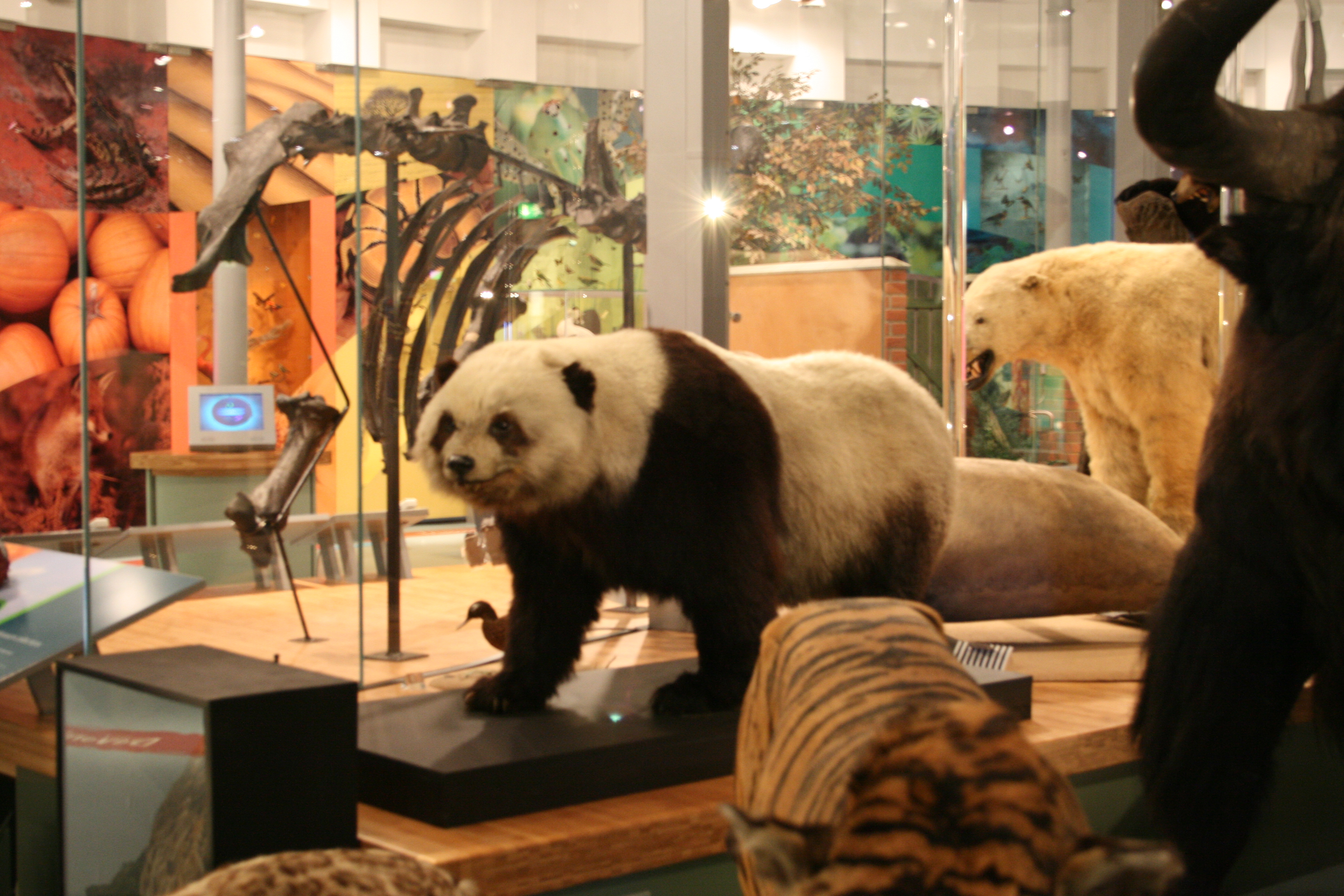
How a Giant Panda – possibly called Grandma – ended up at Leeds City Museum.

Written by Clare Brown, NatSCA Membership Secretary & Curator of Natural Science, Leeds Museums and Galleries, Leeds Discovery Centre.

On display in the basement gallery of Leeds City Museum is a stuffed Giant Panda. We’ve always known and referred to her as “Grandma”, the panda that died only a few days after arriving in London in 1938.

Photograph of a taxidermy giant panda at Leeds Museum.
‘Grandma’ the Giant Panda ©Leeds Museums and Galleries.

Grandma, named as she was the oldest of the group, and her compatriots Happy, Grumpy, Dopey and Baby (Snow White was released in March that year) were the first live Giant Pandas to arrive in the UK. They had taken a long and complicated journey out of central China. Trapped in the forests above Weizhou, Sichuan, the pandas were initially kept at Chengdu under the care of Elizabeth and Floyd Tangier Smith.

Over several weeks, paperwork was prepared and plans were put in place for moving six pandas across the country during a Japanese invasion. It was then Elizabeth who, leaving a poorly Floyd to catch a plane, navigated her way to the Hong Kong Society for Prevention of Cruelty to Animals’ Dogs Home, a journey of some 1400km. One panda died en route.

Continue reading