Top Ten Most Read Blogs of 2016

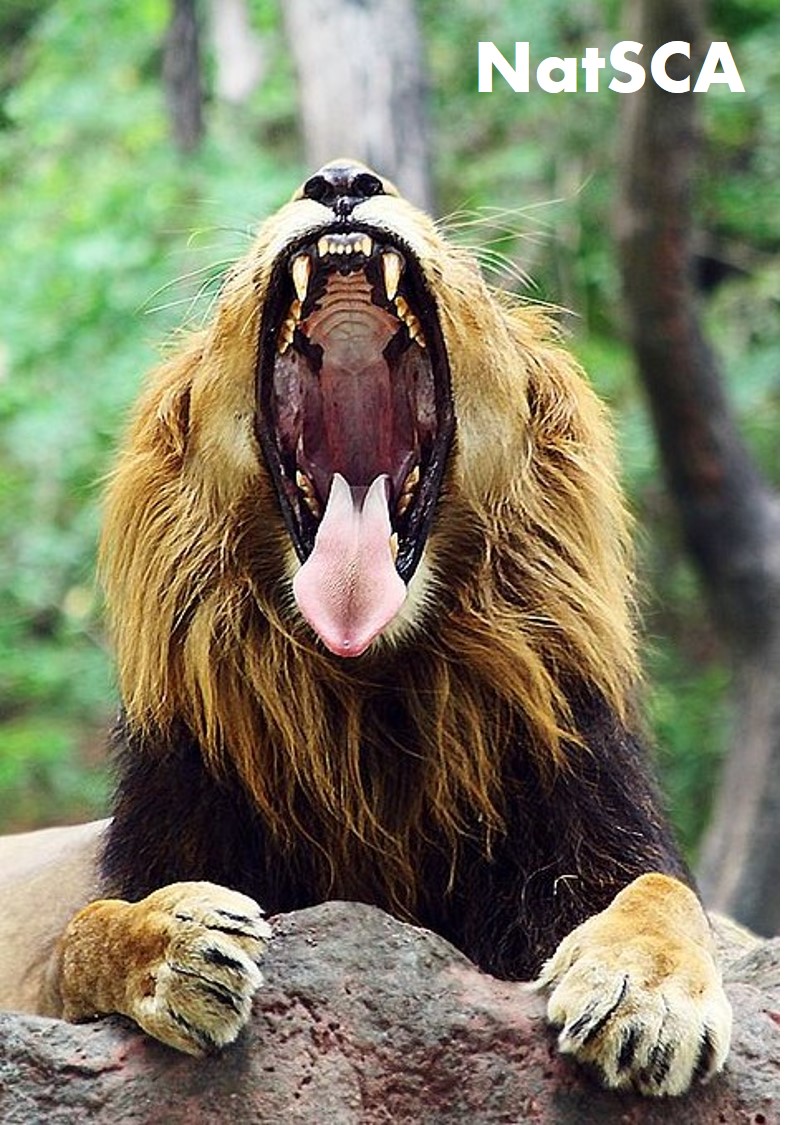
Blogs to shout about (Dakshin, 2013, image in public domain)

Blogs to shout about (Dakshin, 2013, image in public domain)

2016 was a busy year for the NatSCA blog, we published 26 blogs from a super range of authors on an exciting variety of topics. When looking at the analytics of the blog to see what’s popular, it became apparent that people don’t just read what’s current in terms of publication date, they read what’s relevant to them at the time. This means that on top of the 26 blogs published last year, a further 102 blogs dating back to 2012 were also viewed from our archive, in 2016.

Since its inception in August 2012, there have been 182 blogs published on the NatSCA website, and so with such a large number, it’s really interesting to see what grabbed people’s attention, or search engines, the most. Continue reading

Conservation of a Venus Flower Basket

Venus flower basket. (NOAA, 2012, Image in public domain)

Venus flower basket. (NOAA, 2012, Image in public domain)

At The McManus: Dundee’s Art Gallery and Museum, a proposed case re-display was to focus on design. Thus the Art Curator and the Natural Historian got together and produced 13 grubby Venus flower baskets (a type of glass sponge).

As a trained objects conservator I have seen many items come across my desk, however these were a first. Never having seen these deep sea siliceous sponges before, I found them quite fascinating. There are 13 in our collection and at least one of them came from the Challenger Expedition of 1870. The sponges themselves offer a fascinating insight into the first date hotel; a young shrimp couple enter the skeleton of the sponge and mate for life – a jolly good love affair or entrapment? Whichever side you fall on, the actual construction of the sponge is what fascinated the Art Curator. The lattice work formation of the skeleton, which is incredibly strong and functional yet also beautiful, has inspired architects and engineers. Norman Foster’s ‘Gherkin’ building owes a lot to this design of nature. Even David Attenborough listed them in his ‘Attenborough’s Ark’ aired in 2012. Continue reading

How to Store Taxidermy

We all know that discussing issues with other museum professionals within Subject Specialist Networks is an efficient way of disseminating information within the sector, but the following article provides a perspective from a generalist commercial storage company; a voice we don’t usually hear from.

Safestore, the UK’s largest self-storage provider, recently made a video series called ‘Stuff is Great‘ which focused on collectors and their individual passions. Among other client case studies, the series featured Suzette Field and her collection of taxidermy specimens. The following article, How to Store Taxidermy, was written by Safestore themselves and provides useful guidance on how to use these public facilities for storing such material.

This taxidermy collection featured in the Safestore project 'Stuff is Great'. © Safestore

This taxidermy collection featured in the Safestore project ‘Stuff is Great’. © Safestore

As any taxidermy enthusiast will know, a sizable collection can take years to build.  During that time your life and circumstances will change; you may welcome children into your life, move home, change job, all the while accumulating more pieces.  At some point you may be faced with the challenge of storing your taxidermy and with the right know-how it’s not as painful a process as it sounds!

Safestore recently stored a taxidermy collection and found it to be the safest environment for high value taxidermy.  Your attic or garage may seem like a cheaper alternative but both locations are affected by the changing climate throughout the year, putting undue stress on your collection.

Follow these tips for storing your taxidermy safely…

  1. Use wooden crates.

Using a wooden crate for each taxidermy piece means you can affix the mounts to the inside of the crates.  This will keep the taxidermy from touching the inside of the crate and allow air to circulate the piece.  Cardboard isn’t sturdy enough for large taxidermy pieces and doesn’t offer the same protection.

  1. Keep the damp away.

Storage units are typically very dry but the climate can vary from time to time.  Add silica gel packets to each crate as they will absorb any moisture in the air and keep your taxidermy dry.

  1. Keep the pests away.

Moths and small bugs would love nothing more than nibbling away at your taxidermy pieces so using ‘no pest strips’ or moth killer strips will help to keep your crates critter free.

  1. Climate and humidity.

When looking for self storage units for your taxidermy, ensure your unit is somewhat climate controlled.  Units on the outer edge of the building may be more prone to temperature changes so ask for a unit that remains cool and dry throughout the year.

Taxidermy is expensive and some pieces are one of a kind, therefore it is imperative to ensure your items are safe and secure once in storage.  Look for self storage facilities with 24hr CCTV, restricted access, sole key holder policies and intruder alarms.

  1. Check!

It’s super important to check your taxidermy from time to time, especially if you’re storing for a number of months.  Make sure you replace the pest strips and silica packets and check for any signs of damage or stress.  It’s easier to rectify a problem sooner rather than later!

Ultimately taxidermy is for displaying and enjoying, however if you’re in need of an interim home for your collection you’re not short of options.  Keeping your pieces safe and in good condition is easy so long as each item is packed with due care and is stored somewhere out of harm’s reach.

By Tiffiny Franklin, Digital Outreach Executive, Safestore

Cold Case Curation

Museums have many curious objects behind closed doors. Recently, volunteers discovered some ‘cold ones’ at Tullie House Museum and Art Gallery Trust.

Behind Closed Doors

If museums are icebergs, then museum exhibits are just the tip; and the remaining 90% or so of specimens are tucked away safely behind closed doors. Many people, lucky enough to have visited these museum storage areas (‘behind-the-scenes’), will be familiar with almost endless rows of racks and shelves packed with all sorts of different objects, ranging from Chinese vases to taxidermy monitor lizards. But few non-curators would be familiar with the idea of freezers full of dead animals!

We have two large freezers, at our off-site storage facility, packed full of animals; we needed to know exactly how many animals were in there and where they were from, hence this project- Cold Case Curation. The specimens also have excellent provenance; labels with location details including specific grid references and dates. Therefore this Cold Case Curation project was as much a biological survey (albeit indoors) as a detailed museum inventory.

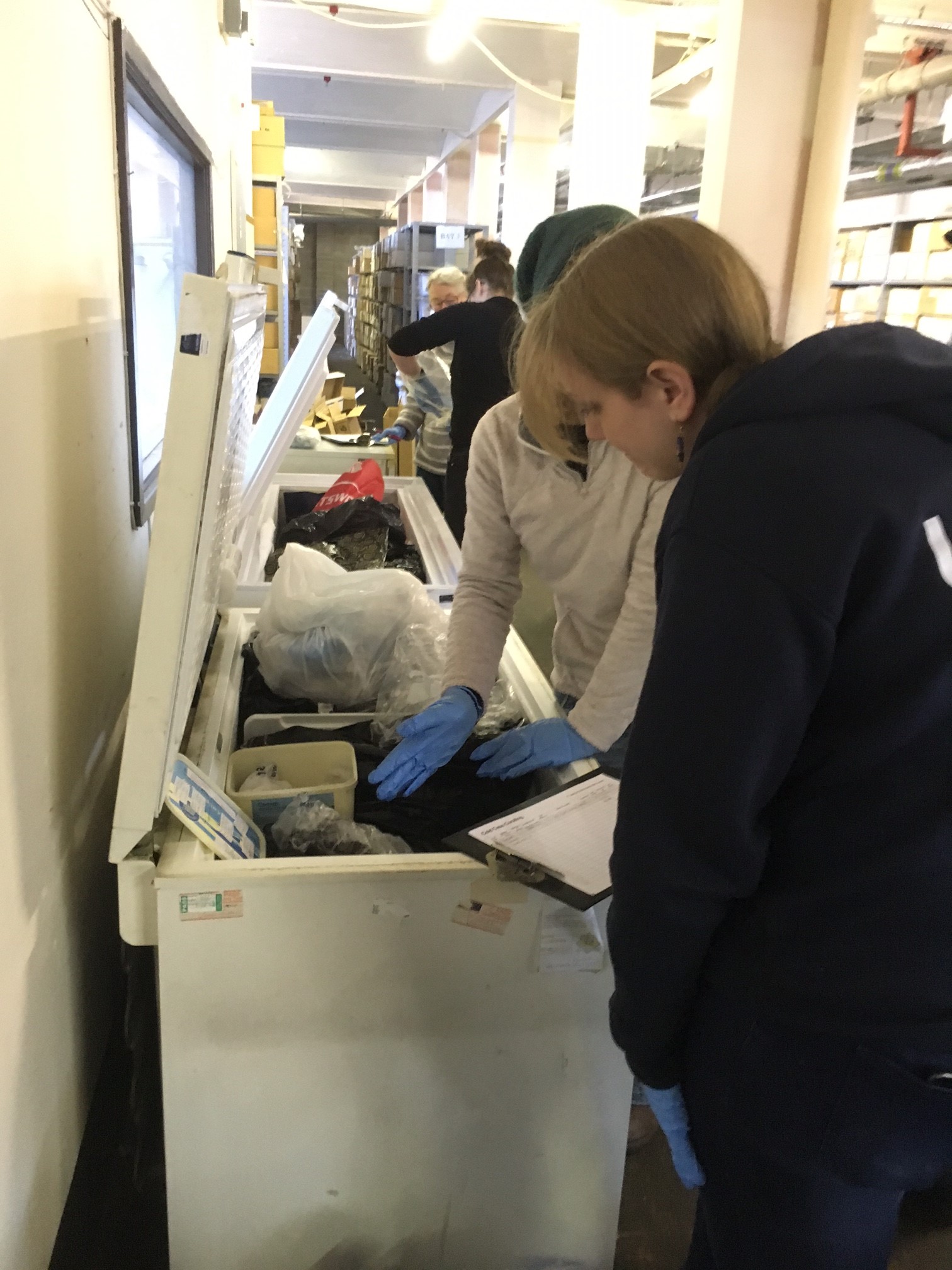
Cold Case Curation in action; the team of five volunteers “surveying” the “fauna” of our freezers

Cold Case Curation in action; the team of five volunteers surveying the ‘Fauna of our Freezers’.

Volunteer-Power

Enter our team of volunteers. They were specially recruited for a day for this Cold Case Curation task; to survey the frozen fauna, matching specimens against existing inventory records. This was a joint initiative with our Cumbria Biodiversity Data Centre (hosted at the Museum), to capture biological records. Most of our volunteers are long-term with the Museum and the Centre, and are current university students.

As our team of five volunteers eagerly crowded around the two huge freezers, they were fascinated with the idea of freezing animals to preserve them before they are stuffed and prepared as taxidermy specimens (but don’t worry, they all died naturally!).

In teams, the volunteers enthusiastically worked their way through documenting the freezer contents. 241 individual specimens later, we had documented 11 species of mammal and 48 species of bird. Interesting discoveries included a bittern, a little grebe chick, 10 waxwings and a white-tailed tropic bird (with stomach contents). Volunteers delighted in handling iconic British species including 54 red squirrels and 24 barn owls.
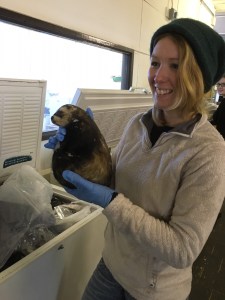
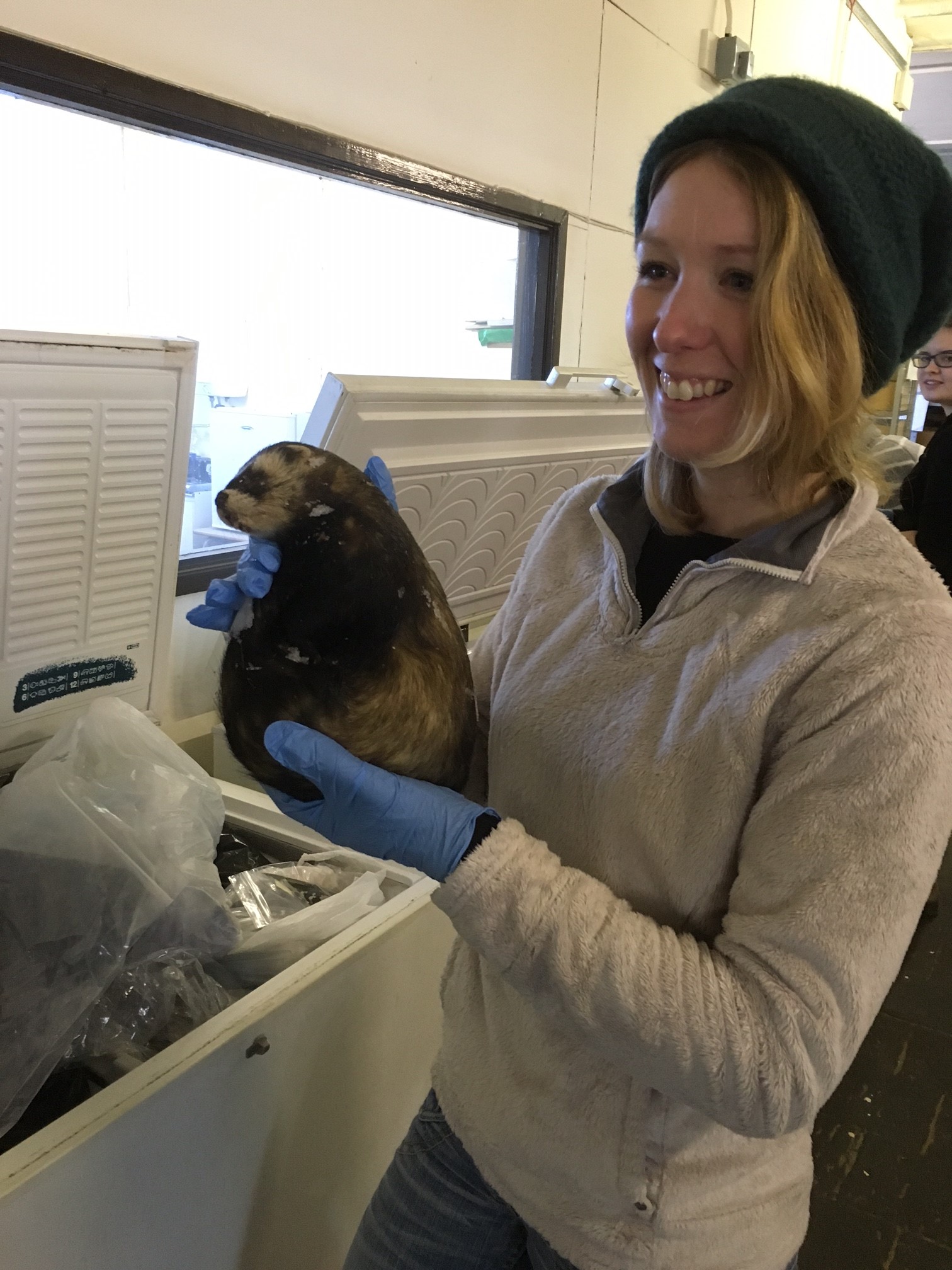
Volunteer, Jessica Mitchell proudly wielding a polecat from the freezer “faunal assemblage"

Volunteer, Jessica Mitchell proudly wielding a polecat from the freezer faunal assemblage.

Their experiences are best summarised in their own words;

“After helping out at Tullie House with their cold case curation, recording everything they had in the freezers, we found some amazing specimens from polecats to owls, your typical garden birds to brown hares, but I have to say my favourite by far was the river otter. This otter was fantastic and it was brilliant to see it so upclose as it is a creature I have only seen from afar in the wild. This event was extremely educational and rewarding to myself as I’m studying zoology here in Carlisle”.  Volunteer, Laura Carter.
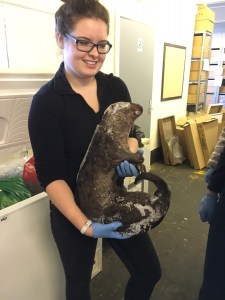
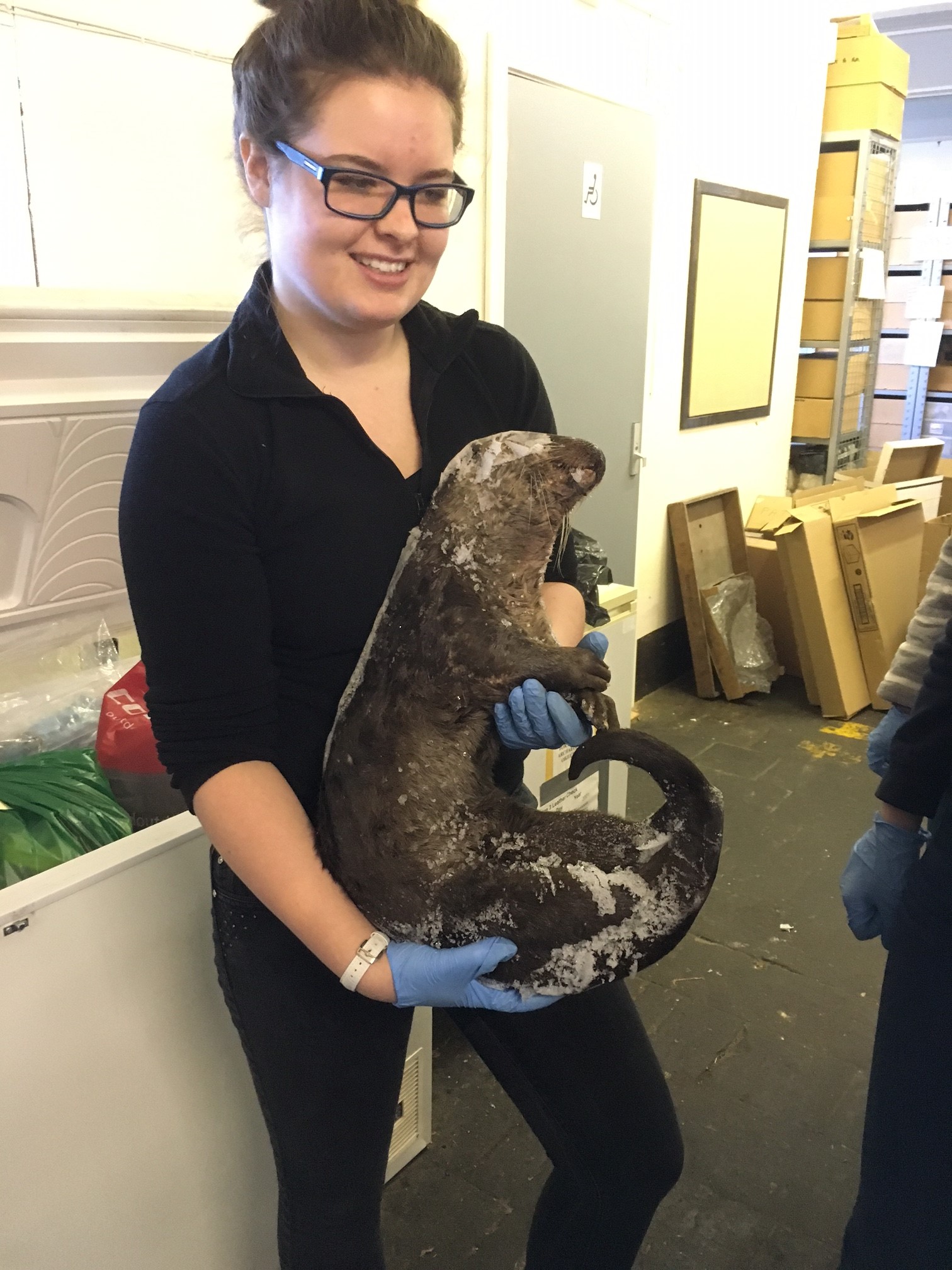
Volunteer, Laura Carter with River Otter discovery from freezer

Volunteer, Laura Carter with a River Otter discovery from the freezer.

Another volunteer, Donna Salter was also drawn to the otter:

“It’s a bit obvious to go for the big, furry, cute mammal, but my favourite has to be the otter. I was somewhat of an otter obsessed child: other girls wrote fan letters to Mark Owen or Ronan Keating while I wrote to Philip Wayre, founder of the Otter Trust (he sent back a signed visitors guide – I still have it). So for me, getting to hold and see the details of an otter can’t really be beaten!”

Cold Case Reflections; Learning from the Model

The Museum has greatly benefited from this exercise with our detailed inventories and biological records which will go into our database and ultimately end up on the Global Biodiversity Network Gateway for public access (and we also have the data we need to make more informed decisions over which specimens we decide to formally accession). However, this project proved to be a particularly successful public engagement event. It was a combination of the fact that volunteers were seeing and handling a variety of animals and that they were ‘discovering specimens’, whilst working together as a team, which is vastly more enjoyable than lone working. The event was enhanced with use of Twitter  (#coldcasecuration), which captured some of the magical moments of discovery.

This exercise illustrates how a relatively routine (inventory) collections management exercise can be turned into an exciting public engagement project, capturing critical data for the museum and inspiring a future generation of potential young scientists and curators.

By Simon Jackson, Curator, Tullie House Museum and Art Gallery Trust

NatSCA Digital Digest

Three-toed sloth (C) Horniman Museum and Gardens

Three-toed sloth (C) Horniman Museum and Gardens

The October NatSCA Digital Digest is here already, where does the time go?

What’s New to Read?

Dana Andrew recently went to Jamaica to track down the original location of some museum specimens, and has reported back to ICOM. She was funded by a WIRP international travel grant, and you can read about her blustery adventures, so far, here.

Eighty full years of mourning have now taken place for the Thylacine, since it was deliberately driven to extinction in 1936. Thylacine expert, Jack Ashby, makes sure it’s not forgotten and talks about how it feels to be in the area where it happened in a tribute blog here.
What’s New to See?

On the 19th October the Grant Museum of Zoology will bring you some sex, some creativity, and some trickery. A new exhibition looks at the colourful world of reproduction in nature.

Two days later, the Wildlife Photographer of the Year exhibition opens at the Natural History Museum on the 21st October. Always a crowd pleaser, I’ve had some sneak peeks which prove this year will be no different.

And just one day after that, the Horniman Museum will also be ready to entertain with a new exhibition. This one, called Memorial: A Tribute to Taxidermy, exhibits historic Horniman Museum taxidermy specimens alongside Jazmine’s modern day interpretations. Elegant and beautiful, this exhibition is a must-see, and comes complete with a fascinating timelapse film of how she did it.
What to do with your Sawfish

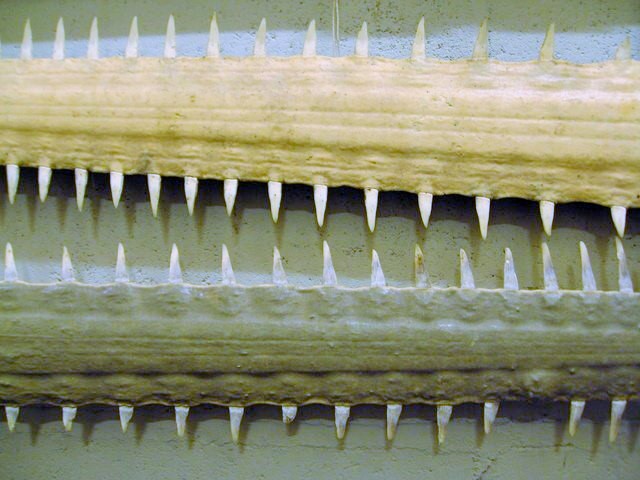
If you have any sawfish rostrums in your collection, particularly if they have locality data, there is something important you really need to do! The Sawfish Conservation Society, the Shark Trust, and The Deep (aquarium) have begun a joint venture to research museum specimens and data with the aim to protect wild populations. If you can help, please get in touch with any of the aforementioned lovely people, and to thank you for your efforts, your institution will be acknowledged in any scientific papers that get published. Double win.

Sawfish rostra (Wikimedia Commons)

Sawfish rostra (Wikimedia Commons)