Splits and Distortion of a “Hisstoric” Snakeskin: Humidification as Part of Remedial Conservation Treatment of a Boa constrictor Skin”

Written by Claire Kelly, Conservator at Natural History Museum, London.

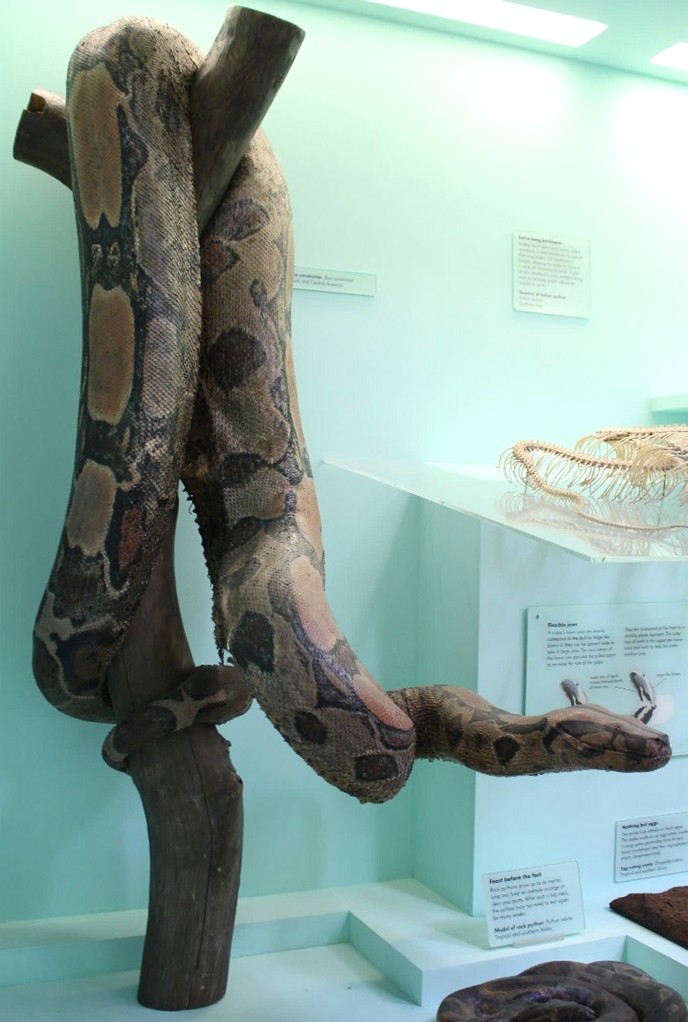
Boa Constrictor in Fishes, Amphibians and Reptiles Gallery at NHM ©The Trustees of the Natural History Museum

A Boa Constrictor on display in the Fishes, Amphibians and Reptiles Gallery at the Natural History Museum in London, UK was removed to undergo a considerable amount of remedial conservation treatment.

The taxidermy skin, dating from around the late 19th century, is mounted over a plaster form that was placed onto a wooden trunk. The skin exhibited severe deterioration with multiple splits in various areas located throughout the length of the specimen. The entire ventral seam had opened along with skin distortion and lifting around the splits without any stitched seam to hold it in situ. Most of the damage was at the ventral area of the specimen but some splits and distortion were visible whilst on display, along with material shed on to the case base.

Continue reading

Moving a ‘Monster’ – the Ups and Downs of Exhibiting a Japanese Spider Crab

Written by Hannah Clarke – Assistant Curator (Collections Access), University of Aberdeen.

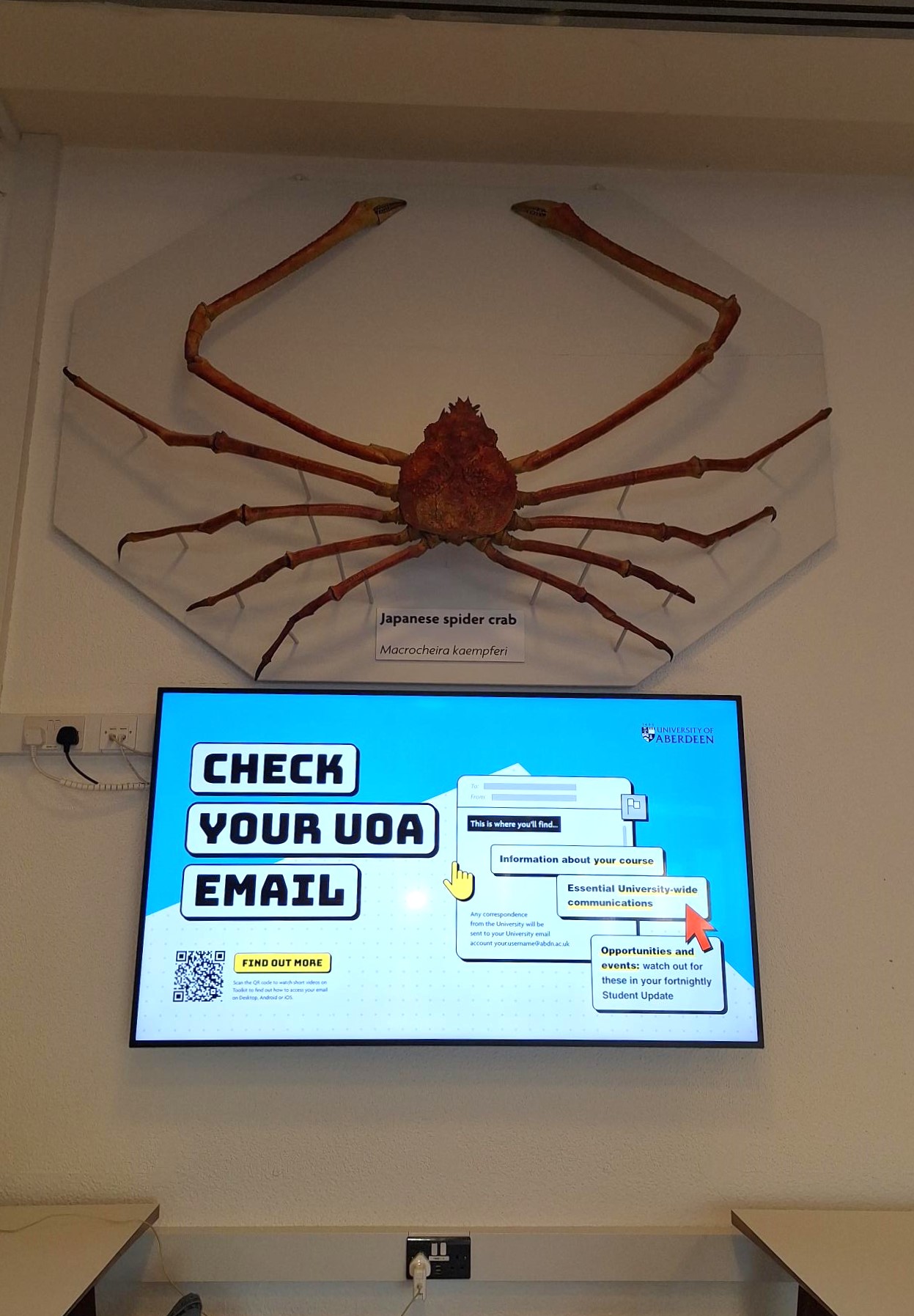
In May this year, I was given the slightly terrifying task of overseeing the removal and transportation of Aberdeen University’s much-loved Japanese Spider Crab (Macrocheira kaempferi) specimen. The crab, who is usually proudly displayed in the foyer of the University’s Zoology Building, had been requested for loan by Aberdeen Art Gallery & Museums, for their exciting new exhibition ‘Monsters of the Deep.’

The crab had previously been removed during renovation work in 2019, without hiccup, so recalling how ‘straightforward’ this had been last time, I was confident that we could get the crab removed, cleaned, packed, and ready for transport in just under three days.

Continue reading

A Refresher Course on Fluid Specimen Conservation at the Natural History Museum of Denmark

Written by Anastasia van Gaver (Conservator) & Bethany Palumbo (Head of Conservation) Natural History Museum Denmark).

Workshop participants and Julian Carter

As conservators, it’s essential we keep up to date with developments in the techniques used in specimen treatments. With hundreds of fluid-preserved specimens to make and conserve for the new exhibitions at the Natural History Museum of Denmark, we sought the best in the field to give us a refresher course. Esteemed expert Julian Carter arrived fresh off the plane from Cardiff and over 3 days we explored different techniques for preserving and mounting specimens and well as discussing the unique challenges we face when conserving these invaluable scientific resources.

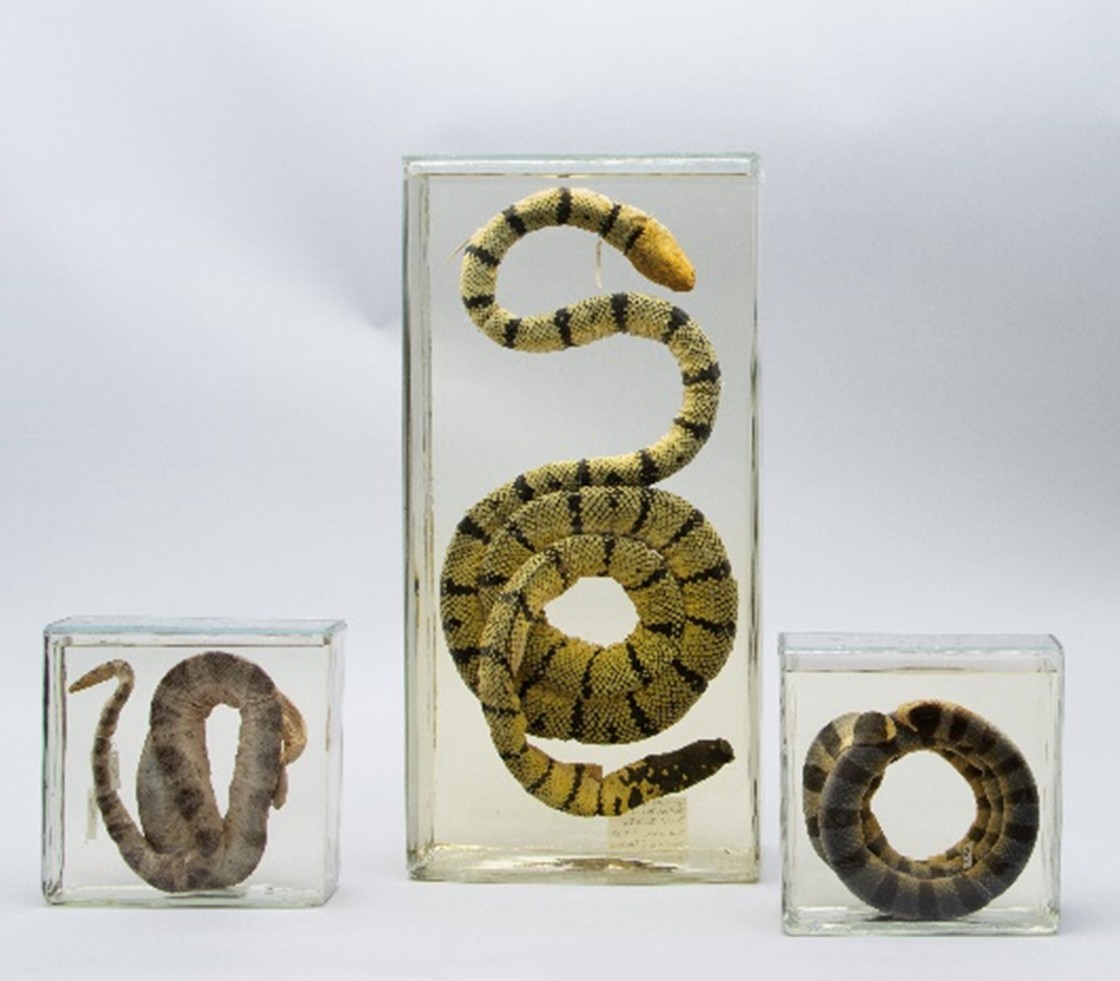
Example of three fluid specimens prepared by the conservation team for the new Natural History Museum of Denmark

Continue reading

NatSCA Digital Digest – June 2025

Compiled by Olivia Beavers, Assistant Curator of Vertebrate Zoology at World Museum, National Museums Liverpool.

Welcome to the June edition of NatSCA Digital Digest.

A monthly blog series featuring the latest on where to go, what to see and do in the natural history sector including jobs, exhibitions, conferences, and training opportunities. We are keen to hear from you if you have any top tips and recommendations for our next Digest, please drop an email to blog@natsca.org.

Sector News

NatSCA Annual Conference & AGM 2025 Recording 

On May 8th and 9th 2025, NatSCA hosted ‘Making a Difference: Showing the Positive Impact of Natural History Collections’, the 2025 NatSCA Conference at the Manchester Museum. This conference was recorded and can now be viewed online on our YouTube channel here.

Society for the History of Natural History Summer Meeting 2025 – online registration open

The SHNH are offering an online attendance option for this year’s summer meeting, ‘A Sense of Nature’ on 19th and 20th June 2025. Registration for in-person attendance has now closed.

The conference will explore the intersections of the senses – including sight (vision), sound (hearing), smell (olfaction), taste (gustation) and touch (tactile perception) – with the history of natural history. The programme will feature 12 papers across six sessions.

Continue reading

A Stable Future – Research into the Stability of Materials used in Taxidermy Manufacture.

Written by Jazmine Miles Long – Taxidermist & Bethany Palumbo – Head of Conservation, Natural History Museum Denmark.

Taxidermy collections are crucial for our understanding of biodiversity, evolution, population genetics and climate change. They form a large part of natural science collections and their long-term preservation is essential. Historically, taxidermy was created using natural, durable materials such as wood, plant fibres, wax, clay and glass with examples dating back to the 16th century. However, over the past 50 years, taxidermists have increasingly adopted synthetic and plastic-based materials due to their ease of application, lower cost, and effectiveness in creating realistic specimens. One such example is polyurethane, a very widely used material to build the form that goes under the taxidermy skin. Although polyurethane has been extensively tested (albeit not specifically for taxidermy), it has already been shown to be unstable and unsuitable for long-term use. Awareness of stable, durable materials is not widespread within the taxidermy community. As a result, many modern museum taxidermy pieces are made with untested and potentially unstable materials.

Continue reading