Written by Holly Morgenroth, Collections Officer / Natural Sciences Curator, RAMM.
A New Acquisition for RAMM
This blog post tells the story of a new and very important acquisition for the Royal Albert Memorial Museum & Art Gallery (RAMM) in Exeter. I grew up in a small Devon village called Otterton and spent many happy hours wandering the banks of the River Otter observing the rich wildlife it had to offer. So when in 2013 news broke that a family of beavers (a species extinct in the wild in Britain for over 400 years) had made the river their home I watched with great interest.
Their arrival divided opinions. The Government planned to remove them from the river. But the beavers captured the hearts of the public and Devon Wildlife Trust (DWT) saw a unique opportunity for research. The beavers became part of a five year scientific trial run by DWT to assess their impact on local geography, ecology and people. The results of the trial were overwhelmingly positive.
Money, it doesn’t need an introduction or any commentary on how hard it is to do anything without it. However, I will say that trying to get hold of it for natural science collections is not impossible and definitely worth pursuing. At Leeds, despite not having a fundraiser on staff, we’ve had quite a few >£100,000 natural science collection grant applications succeed (and fail) over the past few years and I would encourage everyone to put ‘try and get some grant money’ into their work plan.
Looking for who will fund you is half the battle. There are paid-for databases out there (Grantfinder, Grants Online, Funds Online etc.) and free ones (Get Grants, Government Funding Database etc.). I’m not endorsing any of these but they can be helpful if you want an idea of who might fund your project. Be wary of eligibility though, as part of a local authority, Leeds Museums and Galleries are not allowed to apply for loads of grants. Sob.
In the summer of 2019, Sarah Briggs of the UK Museums Association spoke at NatSCA’s conference in Dublin about the lack of applications the Esmee Fairbairn Collections Fund receives from natural science collections. She would like to see more and the board seem keen on projects that look to help the environment.
The John Ellerman Foundation has a good background story. Ellerman was the son of the richest person in England at the beginning of the 20th century. He could have gone into business but instead decided to concentrate on collecting rodents.
Your local area charities/friends group/learned society might well offer a grant scheme and so it’s worth asking around and making local connections.
Last, but not least, NatSCA offer yearly grants to natural science collections through the Bill Pettit Memorial Fund scheme. You can apply for anything – not just conservation or collections management work.
Do you have a great project in mind that supports the conservation, access and use of natural science collections? Well, NatSCA’s Bill Pettit memorial grant for up to £3000 is here to help!
We are looking for applications for exciting new projects for 2021. Terms and conditions and contact details to discuss your project can be found on our Awards and Bursaries page.
Do you have a great project in mind that supports the conservation, access and use of natural science collections? Well, NatSCA’s Bill Pettit memorial grant for up to £3000 is here to help!
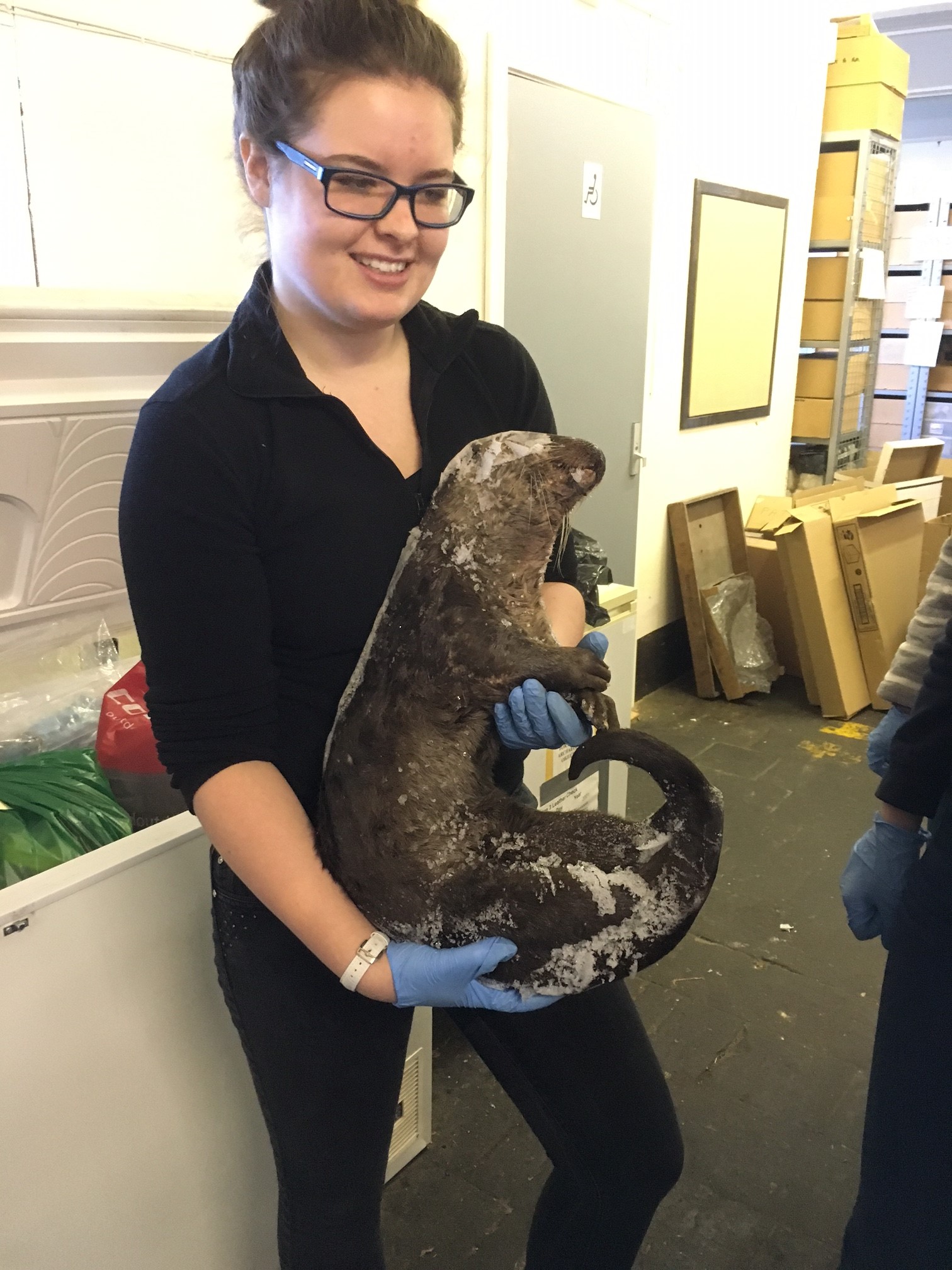
Volunteer, Laura Carter with River Otter discovery from freezer
We are looking for applications for exciting new projects for 2020. Terms and conditions and contact details to discuss your project can be found on our The Bill Pettit Memorial Award.
NatSCA is pleased to invite applications to this year’s Bill Pettit Memorial Award. Up to £2,000 of grant money, is available to NatSCA members this year to support projects including the conservation, access and use of natural science collections.
Charles Arthur William ‘Bill’ Pettit (1937-2009) started his career with the National Institute of Oceanography but moved to the Manchester Museum in 1975 to become Assistant Keeper of Zoology. In his time at Manchester, Bill worked tirelessly for the collections and was instrumental in projects such as FENSCORE as well as numerous publications. It is in recognition of his commitment to natural science collections that we would like to offer this annual award.
Projects will be assessed against NatSCA’s mission to promote collections care, use and access of Natural Science collections. We are looking for projects that can be delivered on time and budget, leaving a tangible legacy. Each project will be considered on its own merits by the NatSCA committee and the committee’s decision, including not awarding any money that year, will be final.






 NatSCA