Mary De La Beche: Lady Lepidopterist

Written by Kanchi Mehta, 2nd year BSc student, Swansea University, whilst on placement at National Museum Cardiff and Swansea Museum.

Born in Swansea in June 1839, the young Mary grew up in a house where she had every freedom. Taught in politics, photography, languages, art and science, young Mary was a smart, outspoken, and opinionated girl. As she grew up, she learnt from her father, Lewis Llewelyn Dillwyn, in the forests and beaches around Swansea. Over the years, she took a particular interest in the biology around her family home and kept that interest throughout her life.

She married in Sketty Church to John Cole Nicholl in 1860. He shared her adoration for the outdoors and over the course of their honeymoon the couple went all over Europe seeing the sights, scaling every mountain they could and documenting it all in their diaries. Mary alone filled roughly six diaries with her thoughts on the nature she saw, the people she met and the languages she learnt all accompanied by her sketches. By the Christmas of 1860, the pair made it home with two puppies in tow, brought for Mary by John, and a baby on the way.
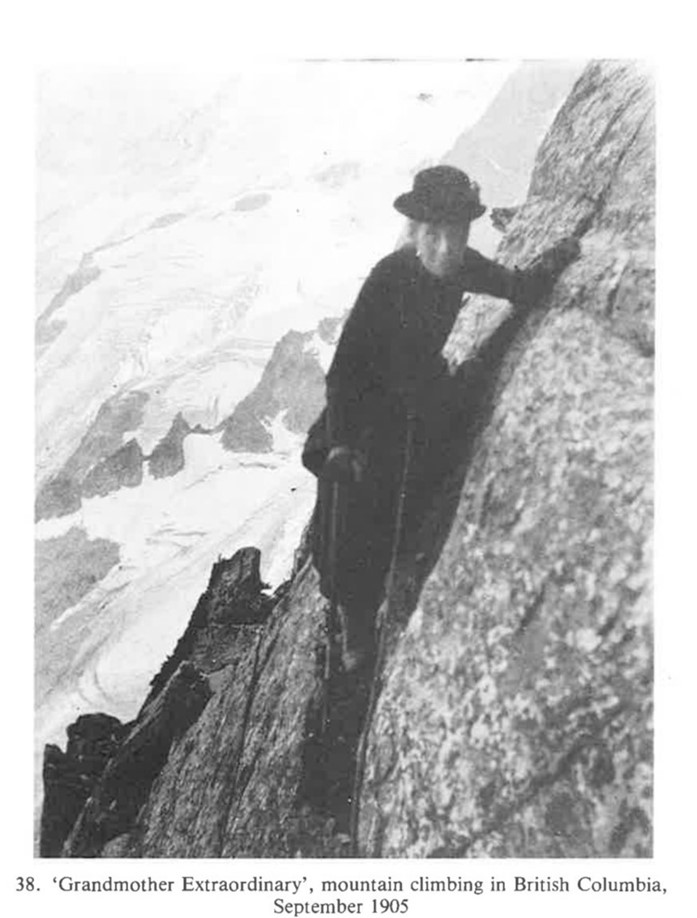
© Grandmother Extraordinary by Hilary M. Thomas
Continue reading

Going ‘Extinct’ for Jewellery

Written by Sonal Mistry (Masters Students in Scientific Illustration, Zuyd University of Applied Sciences, the Netherlands) and Olivia Beavers (Assistant Curator of Vertebrate Zoology at World Museum, National Museums Liverpool).

Last year, Sonal approached the vertebrate zoology team at World Museum Liverpool to see the Nicobar Pigeon taxidermy mounts, study skins, as well as the Liverpool Pigeon study skin and dodo skeleton to use as reference for her work. From the first meeting, it was fascinating to see the detailed nature of her initial sketches and how quickly she worked.

World Museum has received requests from wood carvers and illustrators to access the osteology collection, taxidermy mounts and/or study skins as a reference for their work. The in-person visits help them to create more accurate drawings and carvings compared to using 2D images for reference. 

Collaborating with researchers of a particular species or family broadens our understanding of the collections. For example, Sonal’s explanation of her university assignment shed light on the endangered status of Nicobar Pigeons and the unconventional use of their gizzard stones in jewellery which I was unaware of.

Sonal is currently pursuing a master’s degree in Scientific Illustration, at Zuyd University of Applied Sciences in Maastricht, the Netherlands. Her passion for the sciences and the arts enriches her illustrations with a unique quality that is evident in her diverse projects, showcasing a blend of creativity and scientific accuracy.

Continue reading

NatSCA Digital Digest – July 2024

Compiled by Milo Phillips, Digitisation Coordinator at the Royal Botanic Garden Edinburgh.

Welcome to the July edition of the NatSCA Digital Digest.

A monthly blog series featuring the latest on where to go, what to see and do in the natural history sector including jobs, exhibitions, conferences, and training opportunities. We are keen to hear from you if you have any top tips and recommendations for our next Digest, please drop an email to blog@natsca.org.

Sector News

SPPC Registration and Call for Abstracts

Registration for the Symposium on Palaeontological Preparation and Conservation is now open!

The deadline for abstract submission is July 31st and, the symposium will be run in a hybrid format. Afternoon tours of the university archaeological laboratories will also be available.

For more information on SPPC and to see past abstracts and posters, please visit their website.

Call for Papers – Book of Nature, Nature of Books: Practices of Female Botanists

The research centres TIL (Université de Bourgogne) and EMMA (Université Paul-Valéry Montpellier 3) are organizing a bilingual, international, interdisciplinary conference on the role of women in the development of botany as part of visual, manuscript and print cultures, from the Middle Ages to the contemporary period.

Discussions will focus on the history of natural sciences, print culture, book history, illustration studies, gender studies, plant studies and ecocriticism and the organisers welcome papers on a wide range of case studies, from archives and museum collections to the garden itself.

Please send a 300-word abstract and a biobibliography (in English or French) before 31 October 2024 to the following address: bookofnature2025@gmail.com

The full details can be found here.

Continue reading

Rediscovering the Hancock Coelacanth

Written by Dan Gordon, Keeper of Biology, The Great North Museum: Hancock.

For as long as I’d worked at the museum, there’d always been a Coelacanth. People referred to it in passing, pointing out the large tub of orange tinted spirit where it lurked. I’d always rather taken it for granted; an interesting but rather mundane specimen, and I’d never been curious enough to fish it out of the murky liquid and examine it.

That is, until 2018, when staff at the National Maritime Museum Cornwall got in touch about an exhibition they were putting together called Monsters of the Deep. They’d asked us about Coelacanth fossils and I mentioned the Coelacanth in the fish collection, which was greeted with some surprise. A real one…Would we consider a loan? And as I thought about this, I came to realise that I knew very little about the Coelacanth at all.

There was next to nothing in the catalogue about it, so I decided, firstly, to get a better look. This was easier said than done. The Coelacanth is over a metre long and weighed over 20kg, sitting in a container of tea coloured alcohol bigger than a bathtub. Reaching in, I ran my gloved fingers over its flanks, which had the texture of coarse sandpaper. Lifting it out was like wrestling an alligator, but eventually it emerged, a gaping mouth with small sharp teeth, a ragged tear through the flesh of its head, and the huge eyes of a deep-water dweller.

Continue reading

Taking a ‘Leaf’ of Faith: Managing a Forgotten University Herbarium

Written by Anna Robson, Graduate Intern Archaeology and Bioscience Collections, Durham University.

Background to the Collection

At Durham University, an herbarium of international scope has recently been reawakened revealing unique plant specimens and important stories about the Bioscience Collection as a whole. Over the past 18 months, the Archaeology and Bioscience Curator and Intern have undergone a process of conserving, managing, and researching the ex-teaching Bioscience Collection. Once part of the Bioscience Department’s teaching materials, this collection comprises of skeletal material, antler trophy heads, taxidermy, entomology, oology, a spirit collection and an herbarium.

To give a brief history to the collection, Durham University used to teach Zoology (established 1946) and Botany (established 1932), with Botany in the founding four departments of science in the University. The Department of Botany was spearheaded by Benjamin Millard Griffiths (1886-1942), one of the first readers in Botany who is described as a ‘true scientist’ and ‘inspired great affection’. As scientific advances changed from macro to micro to molecular, Durham’s Biosciences current department is an amalgamation of the former Botany and Zoology departments. Due to this shift, hands-on teaching using herbaria and animal osteological specimens gradually halted.

Continue reading